

Existing law, the Sustainable Groundwater Management Act, requires all groundwater basins designated as high- or medium-priority basins by the Department of Water Resources that are designated as basins subject to critical conditions of overdraft to be managed under a groundwater sustainability plan or coordinated groundwater sustainability plans by January 31, 2020, and requires all other groundwater basins designated as high- or medium-priority basins to be managed under a groundwater sustainability plan or coordinated groundwater sustainability plans by January 31, 2022, except as specified. Existing law authorizes any local agency or combination of local agencies overlying a groundwater basin to decide to become a groundwater sustainability agency for that basin and imposes specified duties upon that agency or combination of agencies, as provided. Existing law authorizes a groundwater sustainability agency to request of the county, and requires a county to consider, that the county forward permit requests for the construction of new groundwater wells, the enlarging of existing groundwater wells, and the reactivation of abandoned groundwater wells to the agency before permit approval. Existing law also authorizes the State Water Resources Control Board to designate a high- or medium-priority basin as a probationary basin under certain conditions for specified purposes. Existing law requires the State Water Resources Control Board to adopt a model water well, cathodic protection well, and monitoring well drilling and abandonment ordinance implementing certain standards for water well construction, maintenance, and abandonment and requires each county, city, or water agency, where appropriate, not later than January 15, 1990, to adopt a water well, cathodic protection well, and monitoring well drilling and abandonment ordinance that meets or exceeds certain standards. Under existing law, if a county, city, or water agency, where appropriate, fails to adopt an ordinance establishing water well, cathodic protection well, and monitoring well drilling and abandonment standards, the model ordinance adopted by the state board is required to take effect on February 15, 1990, and is required to be enforced by the county or city and have the same force and effect as if adopted as a county or city ordinance. This bill would instead require a county to forward permit requests for the construction of new groundwater wells, the enlarging of existing groundwater wells, and the reactivation of abandoned groundwater wells to the groundwater sustainability agency before permit approval. The bill would prohibit a county, city, or any other water well permitting agency from approving a permit for a new groundwater well or for an alteration to an existing well in a basin subject to the act and classified as medium- or high-priority unless specified conditions are met, including that it obtains a written verification, from the groundwater sustainability agency that manages the basin or area of the basin where the well is proposed to be located, determining that, among other things, the extraction by the proposed well is consistent with any sustainable groundwater management program established in any applicable groundwater sustainability plan adopted by that groundwater sustainability agency or an alternate plan approved or under review by the Department of Water Resources. The bill would also require, as condition of approving a permit for a new groundwater well or for an alteration to an existing well in an above-described basin, a county, city, or any other water well permitting agency to, among other things, post the well permit application on its internet website for at least 30 days before approving a permit for a new groundwater well or for an alteration to an existing well. By imposing additional requirements on county, city, or any other water well permitting agency, the bill would impose a state-mandated local program. This bill would provide various exemptions from the above-described provisions, including exempting a permit for any well that provides less than 2 acre-feet of water annually for domestic use or any well used by a public water supply system or state small water system. The California Constitution requires the state to reimburse local agencies and school districts for certain costs mandated by the state. Statutory provisions establish procedures for making that reimbursement. This bill would provide that no reimbursement is required by this act for a specified reason.
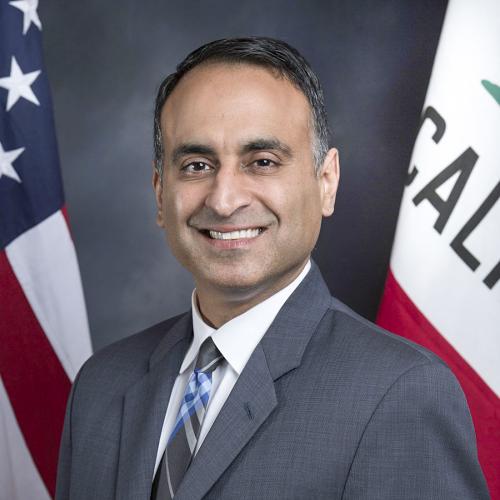
Asm. Ash Kalra
Sponsored bills
This measure would celebrate the history and culture of cruising and encourage local officials and law enforcement to work with local car clubs to conduct safe cruising events.
This measure would commend the Congress of the United States for enacting legislation that will alleviate and remedy the congestion of California's ports. The measure also would urge the Congress of the United States to enact further legislation to ensure that the state's importing and exporting capabilities are returned to prepandemic levels.
This measure would proclaim December 8, 2022, as Latina Equal Pay Day in California, in recognition of the need to eliminate the gender gap in earnings by women and to promote policies to ensure equal pay for all.
This measure would urge the President and the Congress of the United States to amend specified provisions of the federal Social Security Act to allow recipients of disabled adult child benefits under the act to continue to receive those benefits upon marriage.
This measure, among other things, would declare the last week of September 2022, and each year thereafter, as Sacramento-San Joaquin Delta Week, with the purpose of expanding the acknowledgment of the Sacramento-San Joaquin Delta region's contributions to a higher quality of life for all Californians.
This measure would designate a specified portion of State Route 710 in the City of Long Beach as the Long Beach International Gateway Bridge. The measure would request the Department of Transportation to determine the cost for appropriate signs showing this special designation and, upon receiving donations from nonstate sources covering that cost, to erect those signs.
This measure would recognize October 12, 2021, as the 20th anniversary of the enactment of the exemption from nonresident tuition for qualified students during the 2001–02 Regular Session. The measure would also call on the United States Congress to pass the American Families Plan and provide financial resources for undocumented students through the budget reconciliation process, and to adopt comprehensive immigration reform.
This measure would affirm the Legislature's support for expanding Social Security and requests California Representatives in Congress to support expanding Social Security by voting in favor of the Social Security 2100 Act: A Sacred Trust.