

(1) The United States Constitution generally requires a state to give full faith and credit to the public acts, records, and judicial proceedings of every other state. Existing law authorizes, upon the demand made by another state, the extradition of a person charged with committing an act in this state that results in a crime in the demanding state, as specified. Existing law sets forth procedures by which a person may enforce a judgment for the payment of money and child custody orders issued by the court of a state other than California. Existing law authorizes a California court or attorney to issue a subpoena if a foreign subpoena has been sought in this state. Existing law generally prohibits a provider of health care, a health care service plan, or a contractor from disclosing medical information regarding a patient, enrollee, or subscriber without first obtaining an authorization, unless a specified exception applies, including that the disclosure is in response to a subpoena. This bill would prohibit a provider of health care, a health care service plan, or a contractor from releasing medical information related to a person or entity allowing a child to receive gender-affirming health care or gender-affirming mental health care in response to a criminal or civil action, including a foreign subpoena, based on another state's law that authorizes a person to bring a civil or criminal action against a person or entity that allows a child to receive gender-affirming health care or gender-affirming mental health care. The bill additionally would prohibit law enforcement agencies from knowingly making or participating in the arrest or extradition of an individual pursuant to an out-of-state arrest warrant based on another state's law against providing, receiving, or allowing a child to receive gender-affirming health care or gender-affirming mental health care in this state, as specified. (2) Existing law, known as the Uniform Child Custody Jurisdiction and Enforcement Act, provides the state exclusive jurisdictional basis for making an initial child custody determination, and permits a California court to assume temporary emergency jurisdiction in specified circumstances. Existing law permits a court to decline to exercise its jurisdiction if it determines that it is an inconvenient forum and a court in another state is a more appropriate forum. Existing law permits a California court to decline to exercise its jurisdiction if the petitioner has wrongfully taken the child from another state or engaged in similar reprehensible conduct, except as specified. Existing law prohibits a court from considering the taking or retention of a child from a person who has legal custody of the child if there is evidence that the taking or retention was a result of domestic violence. The bill would prohibit the enforcement of an order based on another state's law authorizing a child to be removed from their parent or guardian based on that parent or guardian allowing their child to receive gender-affirming health care or gender-affirming mental health care. The bill would prohibit a court from finding that it is an inconvenient forum where the law or policy of another state that may take jurisdiction limits the ability of a parent to obtain gender-affirming health care or gender-affirming mental health care, as defined, and the provision of such care is at issue in the case before the court. The bill would authorize a court to take temporary jurisdiction because a child has been unable to obtain gender-affirming health care. The bill would additionally prohibit a court from considering the taking or retention of a child from a person who has legal custody of the child, if the taking or retention was for obtaining gender-affirming health care or mental health care. The bill would declare its provisions to be severable. (3) This bill would incorporate additional changes to Sections 2029.300 and 2029.350 of the Code of Civil Procedure proposed by AB 2091 to be operative only if this bill and AB 2091 are enacted and this bill is enacted last.
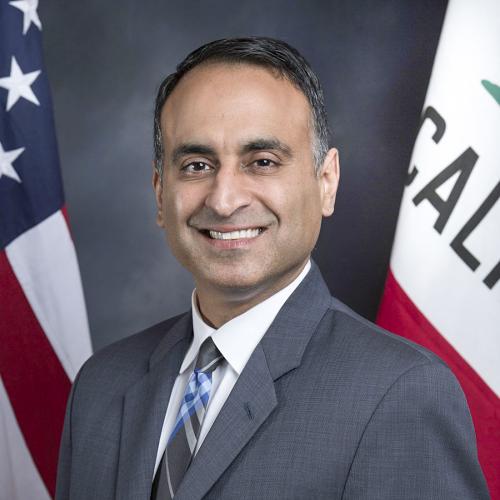
Asm. Ash Kalra
Sponsored bills
Existing law prohibits the state from seeking a criminal conviction or sentence on the basis of race, ethnicity, or national origin, as specified, and, in a case in which judgment has not been entered prior to January 1, 2021, allows a petition to be filed alleging a violation of that prohibition. Existing law authorizes a court that finds a violation of that prohibition to impose specified remedies, including, among other things, vacating the conviction or sentence and ordering new proceedings. This bill would additionally authorize that petition to be filed for cases in which a judgment was entered as final prior to January 1, 2021, as specified, and in cases in which a juvenile disposition resulted in a commitment to the Division of Juvenile Justice, as specified. The bill would, if a motion under these provisions is based on the conduct or statements by the judge, require the judge to disqualify themselves from those proceedings. The bill would additionally make other technical changes. Existing law allows a defendant to file a motion requesting disclosure of all evidence related to a potential violation of the prohibition on seeking a criminal conviction or sentence on the basis of race, ethnicity, or national origin, and requires the court to order the records to be released upon a showing of good cause. If the records are not privileged, existing law allows the court to permit the prosecution to redact information prior to disclosure. This bill would require the court, upon a showing of good cause, to order disclosure unless a statutory privilege or constitutional privacy right cannot be adequately protected by redaction or a protective order. Under existing law, a conviction or sentence is unlawfully imposed on the basis of race, ethnicity, or national origin if the defendant proves, among other things, that the defendant was charged or convicted of a more serious offense than defendants of other races, ethnicities, or national origins, or received a longer or more severe sentence, and the evidence establishes that the prosecution more frequently sought or obtained convictions for more serious offenses against people who share the defendant's race, ethnicity, or national origin, as specified, or if a longer or more severe sentence was more frequently imposed on defendants of a particular race, ethnicity, or national origin, as specified. Existing law requires this determination to be made pursuant to statistical evidence or aggregate data, as specified. This bill would allow that evidence to include nonstatistical evidence and would require the court to consider the totality of the evidence in determining whether a significant difference in seeking or obtaining convictions or in imposing sentences has been established. The bill would require the court to consider whether systemic and institutional racial bias, racial profiling, and historical patterns of racially biased policing and prosecution may have contributed to, or caused differences observed in, the data or impacted the availability of data overall. This bill would incorporate additional changes to Section 1473 of the Penal Code proposed by SB 467 to be operative only if this bill and SB 467 are enacted and this bill is enacted last.
Existing law designates specific days as holidays in this state. Existing law requires the Governor annually to proclaim the date corresponding with the second new moon following the winter solstice, or the third new moon following the winter solstice should an intercalary month intervene, as the "Lunar New Year." Existing law entitles state employees, with specified exceptions, to elect to receive 8 hours of holiday credit for "Native American Day," in lieu of receiving 8 hours of personal holiday credit, and to elect to use 8 hours of vacation, annual leave, or compensating time off, consistent with departmental operational needs and collective bargaining agreements, for "Native American Day," as specified. This bill would repeal provisions requiring the Governor to annually proclaim the "Lunar New Year," and would instead recognize the "Lunar New Year" as a state holiday. The bill would authorize state employees, with specified exceptions, to elect to receive 8 hours of holiday credit for the "Lunar New Year" in lieu of receiving 8 hours of personal holiday credit, and to elect to use 8 hours of vacation, annual leave, or compensating time off, consistent with departmental operational needs and collective bargaining agreements, for "Lunar New Year," as specified. Existing law designates specific days designated as holidays in this state, every Saturday and the day after Thanksgiving Day as judicial holidays, except "Admission Day," "Columbus Day," and any other day appointed by the President, but not by the Governor, for a public fast, thanksgiving, or holiday. This bill would additionally exclude "Lunar New Year" from designation as a judicial holiday. This bill would incorporate additional changes to Section 135 of the Code of Civil Procedure proposed by AB 1801 to be operative only if this bill and AB 1801 are enacted and this bill is enacted last. This bill would incorporate additional changes to Sections 6700, 19853, and 19853.1 of the Government Code proposed by AB 1655 and AB 1801 to be operative only if this bill and AB 1655, AB 1801, or both are enacted and this bill is enacted last.
Existing regulation requires that a state prison provide a prisoner with use of a telephone consistent with their assigned privilege group. Existing law provides that the sheriff of each county may maintain an inmate welfare fund to be kept in the treasury of the county into which, among other funds, any rebates or commissions received from a telephone company attributable to the use of pay telephones that are primarily used by inmates, is required to be deposited. Existing law contains numerous provisions governing the incarceration and detention of juveniles, including the right to maintain and continue frequent contacts with family members through telephone calls for those confined in a facility of the Division of Juvenile Facilities. This bill would require that a state prison, or a state, county, or city youth residential placement or detention center provide voice communication services to incarcerated persons free of charge to the person initiating and the person receiving the communication, subject to the operational discretion of the Department of Corrections and Rehabilitation in a state-operated facility, as specified. The bill would prohibit a county, city, or state agency from receiving revenue for the provision of communication services to persons in its custody. To the extent this bill would mandate that a local government provide a new program or higher level of service, the bill would impose a state-mandated local program. Existing law vests the Public Utilities Commission with regulatory authority over public utilities, including telephone corporations. Existing law requires the commission to require telephone corporations to provide customer service to telecommunication customers that includes, but is not limited to, reasonable statewide service quality standards. This bill would require the commission to establish service quality standards for incarcerated persons calling services, as defined, to be adhered to by communication service providers rendering services to state or local correctional or detention facilities. Under existing law, a violation of any order, decision, rule, direction, demand, or requirement of the commission is a crime. Because a violation of a commission action implementing this bill's requirements would be a crime, the bill would impose a state-mandated local program. The California Constitution requires the state to reimburse local agencies and school districts for certain costs mandated by the state. Statutory provisions establish procedures for making that reimbursement. This bill would provide that with regard to certain mandates no reimbursement is required by this act for specified reasons. With regard to any other mandates, this bill would provide that, if the Commission on State Mandates determines that the bill contains costs so mandated by the state, reimbursement for those costs shall be made pursuant to the statutory provisions noted above.
Existing law, the Alatorre-Zenovich-Dunlap-Berman Agricultural Labor Relations Act of 1975, grants agricultural employees the right to form and join labor organizations and engage in collective bargaining with respect to wages, terms of employment, and other employment conditions, and authorizes employees to elect exclusive bargaining representatives for these purposes. Existing law creates the Agricultural Labor Relations Board and prescribes its composition, duties, and powers. Existing law authorizes the board to hold hearings and conduct investigations and requires that certain procedures be the exclusive method of redressing unfair labor practices. Under existing law, any person who willfully resists, prevents, or interferes with a member of the board or its agents or agencies in the performance of their duties is guilty of a misdemeanor. Existing law requires the board to certify the results of an election conducted by secret ballot of employees in a collective bargaining unit to designate a collective bargaining representative, unless the board determines there are sufficient grounds to refuse to do so. Existing law further provides that if the board refuses to certify an election because of employer misconduct that would render slight the chances of a new election reflecting the free and fair choice of employees, the labor organization shall be certified as the bargaining representative for the bargaining unit. This bill would refer to the election by secret ballot process as a polling place election. The bill would establish alternative procedures to the polling place election and authorize a labor organization to be certified as the exclusive bargaining representative of a bargaining unit through either a labor peace election or a non-labor peace election, as prescribed, dependent on whether an employer enrolls and agrees to a labor peace election for labor organization representation campaigns. The bill would provide that a labor peace election or a non-labor peace election permits a bargaining unit to summarily select a labor organization as its representative for collective bargaining purposes without using the existing polling place process. Under the bill, a labor peace election would be a mail ballot election and a non-labor peace election would establish a process for the submission of a petition with proof of majority support, subject to certification by the board. Among other provisions, the bill would require for both alternative procedures that an employer respond to the board with regard to a petition, including providing a specified list of employees to the board. By expanding the definition of a crime, this bill would impose a state-mandated local program. This bill would establish a schedule for agricultural employers to indicate to the board whether they agree to a labor peace compact, defined to mean an agreement by the employer to, among other things, make no statements for or against union representation to its employees or publicly, in any written or oral form, at any time during employee hire, rehire, or orientation, or after certain documents regarding organization are filed with the board. The bill would prohibit a labor peace compact from prohibiting an employer from communicating truthful statements to employees regarding workplace policies or benefits, as specified. The bill would require the board to develop an online web-based labor peace election process that will allow employers to indicate their labor peace choice online, and that will allow labor organizations to see whether a specific agricultural employer has agreed to a labor peace election campaign. This bill would repeal the above provisions on January 1, 2028. This bill would prescribe civil penalties to be imposed upon an agricultural employer who commits an unfair labor practice in an amount not to exceed $10,000 for each violation, and would increase that sum to an amount not to exceed $25,000 for specified violations. The bill would require the board to consider specified factors in determining the amount of a civil penalty pursuant to these provisions. The bill would also authorize the board to impose personal liability for these penalties upon a director or officer of an employer in certain circumstances. Existing law authorizes a person aggrieved by the final order of the board granting or denying in whole or in part the relief sought for an unfair labor practice, to obtain a review of the order in a specified court of appeal by filing in the court a written petition requesting that the order of the board be modified or set aside. This bill would require an employer who appeals or petitions for a writ of review of any order of the board involving make-whole, backpay, or other monetary awards to employees, to post an appeal bond in the amount of the entire economic value of the order, as specified, and would provide for the bond to be forfeited under specified conditions. This bill would state that its provisions are severable. The California Constitution requires the state to reimburse local agencies and school districts for certain costs mandated by the state. Statutory provisions establish procedures for making that reimbursement. This bill would provide that no reimbursement is required by this act for a specified reason.
Existing law establishes the Department of Housing and Community Development in the Business, Consumer Services, and Housing Agency. Existing law establishes a director of the department and authorizes them to perform all duties, exercise all powers, discharge all responsibility, and administer and enforce all laws, rules, and regulations under the jurisdiction of the department, among other duties. Existing law, the Mobilehome Residency Law, governs the terms and conditions of mobilehome park tenancies, including rental agreements between homeowners and the management of the mobilehome park and park rules and regulations. Existing law, the Mobilehome Parks Act, establishes requirements for the construction, maintenance, occupancy, use, and design of mobilehome parks. Existing law, the Recreational Vehicle Park Occupancy Law, governs the terms and conditions of recreational vehicle park tenancies. Existing law, the Special Occupancy Parks Act, establishes requirements for the construction, maintenance, occupancy, use, and design of special occupancy parks. This bill would require the Department of Housing and Community Development, by May 1, 2025, to adopt regulations to require at least one person per mobilehome park or recreational vehicle park employed or acting under contract as an onsite manager or assistant manager, or otherwise acting in an onsite or offsite managerial capacity or role, on behalf of a mobilehome park or recreational vehicle park to receive training, as specified. The bill would require the training to be at least 6 hours, and no more than 8 hours, during the initial year and would require an online end-of-year examination to occur, as specified. The bill would require, every 2 years thereafter, a training of at least 2 hours, and no more than 4 hours, on rules and regulations for the park, among other matters. The bill would require the director of the department to permit a third-party provider to offer the training, as specified. Once permitted, the bill would require the director to review the training curriculum and materials of the permitted third-party provider every 2 years for compliance with the provisions of this bill. The bill would require the department to adopt regulations for the qualification and disqualification of third-party providers, as specified. The bill would require the department to adopt these regulations by May 1, 2025. This bill would require the department or approved third-party provider to offer the training in an online format, would authorize the training to be offered in other formats, and would authorize the department to consult with the Department of Consumer Affairs, residents, and management, among others, in developing the training. The bill would require the department, upon a person's satisfactory completion of the training and the examination, and upon meeting the other requirements, to issue the person a certificate of completion that would expire every 2 years, and would establish a process for renewing the certificate. This bill would establish the Mobilehome Park and Recreational Vehicle Training Fund within the State Treasury to receive all moneys derived under the bill's provisions and moneys in the fund would be available, upon appropriation by the Legislature, to the Department of Housing and Community Development, for the purpose of carrying out these provisions, as described. The bill would also authorize the department to establish, by regulation, a fee-based structure, not to exceed the department's reasonable costs in administering these provisions, and would set forth billing and payment procedures. This bill would require the management of each mobilehome park to post a copy of the certificate issued to it by the department in a conspicuous location onsite, as specified. The bill would require the department to provide written notice to management regarding its compliance, as specified. The bill would authorize the department, if management of a park is out of compliance with these requirements, to impose a civil penalty, as specified, and suspend the management's permit to operate, upon first providing adequate notice and an opportunity to be heard in accordance with certain procedural requirements. The Administrative Procedure Act generally governs the procedure for the adoption, amendment, or repeal of regulations by state agencies and for the review of those regulatory actions by the Office of Administrative Law. This bill would exempt regulations of the department adopted pursuant to this chapter from the Administrative Procedure Act.
Existing law establishes the Department of Housing and Community Development in the Business, Consumer Services, and Housing Agency and makes the department responsible for administering various housing programs throughout the state. The California Fair Employment and Housing Act generally prohibits housing discrimination with respect to the personal characteristics of race, color, religion, sex, gender, gender identity, gender expression, sexual orientation, marital status, national origin, ancestry, familial status, source of income, disability, veteran or military status, or genetic information. Under existing law, the Civil Rights Department is responsible for receiving, investigating, conciliating, mediating, and prosecuting complaints alleging violations of specified civil rights. Existing law requires local agencies to provide, by April 1 of each year, an annual report to the legislative body, the Office of Planning and Research, and the Department of Housing and Community Development, the progress in meeting its share of regional housing needs. Existing law requires that annual report to include a housing element portion, which includes, but is not limited to, the number of units that have been completed, as specified. This bill would provide that it is the state's policy that lower income individuals residing in neighborhoods and communities experiencing significant displacement, as specified, need access to housing that is affordable and assists in avoiding displacement. The bill would provide that, to the extent feasible and consistent with other laws, the low-income housing tax credit program and tax-exempt bonds for qualified residential rental property used for affordable housing may be used to support access to housing that would allow households facing or at risk of displacement to remain in the community. The bill would specify that a local tenant preference adopted pursuant to the bill's provisions is subject to the duty of public agencies to affirmatively further fair housing, as specified. The bill would require any local government adopting a local tenant preference policy to create a webpage on its internet website containing the ordinance and its supporting materials, and to annually submit a link to its tenant preference webpage to the Department of Housing and Community Development. The bill would require the department to post on its internet website a list of jurisdictions that have tenant preference policies. The bill would repeal these provisions on January 1, 2033.
Existing law, the California Building Standards Law, establishes the California Building Standards Commission within the Department of General Services. Existing law requires the commission to approve and adopt building standards and to codify those standards in the California Building Standards Code. Existing law requires the commission to adopt, approve, codify, and publish mandatory building standards for the installation of electric vehicle charging infrastructure for parking spaces in multifamily dwellings and nonresidential development. Existing law requires the Department of Housing and Community Development to propose mandatory building standards for the installation of electric vehicle charging infrastructure for parking spaces in multifamily dwellings and submit the proposed mandatory building standards to the commission for consideration. Existing law requires the department and the commission, in proposing and adopting these standards, to actively consult with specified parties. This bill, for purposes of the requirements described above, would require the Department of Housing and Community Development to research and develop, and would authorize the department to propose to the commission for adoption, mandatory building standards for parking spaces in multifamily dwellings that achieve specified objectives. In this regard, the bill would require those mandatory building standards to require that each multifamily dwelling unit with access to parking have at least one parking space served by a dedicated branch circuit terminating in a receptacle or an electric vehicle charging station and to include specified signage. The bill would additionally require the commission and the department to consult with interested parties, including multifamily dwelling residents and electric vehicle equity advocate groups, in researching and developing these standards.
Existing law generally regulates pesticide use by the Department of Pesticide Regulation, and requires the Director of Pesticide Regulation to endeavor to eliminate from use a pesticide that endangers the agricultural or nonagricultural environment. A violation of those provisions and regulations adopted pursuant to those provisions is generally a misdemeanor. Existing law requires the department, on or before July 1, 2018, to issue a determination with respect to its reevaluation of neonicotinoids, and to adopt control measures necessary to protect pollinator health within 2 years, as specified. This bill would prohibit, beginning January 1, 2024, the sale, possession, or use of neonicotinoid pesticides, as defined, for application to outdoor ornamental plants, trees, or turf, except for use on, or for the protection of, an agricultural commodity, as defined. The bill would authorize the director, in consultation with the Department of Food and Agriculture, to authorize, by written order, the sale, possession, or use of these prohibited pesticides if the director finds that it would address a valid environmental emergency and there are no other, less harmful alternatives, as specified, and would require the director to make reasonable efforts to inform the public of an environmental emergency finding. The bill would also authorize a certified qualified applicator to possess or use a neonicotinoid pesticide for specified purposes, and a licensed pest control dealer to sell a neonicotinoid pesticide, as provided. The bill would provide that these provisions do not apply to certain actions and applications of these pesticides. Because a violation of these provisions and the regulations adopted pursuant to these provisions would be a misdemeanor, the bill would impose a state-mandated local program. The California Constitution requires the state to reimburse local agencies and school districts for certain costs mandated by the state. Statutory provisions establish procedures for making that reimbursement. This bill would provide that no reimbursement is required by this act for a specified reason.
(1) Existing federal law, the Patient Protection and Affordable Care Act (PPACA) , requires each state to establish an American Health Benefit Exchange to facilitate the purchase of qualified health benefit plans by qualified individuals and qualified small employers. Existing state law creates the California Health Benefit Exchange (Exchange) , also known as Covered California, to facilitate the enrollment of qualified individuals and qualified small employers in qualified health plans as required under PPACA. Under existing regulations, an individual may enroll in a plan through the Exchange in a special enrollment period that is triggered if the individual loses other coverage due to termination of employment or reduction in the number of hours of employment. Existing law requires the Exchange, until January 1, 2023, to administer a program to provide health care coverage financial assistance to California residents with household incomes at or below 600% of the federal poverty level. This bill, upon appropriation by the Legislature, would require the Exchange to administer a program of financial assistance beginning July 1, 2023, to help Californians obtain and maintain health benefits through the Exchange if they lose employer-provided health care coverage as a result of a labor dispute. Under the bill, if specified eligibility requirements are met, an individual who has lost minimum essential coverage from an employer or joint labor management trust fund as a result of a strike, lockout, or other labor dispute would receive the same premium assistance and cost-sharing reductions as an individual with a household income of 138.1% of the federal poverty level, and, beginning January 1, 2024, would also not pay a deductible for any covered benefit if the standard benefit design for a household income of 138.1% of the federal poverty level has zero deductibles. (2) The Personal Income Tax Law, in modified conformity with federal law, generally defines "gross income" as income from whatever source derived, except as specifically excluded, and provides various exclusions from gross income for purposes of computing tax liability. This bill would exclude from gross income any subsidy amount received pursuant to the above-described program of financial assistance.