

Existing law requires the Department of Justice to compile criminal offender record information, defined as the records and data compiled by criminal justice agencies, for purposes of identifying criminal offenders and of maintaining as to each offender a summary of certain information, including arrests, pretrial proceedings, sentencing, and release. Existing law requires a reporting agency to report specified information to the department concerning each arrest, including applicable identification and arrest data, as specified. Existing law requires the superior court that disposes of a case for which an arrest was made to report specified data to the department, including the disposition of the case and specified data elements. This bill would require state and local prosecution offices to collect and transmit data elements, as defined, for each criminal case to the department, including, but not limited to, data about basic case information of each case, including the case number and the date of the crime and arrest, data about the charges, including each charge, enhancement, and special circumstance filed, data about the initial appearance, custody, and bail, including the date of the initial appearance and bail set, whether defendant posted bail, and the date of release from custody, data about plea bargains, including the date and the terms, data about diversion and collaborative court programs, including whether the defendant was offered a diversion program, whether the defendant was eligible for a collaborative court program, and whether there was opposition by the prosecuting agency for either program, data about the case disposition and postconviction proceedings, and data about the victim and the defendant charged. The bill would also require the department to collect specified data, including the number of prior felony arrests and convictions of a defendant. The bill would require the department to be responsible for collecting data elements from agencies, as specified, and aggregating, as specified, these data elements by, including, but not limited to, developing consistent definitions and formats for data elements and providing consistent and clear guidelines to agencies transmitting data elements to the department. The bill would, beginning March 1, 2027, require every agency to collect data elements for cases in which a decision to reject charges or to initiate criminal proceedings by way of complaint or indictment has been made by that agency from that date forward. The bill would, beginning June 1, 2027, require every agency to begin transmitting data elements to the department with this transmission occurring on a quarterly basis until June 1, 2028, after which data elements are transmitted monthly. The bill would authorize the department to require any agency to transmit data before any deadline for specified reasons, including quality control purposes and compliance with standardized formats. The bill would require the department, by October 1, 2023, to establish the Prosecutorial Transparency Advisory Board for the purpose of ensuring transparency, accountability, and equitable access to prosecutorial data. The bill would require specified individuals and representatives of specified organizations, or their designees, including the Attorney General, the president of the California Public Defenders Association, a university professor who specializes in criminal justice data, and 2 individuals who have direct experience being prosecuted in the criminal legal system, to serve on the board. The bill would require the board to provide guidance to the department on draft rules, regulations, policies, plans, reports, and other decisions made by the department. The bill would require the department, by July 1, 2024, in consultation with the Prosecutorial Transparency Advisory Board, to develop a data dictionary that includes standardized definitions for each data element. The bill would require the department, beginning June 1, 2027, to begin collecting data elements from all agencies statewide and to aggregate data from all agencies and publish this data by June 1, 2028, with the publication continuing on a quarterly basis for one year and then on a monthly basis thereafter. The bill would create an exception for the data provided by the agencies to the department to any sealing or expungement of a case, as specified, or any rule of confidentiality or otherwise prohibiting disclosure provided by law. The bill would make the operation of its provisions contingent upon an adequate appropriation by the Legislature, as specified. Existing constitutional provisions require that a statute that limits the right of access to the meetings of public bodies or the writings of public officials and agencies be adopted with findings demonstrating the interest protected by the limitation and the need for protecting that interest. This bill would make legislative findings to that effect. By imposing additional duties on local agencies, this bill would impose a state-mandated local program. The California Constitution requires the state to reimburse local agencies and school districts for certain costs mandated by the state. Statutory provisions establish procedures for making that reimbursement. This bill would provide that, if the Commission on State Mandates determines that the bill contains costs mandated by the state, reimbursement for those costs shall be made pursuant to the statutory provisions noted above.
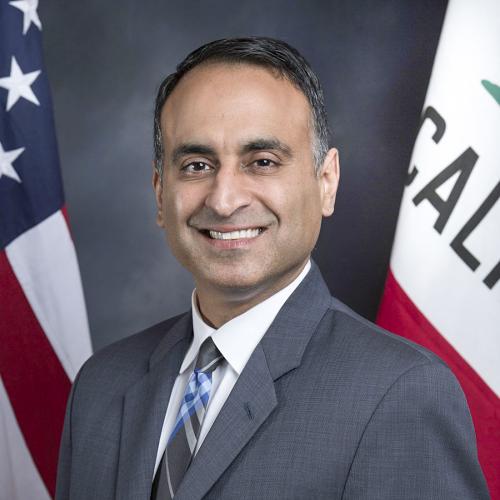
Asm. Ash Kalra
Sponsored bills
Existing law establishes within the Department of Industrial Relations the Division of Labor Standards Enforcement, under the direction of the Labor Commissioner. Existing law authorizes the division to enforce the Labor Code and all labor laws of the state the enforcement of which is not specifically vested in any other officer, board, or commission. Existing law prescribes comprehensive requirements relating to minimum wages, overtime compensation, and standards for working conditions for the protection of employees applicable to an employment relationship. This bill would prohibit an employer, in the event of an emergency condition, as defined, from taking or threatening adverse action against any employee for refusing to report to, or leaving, a workplace or worksite within the affected area because the employee has a reasonable belief that the workplace or worksite is unsafe, except as specified. The bill would also prohibit an employer from preventing any employee, including employees of public entities, as specified, from accessing the employee's mobile device or other communications device for seeking emergency assistance, assessing the safety of the situation, or communicating with a person to confirm their safety. The bill would require an employee to notify the employer of the emergency condition requiring the employee to leave or refuse to report to the workplace or worksite, as specified. The bill would clarify that these provisions are not intended to apply when emergency conditions that pose an imminent and ongoing risk of harm to the workplace, the worksite, the worker, or the worker's home have ceased.
Existing law prescribes punishments, including incarceration, for various criminal offenses. Existing law provides guidelines for sentencing based on these prescribed punishments, including allowing a court to impose the highest term specified when a statute prescribes 3 possible terms of incarceration only if there are circumstances in aggravation. This bill would require a court to consider alternatives to incarceration, including, without limitation, collaborative justice court programs, diversion, restorative justice, and probation. The bill would additionally state that it is the intent of the Legislature that the disposition of any criminal case use the least restrictive means available.
Existing law delegates to the Department of Child Support Services and local child support agencies the responsibility for collecting and enforcing child support obligations, including child support delinquencies, as defined. Existing law requires the State Department of Social Services to promulgate regulations for county child welfare departments, including, but not limited to, any case of separation or desertion of a parent from a child that results in foster care assistance payments, payments for a minor child placed in the same home as a minor or nonminor dependent parent, and California Work Opportunity and Responsibility to Kids (CalWORKs) payments to a caretaker relative of a child who comes within the jurisdiction of the juvenile court. Existing law requires those regulations to require the county child welfare department to determine whether it is in the best interests of the child or nonminor to have the case referred to the local child support agency for child support services, as specified. This bill would require the county child welfare department, in making that determination, to presume that the payment of support by the parent is likely to pose a barrier to the proposed reunification. The bill would require the department to revise its regulations to implement those changes on or before October 1, 2023. To the extent that this bill increases the duties of the county child welfare department, the bill would impose a state-mandated local program. The bill would make related findings and declarations. The California Constitution requires the state to reimburse local agencies and school districts for certain costs mandated by the state. Statutory provisions establish procedures for making that reimbursement. This bill would provide that no reimbursement is required by this act for a specified reason.
Existing law creates various transit districts and prescribes requirements applicable to their labor relations, including those that address the recognition and certification of exclusive employee representatives, unit determinations, and procedures for meeting and conferring on matter subject to collective bargaining. This bill would require a public transit employer to provide written notice to the exclusive employee representative of the workforce affected by autonomous transit vehicle technology of its determination to begin, or its substantive progress toward initiating, any procurement process or a plan to acquire or deploy any autonomous transit vehicle technology for public transit services that would eliminate job functions or jobs of the workforce to which the autonomous transit vehicle technology applies not less than 12 months before commencing the process, plan, or deployment. The bill would require a public transit employer, upon a written request of the exclusive employee representative, to provide specified information to the exclusive employee representative, including the potential gaps in skills that may result from the new service. The bill would require the public transit employer, following the written request for information by the exclusive employee representative, and within 30 days of receiving the specified information, to commence collective bargaining on specified subjects, including creating plans to train and prepare the affected workforce to fill new positions created by the autonomous transit vehicle technology.
Existing law establishes the Public Employment Relations Board (PERB) in state government as a means of resolving disputes and enforcing the statutory duties and rights of specified public employers and employees under various acts regulating collective bargaining, including the Meyers-Milias-Brown Act. Existing law includes within PERB's jurisdiction the resolution of disputes alleging violation of rules and regulations adopted by a public agency, as defined, concerning unit determinations, representations, recognition, and elections, as specified. Existing law authorizes PERB to adopt rules and regulations to carry out its purposes, as provided. Existing law, the Santa Clara Valley Transportation Authority Act, establishes the Santa Clara Valley Transportation Authority with various powers and duties relative to transportation projects and services and the operation of public transit in the County of Santa Clara. Under existing law, the authority's employees have the right to self-organization, to form, join, or assist labor organizations, to bargain collectively through representatives of their own choosing, and to engage in other concerted activities for the purpose of collective bargaining or other mutual aid or protection. Existing law requires that any question as to whether a majority of authority employees desire to be represented by a labor organization be submitted to PERB, as specified. This bill would vest PERB with jurisdiction to enforce certain provisions related to the authority's employees, over charges of unfair practices for represented authority employees, subject to a selection by an exclusive representative. The bill, in the case of such a selection, would give PERB jurisdiction over the initial determination as to whether those charges are justified and, if so, the appropriate remedy, subject to certain restrictions. The bill would require that PERB's regulations apply, as appropriate, to the authority, and authorize PERB to make additional emergency regulations applicable to the authority. The bill would require the authority to give reasonable written notice to an exclusive representative of its employees of its intent to make any change to matters within the scope of representation of the employees represented by the exclusive representative, as specified. By imposing new duties on the authority, the bill would impose a state-mandated local program. This bill would make legislative findings and declarations as to the necessity of a special statute for the authority. The California Constitution requires the state to reimburse local agencies and school districts for certain costs mandated by the state. Statutory provisions establish procedures for making that reimbursement. This bill would provide that, if the Commission on State Mandates determines that the bill contains costs mandated by the state, reimbursement for those costs shall be made pursuant to the statutory provisions noted above.
Existing law authorizes a parking citation processing agency, as defined, to collect an unpaid parking penalty by requesting the Department of Motor Vehicles to place a registration hold on the vehicle to which the citations have been issued, or by obtaining a civil judgment against the registered owner of the vehicle, as specified. Existing law requires a processing agency to offer a payment plan for unpaid parking citations to qualified indigent persons. This bill would require a processing agency, if it seeks to collect an unpaid parking penalty by requesting the Department of Motor Vehicles to place a registration hold on the vehicle, to forgive at least $1,500 in parking fines and fees annually for a qualified homeless person, provide certain information regarding the parking citation forgiveness program, including on its internet website, and collect and have readily available specified information.
Existing law creates the Santa Clara Valley Transportation Authority with various powers and duties relative to transportation projects and services and the operation of public transit in the County of Santa Clara. Existing law authorizes the authority to make contracts, enter into stipulations, and use a Construction Manager/General Contractor project delivery method for public transit projects. This bill would authorize the authority to enter into job order contracts, defined as indefinite-quantity contracts for repair, remodeling, or other repetitive work to be done according to unit prices, with the lowest responsible and responsive bidders. The bill would prohibit the authority from entering into a job order contract for, among other things, work that is protected by a collective bargaining agreement and a single job order contract from exceeding $5,000,000 in its first term and, if extended or renewed, from exceeding $10,000,000 over the maximum of 2 extended terms, as specified. If the authority acts pursuant to that authorization, the bill would require the authority to report on its use of job order contracting, as specified. The bill would repeal these provisions on January 1, 2028.
Existing provisions of the California Constitution provide that the University of California constitutes a public trust and require the university to be administered by the Regents of the University of California (regents) , a corporation in the form of a board, with full powers of organization and government, subject to legislative control only for specified purposes, including any competitive bidding procedures as may be applicable to the university by statute for specified purposes, including the purchasing of materials, goods, and services. Existing law requires the regents, except as provided, to let all contracts involving an expenditure of $100,000 or more annually for goods and materials or services, excepting personal or professional services, to the lowest responsible bidder meeting certain specifications, or to reject all bids. Existing policy of the regents establishes a general prohibition on contracting out for services and functions that can be performed by university staff, with certain exceptions, establishes employment standards for contract employees, and provides for the conversion of contract employees to university employment under prescribed circumstances. This bill would make it unlawful for any vendor, as defined, to accept payment above a specified threshold from the university pursuant to a contract for prescribed services if the vendor is performing services or supplying the university with employees to perform services who are paid less than the higher of the total compensation rate specified in the vendor's contract with the university or as required by university policy. The bill would require a vendor to provide those employees with prescribed written notice relating to compensation. The bill would require a vendor, twice yearly, to provide basic payroll information, as defined, to the university and members of any joint labor-management committee or similar meeting body established with the exclusive representative of university employees who perform the same or similar services. The bill would also require a vendor to provide specified additional written notice, including specific text, relating to the release of basic payroll information, to all employees who agree to perform services for the university or continue doing so. The bill would also require basic payroll information for an individual employee who performs services for the university, on request, to be made available for inspection by that individual employee or that individual employee's designated representative or to be furnished to that individual employee or that individual employee's authorized representative. This bill would authorize an employee or university employee to provide a vendor with written notice of a violation of the bill and the opportunity to correct and cure the violation and thereafter file suit only if the vendor fails to provide prescribed documentation. The bill would establish remedies, including civil penalties and restitution, for prevailing claimants and would provide for the disqualification of the vendor, for a minimum of 5 years, from submitting any bid to the university, or executing, renewing, or extending any contract with or otherwise receiving payment from the university in exchange for services. The bill would make its provisions severable.
Existing law establishes the Office of Small Business Advocate (CalOSBA) within the Governor's Office of Business and Economic Development, also known as GO-Biz, to advocate for causes of small business and to provide small businesses with the information they need to survive in the marketplace. This bill would, upon appropriation by the Legislature, establish the California Employee Ownership Hub within the Office of Small Business Advocate to increase awareness and understanding of employee ownership among stakeholders, assist business owners and employees in navigating available resources, and streamline and reduce barriers to employee ownership. The bill would require an Employee Ownership Hub Manager to administer the hub, and would authorize the manager to be responsible for prescribed duties, including partnering with specified state agencies and private entities to promote employee ownership transitions.