

Under existing law, the Department of Fish and Wildlife (DFW) has jurisdiction over the conservation, protection, and management of fish, wildlife, native plants, and habitat necessary for biologically sustainable populations of those species. Existing law authorizes DFW to approve compensatory mitigation credits for wildlife connectivity actions taken under specified programs. Existing law vests the Department of Transportation (Caltrans) with full possession and control of the state highway system. Existing law requires Caltrans to complete assessments of potential barriers to anadromous fish prior to commencing any project using state or federal transportation funds and requires projects to be constructed without presenting barriers to fish passage. This bill would require Caltrans, in consultation with DFW and other appropriate agencies, to establish an inventory of connectivity needs on the state highway system where the implementation of wildlife passage features could reduce wildlife-vehicle collisions or enhance wildlife connectivity, as specified. The bill would require Caltrans, no later than July 1, 2024, to develop and publish the inventory and a list of funded transportation projects with wildlife passage features that address wildlife connectivity needs and would require Caltrans to update the inventory and the project list at least once every 2 years. The bill would require Caltrans, for any project on the state highway system in a connectivity area that adds a traffic lane or that has the potential to significantly impair wildlife connectivity, to perform an assessment, in consultation with DFW, to identify potential wildlife connectivity barriers and any needs for improved permeability, as specified. The bill would require Caltrans to submit the assessment to DFW and, if any structural barrier to wildlife connectivity exists or will be added by the project for target species in the connectivity area, would require the implementing agency to remediate barriers to wildlife connectivity in conjunction with the project. The bill would authorize Caltrans to use compensatory mitigation credits to satisfy these remediation requirements if DFW concurs with the use of those credits. The bill would establish the Transportation Wildlife Connectivity Remediation Program, to be administered by Caltrans, in consultation with DFW, for the purposes of improving wildlife connectivity across transportation systems in connectivity areas. As part of the program, the bill would require Caltrans, upon appropriation by the Legislature, to develop a program of projects that support the remediation and improvement of wildlife connectivity across transportation systems, as specified. The bill would require Caltrans, in concurrence with DFW, to develop guidelines for the implementation of the program following one or more public workshops and an opportunity for the public to provide written comments. The bill would authorize Caltrans to receive compensatory mitigation credits for the implementation of a project in the program if DFW concurs with the creation of those credits. The bill would require the department to update appropriate design guidance, including the Highway Design Manual, by July 1, 2025, to incorporate design concepts for wildlife passage features and related standard plans and specifications as appropriate. The bill would require Caltrans to submit a report to specified committees of the Legislature by July 1, 2028, that includes recommendations for the provisions of the bill and describes the status of its progress in accomplishing the requirements of the bill.
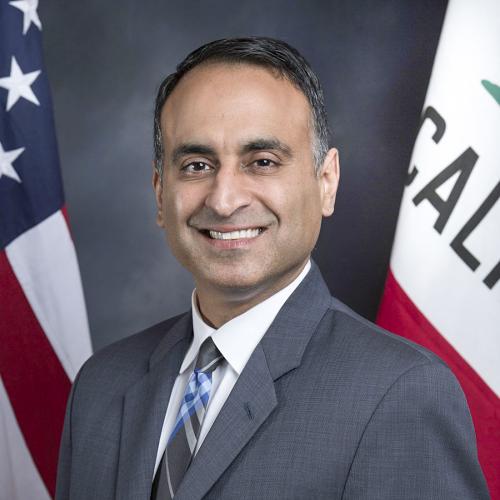
Asm. Ash Kalra
Sponsored bills
Existing law requires that a candidate for a peace officer position be of good moral character, as determined by a thorough background investigation. This bill would require that background investigation to include an inquiry into whether a candidate for specified peace officer positions has engaged in membership in a hate group, participation in any hate group activity, or advocacy of public expressions of hate, as specified, and as those terms are defined. The bill would provide that certain findings would disqualify a person from employment. Existing law requires a public agency that employs peace officers to have a procedure to investigate complaints by members of the public against peace officers. This bill would require an agency to investigate, as specified, any internal complaint or complaint made by the public that alleges, as specified, that a peace officer engaged in membership in a hate group, participation in any hate group activity, or advocacy of public expressions of hate. The bill would provide that certain findings would require the employing agency to remove that peace officer from appointment as a peace officer. This bill would also require the Department of Justice to adopt and promulgate guidelines for the investigation and adjudication of these complaints by local agencies. Existing law makes the personnel records of peace officers, as specified, confidential and not subject to disclosure as public records. This bill would exempt from confidentiality the record of any sustained complaint that a peace officer has engaged in membership in a hate group, participation in any hate group activity, or advocacy of public expressions of hate. By requiring local agencies to investigate certain complaints, this bill would impose a state-mandated local program. The California Constitution requires local agencies, for the purpose of ensuring public access to the meetings of public bodies and the writings of public officials and agencies, to comply with a statutory enactment that amends or enacts laws relating to public records or open meetings and contains findings demonstrating that the enactment furthers the constitutional requirements relating to this purpose. This bill would make legislative findings to that effect. The California Constitution requires the state to reimburse local agencies and school districts for certain costs mandated by the state. Statutory provisions establish procedures for making that reimbursement. This bill would provide that with regard to certain mandates no reimbursement is required by this act for a specified reason. With regard to any other mandates, this bill would provide that, if the Commission on State Mandates determines that the bill contains costs so mandated by the state, reimbursement for those costs shall be made pursuant to the statutory provisions noted above.
Existing law establishes the Natural Resources Agency, which consists of various departments, including the Department of Conservation, the Department of Fish and Wildlife, and the Department of Parks and Recreation. Existing law vests in the Natural Resources Agency various powers, including those related to conservation of lands. This bill would establish the Equitable Outdoor Access Act, which sets forth the state's commitment to ensuring all Californians can benefit from, and have meaningful access to, the state's rich cultural and natural resources. The bill would declare that it is state policy, among other things, to ensure that all Californians have equitable opportunities to safe and affordable access to nature and access to the benefits of nature, and to prevent and minimize the intentional and unwarranted limitation of sustainable public access to public lands, where appropriate, including, but not limited to, local, regional, state, and federal parks, rivers, lakes, beaches, forests, mountain ranges, deserts, and other natural landscapes. The bill would require specified state agencies to consider and incorporate, as appropriate, the state policy when revising, adopting, or establishing policies, regulations, or grant criteria, or making expenditures, as specified. The bill would require all state agencies implementing the above-described state policy to do so in a manner consistent with the mission of their agency and that protects the health and safety of the public and conserves natural and cultural resources. The bill would require the state to encourage the types of access that promote, and are consistent with, specified conservation goals. The bill would require the Natural Resources Agency to prepare and submit a report to the Legislature with information related to the implementation of these provisions on or before January 1, 2024.
Existing law requires each school district or county superintendent of schools maintaining kindergarten or any of grades 1 to 12, inclusive, and each charter school to provide for each needy pupil one nutritionally adequate free or reduced-price meal during each schoolday, and authorizes a school district or county office of education to use funds available from any federal program the purpose of which includes the provision of meals to a pupil, including the federal School Breakfast Program, to comply with that requirement. Existing law, commencing with the 2022–23 school year, requires a school district or county superintendent of schools maintaining kindergarten or any of grades 1 to 12, inclusive, or charter school to provide 2 nutritiously adequate school meals free of charge during each schoolday to any pupil who requests a meal without consideration of the pupil's eligibility for a federally funded free or reduced-priced meal, with a maximum of one free meal for each meal service period, as provided. This bill would require the State Department of Education, in consultation with the State Department of Social Services, to develop, and to post on its internet website by July 1, 2023, guidance for local educational agencies participating in the federal School Breakfast Program that maintain kindergarten or any of grades 1 to 6, inclusive, on how to serve eligible nonschoolaged children breakfast or a morning snack at a local educational agency schoolsite. The bill would define "eligible nonschoolaged child" to mean a child who is not enrolled in school and who is a sibling, half sibling, or stepsibling of, or a foster child residing with, a pupil who is eligible for a free or reduced-price breakfast. The bill would require a guardian of an eligible nonschoolaged child to be present in order for the nonschoolaged child to receive breakfast or a morning snack.
Existing law defines the ballot label as the portion of the ballot containing the names of the candidates or a statement of a measure. For statewide measures, existing law requires the Attorney General to prepare a condensed version of the ballot title and summary, including the fiscal impact summary prepared by the Legislative Analyst that is printed in the state voter information guide. This bill would additionally require the ballot label for statewide measures, and, at the option of a county, the ballot label or similar description on the ballot of county, city, district, and school district measures, to include a listing of nonprofit organizations, businesses, or individuals taken from the signers or the text of ballot arguments printed in the voter information guide that support and oppose the measure, as specified. The bill would require a nonprofit organization, business, or individual to meet certain criteria before being listed on the ballot label or similar description of the measure on the ballot. The bill would require the signers of the ballot arguments to submit the lists of supporters and opponents to the Secretary of State or the respective elections official and would require the Secretary of State or respective elections official to provide those lists to county elections officials as part of the ballot label. The bill would make conforming changes and related findings and declarations. The bill would include findings that changes proposed by this bill address a matter of statewide concern rather than a municipal affair and, therefore, apply to all cities, including charter cities. Because the bill would impose additional duties on local elections officials, and because it would expand the crime of perjury, it would impose a state-mandated local program. The California Constitution requires the state to reimburse local agencies and school districts for certain costs mandated by the state. Statutory provisions establish procedures for making that reimbursement. This bill would provide that with regard to certain mandates no reimbursement is required by this act for a specified reason. With regard to any other mandates, this bill would provide that, if the Commission on State Mandates determines that the bill contains costs so mandated by the state, reimbursement for those costs shall be made pursuant to the statutory provisions noted above.
Existing law subjects a minor between 12 and 17 years of age, inclusive, who violates any federal, state, or local law or ordinance, who persistently or habitually refuses to obey the reasonable and proper orders or directions of the minor's parents, guardian, or custodian, or who is beyond the control of that person, who violates an ordinance establishing a curfew or is truant, and a minor under 12 years of age who is alleged to have committed specified serious offenses, to the jurisdiction of the juvenile court, which may adjudge the minor to be a ward of the court. When a minor is adjudged to be a ward of the court, as previously described, and is placed under the supervision of the probation officer or committed to the care, custody, and control of the probation officer, existing law authorizes the court to make any and all reasonable orders for the conduct of the ward, and to impose and require any and all reasonable conditions that it may determine fitting and proper to the end that justice may be done and the reformation and rehabilitation of the ward enhanced. This bill would limit to 6 months the period of time a ward may remain on probation, except that a court may extend the probation period for a period not to exceed increments of 6 months after a noticed hearing and upon proof by a preponderance of the evidence that it is in the ward's best interest. The bill would require the probation agency to submit a report to the court detailing the basis for any request to extend probation at the noticed hearing. The bill would require the court to provide the ward and the prosecuting attorney with the opportunity to present relevant evidence, as specified. The bill would require the court to hold a noticed hearing for the ward not less frequently than every 6 months for the remainder of the wardship period if the court extends probation. The bill would additionally require, among other things, that conditions of probation for a ward be individually tailored, developmentally appropriate, and reasonable. Existing law authorizes the court, as part of the order adjudging the minor to be a ward of the court, to order the ward to pay restitution, to pay a fine up to $250 for deposit in the county treasury if the court finds the minor has the financial ability to pay, or to participate in an uncompensated work program. This bill would remove the authority of the court to order the minor to pay the $250 fine or participate in an uncompensated work program in lieu of restitution. Existing law requires the court, for specified offenses, to order certain actions as a condition of a minor's probation including attending counseling, repairing property, repaying the cost of apprehension to the city or county, and performing community service. This bill would, in specified instances, no longer require the court to order certain actions as a condition of a minor's probation. The bill would instead impose requirements on the conditions of a minor's probation ordered by the court. Existing law requires a court to order a minor who is subject to the jurisdiction of the juvenile court to pay restitution to the victim and a restitution fine that is deposited in the Restitution Fund, as specified. Under existing law, the board of supervisors of a county may, at its discretion, impose a fee to cover the actual administrative cost of collecting the restitution fine, as specified, with the proceeds deposited in the general fund of the county. This bill would remove the authority of the board of supervisors of a county to impose this fee.
(1) Existing law establishes the Commission on Teacher Credentialing to, among other things, issue teaching and services credentials. Existing law requires the commission to appoint a Committee of Credentials and requires allegations of acts or omissions for which adverse action may be taken against applicants or holders of teaching or services credentials to be reported to the committee, including conviction for a controlled substance offense, as defined. Existing law requires the commission to deny an application for the issuance of a credential or the renewal of a credential for a person who has been convicted of a controlled substance offense. This bill would prohibit the record of a conviction for possession of specified controlled substances that is more than 5 years old and for which relief was granted from being presented to the committee or from being used to deny a credential. (2) Existing law authorizes a defendant who was sentenced to a county jail for the commission of a felony and who has met specified criteria to petition to withdraw their plea of guilty or nolo contendere and enter a plea of not guilty after the completion of their sentence, as specified. Existing law requires the court to dismiss the accusations or information against the defendant and release them from all penalties and disabilities resulting from the offense, except as specified. This bill would make this relief available to a defendant who has been convicted of a felony, as long as that conviction does not require registration as a sex offender. Existing law requires the Department of Justice, on a monthly basis, to review the records in the statewide criminal justice databases and identify persons who are eligible for records of arrest relief without requiring the filing of a petition or motion. Under existing law, a person is eligible for arrest record relief if they were arrested on or after January 1, 1973, and the arrest was for a misdemeanor and the charge was dismissed or criminal proceedings have not been initiated within one year after the arrest, or the arrest was for a felony punishable in the county jail and criminal proceedings have not been initiated within 3 years after the date of the arrest. This bill would, commencing July 1, 2023, generally make this arrest record relief available to a person who has been arrested for a felony, including a felony punishable in the state prison, as specified. Existing law, commencing January 1, 2022, and subject to appropriation, requires the Department of Justice, on a monthly basis, to review the records in the statewide criminal justice databases and identify persons who are eligible for automatic conviction record relief. Under existing law, a person is eligible for automatic conviction record relief if, on or after January 1, 1973, they were sentenced to probation, and completed it without revocation, or if they were convicted of an infraction or a misdemeanor, and other criteria are met, as specified. The bill, commencing July 1, 2023, would additionally make this conviction record relief available for a defendant convicted, on or after January 1, 2005, of a felony for which they did not complete probation without revocation if the defendant appears to have completed all terms of incarceration, probation, mandatory supervision, postrelease community supervision, and parole, and a period of 4 years has elapsed during which the defendant was not convicted of a new felony offense, except as specified. The bill would specify that conviction record relief does not release the defendant from the terms and conditions of unexpired criminal protective orders. This bill would state that conviction record relief does not affect the authority to receive, or take adverse action based on, criminal history information for purposes of teacher credentialing or employment in public education, as specified. The bill would prohibit disclosure of information relating to a conviction for possession of specified controlled substances when the conviction is more than 5 years old and when relief has been granted under these provisions. (3) Existing law requires the Department of Justice to maintain state summary criminal history information, as defined, and to furnish this information to various state and local government officers, officials, and other prescribed entities, if needed in the course of their duties. Existing law requires the department to provide the Commission on Teacher Credentialing with every conviction rendered against an applicant, retroactive to January 1, 2020, regardless of relief granted. Existing law makes it a crime for a person authorized by law to receive state summary criminal history information to knowingly furnish that information to a person who is not authorized to receive it. This bill would require the department to also provide that information to school districts, county offices of education, charter schools, private schools, state special schools for the blind and deaf, or any other entity required to have a background check because of a contract with any of those entities. The bill would prohibit the department from disseminating information for a conviction for possession of specified controlled substances if that conviction is more than 5 years old and relief has been granted. By expanding the scope of a crime, this bill would impose a state-mandated local program. The California Constitution requires the state to reimburse local agencies and school districts for certain costs mandated by the state. Statutory provisions establish procedures for making that reimbursement. This bill would provide that no reimbursement is required by this act for a specified reason.
Existing law makes it a misdemeanor for a person to willfully violate their written promise to appear or a lawfully granted continuance of their promise to appear in court or before a person authorized to receive a deposit of bail, and requires the Department of Motor Vehicles (DMV) to suspend the driving privilege of that person upon receipt of notification of that violation from a court. Existing law generally authorizes a court to notify the DMV of a violation of a written promise to appear or a lawfully granted continuance of their promise to appear in court or before a person authorized to receive a deposit of bail, and requires a court to notify the DMV of such a violation when a person is charged with specified offenses related to driving under the influence. Existing law prohibits the department from issuing or renewing a driver's license to a person when it has received one of these notices. This bill would, beginning January 1, 2027, repeal that requirement of the DMV to suspend a person's driving privilege, would terminate any suspension issued by the DMV pursuant to those provisions prior to January 1, 2027, and would remove the prohibition from issuing or renewing a driver's license. The bill would repeal the above-described authorization and requirement that the court notify the DMV of a violation of a written promise to appear or a lawfully granted continuance of their promise to appear in court or before a person authorized to receive a deposit of bail. The bill would make other conforming changes. Existing law prohibits a person from driving a motor vehicle upon a highway, unless the person holds a valid driver's license, except as specified. A violation of this provision is a misdemeanor. This bill would, instead, make a violation of this provision an infraction for a first or 2nd offense, except as specified, and a misdemeanor or an infraction for subsequent violations.
Existing law establishes the state prisons under the jurisdiction of the Department of Corrections and Rehabilitation. Existing law places county jails under the jurisdiction of the sheriff for the confinement of persons sentenced to imprisonment for the conviction of a crime. This bill would require every jail, prison, public or privately operated detention facility, and a facility in which individuals are subject to confinement or involuntary detention to develop and follow written procedures governing the management of segregated confinement, as specified. The bill would require those facilities to document the use of segregated confinement by, among other things, providing written orders of that confinement to the individual confined, as specified. The bill would prohibit those facilities from involuntarily placing an individual in segregated confinement if the individual belongs to a special population, including, among others, that the individual has a mental or physical disability or that the individual is under 26 years of age or over 59 years of age. The bill would require the facility to periodically check on the individual and have a medical or mental health professional periodically assess the individual. This bill would require a facility to offer out-of-cell programming to individuals in segregated confinement for at least 4 hours per day, not including time spent on housekeeping or in paid employment. The bill would also authorize a facility to use segregated confinement to help treat and protect against the spread of communicable disease, under certain circumstances. This bill would prohibit a facility from holding an individual in segregated confinement for more than 15 consecutive days and no more than 45 days in a 180-day period, as specified. This bill would also prohibit a facility from imposing limitations on services, treatment, or basic needs; conducting out-of-cell programming opportunities in a smaller cage or therapy module; placing an individual in segregated confinement on the basis of confidential information, as specified; using specified restraints when an individual is in segregated confinement; and using segregated confinement as a means of protecting an individual. This bill would require a facility administrator or chief physician to conduct a secondary review of a person in segregated confinement's dispute regarding qualification in the special populations category. This bill would require facilities to create and publish monthly, semiannual, and annual reports, as specified. The bill would require the Office of the Inspector General and the Board of State and Community Corrections to assess each facility's compliance with the act, as specified. This bill would require local and state authorities to promulgate regulations or directives to implement the act, where applicable. The bill would declare these provisions to be severable. By imposing additional duties on county jails, this bill would create a state-mandated local program. The California Constitution requires the state to reimburse local agencies and school districts for certain costs mandated by the state. Statutory provisions establish procedures for making that reimbursement. This bill would provide that, if the Commission on State Mandates determines that the bill contains costs mandated by the state, reimbursement for those costs shall be made pursuant to the statutory provisions noted above.
The Dixon-Zenovich-Maddy California Arts Act of 1975 establishes the Arts Council, consisting of 11 appointed members. The act specifies the duties of the council, including providing for the exhibition of art works in public buildings throughout California. Existing law establishes the Office of Small Business Advocate within the Governor's Office of Business and Economic Development. Existing law authorizes the Governor to appoint the Director of the Office of Small Business Advocate who serves as the Small Business Advocate. Existing law requires the advocate to serve as the principal advocate in the state on behalf of small businesses, to represent the views and interests of small businesses before other state agencies, and to enlist the cooperation and assistance of public and private agencies, businesses, and other organizations in disseminating information about the programs and services provided by state government that are of benefit to small businesses, among other things. This bill would create in the State Treasury the Performing Arts Equitable Payroll Fund. The bill would require the Office of Small Business Advocate to establish and administer a grant program, funded by the Performing Arts Equitable Payroll Fund, upon appropriation by the Legislature, for the purpose of enabling small nonprofit performing arts organizations, as defined, to hire and retain employees. The bill would limit the eligibility of applicants for the grant program to applicants that submit specified information, and, in some cases, information that has been attested to, including founding documents for the organizations, various policies and statements of the organization, financial records of the organization, or of its fiscal sponsor; and evidence of its production and advertisement of performing arts events that it has made open to the public. The bill would exclude various organizations from eligibility, as specified. The bill would require any recipient of the grant to provide the office with certified information, including certification that the grant funds were used for only the specified purposes allowed by these provisions; organizational information including venue size where applicable, annual budget, the number of employees and independent contractors in the last budget year, and the percentage of budget spent on payroll expenses; and certification that there have been no final judgments relating to employee misclassification at any time after the effective date of these provisions. This bill would require the office to adopt regulations as necessary for ensuring that grant recipients have not used moneys for other purposes and for validating the accuracy of certifications provided. The bill would authorize the office to distribute the grant according to a specified schedule that assigns a percentage of the first $10,000 of payroll expenses to be reimbursed based on the adjusted gross revenue, as defined, of the grant recipient organization per employee per quarter.