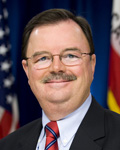
Photo of Richard Gordon
D California Assembly · District 24

Asm. Richard Gordon

Compare
Total votes
13,993
all sessions
Attendance
95%
515 missed
Near the chamber average
With party
99%
of cast votes
Near the chamber average
Bipartisan score
0%
crosses aisle rarely
Near the chamber average
Sponsored
815
bills & resolutions
Near the chamber average
Committees
0
assignments
815 bills and resolutions

Sponsored bills

Total
815
Primary
120
Co-sponsor
695
This page
815
matching current filters
Primary AB 1632
In committee · California Assembly · Lead sponsor
Agricultural product marketing: community supported agriculture.

Existing law encourages the Department of Food and Agriculture to assist producers in organizing certified farmers' markets, field retail stands, farm stands, and other forms of direct marketing by providing technical advice on marketing methods and in complying with the regulations that affect direct marketing programs. This bill would also encourage the department to assist in organizing the marketing of community supported agriculture.

In committee Mar 12, 2012 0 co-sponsors
Co-sponsor SB 14
Vetoed · California Senate · Co-sponsor
State Budget.

(1) The California Constitution requires the Governor to submit annually to the Legislature a budget itemizing state expenditures and estimating state revenues and requires the Legislature to pass the Budget Bill by midnight on June 15. This bill would require that the budget submitted by the Governor to the Legislature for the 2013–14 fiscal year and each fiscal year thereafter, as specified in a plan developed by the Department of Finance and distributed to the appropriate committees of the Legislature by August 1, 2012, be developed pursuant to performance-based budgeting, as defined, for each state agency. (2) Under existing law, a state agency for which an appropriation is made is generally required to submit to the Department of Finance for approval a complete and detailed budget setting forth all proposed expenditures and estimated revenues for the ensuing fiscal year. The bill would require the budget of a state agency, as defined, submitted to the department as specified in the plan developed by the department, to utilize performance-based budgeting for all programs, as defined to include those performed not only by state agencies, but by local agencies, contractors, or others that have a material relationship with the state, or its authorities and activities. For those programs not administered by the state, but which confer a benefit that would not otherwise be conferred but for the action of state government, state departments would be required to develop a process for consulting with responsible local agencies, contractors or other responsible entities, and stakeholders to develop information related to performance standards and program performance. The bill would require the department to include specified performance-based budgeting information in the Governor's Budget proposal and to post that information on the department's Internet Web site. Implementation of the requirement to use performance-based budgeting for departments and programs would be contingent on an appropriation of funding for that requirement in the annual Budget Act.

Vetoed Mar 1, 2012 1 co-sponsor
Co-sponsor ACR 96
In committee · California Assembly · Co-sponsor
Relative to the California Day of Remembrance for the Massacres of Armenians in Sumgait, Kirovabad, and Baku.

This measure would designate February 27, 2012, as California Day of Remembrance for the Massacres of Armenians in Sumgait, Kirovabad, and Baku, and would call upon the people of California to use vigilance to promote greater tolerance in Azerbaijan and ensure the peaceful settlement of the Nagorno Karabakh conflict while protecting the security of the Armenians in the Nagorno Karabakh Republic.

In committee Feb 17, 2012 1 co-sponsor
Co-sponsor AB 181
Failed · California Assembly · Co-sponsor
Foster youth: mental health bill of rights.

Existing law provides that, when a child is removed from his or her family by the juvenile court, placement of the child in foster care should secure, as nearly as possible, the custody, care, and discipline equivalent to that which should have been given the child by his or her parents. Existing law provides enumerated rights for children who are placed in foster care. Existing law establishes the Office of the State Foster Care Ombudsperson to disseminate specified information, including the stated rights of foster youth, and to investigate and attempt to resolve complaints made by or on behalf of children placed in foster care, related to their care, placement, or services. This bill would enumerate rights for foster youth relating to mental health services. The bill would require the office, in consultation with various entities, to develop, no later than July 1, 2012, standardized information explaining the rights specified and to distribute this information to foster youth.

Failed Feb 1, 2012 1 co-sponsor
Primary AB 850
Failed · California Assembly · Lead sponsor
State buildings: efficiency.

Existing law requires the Department of General Services, in consultation with other state entities, to develop a plan to exploit cost-effective energy efficiency measures in state facilities. Existing law requires the department to update the plan biennially, coordinate implementation efforts, and make recommendations to the Governor and the Legislature to achieve energy goals for state facilities. Existing law requires the department to make these recommendations no later than March 1, 2009, and biennially thereafter. Existing law also requires the department to report on projects under its jurisdiction, as specified. This bill would instead require the California Energy Resources Conservation and Development Commission to develop a plan to exploit cost-effective energy efficiency and water conservation measures in state facilities. This bill would require the department to coordinate plan implementation efforts, and to submit recommendations on energy efficiency and water conservation goals to the Governor and the Legislature. This bill would require the department, in consultation with the commission, to make these recommendations no later than January 1, 2013.

Failed Feb 1, 2012 0 co-sponsors
Co-sponsor AB 991
Failed · California Assembly · Co-sponsor
State government: licenses: California Licensing and Permit Center.

Existing law requires members of the public to obtain license, permits, or to register with state agencies prior to undertaking certain types of tasks. This bill would require the Governor to establish a Internet Web site, known as the California Licensing and Permit Center (CLPC) , to assist the public with licensing, permitting, and registration requirements of state agencies. This bill would require the Governor to operate, via both e-mail and telephone methods, a help center to assist applicants with licensing, permitting, and registration requirements. This bill would require state agencies that the Governor determines has licensing authority to cooperate with this program by providing accurate updated information about their licensing requirements. This bill would create the California License and Permit Fund in the State Treasury, and require state agencies that are required to participate in the CLPC to reallocate a portion of their operating budget, as specified, to pay for the operating cost of the CLPC. This bill would state that upon appropriation by the Legislature, revenues from the fund will be used only for purposes of the bill. This bill would require the CLPC to be provided to the public free of charge.

Failed Feb 1, 2012 1 co-sponsor
Co-sponsor SB 810
died · California Senate · Co-sponsor
Singleâ€'payer health care coverage.

Existing law provides for the creation of various programs to provide health care services to persons who have limited incomes and meet various eligibility requirements. These programs include the Healthy Families Program administered by the Managed Risk Medical Insurance Board, and the Medi‑Cal program administered by the State Department of Health Care Services. Existing law provides for the regulation of health care service plans by the Department of Managed Health Care and health insurers by the Department of Insurance. Commencing January 1, 2014, the federal Patient Protection and Affordable Care Act requires every individual to be covered under minimum essential coverage, as specified, and requires every health insurance issuer issuing individual or group health insurance coverage to accept every employer and individual who applies for coverage. Existing law establishes the California Health Benefit Exchange to facilitate the purchase of qualified health plans through the Exchange by qualified individuals and small employers by January 1, 2014. This bill would establish the California Healthcare System to be administered by the newly created California Healthcare Agency under the control of a Healthcare Commissioner appointed by the Governor and subject to confirmation by the Senate. The bill would make all California residents eligible for specified health care benefits under the California Healthcare System, which would, on a single-payer basis, negotiate for or set fees for health care services provided through the system and pay claims for those services. The bill would require the commissioner to seek all necessary waivers, exemptions, agreements, or legislation to allow various existing federal, state, and local health care payments to be paid to the California Healthcare System, which would then assume responsibility for all benefits and services previously paid for with those funds. The bill would create the Healthcare Policy Board to establish policy on medical issues and various other matters relating to the system. The bill would create the Office of Patient Advocacy within the agency to represent the interests of health care consumers relative to the system. The bill would create within the agency the Office of Health Planning to plan for the health care needs of the population, and the Office of Health Care Quality, headed by a chief medical officer, to support the delivery of high-quality care and promote provider and patient satisfaction. The bill would create the Office of Inspector General for the California Healthcare System within the Attorney General's office, which would have various oversight powers. The bill would prohibit health care service plan contracts or health insurance policies from being issued for services covered by the California Healthcare System, subject to appropriation by the Legislature, and would authorize the collection of penalty moneys for deposit into the Healthcare Fund, which the bill would create. The bill would create the Payments Board to administer the finances of the California Healthcare System. The bill would create the California Healthcare Premium Commission (Premium Commission) to determine the cost of the California Healthcare System and to develop a premium structure for the system that complies with specified standards. The bill would require the Premium Commission to recommend a premium structure to the Governor and the Legislature on or before January 1, 2014, and to make a draft recommendation to the Governor, the Legislature, and the public 90 days before submitting its final premium structure recommendation. The bill would specify that only its provisions relating to the Premium Commission would become operative on January 1, 2013, with its remaining provisions becoming operative on the earlier of the date the Secretary of California Health and Human Services notifies the Legislature, as specified, that sufficient funding exists to implement the California Healthcare System and the date the secretary receives the necessary federal waiver under the federal Patient Protection and Affordable Care Act. The bill would extend the application of certain insurance fraud laws to providers of services and products under the system, thereby imposing a state-mandated local program by revising the definition of a crime. The bill would enact other related provisions relative to budgeting, regional entities, federal preemption, subrogation, collective bargaining agreements, compensation of health care providers, conflict of interest, patient grievances, and independent medical review. The California Constitution requires the state to reimburse local agencies and school districts for certain costs mandated by the state. Statutory provisions establish procedures for making that reimbursement. This bill would provide that no reimbursement is required by this act for a specified reason.


died Feb 1, 2012 1 co-sponsor
Showing 701 to 710 of 815 bills
Previous 1 … 70 71 72 … 82 Next