

The Political Reform Act of 1974 imposes various limitations on contributions that may be made to, or accepted by, candidates for elective office. A violation of the act's provisions is punishable as a misdemeanor and subject to specified penalties. This bill, the Corporate-Free Elections Act, would prohibit a candidate for elective office from receiving a contribution from a business entity, and a business entity from making a contribution to a candidate for elective office, and would make related findings and declarations. By expanding the scope of existing crimes with regard to contribution limitations, this bill would impose a state-mandated local program. The California Constitution requires the state to reimburse local agencies and school districts for certain costs mandated by the state. Statutory provisions establish procedures for making that reimbursement. This bill would provide that no reimbursement is required by this act for a specified reason. The Political Reform Act of 1974, an initiative measure, provides that the Legislature may amend the act to further the act's purposes upon a 23 vote of each house of the Legislature and compliance with specified procedural requirements. This bill would declare that it furthers the purposes of the act.
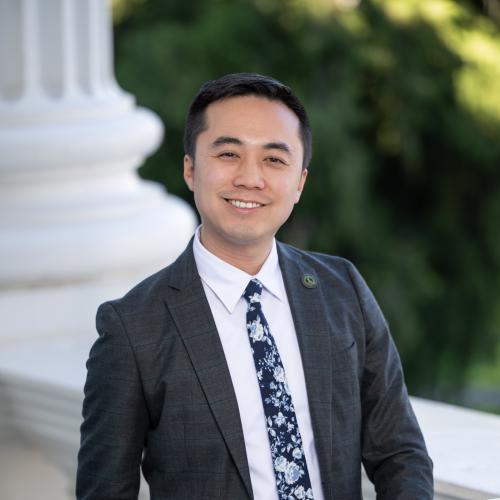
Asm. Alex Lee
Sponsored bills
The Personal Income Tax Law and California Constitution impose taxes based upon taxable income of individuals, estates, and trusts at specified rates. This bill, for taxable years beginning on or after January 1, 2021, in addition to those taxes, would impose an additional tax of at the rates of 1%, 3%, and 3.5% on that portion of a taxpayer's taxable income over specified thresholds, as provided. This bill would include a change in state statute that would result in a taxpayer paying a higher tax within the meaning of Section 3 of Article XIIIA of the California Constitution, and thus would require for passage the approval of 23 of the membership of each house of the Legislature. This bill would take effect immediately as a tax levy.
Existing law imposes various sentence enhancements, consisting of additional and consecutive terms of imprisonment, including, among others, enhancements for being armed with a firearm during the commission of a felony, being armed with a firearm during the commission of a street gang crime, as defined, being armed with ammunition designed to penetrate armor during the commission of a felony, furnishing a firearm to another for the purpose of aiding, abetting, or enabling that person to commit a felony, and using a firearm during the commission of a felony. This bill would repeal those enhancements and make conforming changes. Existing law imposes a sentence enhancement in the state prison of 10 years for personally using a firearm in the commission of specified felonies, 20 years for personally and intentionally discharging a firearm in the commission of those felonies, and 25 years to life for personally and intentionally discharging a firearm and causing great bodily injury or death to any other person during the commission of those felonies. This bill would reduce those enhancements to 1, 2, and 3 years, respectively. Existing law imposes a sentence enhancement of 5, 6, or 10 years in the state prison for, with intent to inflict great bodily injury or death, discharging a firearm from a motor vehicle in the commission of a felony and inflicting great bodily injury or death in the commission of a felony. This bill would reduce that enhancement to 1, 2, or 3 years in the state prison. This bill would additionally authorize a person serving a term for those provisions as they read on or before December 31, 2021, to petition the court for a recall of sentence and to request resentencing in accordance with these changes.
The California Emergency Services Act, among other things, establishes the Office of Emergency Services within the office of the Governor, under the charge of a Director of Emergency Services appointed by the Governor. The act and other existing laws set forth the duties and authority of the office and the director, with respect to specified emergency preparedness, mitigation, and response activities within the state. This bill would require the office to collaborate with cities hosting large-scale sporting and associated events, and to prepare for the planning, resourcing, management, and delivery of safety and security of those events. The bill would require the office to enter into a memorandum of understanding with the host cities and with other necessary parties to enhance safety and security, and would require the memorandum of understanding to comply with the state's Master Mutual Aid Agreement. This bill would require the office to prepare for the planning, resourcing, management, and delivery of safety and security at the potential 2026 FIFA World Cup hosting sites in the City of Los Angeles and the San Francisco Bay area. The bill would require the office, no later than one year from the date the final selection of host cities is made, to enter into a memorandum of understanding with the cities hosting the 2026 FIFA World Cup games, the chosen host committees, and with other necessary parties to implement those safety and security activities. The bill would repeal these provisions on January 1, 2027. The California Constitution requires the state to reimburse local agencies and school districts for certain costs mandated by the state. Statutory provisions establish procedures for making that reimbursement. This bill would provide that, if the Commission on State Mandates determines that the bill contains costs mandated by the state, reimbursement for those costs shall be made pursuant to the statutory provisions noted above.
Existing law, commonly known as the Ellis Act, generally prohibits public entities from adopting any statute, ordinance, or regulation, or taking any administrative action, to compel the owner of residential real property to offer or to continue to offer accommodations, as defined, in the property for rent or lease. Existing law authorizes any public entity that has in effect any control or system of control on the price at which accommodations are offered for rent or lease to require by statute or ordinance, or by regulation, that the owner notify the entity of an intention to withdraw those accommodations from rent or lease, and to require that the notice contain specified statements. This bill would, when a public entity has a price control system in effect, prohibit an owner of accommodations from filing a notice with a public entity of an intent to withdraw accommodations or prosecuting an action to recover possession of accommodations, or threatening to do so, if not all the owners of the accommodations have been owners of record for at least 5 continuous years, with specified exceptions, or with respect to property that the owner acquired within 10 years after providing notice of an intent to withdraw accommodations at a different property. This bill would require an owner of accommodations notifying the public entity of an intention to withdraw accommodations from rent or lease, as provided, to identify each person or entity with an ownership interest in the accommodations, as provided. That information would be available for public inspection. The bill would prohibit an owner or any person or entity with an ownership interest from acting in concert with a coowner, successor owner, prospective owner, agent, employee, or assignee to circumvent these provisions. The bill would provide specified, nonexclusive remedies for a violation. The bill would include findings that changes proposed by this bill address a matter of statewide concern rather than a municipal affair and, therefore, apply to all cities, including charter cities.
Existing law establishes the Department of Housing and Community Development in the Business, Consumer Services, and Housing Agency and makes the department responsible for administering various housing programs throughout the state, including, among others, the Multifamily Housing Program, the Housing for a Healthy California Program, and the California Emergency Solutions Grants Program. This bill would establish the Reentry Housing and Workforce Development Program. The bill would require the department, on or before July 1, 2022, to take specified actions to, upon appropriation by the Legislature, provide grants to applicants, as defined, for innovative or evidence-based housing, housing-based services, and employment interventions to allow people with recent histories of incarceration to exit homelessness and remain stably housed. The bill would require the department to establish a process, in collaboration with the Department of Corrections and Rehabilitation and with counties in which recipients are operating, for referral of participants, in accordance with certain guidelines and procedures. The bill would require the department to score applicants to the program competitively according to specified criteria. The bill would require recipients of funds from the program to use those funds for, among other things, long-term rental assistance in permanent housing, incentives to landlords, and innovative or evidence-based services to assist participants in accessing permanent supportive housing. The bill would require the department to distribute funds allocated by executing contracts with awarded entities for a term of 5 years, subject to automatic renewal. The bill would require a recipient of the program to submit an annual report to the department. The bill would require the department to hire an independent evaluator to assess outcomes from the program and would require the department to submit that analysis to specified committees of the Legislature.
Existing law establishes the California Violence Intervention and Prevention (CalVIP) Grant Program, administered by the Board of State and Community Corrections, to award competitive grants for the purpose of violence intervention and prevention. Existing law imposes various taxes, including taxes on the privilege of engaging in certain activities. The Fee Collection Procedures Law, the violation of which is a crime, provides procedures for the collection of certain fees and surcharges. This bill, the Gun Violence Prevention, Healing, and Recovery Act, would, commencing July 1, 2023, and subject to an appropriation as specified, impose an excise tax in the amount of 10% of the sales price of a handgun and 11% of the sales price of a long gun, rifle, firearm precursor part, and ammunition, as specified. The tax would be collected by the state pursuant to the Fee Collection Procedures Law. The bill would require that the revenues collected be deposited in the Gun Violence Prevention, Healing, and Recovery Fund, which the bill would establish in the State Treasury. This bill would include a change in state statute that would result in a taxpayer paying a higher tax within the meaning of Section 3 of Article XIII A of the California Constitution, and thus would require for passage the approval of 23 of the membership of each house of the Legislature. Because this bill would expand the scope of the Fee Collection Procedures Law, the violation of which is a crime, this bill would impose a state-mandated local program. The California Constitution requires the state to reimburse local agencies and school districts for certain costs mandated by the state. Statutory provisions establish procedures for making that reimbursement. This bill would provide that no reimbursement is required by this act for a specified reason. This bill would declare that it is to take effect immediately as an urgency statute.
Existing law establishes a basic speed law that prohibits a person from driving a vehicle upon a highway at a speed greater than is reasonable or prudent given the weather, visibility, traffic, and highway conditions, and in no event at a speed that endangers the safety of persons or property. This bill would authorize, until January 1, 2027, the Cities of Los Angeles, Oakland, San Jose, one city in southern California, and the City and County of San Francisco to establish the Speed Safety System Pilot Program for speed limit enforcement in certain areas, if the system meets specified requirements, including that the presence of a fixed or mobile system is clearly identified. The bill would require the participating cities or city and county to adopt a Speed Safety System Use Policy and a Speed Safety System Impact Report before implementing the program, and would require the city or city and county to engage in a public information campaign at least 30 days before implementation of the program, including information relating to when the systems would begin detecting violations and where the systems would be utilized. The bill would require the participating cities or city and county to issue warning notices rather than notices of violations for violations detected within the first 30 calendar days of the program. The bill would require the participating cities or city and county to develop uniform guidelines for, among other things, the processing and storage of confidential information. The bill would designate all photographic, video, or other visual or administrative records made by a system as confidential, and would only authorize public agencies to use and allow access to these records for specified purposes. This bill would specify that any violation of a speed law recorded by a speed safety system authorized by these provisions would be subject only to the provided civil penalties. The bill would, among other things, provide for the issuance of a notice of violation, an initial review, an administrative hearing, and an appeals process, as specified, for a violation under this program. The bill would require any program created pursuant to these provisions to offer a diversion program for indigent speed safety system violation recipients, as specified. The bill would require a city or city and county participating in the pilot program to submit reports to the Legislature, as specified, to evaluate the speed safety system to determine the system's impact on street safety and economic impact on the communities where the system is utilized. Existing law establishes a $25 filing fee for specified appeals and petitions. This bill would require a $25 filing fee for an appeal challenging a notice of violation issued as a result of a speed safety system until January 1, 2027. This bill would make legislative findings and declarations as to the necessity of a special statute for the Cities of Los Angeles, Oakland, San Jose, and the City and County of San Francisco. Existing constitutional provisions require that a statute that limits the right of access to the meetings of public bodies or the writings of public officials and agencies be adopted with findings demonstrating the interest protected by the limitation and the need for protecting that interest. This bill would make legislative findings to that effect.
(1) Existing law provides for the licensure and regulation of various professions and vocations by boards within the Department of Consumer Affairs. Existing law establishes the California Board of Accountancy, which is within the Department of Consumer Affairs, and requires the board to license and regulate accountants in this state. This bill would require the board to prescribe rules relating to the requirements established in this bill for all licensees who plan, direct, or approve any financial or compliance audit report on school districts, county offices of education, and charter schools, as described in (6) below. (2) Existing law requires the Controller, in consultation with the Department of Finance and the State Department of Education, to develop a plan to review and report on financial and compliance audits, and with representatives of other entities, to recommend the statements and other information to be included in the audit reports filed with the state by local educational agencies, and to propose the content of an audit guide. This bill would require the Education Audits Appeal Panel to include in the audit guide, Standards and Procedures for Audits of California K–12 Local Educational Agencies, certain requirements on school districts, county offices of education, charter schools, and certified public accountants and public accountants who audit local educational agencies relating to attendance accounting documentation for independent study, including requiring these certified public accountants and public accountants to analyze enrollment at a charter school classified as a nonclassroom-based charter school each fiscal year, and to report to the State Department of Education any instance where enrollment increases or decreases by more than 5% at the charter school during any month over the prior month. By imposing additional duties on local educational agencies, the bill would impose a state-mandated local program. (3) Existing law, whenever in the Education Code the power to contract is invested in the governing board of a school district or any member thereof, authorizes that power, by a majority vote of the governing board, to be delegated to its district superintendent, or to any persons the district superintendent may designate, or if there is no district superintendent, to any other officer or employee of the district that the governing board may designate, as specified. Existing law similarly authorizes the designation of school district officers or employees to exercise the authority to purchase supplies, materials, apparatus, equipment, and services on behalf of the district. In the event of malfeasance in office, existing law requires the school district officer or employee invested by the governing board with the power to contract to be personally liable for any and all moneys of the school district paid out as a result of the malfeasance. This bill would add to existing law similar provisions relating to charter school governing bodies and charter school officials that may be designated by those governing bodies in these instances. (4) Existing law establishes the State Department of Education, under the administration of the Superintendent of Public Instruction, and assigns to it numerous duties relating to the governance and financing of the public elementary and secondary schools of this state. This bill would establish the Office of Inspector General in the department. The bill would provide for the appointment of the Inspector General by the Governor, subject to confirmation by a vote of the majority of the membership of the Senate. The bill would require the Inspector General to conduct and supervise audits and investigations relating to the programs and operations of the department, to provide leadership and coordination and recommend policies to prevent and detect fraud and abuse in programs and operations of the department, and to provide a means for keeping the Superintendent and the Legislature fully and currently informed about problems and deficiencies relating to the administration of the programs and operations of the department and the necessity for and progress of corrective actions that the Inspector General deems to be appropriate. (5) Existing law, with specified exceptions, authorizes school districts to operate programs of multitrack year-round scheduling at one or more schools within the district. This bill, beginning in the 2022–23 school year, would prohibit a school district or charter school from operating a program of multitrack year-round scheduling unless a multitrack calendar is authorized by the State Board of Education due to impacted facilities, as specified. (6) Existing law requires county superintendents of schools to provide for an audit of all funds under their jurisdiction and control, and requires the governing boards of each local educational agency to either provide for an audit of the books and accounts of the agency or make arrangements with county superintendents of schools to provide for that auditing. This bill, commencing with the 2022–23 fiscal year Guide for Annual Audits of K–12 Local Education Agencies and State Compliance Reporting, would require the Controller to include instructions requiring specified supplemental information and schedules in audit report components for charter school audits. The bill would require the instructions to ensure that all school districts, county offices of education, and charter schools are audited annually. The bill would also require specified training to be provided, pursuant to regulations adopted, on or before January 1, 2023, by the California Board of Accountancy, in consultation with other entities as prescribed, to certified public accountants and public accountants who audit local educational agencies, including charter schools. The bill would also require the board, in consultation with the prescribed entities, to adopt regulations, on or before January 1, 2023, providing for peer review of certified public accountants and public accountants, as specified. (7) Existing law requires the Commission on Teacher Credentialing, among other duties, to establish standards for the issuance and renewal of credentials, certificates, and permits. Existing law requires a county superintendent of schools to monitor and review school district certificated employee assignment practices, as provided. Existing law requires a county superintendent of schools to submit an annual report to the commission and the State Department of Education summarizing the results of all assignment monitoring and reviews. Existing law requires the commission to administer a State Assignment Accountability System to provide local educational agencies with a data system for assignment monitoring. Existing law requires the commission to annually use data it receives from the department to produce an initial data file of vacant positions and assignments that do not have a clear match of credential to assignment. Existing law requires a monitoring authority to review and determine any potential misassignments, as defined, reported in and identified through the system for local educational agencies within its authority, as provided. Existing law grants the commission the authority to make a final determination for all potential misassignments. Existing law requires, commencing with the 2020-21 school year, the commission to make annual misassignment and vacant position data publicly available on its internet website. Existing law specifies that, for these purposes, in a charter school, "misassignment" applies only to employees in teaching positions. This bill would delete the provision that limits the application of "misassignment" in charter schools only to employees in teaching positions. To the extent that this provision would create new duties for county superintendents of schools, it would constitute a state-mandated local program. The bill would require teachers of certain courses offered by a local educational agency to hold the certificate, permit, or other document required by the commission for that assignment and be monitored. The bill would require any person who is employed by a vendor providing direct services to pupils at a local educational agency for which certification qualifications are established to hold the certificate, permit, or other document required by the commission for their assignment, or would require supervision of pupils by an appropriate credentialholder, as specified, during services provided by the vendor. The bill would require direct services to pupils provided by the vendor to be standards-aligned curriculum. (8) Existing law establishes a system of financing public elementary and secondary schools in this state. This system includes the apportionment of state funds to local educational agencies based, to a significant degree, on the average daily attendance of pupils as reported to the State Department of Education by those local educational agencies. This bill would require the department to provide a report, including specified data, to the Legislature relating to the possible integration of the California Longitudinal Pupil Achievement Data System and the average daily attendance apportionment data system. The bill would authorize the State Board of Education to adopt regulations as it deems appropriate and consistent with these provisions. The bill would also, upon the operative date of the bill, require, as specified, the state board to adopt regulations specifying that the record of daily engagement is no longer required of a charter school day of nonclassroom-based independent study attendance. (9) The Charter Schools Act of 1992 authorizes the establishment, operation, and governance of charter schools. Existing law requires a petition to establish a charter school to include reasonably comprehensive descriptions of certain things, including the manner in which annual, independent financial audits shall be conducted, and the manner in which audit exceptions and deficiencies shall be resolved to the satisfaction of the chartering authority. The bill would require, not later than May 1 of each fiscal year, each chartering authority to provide for an audit of all funds of charter schools authorized by that authority, and would expressly require the governing body of each charter school to either provide for an audit of the books and accounts of the charter school or to make arrangements with the chartering authority to provide for that audit, as specified. The bill would require each chartering authority to certify specified data relating to the verification of the reporting of average daily attendance by nonclassroom-based charter schools. The bill would require the state board, in consultation with the Superintendent, to revise regulations to require charter schools to report periodic and annual financial data in the same manner and on the same form prescribed for school districts. The bill would phase in, from the 2023–24 fiscal year to the 2025–26 fiscal year, inclusive, and based on the average daily attendance of the charter school, the requirement that charter schools report this data in the same manner and on the same form prescribed for school districts. The bill would require the state board to appoint an advisory committee on charter schools that would include representatives from school district superintendents, charter schools, teachers, members of the governing boards of school districts, county superintendents of schools, and the Superintendent. The bill would limit the size of the totality of nonclassroom-based charter schools that a school district may authorize based on the average daily attendance of the school district. The bill would establish the Charter Authorizing Support Team program, which would be implemented only upon an appropriation for its purposes in the annual Budget Act or other statute, to be administered by the County Office Fiscal Crisis and Management Assistance Team, as an initiative to expand uniform charter school authorizing and oversight practices. The bill would specify the goals and proposed activities of the program, including the appointment of a 12-member advisory board with designated membership and responsibilities. The bill would require the Legislative Analyst's Office to submit to the Governor and the appropriate education policy and budget committees, on or before December 1, 2026, an evaluation of the program. The bill would require charter schools, in addition to complying with existing requirements relating to minimum minutes of instruction, to adhere to designated minimum schoolday requirements in applicable statutes generally relating to school districts. Existing law authorizes a chartering authority to charge for the actual costs of supervisorial oversight of a charter school (A) not to exceed 1% of the revenue of the charter school, or (B) not to exceed 3% of the revenue of the charter school if the charter school is able to obtain substantially rent-free facilities from the chartering authority. The bill would gradually change the costs a chartering authority can charge such that, on and after July 1, 2023, the chartering authority could charge for the actual costs of supervisorial oversight of a charter school (A) not to exceed 3% of the revenue of the charter school, or (B) not to exceed 2% of the revenue of the charter school if the charter school is able to obtain substantially rent-free facilities from the chartering authority. On and after July 1, 2022, the bill would require charter schools to comply with specified requirements relating to the expenditure of public funds for the payment of vendors, and would require the extent of the charter school's compliance with these requirements to be reviewed and reported as part of the annual, independent financial audit that the charter school is required to submit. The bill would revise and recast provisions of the act relating to the reporting of average daily attendance by charter schools, and would distinguish between the reporting of average daily attendance for classroom-based instruction and the reporting of average daily attendance for nonclassroom-based instruction. To the extent that these additions to the act would impose new duties on local educational agencies, they would constitute a state-mandated local program. The bill would also make various conforming changes to the act. (10) Existing law requires community school and independent study average daily attendance to be claimed by school districts, county superintendents of schools, and charter schools only for pupils who are residents of the county in which the apportionment claim is reported, or who are residents of a county immediately adjacent to the county in which the apportionment claim is reported. This bill would delete the provision allowing community school and independent study average daily attendance to be claimed by nonclassroom-based charter schools for residents of a county immediately adjacent to the county in which the apportionment claim is reported. (11) Existing law authorizes the governing boards of school districts and county offices of education to offer independent study to meet the educational needs of pupils when certain requirements are met. Existing law prohibits courses that are required for high school graduation from being offered exclusively through independent study. This bill would recast and revise provisions related to the calculation of average daily attendance for independent study pupils, and extend the scope of those provisions to charter schools. These provisions would become operative on July 1, 2022. (12) Existing law prohibits a school district or county office of education from being eligible to receive apportionments for independent study by pupils unless the school district or county office has adopted written policies, and implemented those policies, in accordance with rules and regulations adopted by the Superintendent, as specified. This bill would extend this prohibition to charter schools, and would add requirements to the independent study policies and procedures. The bill would require that an independent study written agreement, with specified content, be agreed to and signed, under penalty of perjury. This provision would impose a state-mandated local program by imposing new duties on local educational agencies and by creating a new crime. The bill would require the course of study, including specific courses, offered through independent study to be annually certified by a school district, county office of education, or charter school governing board or body resolution, to be of the same rigor and educational quality as an equivalent classroom-based course of study, and to be aligned to relevant local and state content standards. These provisions would become operative on July 1, 2022, and to the extent that they impose new duties on local educational agencies, would constitute a state-mandated local program. (13) This bill would make certain provisions relating to independent study, and rendered duplicative by other provisions added by this bill, inoperative on July 1, 2022, and would repeal these provisions as of January 1, 2023. (14) The Local Agency Public Construction Act regulates, among other things, the letting of contracts by school district governing boards involving an expenditure of more than $50,000 for specified purposes, including the purchase of equipment, materials, or supplies to be furnished, sold, or leased to the district, services other than construction services, and repairs, including maintenance, as defined. This bill would extend to charter schools the provisions of the act that currently apply to school districts. To the extent the bill would impose additional duties on charter schools, the bill would impose a state-mandated local program. (15) The California Constitution requires the state to reimburse local agencies and school districts for certain costs mandated by the state. Statutory provisions establish procedures for making that reimbursement. This bill would provide that with regard to certain mandates no reimbursement is required by this act for a specified reason. With regard to any other mandates, this bill would provide that, if the Commission on State Mandates determines that the bill contains costs so mandated by the state, reimbursement for those costs shall be made pursuant to the statutory provisions noted above.
The California Drought, Water, Parks, Climate, Coastal Protection, and Outdoor Access For All Act of 2018, approved by the voters as Proposition 68 at the June 5, 2018, statewide primary direct election, authorizes the issuance of bonds in the amount of $4,100,000,000 pursuant to the State General Obligation Bond Law to finance a drought, water, parks, climate, coastal protection, and outdoor access for all program. Article XVI of the California Constitution requires measures authorizing general obligation bonds to specify the single object or work to be funded by the bonds and further requires a bond act to be approved by a 23 vote of each house of the Legislature and a majority of the voters. This bill would enact the Safe Drinking Water, Wildfire Prevention, Drought Preparation, Flood Protection, Extreme Heat Mitigation, and Workforce Development Bond Act of 2022, which, if approved by the voters, would authorize the issuance of bonds in the amount of $7,080,000,000 pursuant to the State General Obligation Bond Law to finance projects for safe drinking water, wildfire prevention, drought preparation, flood protection, extreme heat mitigation, and workforce development programs. This bill would provide for the submission of these provisions to the voters at the June 7, 2022, statewide primary election. This bill would declare that it is to take effect immediately as an urgency statute.