

Under existing law, the State Water Resources Control Board and the 9 California regional water quality control boards regulate water quality and prescribe waste discharge requirements in accordance with the federal national pollutant discharge elimination system (NPDES) permit program established by the federal Clean Water Act and the Porter-Cologne Water Quality Control Act. Existing law requires each regional board to formulate and adopt water quality control plans for all areas within the region, as provided. Existing law authorizes the imposition of civil penalties for violations of certain waste discharge requirements and requires that penalties imposed pursuant to these provisions be deposited into the Waste Discharge Permit Fund, to be expended by the state board, upon appropriation by the Legislature, for specified purposes related to water quality. For violations of certain other waste discharge requirements, including the violation of a waste discharge requirement effluent limitation, existing law imposes specified civil penalties, the proceeds of which are deposited into the continuously appropriated State Water Pollution Cleanup and Abatement Account, which is established in the State Water Quality Control Fund. This bill would require, by January 1, 2023, the state board and regional boards to prioritize enforcement of all water quality standard violations that are causing or contributing to an exceedance of a water quality standard in a surface water of the state. The bill would require the state board and regional boards, by January 1, 2025, to evaluate impaired state surface waters and report to the Legislature a plan to bring all water segments into attainment by January 1, 2050. The bill would require the state board and regional boards to update the report with a progress summary to the Legislature every 5 years. The bill would create the Waterway Recovery Account in the Waste Discharge Permit Fund and would make moneys in the Waterway Recovery Account available for the state board to expend, upon appropriation by the Legislature, to bring impaired water segments into attainment in accordance with the plan. The bill would require penalties obtained pursuant to the above-described prioritized enforcement of water quality standards to be deposited into the Waterway Recovery Account. The bill would require, by January 1, 2026, and subject to a future legislative act, 50% of the annual proceeds of the State Water Pollution Cleanup and Abatement Account to be annually transferred to the Waterway Recovery Account. The bill would require the state board, upon appropriation by the Legislature, to expend 5% of the annual proceeds of the State Water Pollution Cleanup and Abatement Account to fund a specified state board program.
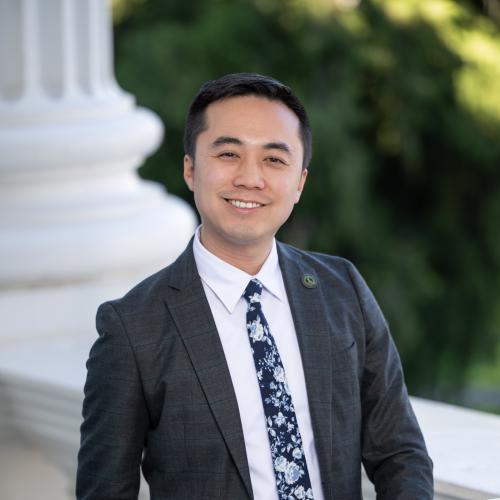
Asm. Alex Lee
Sponsored bills
The California Global Warming Solutions Act of 2006 designates the State Air Resources Board as the state agency charged with monitoring and regulating sources of emissions of greenhouse gases. The state board is required to approve a statewide greenhouse gas emissions limit equivalent to the statewide greenhouse gas emissions level in 1990 to be achieved by 2020 and to ensure that statewide greenhouse gas emissions are reduced to at least 40% below the 1990 level by 2030. The act requires the state board to prepare and approve a scoping plan for achieving the maximum technologically feasible and cost-effective reductions in greenhouse gas emissions, and to update the plan not less than every 5 years. Under the act, a violation of a rule, regulation, order, emission limitation, emission reduction measure, or other measure adopted by the state board under the act is a crime. This bill would require the state board to ensure that statewide greenhouse gas emissions are reduced to at least 40% and up to 80% below the 1990 level by 2030. By expanding the scope of a crime, this bill would imposed a state-mandated local program. The bill would adopt a state policy to lead a global effort to restore oceanic and atmospheric concentrations of greenhouse gas emissions to preindustrial levels as soon as possible to secure a safe climate for all, and to restore community health and reverse the impacts from the damage and injustice climate change is causing to the people, the economy, and the environment of California. The bill would require the Secretary of the Natural Resources Agency, in coordination with the Secretary for Environmental Protection and the State Air Resources Board, and concurrent with the scoping plan, to develop a climate restoration plan that specifies carbon removal targets, before 2035, as necessary to facilitate achievement of those goals. Existing law establishes the Integrated Climate Adaptation and Resiliency Program, administered by the Office of Planning and Research, to coordinate regional and local efforts with state climate adaptation strategies to adapt to the impacts of climate change, as specified. This bill would require the office, in collaboration with various state entities, to develop criteria to ensure that public expenditures for projects that address climate change resilience protect the most vulnerable communities first, rectify intersectional and systemic inequities, and enhance low-income and vulnerable communities' labor standards, workers' rights, career pathways, and community benefits. The California Constitution requires the state to reimburse local agencies and school districts for certain costs mandated by the state. Statutory provisions establish procedures for making that reimbursement. This bill would provide that no reimbursement is required by this act for a specified reason.
Existing law, the California Building Standards Law, establishes the California Building Standards Commission within the Department of General Services and sets forth its powers and duties, including approval and adoption of building standards and codification of those standards into the California Building Standards Code. Existing law, the Warren-Alquist State Energy Resources Conservation and Development Act, requires the State Energy Resources Conservation and Development Commission to adopt, among other regulations, lighting and other building design and construction standards that increase efficiency in the use of energy for new residential and nonresidential buildings to reduce the wasteful, uneconomic, inefficient, or unnecessary consumption of energy, including energy associated with the use of water and to manage energy loads to help maintain electrical grid reliability. Existing law also requires the commission to adopt standards for minimum levels of operating efficiency and other cost-effective measures to promote the use of certain energy- and water-efficient appliances. This bill would state the intent of the Legislature to enact legislation relating to the regulation of residential and outdoor light-emitting diodes (LED) fixtures that create artificial light pollution at night, which causes harmful environmental and public health effects.
Existing law imposes various taxes, including personal income and excise taxes. The California Constitution requires a 23 vote of both houses of the Legislature for the passage of any change in statute that results in any taxpayer paying a higher tax. The California Constitution generally prohibits the total annual appropriations subject to limitation of the state and each local government from exceeding the appropriations limit of the entity of government for the prior fiscal year, adjusted for the change in the cost of living and the change in population, and prescribes procedures for making adjustments to the appropriations limit. This measure would impose an excise tax, payroll taxes, and a State Personal Income CalCare Tax at specified rates to fund comprehensive universal single-payer health care coverage and a health care cost control system for the benefit of every resident of the state, as well as reserves deemed necessary to ensure payment, to be established in statute. The measure would authorize the Legislature, upon an economic analysis determining insufficient amounts to fund these purposes, to increase any or all of these tax rates by a statute passed by majority vote of both houses of the Legislature. This measure would establish the CalCare Trust Fund in the State Treasury and would deposit these tax revenues in the fund for the purpose of funding this health care coverage, cost control system, and reserves, and would authorize the Legislature to appropriate these funds by a statute passed by a majority vote of the membership of both houses. The measure would exclude appropriations of revenues from the CalCare Trust Fund from the limitation on appropriations and from consideration for purposes of educational funding mandated by the California Constitution. This measure would prohibit the above-described provisions from becoming operative until the later operative date of a statute that establishes comprehensive universal single-payer health care coverage, a health care cost control system, and necessary reserves, and a statute that establishes the administration, collection, and enforcement of the excise tax, payroll taxes, and a State Personal Income CalCare Tax imposed by the measure.
Existing law generally authorizes a court to dismiss an action or to strike or dismiss an enhancement in the furtherance of justice. This bill would, except as specified, require a court to dismiss an enhancement if it is in the furtherance of justice to do so. The bill would require a court to consider and afford great weight to evidence offered by the defendant to prove that specified mitigating circumstances are present. The bill would provide that proof of the presence of one or more specified mitigating circumstances weighs greatly in favor of dismissing an enhancement, unless the court finds that dismissal would endanger public safety, as defined.
(1) Existing law, notwithstanding the requirement that each person between 6 and 18 years of age who is not otherwise exempted is subject to compulsory full-time education, requires a pupil to be excused from school for specified types of absences, including, among others, if the absence was due to the pupil's illness. This bill would include, within the meaning of an absence due to a pupil's illness, an absence for the benefit of the pupil's mental or behavioral health. The bill would require the State Board of Education to update its illness verification regulations, as necessary, to account for including a pupil's absence for the benefit of the pupil's mental or behavioral health within the scope of this provision. To the extent this bill would impose additional duties on local educational entities, the bill would impose a state-mandated local program. (2) Existing law requires the governing board of a school district to give diligent care to the health and physical development of pupils and authorizes the governing board of a school district to employ properly certified persons for the work. Existing law requires a school of a school district or county office of education and a charter school to notify pupils and parents or guardians of pupils no less than twice during the school year on how to initiate access to available pupil mental health services on campus or in the community, or both, as provided. This bill, contingent on an appropriation made for these purposes, would require the State Department of Education, on or before January 1, 2023, to recommend best practices and identify evidence-based, as defined, and evidence-informed, as defined, training programs for schools to address youth behavioral health, including, but not necessarily limited to, staff and pupil training, as specified. The bill would define a local educational agency for purposes of these provisions to mean a county office of education, school district, state special school, or charter school that serves pupils in any of grades 7 to 12, inclusive. (3) This bill would incorporate additional changes to Section 48205 of the Education Code proposed by AB 516 to be operative only if this bill and AB 516 are enacted and this bill is enacted last. (4) The California Constitution requires the state to reimburse local agencies and school districts for certain costs mandated by the state. Statutory provisions establish procedures for making that reimbursement. This bill would provide that, if the Commission on State Mandates determines that the bill contains costs mandated by the state, reimbursement for those costs shall be made pursuant to the statutory provisions noted above. (5) This bill would declare that it is to take effect immediately as an urgency statute.
Existing law establishes the State Department of Social Services in the Health and Welfare Agency and sets forth its powers and duties relating to the administration of various programs relating to public social services. This bill would enact the Community Response Initiative to Strengthen Emergency Systems Act, or the C.R.I.S.E.S. Act, for purposes of creating, implementing, and evaluating the C.R.I.S.E.S. Grant Pilot Program, which the act would establish. The bill would require the department to administer the program if appropriate funding is made available to the department. The bill would require the department to award grants to qualified grantees, which include city, county, and tribal departments of social services, disability services, health services, public health, or behavioral health, based on grant eligibility criteria developed in partnership with a stakeholder workgroup. This bill would require each grantee to receive a minimum award of $250,000 per year under the program. The bill would require a grantee to award at least 90% of grant funds received to one or more qualifying community-based organizations, as defined. The bill would require funds awarded under the program to be utilized to create and strengthen community-based alternatives to law enforcement to lessen the reliance on law enforcement agencies as first responders to crisis situations unrelated to a fire department or emergency medical service response. This bill would require a grantee to report at least annually to the department on the use of funding awarded under the program. The bill would require the department to convene a stakeholder workgroup consisting of specified individuals to make recommendations to the department regarding the implementation of the program, as specified. This bill would establish the Community Response Initiative to Strengthen Emergency Systems Program Fund within the State Treasury, and would provide that, upon appropriation by the Legislature, the moneys may be expended by the department for purposes of the program. The bill would prohibit the department from expending more than 5% of appropriated funds on administrative costs, as specified. The bill would require the department to award all grants by January 1, 2023. This bill would authorize the department to implement, interpret, or make specific the provisions of the program without taking regulatory action, as specified. The bill would grant immunity to the state from liability resulting from the activities of a grantee or community-based organization under the program. This bill would repeal these provisions on June 30, 2026.
Under existing law, classified employees of school districts and community college districts subject to layoff as a result of the expiration of a specially funded program at the end of a school year are required to be given written notice on or before April 29 informing them of certain rights. Existing law also requires that notice be given not less than 60 days before the effective layoff date if the termination date of a specially funded program is other than June 30, or if classified employees are subject to layoff as a result of a bona fide reduction or elimination of a service performed by a department. This bill instead would revise and recast provisions relating to the layoff of classified employees of school districts and community college districts to require certain notices and opportunities for a hearing when a permanent classified employee's services will not be required for the ensuing year due to lack of work or lack of funds. The bill would, for the purposes of specified notice and hearing rights, define "permanent classified employee" to include both an employee who was permanent at the time the notice or right to a hearing was required and an employee who became permanent after the date of the required notice. The bill would express the intent of the Legislature in enacting the bill to provide permanent classified school employees and those who become permanent classified school employees with the same rights to notice and hearing with respect to layoffs as are provided to certificated employees of school districts, including teachers and administrators, and academic employees of community college districts. If classified positions must be eliminated as a result of the expiration of a specially funded program, the bill would require written notice of the layoff date and certain rights be given to the classified employees not less than 60 days before the effective layoff date. If, after January 1, 2021, the Legislature provides certificated or academic employees with any additional rights to notice or hearing as to layoffs, the bill would require the respective permanent classified employees, as described, to be afforded the same rights by the school district or community college district, as applicable. To the extent school districts and community college districts are required to perform additional duties, the bill would impose a state-mandated local program. The California Constitution requires the state to reimburse local agencies and school districts for certain costs mandated by the state. Statutory provisions establish procedures for making that reimbursement. This bill would provide that, if the Commission on State Mandates determines that the bill contains costs mandated by the state, reimbursement for those costs shall be made pursuant to the statutory provisions noted above.
(1) Existing law requires a pupil to complete designated coursework while in grades 9 to 12, inclusive, in order to receive a diploma of graduation from high school. These graduation requirements include, among others, the completion of 3 years of courses in English and 3 years of courses in social studies, including one-year courses in United States history and geography and world history, culture, and geography, a one-semester course in American government and civics, and a one-semester course in economics. Existing law requires the Instructional Quality Commission to develop, and the State Board of Education to adopt, modify, or revise, a model curriculum in ethnic studies. Existing law also encourages each school district and charter school that maintains any of grades 9 to 12, inclusive, and that does not otherwise offer a standards-based ethnic studies curriculum to offer, beginning in the school year following the adoption of the model curriculum, a course of study in ethnic studies based on the model curriculum. This bill would add the completion of a one-semester course in ethnic studies, meeting specified requirements, to the graduation requirements commencing with pupils graduating in the 2029–30 school year, including for pupils enrolled in a charter school. The bill would expressly authorize local educational agencies, including charter schools, to require a full-year course in ethnic studies at their discretion. The bill would require local educational agencies, including charter schools, to offer an ethnic studies course commencing with the 2025–26 school year, as specified. The bill would authorize, subject to the course offerings of a local educational agency, including a charter school, a pupil to satisfy the ethnic studies course requirement by completing either (A) a course based on the model curriculum in ethnic studies developed by the commission, (B) an existing ethnic studies course, (C) an ethnic studies course taught as part of a course that has been approved as meeting the A–G requirements of the University of California and the California State University, or (D) a locally developed ethnic studies course approved by the governing board of the school district or the governing body of the charter school. The bill would prohibit a course that does not use ethnic studies content as the primary content through which the subject is taught from being used to satisfy the ethnic studies course requirement. The bill would require a pupil who completes a course described above to also accrue credit for coursework in the subject that the course is offered, including, if applicable, credit towards satisfying a course required for a diploma of graduation from high school. These provisions would become operative only upon an appropriation of funds by the Legislature for these purposes in the annual Budget Act or another statute. Because the bill would add new duties to local educational agencies, it would constitute a state-mandated local program. (2) The California Constitution requires the state to reimburse local agencies and school districts for certain costs mandated by the state. Statutory provisions establish procedures for making that reimbursement. This bill would provide that, if the Commission on State Mandates determines that the bill contains costs mandated by the state, reimbursement for those costs shall be made pursuant to the statutory provisions noted above.