

Existing law creates the Santa Clara Valley Transportation Authority (VTA) with various powers and duties relative to transportation projects and services and the operation of public transit in the County of Santa Clara. Existing law vests the government of the VTA in a 12-member board of directors whose terms of office are two years. Under existing law, only members of the county board of supervisors and city council members and mayors of cities in the county are authorized to serve on the board. Existing law provides for the appointment of the board members by those local governments, as specified. This bill, on and after July 1, 2022, would reduce the size of the board to 9 members, increase their terms of office to 4 years, and provide for residents living in the county, rather than local officials, to serve on the board, as specified. The bill would require that expertise, experience, or knowledge relative to transportation, infrastructure or project management, accounting or finance, and executive management are represented on the board.
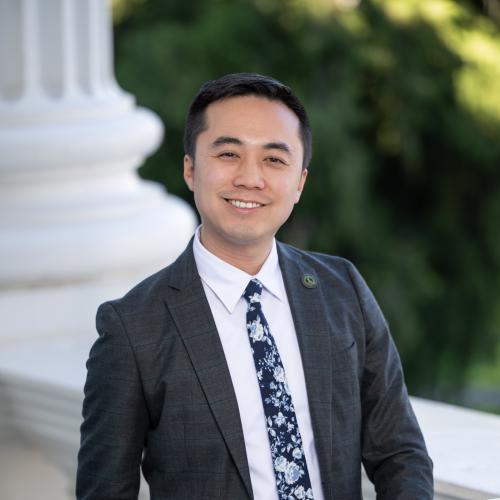
Asm. Alex Lee
Sponsored bills
(1) The Personal Income Tax Law, in conformity with federal income tax law, generally defines gross income as income from whatever source derived, except as specifically excluded, and provides various exclusions from gross income. Existing federal law, for purposes of determining a taxpayer's gross income for federal income taxation, requires that a person who is a United States shareholder of any controlled foreign corporation to include in their gross income the global intangible low-taxed income for that taxable year, as provided. This bill, for taxable years beginning on or after January 1, 2022, would include a taxpayer's global intangible low-taxed income in their gross income for purposes of the Personal Income Tax Law, in modified conformity with the above-described federal provisions. The bill would exempt any regulation, standard, criterion, procedure, determination, rule, notice, or guideline established or issued by the Franchise Tax Board to implement its provisions from the rulemaking provisions of the Administrative Procedure Act. The Corporation Tax Law, when the income of a taxpayer subject to tax under that law is derived from or attributable to sources both within and without the state, generally requires that the tax be measured by the net income derived from or attributable to sources within this state, as provided. Notwithstanding this requirement, the Corporation Tax Law authorizes a qualified taxpayer, as defined, to elect to determine its income derived from or attributable to sources within this state pursuant to a water's-edge election, as provided. For taxable years beginning on or after January 1, 2003, existing law requires that a water's-edge election be made on an original, timely filed return for the year of the election, as provided, and provides for the continued effect or termination of that election. This bill, beginning January 1, 2022, would require that a taxpayer that makes a water's-edge election under these provisions take into account 50% of the global intangible low-taxed income and 40% of the repatriation income of its affiliated corporations, as those terms are defined. The bill would allow a taxpayer, for calendar year 2022 only, the opportunity to revoke a water's-edge election if the taxpayer includes global intangible low-taxed income pursuant to these provisions. The bill would prohibit the total of all business credits, as defined, and all credits allowed under specified provisions of the Corporation Tax Law, with specified exceptions, from reducing the additional tax liability added by this bill's provisions by more than $5,000,000, as provided. The bill would exempt any regulation, standard, criterion, procedure, determination, rule, notice, or guideline established or issued by the Franchise Tax Board to implement its provisions from the rulemaking provisions of the Administrative Procedure Act. This bill would state the intent of the Legislature that any revenue resulting from the above-described changes to the Personal Income Tax Law and the Corporation Tax Law be used for purposes of the Bring California Home Act, as described below. (2) Existing law requires the Governor to create the Homeless Coordinating and Financing Council (council) . Existing law specifies the duties of the coordinating council, including creating partnerships among state agencies and departments, local government agencies, and specified federal agencies and private entities, for the purpose of arriving at specific strategies to end homelessness. Existing law requires the Governor to appoint up to 19 members of the council, including representatives from specified state agencies and departments, and a formerly homeless person and a formerly homeless youth who both live in California, and requires the Senate Committee on Rules and the Speaker of the Assembly to each appoint one member to the council from 2 different stakeholder organizations. This bill would delete the provisions relating to the appointment authority of the Governor and the Legislature, and would instead restructure the council, including requiring the council to be composed of prescribed individuals, including the directors of specified state agencies and departments, such as the State Department of Public Health. The bill would require the council to seek guidance from, and meet with, an advisory committee composed of specified individuals, including a survivor of gender-based violence who formerly experienced homelessness and a formerly homeless person who lives in California. This bill would require the council, its technical services provider, or an entity with which the council contracts to identify, analyze, and collect various data in regards to homelessness in this state, including identifying state programs that provide housing or housing-based services to persons experiencing homelessness, as provided. The bill would require the council to report on this information to specified committees of the Legislature by July 31, 2022. The bill would require the council to seek technical assistance offered by the United States Department of Housing and Urban Development, if available, for purposes of conducting this statewide needs and gaps analysis. The bill would require a state department or agency with a member on the council to assist in data collection for the analysis by responding to data requests within 180 days, as specified. The bill would require the council to convene a funder's workgroup, composed of specified individuals, including staff of the council and staff working for agencies or departments represented on the council, to accomplish prescribed goals, and would authorize that workgroup to invite philanthropic organizations focused on ending homelessness, reducing health disparities, ending domestic violence, or ensuring Californians do not exit foster care or incarceration to homelessness to participate in specific meetings. The bill would require the workgroup to perform specified duties, including collaborating with state agency staff to develop a universal application for service providers and other entities to apply to agencies and departments represented on the council for funding for homeless services and housing, and to coordinate state agencies and departments to reduce the risk of long-term homelessness by developing specific protocols and procedures that accomplish prescribed goals, such as assisting individuals reentering communities from jails and prisons with housing navigation, housing acquisition support, and obtaining permanent housing. Existing law requires agencies and departments administering state programs to collaborate with the council to adopt guidelines to revise or adopt guidelines and regulations to incorporate core components of Housing First, as provided. Existing law defines "state programs" for these purposes to mean any programs a California state agency or department funds, implements, or administers for the purpose of providing housing or housing-based services to people experiencing homelessness or at risk of homelessness, but excludes federally funded programs with inconsistent requirements or programs that fund emergency shelters. This bill would delete the exclusion for programs that fund emergency shelters from this definition of "state programs," thereby expanding the scope of programs required to incorporate core components of Housing First, as described above. (3) Existing law establishes, among various other programs intended to address homelessness in this state, the Homeless Housing, Assistance, and Prevention program for the purpose of providing jurisdictions with one-time grant funds to support regional coordination and expand or develop local capacity to address their immediate homelessness challenges informed by a best-practices framework focused on moving homeless individuals and families into permanent housing and supporting the efforts of those individuals and families to maintain their permanent housing. Existing law provides for the allocation of funding under the program among continuums of care, cities, and counties in 2 rounds, the first of which is administered by the Business, Consumer Services, and Housing Agency and the second of which is administered by the coordinating council. This bill would enact the Bring California Home Act, which would establish the Bring California Home Fund in the State Treasury and continuously appropriate moneys in that fund for the purpose of implementing that act. The bill would require the Controller to annually transfer specified amounts, determined as provided by the Franchise Tax Board based on the above-described changes made by this bill to the Personal Income Tax Law and the Corporation Tax Law, to the Bring California Home Fund. The bill would require that recipients and subrecipients under the program ensure that any expenditure of moneys allocated to them serve the eligible population, unless otherwise expressly provided in the bill. The bill would define various terms for these purposes. The bill would require the council to administer allocations to counties and continuums of care that apply jointly and to large cities, as provided. The bill would require the council to set aside $200,000,000 for bonus awards, as provided. Of the remaining amount in the fund, the bill would require the council to allocate 60% to counties and continuums of care applying jointly and 40% to large cities, in accordance with a specified formula and subject to certain requirements. The bill would establish eligibility criteria for a county and continuum of care or a large city to receive an allocation under these provisions and specify the eligible uses for those moneys. The bill would authorize a jointly applying county and continuum of care to request that the State Department of Social Services contract with local agencies or nonprofit organizations providing the housing and housing-based services under the program in exchange for a percentage of the allocation to the county and continuum of care for administrative costs, as provided. The bill would require the council to allocate available funding in 2-year cycles, with the first round allocated no later than March 31, 2023, and to develop a simple application that an eligible entity may use to apply for funding, as well as common standards for recipients to monitor, report, and ensure accountability, provide services, and subsidize housing. The bill would require the council and each recipient to establish performance outcomes for the initial cycle and to establish outcome goals before each subsequent grant cycle, as provided, and require the council to award bonus funding to a recipient, if the recipient has achieved those performance outcomes, or reduce or deny that bonus funding the if the recipient has not achieved those performance outcomes. The bill, except as otherwise provided, would require each recipient to contractually obligate 100% of the amount allocated to it within 3 years, for the first grant cycle, or 1 year, for each subsequent cycle, and to expend the entirety of that amount within 4 years, for the first grant cycle, or 2 years, for each subsequent cycle. If a recipient fails to comply with these deadlines, uses moneys allocated to it for an unauthorized purpose, or fails to apply for an allocation within the initial award cycle, the bill would require the council to either select an alternative entity to administer the recipient's allocation in accordance with specified requirements or solely establish performance outcomes and program priorities for that recipient jurisdiction and work with local, regional, or statewide entities to administer the allocation on behalf of the recipient. The bill would require each recipient to annually report to the council specified information relating to allocations made under these provisions. The bill would require the council to conduct regular monitoring and audits of the activities and outcomes of recipients that are joint county-continuum of care applicants or large cities. No later than January 1, 2024, and every 5th January 1 thereafter, the bill would require the council to evaluate the outcomes of this program and submit a report, containing specified information, to specified committees of the Legislature. The bill would require the council to establish an advisory committee to inform state and local policies, practices, and programs with respect to the experiences of specified demographic groups experiencing homelessness. (4) Existing law provides for the Medi-Cal program, which is administered by the State Department of Health Care Services, under which qualified low-income individuals receive health care services pursuant to a schedule of benefits. The Medi-Cal program is, in part, governed and funded by federal Medicaid program provisions. By January 1, 2025, this bill would require the department to seek federal approval for a Medi-Cal benefit to fund prescribed services, including housing navigation and housing acquisition support services, for beneficiaries experiencing homelessness, to convene a stakeholder advisory group representing counties, health care consumers, and homeless advocates in developing this plan, to work with counties to determine an effective process for funding the state's share of the federal medical assistance percentage, and to pursue philanthropic funding to carry out the administrative duties related to these provisions. The bill would authorize the department to use up to 20% of the county-continuum allocation from the Bring California Home Fund, as described above, to pay for the state's federal medical assistance percentage associated with this benefit. (5) This bill would declare that it is to take effect immediately as an urgency statute.
Existing law, the Ralph C. Dills Act (Dills Act) , governs collective bargaining between the state and recognized state public employee organizations. Existing law excludes certain employees from coverage under the Dills Act, including, among others, managerial employees, supervisory employees, and confidential employees, as defined. Existing law creates the Public Employment Relations Board and authorizes it, among other things, to determine appropriate state employee bargaining units, as specified. This bill would enact the Legislature Employer-Employee Relations Act, to provide employees of the Legislature, including some supervisory and managerial employees, the right to form, join, and participate in the activities of employee organizations of their own choosing for the purpose of representation on all matters of employer-employee relations. The bill would prescribe rights, duties, and prohibitions in this context that parallel those in the Dills Act. The bill would prohibit the Public Employment Relations Board from including employees of the Legislature in a bargaining unit that includes employees other than those of the Legislature. The bill would make it a misdemeanor for any person to willfully resist, prevent, impede, or interfere with any member of the board, or any of its agents, in the performance of duties pursuant to its provisions. By expanding the definition of a crime, this bill would impose a state-mandated local program. The bill would provide that the provisions of the Legislature Employer-Employee Relations Act are severable. The California Constitution requires the state to reimburse local agencies and school districts for certain costs mandated by the state. Statutory provisions establish procedures for making that reimbursement. This bill would provide that no reimbursement is required by this act for a specified reason.
Existing law provides for the housing of juvenile wards of the court in juvenile facilities, including juvenile halls and forestry camps. Existing law requires the Board of State and Community Corrections to adopt minimum standards for the operation and maintenance of juvenile halls for the confinement of minors. Existing law requires the judge of the juvenile court of the county to annually inspect any jail or juvenile hall that was used for the confinement of any minor and to notify the operator of the jail or juvenile hall of any observed noncompliance with the minimum standards of the juvenile facility adopted by the board. This bill would prohibit the use or storage of a chemical agent, as defined, with the exception of oleoresin capsicum (OC) spray, inside, or on the grounds of, a juvenile facility. The bill would prohibit, commencing July 1, 2024, the use of a chemical agent against a juvenile who is under 18 years of age or in any space where a juvenile who is under 18 years of age is present. The bill would require an entity that manages, operates, or owns a juvenile facility to dispose of all chemical agents, with the exception of OC spray, in its possession on or before December 31, 2023, and to notify the board of that disposition. The bill would require the custodian of each juvenile facility to report quarterly to the board on the use of a chemical agent in the facility, as provided. The bill would require the Legislative Analyst's Office to submit to the Legislature a report on model practices and protocols for alternatives to the use of chemical agents in juvenile facilities, as specified. The bill would require the board to develop training, model practices, and regulations to implement the findings and recommendations of the report, as specified. By imposing new duties on local juvenile facilities, this bill would impose a state-mandated local program. The California Constitution requires the state to reimburse local agencies and school districts for certain costs mandated by the state. Statutory provisions establish procedures for making that reimbursement. This bill would provide that, if the Commission on State Mandates determines that the bill contains costs mandated by the state, reimbursement for those costs shall be made pursuant to the statutory provisions noted above.
Under existing law, there is established in each county treasury a Supplemental Law Enforcement Services Account (SLESA) to receive all amounts allocated to a county for specified purposes. In any fiscal year for which a county receives moneys to be expended for implementation, existing law requires the county auditor to allocate the moneys in the county's SLESA within 30 days of the deposit of those moneys into the fund. Existing law requires the moneys to be allocated in specified amounts, including, but not limited to, 50% to a county or city and county to implement a comprehensive multiagency juvenile justice plan, as specified. Existing law requires the juvenile justice plan to be developed by the local juvenile justice coordinating council in each county and city and county. Existing law requires the plan to be annually reviewed and updated by the council and submitted to the Board of State and Community Corrections. Existing law requires the multiagency juvenile justice plan to include certain components, including, but not limited to, a local juvenile justice action strategy that provides for a continuum of responses to juvenile crime and delinquency. Existing law also requires each council to annually report to their board of supervisors and the board information on the effectiveness of the programs and strategies funded under these provisions, and requires the board to annually report this information to the Governor and the Legislature and post it on its internet website. This bill would revise and recast required components of the multiagency juvenile justice plan to, among other things, additionally require a plan to include an assessment of existing community-based youth development services, identification and prioritization of areas of the community that face significant public safety risk from crime, documentation of the effectiveness of the programs funded under these provisions, and a description of the target population funded under these provisions. The bill would require programs and strategies funded under these provisions to, among other things, be modeled on trauma-informed and youth development approaches and in collaboration with community-based organizations. The bill would require no less than 95% of the funds allocated under these provisions to be distributed to community-based organizations and other public agencies or departments that are not law enforcement entities, as specified, and prohibits this portion of the funds from being used for law enforcement activities or personnel. The bill would require a council to include additional information in its annual report to the board of supervisors and the board relating to their programs, including data on participants, and would impose additional requirements on the board with respect to those annual reports, including, but not limited to, providing a statewide analysis of county spending. Existing law requires a juvenile justice coordinating council to consist of certain members, including, but not limited to, the chief probation officer, as chair, and a representative from the district attorney's office, the public defender's office, and the sheriff's department, among others. This bill would revise and recast those membership provisions, and instead require each Juvenile Justice Coordinating Council to, at a minimum, consist of 7 members with at least 50% community representatives with the remainder of the seats allocated to government agencies. The bill would require a council to select 2 co-chairs from amongst its members, at least 1 of which must be a community representative. The bill would require a council to meet no less than 3 times per year and announce its meetings at least 10 days in advance of a meeting.
Existing federal law, the federal Patient Protection and Affordable Care Act (PPACA) , requires each state to establish an American Health Benefit Exchange to facilitate the purchase of qualified health benefit plans by qualified individuals and qualified small employers. PPACA defines a "qualified health plan" as a plan that, among other requirements, provides an essential health benefits package. Existing state law creates the California Health Benefit Exchange, also known as Covered California, to facilitate the enrollment of qualified individuals and qualified small employers in qualified health plans as required under PPACA. Existing law, the Knox-Keene Health Care Service Plan Act of 1975, provides for the licensure and regulation of health care service plans by the Department of Managed Health Care. Existing law provides for the regulation of health insurers by the Department of Insurance. Existing law provides for the Medi-Cal program, which is administered by the State Department of Health Care Services, under which qualified low-income individuals receive health care services. The Medi-Cal program is, in part, governed and funded by federal Medicaid program provisions. This bill, the California Guaranteed Health Care for All Act, would create the California Guaranteed Health Care for All program, or CalCare, to provide comprehensive universal single-payer health care coverage and a health care cost control system for the benefit of all residents of the state. The bill, among other things, would provide that CalCare cover a wide range of medical benefits and other services and would incorporate the health care benefits and standards of other existing federal and state provisions, including the federal Children's Health Insurance Program, Medi-Cal, ancillary health care or social services covered by regional centers for persons with developmental disabilities, Knox-Keene, and the federal Medicare program. The bill would require the board to seek all necessary waivers, approvals, and agreements to allow various existing federal health care payments to be paid to CalCare, which would then assume responsibility for all benefits and services previously paid for with those funds. This bill would create the CalCare Board to govern CalCare, made up of 9 voting members with demonstrated and acknowledged expertise in health care, and appointed as provided, plus the Secretary of California Health and Human Services or their designee as a nonvoting, ex officio member. The bill would provide the board with all the powers and duties necessary to establish CalCare, including determining when individuals may start enrolling into CalCare, employing necessary staff, negotiating pricing for covered pharmaceuticals and medical supplies, establishing a prescription drug formulary, and negotiating and entering into necessary contracts. The bill would require the board, on or before July 1, 2024, to conduct and deliver a fiscal analysis to determine whether or not CalCare may be implemented and whether revenue is more likely than not to pay for program costs, as specified. The bill would require the board to convene a CalCare Public Advisory Committee with specified members to advise the board on all matters of policy for CalCare. The bill would establish an 11-member Advisory Commission on Long-Term Services and Supports to advise the board on matters of policy related to long-term services and supports. This bill would provide for the participation of health care providers in CalCare, including the requirements of a participation agreement between a health care provider and the board, provide for payment for health care items and services, and specify program participation standards. The bill would prohibit a participating provider from discriminating against a person by, among other things, reducing or denying a person's benefits under CalCare because of a specified characteristic, status, or condition of the person. This bill would prohibit a participating provider from billing or entering into a private contract with an individual eligible for CalCare benefits regarding a covered benefit, but would authorize contracting for a health care item or service that is not a covered benefit if specified criteria are met. The bill would authorize health care providers to collectively negotiate fee-for-service rates of payment for health care items and services using a 3rd-party representative, as provided. The bill would require the board to annually determine an institutional provider's global budget, to be used to cover operating expenses related to covered health care items and services for that fiscal year, and would authorize payments under the global budget. This bill would state the intent of the Legislature to enact legislation that would develop a revenue plan, taking into consideration anticipated federal revenue available for CalCare. The bill would create the CalCare Trust Fund in the State Treasury, as a continuously appropriated fund, consisting of any federal and state moneys received for the purposes of the act. Because the bill would create a continuously appropriated fund, it would make an appropriation. This bill would prohibit specified provisions of this act from becoming operative until the Secretary of California Health and Human Services gives written notice to the Secretary of the Senate and the Chief Clerk of the Assembly that the CalCare Trust Fund has the revenues to fund the costs of implementing the act, the people of California have approved the necessary revenue mechanisms, and the Legislature has approved implementation of the CalCare by statute. The California Health and Human Services Agency would be required to publish a copy of the notice on its internet website. Existing constitutional provisions require that a statute that limits the right of access to the meetings of public bodies or the writings of public officials and agencies be adopted with findings demonstrating the interest protected by the limitation and the need for protecting that interest. This bill would make legislative findings to that effect.
Existing law imposes taxes upon income and real property, as well as taxes upon certain transactions and excise taxes. This bill would, for taxable years beginning on or after January 1, 2022, impose an annual tax at a rate of 1% of a resident of this state's worldwide net worth in excess of $50,000,000, or in excess of $25,000,000 in the case of a married taxpayer filing separately. The bill would also impose an additional tax at a rate of 0.5% of a resident's worldwide net worth in excess of $1,000,000,000, or in excess of $500,000,000 in the case of a married taxpayer filing separately. The bill would describe worldwide net worth with reference to specific federal provisions and would provide that worldwide net worth does not include specific assets, including personal property situated out of state, directly held real property, or liabilities related to directly held real property. The bill would also authorize the Franchise Tax Board to adopt regulations to carry out these provisions, including regulations regarding the valuation of certain assets that are not publicly traded. Existing law requires the Franchise Tax Board to administer the Personal Income Tax Law. This bill would require the Franchise Tax Board to amend or create returns with regard to the Wealth Tax. Existing law, the False Claims Act, provides that any person who commits specified acts, including, but not limited to, knowingly presenting a false or fraudulent claim for payment or approval or knowingly making or using a false record or statement material to a false or fraudulent claim, is liable to the state or to the political subdivision for 3 times the amount of damages that the state or political subdivision sustained because of the act and for the costs of a civil action brought to recover any penalties or damages, and is subject to a civil penalty. That act requires the Attorney General or the prosecuting authority of a political subdivision to diligently investigate violations of those specific acts involving state funds or political subdivision funds, respectively, and authorizes the Attorney General, the prosecuting authority, or a qui tam plaintiff to bring a civil action against a person who commits those acts. That act does not apply to claims, records, or statements made under the Revenue and Taxation Code. This bill would apply the provisions of the False Claims Act to claims, records, or statements made in relation to the wealth tax imposed by the bill, as specified. This bill would specify that the tax imposed by the bill shall only become operative if a specified constitutional amendment is approved by the voters and takes effect. This bill would include a change in state statute that would result in a taxpayer paying a higher tax within the meaning of Section 3 of Article XIIIA of the California Constitution, and thus would require for passage the approval of 23 of the membership of each house of the Legislature. Existing constitutional provisions require that a statute that limits the right of access to the meetings of public bodies or the writings of public officials and agencies be adopted with findings demonstrating the interest protected by the limitation and the need for protecting that interest. This bill would make legislative findings to that effect. The California Constitution requires the state to reimburse local agencies and school districts for certain costs mandated by the state. Statutory provisions establish procedures for making that reimbursement. This bill would provide that no reimbursement is required by this act for a specified reason.
Existing law, the Housing Authorities Law, authorizes the establishment of a functioning housing authority within a city or county by enactment of a resolution by the city or county declaring that there is need of a functioning housing authority in the city or county. Existing law authorizes a housing authority of a city or county to, among other things, prepare, carry out, acquire, lease, and operate housing projects and housing developments for persons of low income, as provided. This bill, the Social Housing Act of 2021, would establish, in the Business, Consumer Services, and Housing Agency, the California Social Housing Council to develop policy proposals that would promote the development of social housing, as defined, to hold public meetings throughout the state to educate participants on the history and purposes of social housing, and to solicit input on the policy proposals from stakeholders. The bill would require the council to report to the Legislature by January 1, 2024, on the council's recommended policy proposals and all input received. The bill would make related findings and declarations.
(1) Existing law, the COVID-19 Tenant Relief Act of 2020, establishes certain procedural requirements and limitations on evictions for nonpayment of rent due to COVID-19 rental debt, as defined. The act, among other things, prohibits a tenant that delivers a declaration, under penalty of perjury, of COVID-19-related financial distress from being deemed in default with regard to the COVID-19 rental debt, as specified. Existing law defines COVID-19 rental debt as unpaid rent or any other unpaid financial obligation of a tenant that came due between March 1, 2020, and January 31, 2021. Existing law repeals the act on February 1, 2025. This bill would extend the definition of "COVID-19 rental debt" as unpaid rent or any other unpaid financial obligation of a tenant that came due between March 1, 2020, and December 31, 2021. The bill would also extend the repeal date of the act to January 1, 2026. The bill would make other conforming changes to align with these extended dates. By extending the repeal date of the act, the bill would expand the crime of perjury and create a state-mandated local program. Existing law authorizes a landlord to require a high-income tenant, as defined, to submit additional documentation supporting the claim that the tenant has suffered COVID-19-related financial distress if the landlord provides the tenant with a specified notice. This bill would provide that a tenant is not required to submit that additional supporting documentation unless the landlord provides the tenant with a copy of the proof of income that demonstrates that the tenant qualifies as a high-income tenant. Existing law prohibits a landlord from interrupting or terminating utility service furnished to a tenant with the intent to terminate the occupancy of the tenant, and imposes specified penalties on a landlord who violates that prohibition. Existing law, until February 1, 2021, imposes additional damages in an amount of at least $1,000, but not more than $2,500, on a landlord that violates that prohibition, if the tenant has provided a declaration of COVID-19 financial distress, as specified. This bill would extend the imposition of those additional damages to January 1, 2022, and would remove the condition that the tenant provide a declaration of COVID-19 financial distress. This bill would additionally prohibit a landlord from taking certain actions with respect to a tenant's COVID-19 rental debt, including, among others, charging or attempting to collect late fees, providing different terms or conditions of tenancy, or withholding a service or amenity. Existing law, until February 1, 2021, prohibits a landlord from bringing an action for unlawful detainer based on a cause of action other than nonpayment of COVID-19 rental debt for the purpose of retaliating against the lessee because the lessee has COVID-19 rental debt. This bill would extend that prohibition to January 1, 2022. Existing law, until February 1, 2025, provides that a small claims court has jurisdiction in any action for recovery of COVID-19 rental debt, as defined, regardless of the amount demanded. This bill would extend that provision to January 1, 2026. Existing law prohibits action to recover COVID-19 rental debt from commencing before March 1, 2021. This bill would extend that prohibition to January 1, 2022, or the end of a local jurisdiction's repayment period, whichever is later. (2) Existing law, the Consumer Credit Reporting Agencies Act, provides for the regulation of consumer credit reporting agencies that collect credit-related information on consumers and report this information to subscribers and of persons who furnish that information to consumer credit reporting agencies, as provided. This bill would prohibit a housing provider, credit reporting agency, tenant screening company, or other entity that evaluates tenants on behalf of a housing provider from using an alleged COVID-19 rental debt, as defined, as a negative factor for the purpose of evaluating creditworthiness or as the basis for a negative reference to a prospective housing provider. (3) Existing law, the Mobilehome Residency Law, requires the management of a mobilehome park to comply with notice and specified other requirements in order to terminate a tenancy in a mobilehome park due to a change of use of the mobilehome park, including giving homeowners at least 15 days' written notice that the management will be appearing before a local governmental board, commission, or body to request permits for the change of use. This bill would instead require the management to give homeowners at least 60 days' written notice that the management will be appearing before a local governmental board, commission, or body to obtain local approval for the intended change of use of the mobilehome park. (4) Existing law prescribes various requirements to be satisfied before the exercise of a power of sale under a mortgage or deed of trust. In this regard, existing law requires that a notice of default and a notice of sale be recorded and that specified periods of time elapse between the recording and the sale. Existing law establishes certain requirements in connection with foreclosures on mortgages and deeds of trust, including restrictions on the actions mortgage servicers may take while a borrower is attempting to secure a loan modification or has submitted a loan modification application. Existing law, until January 1, 2023, applies those protections to a first lien mortgage or deed of trust that is secured by residential real property that is occupied by a tenant, contains no more than four dwelling units, and meets certain criteria, including that a tenant occupying the property is unable to pay rent due to a reduction in income resulting from the novel coronavirus. The bill, commencing January 1, 2023, would limit the extension of those protections to the above-described first lien mortgages and deeds of trust to instances in which the borrower has been approved for foreclosure prevention, as specified, or the borrower submitted a completed application for a first lien loan modification before January 1, 2023, and, as of January 1, 2023, either the mortgage servicer has not yet determined whether the applicant is eligible, or the appeal period for the mortgage servicer's denial of the application has not yet expired. (5) The California Constitution requires the state to reimburse local agencies and school districts for certain costs mandated by the state. Statutory provisions establish procedures for making that reimbursement. This bill would provide that no reimbursement is required by this act for a specified reason. (6) This bill would declare that it is to take effect immediately as an urgency statute.
Existing law requires the California Housing Finance Agency to administer, among other programs, a home purchase assistance program for the purpose of assisting low- and moderate-income homebuyers to qualify for the purchase of owner-occupied homes, with priority given to first-time homebuyers, subject to specified terms and requirements. Existing law also authorizes the agency to create its own home purchase assistance programs, home purchase assistance products, or both, on terms and conditions that the agency deems prudent. Existing law establishes the Home Purchase Assistance Fund and continuously appropriates moneys in that fund for expenditure for these home purchase assistance programs and for defraying administrative costs of the agency. The Personal Income Tax Law allows various deductions in computing the income that is subject to the taxes imposed by that law, including, in modified conformity with federal income tax laws, a deduction for a limited amount of interest paid on acquisition indebtedness, as defined, with respect to a qualified residence of the taxpayer. Existing law limits the aggregate amount treated as acquisition indebtedness for these purposes to $1,000,000, or $500,000 in the case of a married individual filing a separate return. Existing law specifies for these purposes that a qualified residence includes the taxpayer's principal residence and one other residence selected by the taxpayer, as provided. This bill, for taxable years beginning on or after January 1, 2022, would disallow the deduction of acquisition indebtedness with respect to a qualified residence of a taxpayer other than the principal residence. This bill would require the Franchise Tax Board, in consultation with the Department of Finance, to estimate the amount of additional revenue resulting from the above-described modifications made with respect to the calculation of taxable income under the Personal Income Tax Law by this bill and to notify the Controller of that amount, as provided. The bill would require the Controller, upon receipt of these notifications, to transfer an amount equal to the amount determined by the Franchise Tax Board from the General Fund to the Home Purchase Assistance Fund, as described above. By increasing the amount of money deposited in a continuously appropriated fund, this bill would make an appropriation.