

Passed Feb 18, 2022
1 co-sponsor
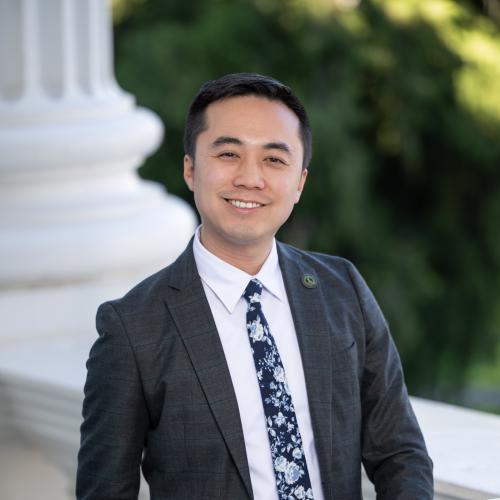
Asm. Alex Lee
Total votes
14,493
all sessions
Attendance
94%
702 missed
Near the chamber average
With party
99%
of cast votes
Near the chamber average
Bipartisan score
0%
crosses aisle rarely
Near the chamber average
Sponsored
1,076
bills & resolutions
Near the chamber average
Committees
12
assignments
1,076 bills and resolutions
Sponsored bills
Total
1,076
Primary
123
Co-sponsor
953
This page
1,076
matching current filters
Civil law.
Existing law provides that a person who has actual notice of circumstances sufficient to put a prudent person on notice of a fact is deemed to have constructive notice of that fact in all cases where that fact is at issue. This bill would make a nonsubstantive change to this provision.
In committee Feb 17, 2022
0 co-sponsors
Passed Feb 10, 2022
1 co-sponsor
Prisons: inmate visitation.
(1) Under existing law, a person sentenced to imprisonment in a state prison or in a county jail for a felony offense, as specified, may during that period of confinement be deprived of only those rights as is reasonably related to legitimate penological interests. Existing law enumerates certain civil rights of these prisoners, including the right to purchase, receive, and read newspapers, periodicals, and books accepted for distribution by the United States Post Office. This bill would include the right to personal visits as a civil right, as specified. The bill would provide that these civil rights may not be infringed upon, except as necessary and only if narrowly tailored to further the legitimate security interests of the government, and would provide that any governmental action related to these civil rights may be reviewed in court for legal error under a substantial evidence standard of review. (2) Existing law authorizes the Secretary of the Department of Corrections and Rehabilitation to prescribe and amend rules and regulations for the administration of prisons, and requires regulations, which are adopted by the Department of Corrections and Rehabilitation, that may impact the visitation of inmates to recognize and consider the value of inmate visitation as a means of increasing safety in prisons, maintaining family and community connections, and preparing inmates for successful release and rehabilitation. Existing regulations establish the framework for establishing a visiting process in prisons that is conducted in as accommodating a manner as possible, subject to the need to maintain order, the safety of persons, the security of institutions and facilities, and required prison activities and operations. Existing law requires the department to contract with a private nonprofit agency or agencies to establish and operate a visitor center outside of each state adult prison in California that has a population of more than 300 inmates, and prescribes the minimum level of services to be available to prison visitors, including emergency clothing and information on visiting regulations and processes. Existing law requires the department to cooperate with the Department of Transportation in the development of public transportation services to prisons, requires these departments to evaluate the addition of stations or stops on existing bus or rail routes, or the addition of new services, that improve transportation access for visitors to prisons, and requires the department to publicize the availability of transportation services provided by the Department of Transportation. This bill would additionally require those regulations pertaining to inmate visits to recognize and consider the right to personal visits as a civil right. The bill would prohibit the Department of Corrections and Rehabilitation from denying in-person contact visits, as specified, including as a disciplinary sanction against the incarcerated person. The bill would require the department to inform an applicant of the specific reason for any denial of a visit.
Vetoed Feb 7, 2022
1 co-sponsor
Agricultural labor relations: labor representative elections: representation ballot card election.
Existing law, the Alatorre-Zenovich-Dunlap-Berman Agricultural Labor Relations Act of 1975, grants agricultural employees the right to form and join labor organizations and engage in collective bargaining with respect to wages, terms of employment, and other employment conditions, and authorizes employees to elect exclusive bargaining representatives for these purposes. Existing law requires the Agricultural Labor Relations Board to certify the results of an election conducted by secret ballot of employees in a collective bargaining unit to designate a collective bargaining representative, unless the board determines there are sufficient grounds to refuse to do so. Existing law further provides that if the board refuses to certify an election because of employer misconduct that would render slight the chances of a new election reflecting the free and fair choice of employees, the labor organization shall be certified as the bargaining representative for the bargaining unit. This bill would refer to the secret ballot election as a polling place election. This bill would also permit agricultural employees, as an alternative election procedure, to select their labor representatives through a representation ballot card election by submitting a petition to the board supported by representation ballot cards signed by a majority of employees in the bargaining unit. This bill would require the board to conduct an immediate investigation regarding the validity of the petition and the supporting representation ballot cards and, within 5 days after receiving a petition, to make an administrative decision as to whether the petition meets certain requirements and as to whether the labor organization submitted the requisite number of cards. The bill would require the board to certify the labor organization as the exclusive bargaining representative if the board determines that the labor organization has submitted the required number of representation ballot cards and the cards meet specified criteria. Existing law authorizes a person aggrieved by the final order of the board granting or denying in whole or in part the relief sought for an unfair labor practice, to obtain a review of the order in a specified court of appeal by filing in the court a written petition requesting that the order of the board be modified or set aside. This bill would require an employer who appeals or petitions for a writ of review of any order of the board involving make-whole, backpay, or other monetary awards to employees, to post an appeal bond in the amount of the entire economic value of the order, as specified, and would provide for the bond to be forfeited under specified conditions. This bill would state that its provisions are severable.
Vetoed Feb 3, 2022
1 co-sponsor
Food delivery platforms.
Existing law, the Fair Food Delivery Act of 2020, defines a "food delivery platform" as an online business that acts as an intermediary between consumers and multiple food facilities, as defined, to submit food orders and arrange for the delivery of the order, and prohibits a food delivery platform from arranging for the delivery of an order from a food facility without first obtaining an agreement with the food facility. This bill, in addition to making related findings and declarations, would require those agreements between a food delivery platform and a food facility to be written, require those agreements when food delivery platforms arrange for the pickup of an order from food facilities, and would require specified disclosures in agreements entered into or modified on or after January 1, 2022. The bill would prohibit food delivery platforms from charging a food facility for forwarded calls, as defined, unless the forwarded call resulted in a paid order, as specified, from the food facility that will be delivered, or arranged for delivery or pickup, to the consumer by the food delivery platform. This bill would also prohibit a listing website, as defined, from associating a telephone number with a food facility on their internet website or application that the listing website knows would result in a forwarded call, unless the listing website clearly and conspicuously, as defined, discloses if an order placed through a telephone number or other interface on their internet website or application may result in a commission or fee paid to a party other than the food facility, identifies that party, and provides a direct link to the telephone number of the food facility, as specified. The bill would make the provisions of the act severable. This bill would incorporate additional changes to Section 22598 of the Business and Professions Code proposed by AB 286 to be operative only if this bill and AB 286 are enacted and this bill is enacted last.
Vetoed Feb 3, 2022
0 co-sponsors
Legal Services Trust Fund Commission: Homelessness Prevention Fund: grants: eviction or displacement.
Existing law prescribes certain rights and limitations for landlords and tenants subject to eviction and certain procedures for civil actions involving evictions. Existing law, the State Bar Act, provides for the licensure and regulation of attorneys by the State Bar of California, a public corporation, governed by a board of trustees. Existing law requires an attorney to maintain short-term deposits of client funds in an Interest on Lawyers' Trust Account (IOLTA) and requires the interest and dividends earned on the account to be paid to the State Bar for the funding of certain programs that provide civil legal services without charge to indigent persons. Existing law requires the board of trustees to adopt regulations and procedures necessary to implement provisions, referred to as the Legal Services Trust Fund Program, that govern the funding of those programs. Existing administrative law establishes a Legal Services Trust Fund Commission to administer revenue from IOLTA and other funds remitted to the trust fund program. This bill would establish the Homelessness Prevention Fund to be administered by the commission. The bill would require the commission, subject to appropriation to the State Bar by the Legislature, to distribute moneys in the fund in the form of grants, awarded on a competitive basis, to fund prescribed legal services, education, and outreach for tenants relating to eviction or displacement. The bill would require the commission to develop guidelines for the grant process in accordance with specified requirements. The bill would establish eligibility requirements for grant applicants, including that the applicant agrees to provide all of the services funded by the grant without charge to recipients. The bill would require a grantee to report semiannually to the commission on certain activities and services funded by the grant and would prohibit a grantee from using more than 15% of the allocation received from the fund for administrative costs in the first year it receives a grant and 10% in every year thereafter. The bill would limit the State Bar expenditure of funds for administration to the actual costs of administration of these provisions, up to 5% of the funds provided.
Vetoed Feb 3, 2022
1 co-sponsor
California Deforestation-Free Procurement Act: public works projects: wood and wood products.
Existing law governs the bidding and awarding of public contracts by various state agencies. Existing law imposes requirements on contractors awarded various public contracts, including, among others, certifying that no equipment, materials, supplies, apparel, garments, or accessories provided under specified contracts are produced by sweatshop labor, forced labor, convict labor, indentured labor under penal sanction, abusive forms of child labor, or exploitation of children in sweatshop labor. This bill would establish the California Deforestation-Free Procurement Act. The bill would require a contractor, as defined, and specified subcontractors, for any contract entered into, extended, or renewed on or after January 1, 2024, contracting with a state agency for the procurement of products comprised wholly or in part of forest-risk commodities to certify that the commodities were not grown, derived, harvested, reared, or produced on land where tropical deforestation occurred on or after January 1, 2022. The bill would exempt a credit card purchase of goods of $2,500 or less, not to exceed a total of $7,500 of goods per contractor per year, from these certification requirements. The bill would require specified contractors to have a No Deforestation, No Peat, No Exploitation policy, as specified, and would require the contractors to make the policy and corresponding data publicly available. The bill would require, on or before July 1, 2023, the Department of General Services to issue an informational notice or memorandum on a Deforestation-Free Code of Conduct to be used by contractors that includes, among other things, a list of forest-risk commodities subject to these provisions. This bill would impose sanctions on contractors who knew or should have known that a product furnished to the state was comprised wholly or in part of a forest-risk commodity in violation of these provisions. The bill would specify that any person who certifies as true any material matter that the person knows to be false is guilty of a misdemeanor. By creating a new crime, this bill would impose a state-mandated local program. The State Contract Act governs the bidding and award of public works contracts by specific state agencies and requires an awarding department, before entering into any contract for a project, to prepare full, complete, and accurate plans, specifications, and estimates of cost. The act prohibits, except in specified circumstances, a state agency responsible for letting public works contracts from drafting bid specifications in a manner that limits the bidding to any one concern or product, except under certain circumstances. This bill would prohibit a state agency from including in bid specifications for public works projects any wood or wood products whose importation and use are prohibited under the federal Lacey Act. The California Constitution requires the state to reimburse local agencies and school districts for certain costs mandated by the state. Statutory provisions establish procedures for making that reimbursement. This bill would provide that no reimbursement is required by this act for a specified reason.
Vetoed Feb 3, 2022
1 co-sponsor
Local government: open and public meetings.
Existing law, the Ralph M. Brown Act, requires, with specified exceptions, that all meetings of a legislative body of a local agency, as those terms are defined, be open and public and that all persons be permitted to attend and participate. Under existing law, a member of the legislative body who attends a meeting where action is taken in violation of this provision, with the intent to deprive the public of information that the member knows the public is entitled to, is guilty of a crime. This bill would require local agencies to conduct meetings subject to the act consistent with applicable state and federal civil rights laws, as specified. This bill would, until December 31, 2023, require all open and public meetings of a city council or a county board of supervisors that governs a jurisdiction containing least 250,000 people to include an opportunity for members of the public to attend via a two-way telephonic option or a two-way internet-based service option, as specified, and would require a city council or county board of supervisors that has, as of June 15, 2021, provided video streaming, as defined, of at least one of its meetings to continue to provide that video streaming. The bill would require all open and public meetings to include an in-person public comment opportunity, except in specified circumstances during a declared state or local emergency. The bill would require all meetings to provide the public with an opportunity to comment on proposed legislation in person and remotely via a telephonic or an internet-based service option, as provided. By imposing new duties on local governments and expanding the application of a crime with respect to meetings, this bill would impose a state-mandated local program. The California Constitution requires the state to reimburse local agencies and school districts for certain costs mandated by the state. Statutory provisions establish procedures for making that reimbursement. This bill would provide that no reimbursement is required by this act for specified reasons. The California Constitution requires local agencies, for the purpose of ensuring public access to the meetings of public bodies and the writings of public officials and agencies, to comply with a statutory enactment that amends or enacts laws relating to public records or open meetings and contains findings demonstrating that the enactment furthers the constitutional requirements relating to this purpose. This bill would make legislative findings to that effect. The bill would include findings that changes proposed by this bill address a matter of statewide concern rather than a municipal affair and, therefore, apply to all cities and counties, including charter cities and counties. This bill would incorporate additional changes to Section 54953 of the Government Code proposed by AB 361 to be operative only if this bill and AB 361 are enacted and this bill is enacted last.
Vetoed Feb 3, 2022
0 co-sponsors
Passed Feb 3, 2022
1 co-sponsor
Ask Maddy
·
AI policy assistant
Ask Maddy about Alex Lee
Scope: california
Hi! I can help you understand Alex Lee's legislative record. What would you like to know?
Try one of these
i
Maddy answers using official bill text and legislative records. Always verify before sharing.
Sources cited inline