

Existing law designates specific days as holidays in this state. Existing law requires the Governor annually to proclaim the date corresponding with the second new moon following the winter solstice, or the third new moon following the winter solstice should an intercalary month intervene, as the "Lunar New Year." Existing law entitles state employees, with specified exceptions, to elect to receive 8 hours of holiday credit for "Native American Day," in lieu of receiving 8 hours of personal holiday credit, and to elect to use 8 hours of vacation, annual leave, or compensating time off, consistent with departmental operational needs and collective bargaining agreements, for "Native American Day," as specified. This bill would repeal provisions requiring the Governor to annually proclaim the "Lunar New Year," and would instead recognize the "Lunar New Year" as a state holiday. The bill would authorize state employees, with specified exceptions, to elect to receive 8 hours of holiday credit for the "Lunar New Year" in lieu of receiving 8 hours of personal holiday credit, and to elect to use 8 hours of vacation, annual leave, or compensating time off, consistent with departmental operational needs and collective bargaining agreements, for "Lunar New Year," as specified. Existing law designates specific days designated as holidays in this state, every Saturday and the day after Thanksgiving Day as judicial holidays, except "Admission Day," "Columbus Day," and any other day appointed by the President, but not by the Governor, for a public fast, thanksgiving, or holiday. This bill would additionally exclude "Lunar New Year" from designation as a judicial holiday. This bill would incorporate additional changes to Section 135 of the Code of Civil Procedure proposed by AB 1801 to be operative only if this bill and AB 1801 are enacted and this bill is enacted last. This bill would incorporate additional changes to Sections 6700, 19853, and 19853.1 of the Government Code proposed by AB 1655 and AB 1801 to be operative only if this bill and AB 1655, AB 1801, or both are enacted and this bill is enacted last.
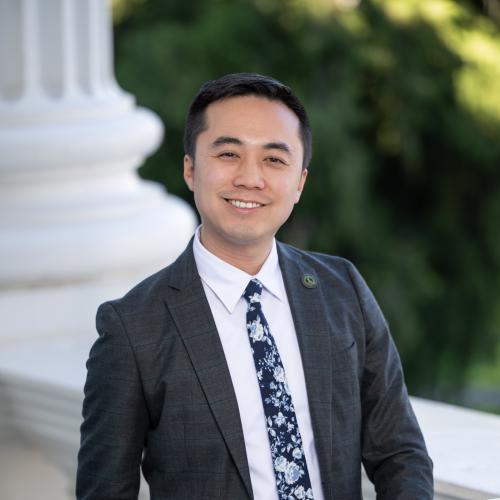
Asm. Alex Lee
Sponsored bills
Existing law, the Alatorre-Zenovich-Dunlap-Berman Agricultural Labor Relations Act of 1975, grants agricultural employees the right to form and join labor organizations and engage in collective bargaining with respect to wages, terms of employment, and other employment conditions, and authorizes employees to elect exclusive bargaining representatives for these purposes. Existing law creates the Agricultural Labor Relations Board and prescribes its composition, duties, and powers. Existing law authorizes the board to hold hearings and conduct investigations and requires that certain procedures be the exclusive method of redressing unfair labor practices. Under existing law, any person who willfully resists, prevents, or interferes with a member of the board or its agents or agencies in the performance of their duties is guilty of a misdemeanor. Existing law requires the board to certify the results of an election conducted by secret ballot of employees in a collective bargaining unit to designate a collective bargaining representative, unless the board determines there are sufficient grounds to refuse to do so. Existing law further provides that if the board refuses to certify an election because of employer misconduct that would render slight the chances of a new election reflecting the free and fair choice of employees, the labor organization shall be certified as the bargaining representative for the bargaining unit. This bill would refer to the election by secret ballot process as a polling place election. The bill would establish alternative procedures to the polling place election and authorize a labor organization to be certified as the exclusive bargaining representative of a bargaining unit through either a labor peace election or a non-labor peace election, as prescribed, dependent on whether an employer enrolls and agrees to a labor peace election for labor organization representation campaigns. The bill would provide that a labor peace election or a non-labor peace election permits a bargaining unit to summarily select a labor organization as its representative for collective bargaining purposes without using the existing polling place process. Under the bill, a labor peace election would be a mail ballot election and a non-labor peace election would establish a process for the submission of a petition with proof of majority support, subject to certification by the board. Among other provisions, the bill would require for both alternative procedures that an employer respond to the board with regard to a petition, including providing a specified list of employees to the board. By expanding the definition of a crime, this bill would impose a state-mandated local program. This bill would establish a schedule for agricultural employers to indicate to the board whether they agree to a labor peace compact, defined to mean an agreement by the employer to, among other things, make no statements for or against union representation to its employees or publicly, in any written or oral form, at any time during employee hire, rehire, or orientation, or after certain documents regarding organization are filed with the board. The bill would prohibit a labor peace compact from prohibiting an employer from communicating truthful statements to employees regarding workplace policies or benefits, as specified. The bill would require the board to develop an online web-based labor peace election process that will allow employers to indicate their labor peace choice online, and that will allow labor organizations to see whether a specific agricultural employer has agreed to a labor peace election campaign. This bill would repeal the above provisions on January 1, 2028. This bill would prescribe civil penalties to be imposed upon an agricultural employer who commits an unfair labor practice in an amount not to exceed $10,000 for each violation, and would increase that sum to an amount not to exceed $25,000 for specified violations. The bill would require the board to consider specified factors in determining the amount of a civil penalty pursuant to these provisions. The bill would also authorize the board to impose personal liability for these penalties upon a director or officer of an employer in certain circumstances. Existing law authorizes a person aggrieved by the final order of the board granting or denying in whole or in part the relief sought for an unfair labor practice, to obtain a review of the order in a specified court of appeal by filing in the court a written petition requesting that the order of the board be modified or set aside. This bill would require an employer who appeals or petitions for a writ of review of any order of the board involving make-whole, backpay, or other monetary awards to employees, to post an appeal bond in the amount of the entire economic value of the order, as specified, and would provide for the bond to be forfeited under specified conditions. This bill would state that its provisions are severable. The California Constitution requires the state to reimburse local agencies and school districts for certain costs mandated by the state. Statutory provisions establish procedures for making that reimbursement. This bill would provide that no reimbursement is required by this act for a specified reason.
Existing law, the California Building Standards Law, establishes the California Building Standards Commission within the Department of General Services. Existing law requires the commission to approve and adopt building standards and to codify those standards in the California Building Standards Code. Existing law requires the Department of Housing and Community Development to propose to the commission for consideration mandatory building standards for the installation of future electric vehicle charging infrastructure for parking spaces in multifamily dwellings, as specified. Existing law requires the commission to adopt, approve, codify, and publish mandatory building standards for the installation of electric vehicle charging infrastructure for parking spaces in multifamily dwellings and nonresidential development. This bill would, commencing with the next triennial edition of the California Building Standards Code, require the commission and the Department of Housing and Community Development to research and develop, and authorize the commission and department to propose for adoption, mandatory building standards for the installation of electric vehicle charging stations with low power level 2 or higher electric vehicle chargers in existing multifamily dwellings, hotels, motels, and nonresidential development during certain retrofits, additions, and alterations to existing parking facilities, as specified. This bill would require the Department of Housing and Community Development and the commission to review those building standards every triennial code cycle and update those building standards until specified goals are met, as specified. The bill would make related findings and declarations. The bill would repeal these provisions on January 1, 2033.
Existing law generally regulates pesticide use by the Department of Pesticide Regulation, and requires the Director of Pesticide Regulation to endeavor to eliminate from use a pesticide that endangers the agricultural or nonagricultural environment. A violation of those provisions and regulations adopted pursuant to those provisions is generally a misdemeanor. Existing law requires the department, on or before July 1, 2018, to issue a determination with respect to its reevaluation of neonicotinoids, and to adopt control measures necessary to protect pollinator health within 2 years, as specified. This bill would prohibit, beginning January 1, 2024, the sale, possession, or use of neonicotinoid pesticides, as defined, for application to outdoor ornamental plants, trees, or turf, except for use on, or for the protection of, an agricultural commodity, as defined. The bill would authorize the director, in consultation with the Department of Food and Agriculture, to authorize, by written order, the sale, possession, or use of these prohibited pesticides if the director finds that it would address a valid environmental emergency and there are no other, less harmful alternatives, as specified, and would require the director to make reasonable efforts to inform the public of an environmental emergency finding. The bill would also authorize a certified qualified applicator to possess or use a neonicotinoid pesticide for specified purposes, and a licensed pest control dealer to sell a neonicotinoid pesticide, as provided. The bill would provide that these provisions do not apply to certain actions and applications of these pesticides. Because a violation of these provisions and the regulations adopted pursuant to these provisions would be a misdemeanor, the bill would impose a state-mandated local program. The California Constitution requires the state to reimburse local agencies and school districts for certain costs mandated by the state. Statutory provisions establish procedures for making that reimbursement. This bill would provide that no reimbursement is required by this act for a specified reason.
Existing law, the Mobilehome Residency Law, governs tenancies in mobilehome parks, and imposes various duties on the owners of mobilehome parks and the agents and representatives authorized to act on behalf of the owners. Existing law requires management to meet and consult with homeowners upon written request on specified matters. This bill would further specify the matters on which management is required to meet and consult with homeowners and would add the topics of utility billing and charges and common area facilities. The bill would authorize participation in a meeting to occur in person or by virtual means, as specified, and would require management to comply with the method of meeting requested by the homeowner or homeowners. If an individual homeowner or group of homeowners consents to be represented at a meeting, the bill would require management to meet with either the designated representative on their behalf, or with both the homeowners and the designated representative. The bill would authorize a designated representative to participate in person, by telephone, or by virtual means, as specified, if so requested by an individual homeowner or group of homeowners. The bill would require management to permit the attendance of language interpreters, as specified, at any meeting held pursuant to these provisions.
Existing law prohibits the theft of personal property, as specified. Existing law, for purposes of provisions related to theft, declares that a dog is personal property and that the value of a dog shall be determined in the same manner as for other personal property. Under existing law, theft of a dog with a value exceeding $950 is grand theft and theft of a dog with a value not exceeding $950 is petty theft. Existing appellate case law holds that a cat is personal property for purposes of theft. Existing law defines a feral cat as a cat without owner identification whose usual and consistent temperament is extreme fear and resistance to contact with people and who is totally unsocialized to people. This bill would expand the scope of those crimes to apply to any companion animal, as defined. By expanding the application of an existing crime, this bill would impose a state-mandated local program. The California Constitution requires the state to reimburse local agencies and school districts for certain costs mandated by the state. Statutory provisions establish procedures for making that reimbursement. This bill would provide that no reimbursement is required by this act for a specified reason.
Existing law provides for the Medi-Cal program, which is administered by the State Department of Health Care Services, under which qualified low-income individuals receive health care services. The Medi-Cal program is, in part, governed and funded by federal Medicaid program provisions. Under existing law, Medi-Cal services may be provided pursuant to contracts with various types of managed care health plans, including through a county organized health system. Under existing law, in-person contact between a health care provider and a patient is not required under the Medi-Cal program for services appropriately provided through telehealth. Existing law provides that neither face-to-face contact nor a patient's physical presence on the premises of an enrolled community clinic is required for services provided by the clinic to a Medi-Cal beneficiary during or immediately following a proclamation declaring a state of emergency. Existing law defines "immediately following" for this purpose to mean up to 90 days following the termination of the proclaimed state of emergency, unless there are extraordinary circumstances. Under existing law, federally qualified health center (FQHC) services and rural health clinic (RHC) services are covered benefits under the Medi-Cal program, to be reimbursed, to the extent that federal financial participation is available, to providers on a per-visit basis. "Visit" is defined as a face-to-face encounter between an FQHC or RHC patient and any of specified health care professionals. Under existing law, "visit" also includes an encounter between an FQHC or RHC patient and specified medical professionals when services delivered through that interaction meet the applicable standard of care. Existing law prohibits an FQHC or RHC from establishing a new patient relationship using an audio-only synchronous interaction and authorizes the department to provide specific exceptions to that prohibition, developed in consultation with affected stakeholders and published in departmental guidance. This bill would authorize the department to authorize an FQHC or RHC to establish a new patient relationship using an audio-only synchronous interaction when the visit is related to sensitive services, as defined, and authorize an FQHC or RHC to establish a new patient relationship using an audio-only synchronous interaction when the patient requests an audio-only modality or attests they do not have access to video. Existing law provides that face-to-face contact is not required when covered health care services are provided by video synchronous interaction, audio-only synchronous interaction, remote patient monitoring, or other permissible virtual communication modalities when those services and settings meet certain criteria. Existing law, effective as specified, requires a provider furnishing services via audio-only synchronous interaction to also offer those same health care services via video synchronous interaction to preserve beneficiary choice. Existing law authorizes the department to provide specific exceptions to that requirement based on a Medi-Cal provider's access to requisite technologies, as specified. Existing law also prohibits a health care provider from establishing a new patient relationship with a Medi-Cal beneficiary via, among other interactions, telephonic (audio-only) synchronous interaction. Existing law authorizes the department to provide specific exceptions to that prohibition, as specified. This bill would authorize the department to take into consideration the availability of broadband access when providing those specific exceptions. The bill would authorize the department to authorize a health care provider to establish a new patient relationship using an audio-only synchronous interaction when the visit is related to sensitive services, as defined, and authorize a health care provider to establish a new patient relationship using an audio-only synchronous interaction when the patient requests an audio-only modality or attests they do not have access to video. This bill would incorporate additional changes to Section 14132.100 of the Welfare and Institutions Code proposed by SB 966 to be operative only if this bill and SB 966 are enacted and this bill is enacted last.
Existing law, the California Building Standards Law, establishes the California Building Standards Commission within the Department of General Services and sets forth its powers and duties, including approval and adoption of building standards and codification of those standards into the California Building Standards Code. Existing law, the Warren-Alquist State Energy Resources Conservation and Development Act, requires the State Energy Resources Conservation and Development Commission to adopt, among other regulations, lighting and other building design and construction standards that increase efficiency in the use of energy for new residential and nonresidential buildings to reduce the wasteful, uneconomic, inefficient, or unnecessary consumption of energy, including energy associated with the use of water, and to manage energy loads to help maintain electrical grid reliability. Existing law also requires the commission to adopt standards for minimum levels of operating efficiency and other cost-effective measures to promote the use of certain energy- and water-efficient appliances. This bill would require, with certain exceptions, a state agency, as defined, to ensure that an outdoor lighting fixture that is installed or replaced on or after January 1, 2023, on a structure or land that is owned, leased, or managed by the state agency is shielded, as defined, and meets additional specified criteria.
Existing law establishes the Bay Area Air Quality Management District, which is vested with the authority to regulate air emissions located in the boundaries of the Counties of Alameda, Contra Costa, Marin, Napa, San Francisco, San Mateo, and Santa Clara and portions of the Counties of Solano and Sonoma. Existing law establishes a district board to govern the district and prescribes the membership of the district board. Existing law authorizes the district board to provide, by ordinance, compensation not to exceed $100 per day for board members for attending meetings of the board or committees of the board or while on official business of the district and not to exceed $6,000 per year. Existing law also requires board members to receive actual and necessary expenses incurred in the performance of their duties. This bill would revise the amount of compensation that a member of the board may receive for attending a meeting of the board or attending a meeting while on official business of the district to an amount not to exceed $100 per meeting and $200 per day. The bill would also authorize a member of the board to receive compensation for active transportation travel to one of these meetings and would subject this compensation to the $6,000 total annual compensation limit.
Existing law provides for the establishment of California American Indian education centers by any tribal group or incorporated American Indian association to meet specified objectives, and further provides for the administration of grants, upon application, by the State Department of Education for those purposes in accordance with specified provisions. Existing law requires each center to annually submit specified data to the department that reflects each center's ability to meet its stated objectives and any other objectives chosen by the center. Existing law requires the department to enter into a contract with a county office of education or a consortium of county offices of education for the purpose of developing model curriculum related to Native American studies, as provided. This bill would establish the California Indian Education Act and encourage school districts, county offices of education, and charter schools to form California Indian Education Task Forces with California tribes local to their regions or tribes historically located in the region. The bill would encourage task force participants to discuss issues of mutual concern and to undertake certain work. The bill would require California Indian Education Task Forces to submit, within one year of formation and annually thereafter, a report of findings to the department, as provided. The bill would require the department to submit, within one year of receiving task force reports and annually thereafter, a report to certain education committees of both houses of the Legislature regarding the narrowing of the achievement gap and the adoption of curriculum, as provided. The bill would authorize California Indian Education Task Forces to submit curricular materials to the county office of education, or consortium of county offices of education, that contracted to develop the model curricula related to Native American studies. The bill would require the contracted county office of education, or consortium of county offices of education, to consider these submitted materials for inclusion in the model curriculum. To the extent that this bill imposes new duties on the county office of education, or consortium of county offices of education, that contracted to develop the model curriculum, the bill would impose a state-mandated local program. The California Constitution requires the state to reimburse local agencies and school districts for certain costs mandated by the state. Statutory provisions establish procedures for making that reimbursement. This bill would provide that, if the Commission on State Mandates determines that the bill contains costs mandated by the state, reimbursement for those costs shall be made pursuant to the statutory provisions noted above.