

Existing federal law establishes the Supplemental Nutrition Assistance Program (SNAP) , known in California as CalFresh, under which supplemental nutrition assistance benefits allocated to the state by the federal government are distributed to eligible individuals by each county. Existing state law establishes, in addition to CalFresh, the California Food Assistance Program (CFAP) to provide nutrition benefits to households that are ineligible for CalFresh benefits solely due to their immigration status, as specified. Existing law sets forth provisions relating to state funding for CFAP. Under existing federal and state law, in determining the eligibility and amount of aid for a person who is not a citizen or national of the United States under certain public social services programs, the income and resources of the person are deemed to include the income and resources of any person who has executed an affidavit of support on behalf of the person and the spouse of that person, with certain exemptions. Existing state law requires that federal deeming rules and exemptions governing SNAP also govern CFAP, with certain exceptions. Under this bill, beginning January 1, 2028, or when the department notifies the Legislature that the Statewide Automated Welfare System can perform the necessary automation to implement these provisions, whichever is later, federal sponsor deeming rules and noncitizen exemptions governing SNAP would instead not apply to CFAP. By creating new duties for counties relating to CFAP eligibility, the bill would impose a state-mandated local program. The California Constitution requires the state to reimburse local agencies and school districts for certain costs mandated by the state. Statutory provisions establish procedures for making that reimbursement. This bill would provide that, if the Commission on State Mandates determines that the bill contains costs mandated by the state, reimbursement for those costs shall be made pursuant to the statutory provisions noted above.
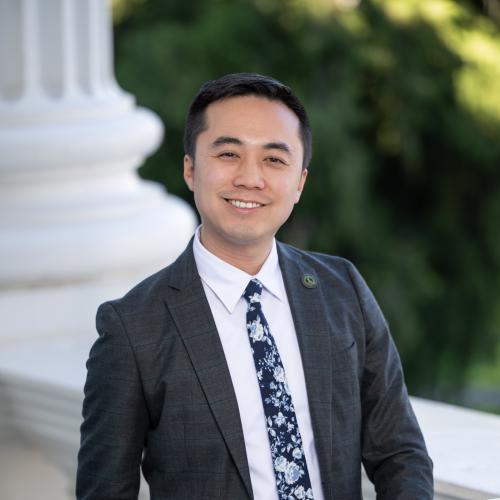
Rep. Alex Lee
Sponsored bills
Under existing law, the Tom Bane Civil Rights Act (act) , if a person or persons, whether or not acting under color of law, interferes or attempts to interfere, by threats, intimidation, or coercion, with the exercise or enjoyment by any individual or individuals of rights secured by the Constitution or laws of the United States, or of the rights secured by the Constitution or laws of this state, the Attorney General, or any district attorney or city attorney, is authorized to bring a civil action for injunctive and other appropriate equitable relief in the name of the people of the State of California, in order to protect the exercise or enjoyment of the right or rights secured. Under that act, an individual may also institute and prosecute in their own name and on their own behalf a civil action for damages, as described, for any resulting interference or attempt at interference of the individual's exercise or enjoyment of rights secured by the Constitution or laws of the United States or this state. The act authorizes the court to award the petitioner or plaintiff reasonable attorney's fees in addition to any damages, injunction, or other equitable relief awarded in these civil actions (attorney's fees authorization) . Existing federal law provides that every person who, under color of any statute, ordinance, regulation, custom, or usage, of any state, territory, or the District of Columbia, subjects or causes to be subjected any United States citizen or other person within the jurisdiction to the deprivation of any rights, privileges, or immunities secured by the Constitution and laws, is liable to the party injured in an action at law, suit in equity, or other proper proceeding for redress, except as provided. This bill would also provide that every natural person, as defined, who, under color of any law, statute, ordinance, regulation, custom, or usage, as defined, subjects or causes to be subjected any citizen of this state or any person within the jurisdiction thereof to the deprivation of any rights, privileges, or immunities secured by the United States Constitution, shall be liable to the party injured in an action at law, suit in equity, or other proper proceeding for redress, except as specified. The bill would apply the aforementioned attorney's fees authorization, except as specified, to any action brought under these provisions. The bill would authorize a court, in its discretion, to also award costs, except as specified, to the prevailing plaintiff in any action brought under these provisions. This bill would authorize a defendant in an action brought under these provisions to assert and receive the benefit of a defense of absolute or qualified immunity only to the same extent as a person sued under certain federal provisions under like circumstances, as specified, and would specify that nothing in these provisions is to be construed to waive or abrogate any defense of sovereign immunity otherwise available to a party, as specified. The bill would prohibit any civil action brought under these provisions from being commenced later than 2 years after the date that the cause of action accrues. The bill would make its provisions severable. The bill would specify that these provisions apply retroactively to March 1, 2025, as provided. This bill would declare the intent of the Legislature in enacting these provisions. This bill would declare that it is to take effect immediately as an urgency statute.
Existing law prohibits an employer or any other person from engaging in, or directing another person to engage in, an unfair immigration-related practice against a person for the purpose of, or with the intent of, retaliating against any person for exercising a right protected under state labor and employment laws or under a local ordinance applicable to employees, as specified. Existing law authorizes a civil action for equitable relief and damages or penalties, as specified, by an employee or other person who is the subject of an unfair immigration-related practice. This bill would expand the above-described prohibition to include retaliating against any person for exercising any right under any local, state, or federal statute or regulation applicable to employees, as defined, and would prohibit preventing a person from exercising such a right. The bill would also prohibit an employer or any other person from engaging in any other conduct, related to any person's perceived immigration status, that would reasonably tend to dissuade a person from engaging in conduct that the person has a legal right to engage in under any local, state, or federal statute or regulation applicable to employees, or to induce a person to engage in conduct that the person has a legal right to abstain from under any local, state, or federal statute or regulation applicable to employees. The bill would make an employer or other person who violates these provisions liable for a civil penalty not exceeding $10,000 per employee or person for each violation, as specified. The bill would also make related and conforming changes to these provisions.
Existing law, the California Child Day Care Facilities Act, sets forth requirements for licensure as a daycare center. This bill, except as specified, would authorize on and after January 1, 2027, when the state constructs, acquires, or receives as a gift any office building that can accommodate state employees, or when additions, alterations, or repairs are made to any existing state-owned office building, and the additions, alterations, or repairs both change and affect the use of 25 percent of the net square foot area of the building and include addition to, alteration of, or repair of the first floor, priority to be given to licensed childcare providers, as defined, that seek to contract with the Director of General Services (director) to use a part of the space as a daycare center, as defined. The bill would subject the use of the space as a daycare center to terms and conditions set forth by the director, including as to cost. This bill would authorize the director to secure other space not attached to a state-owned office building for use as a daycare center if funds are made available for those purposes and the director determines one of certain conditions exist. The bill would also authorize existing state-owned office buildings to be retrofitted to accommodate a daycare center at the director's discretion, to the extent that state funds are made available for those purposes. The bill would set forth priority for enrollment of children in daycare centers established pursuant to the bill's provisions. This bill would require compliance with local and state safety building codes for daycare centers in state-owned office buildings. The bill would exclude from the bill's provisions office buildings used or owned by the state that provide care or 24-hour residential care for patients, inmates, or wards of the state.
Existing law establishes the Medi-Cal program, which is administered by the State Department of Health Care Services, under which qualified low-income individuals receive health care services, including pharmacy services and drugs. The Medi-Cal program is, in part, governed and funded by federal Medicaid Program provisions. Existing law sets forth a schedule of benefits covered under the Medi-Cal program, including acupuncture, but only to the extent federal matching funds are provided for acupuncture. To the extent federal financial participation is available, this bill would require the Medi-Cal program to cover up to 24 acupuncture visits per beneficiary per calendar year and would state that additional visits per calendar year may be authorized based on medical necessity. This bill would incorporate additional changes to Section 14132 of the Welfare and Institutions Code proposed by AB 350 and SB 944 to be operative only if this bill and either or both AB 350 and SB 944 are enacted and this bill is enacted last. This bill would make certain provisions operative only if both this bill and SB 944 is enacted and takes effect on or before January 1, 2027.
Existing law generally provides various benefits, including grant programs and tax credits. Existing law, the California Values Act, generally prohibits California law enforcement agencies from using their moneys or personnel for immigration enforcement purposes, except as specified. This bill would prohibit a business entity that is directly invested in, owns, operates, or manages a private detention facility, or that contracts with the federal government for immigration enforcement purposes, as specified, from receiving any state-provided grant or loan, as specified. The bill would also prohibit a disqualified taxpayer, as defined, from receiving any tax credits, except as provided. The bill would define "disqualified taxpayer" to mean a taxpayer that is directly invested in, owns, operates, or manages a private detention facility, or a taxpayer that contracts with a private detention facility or agency engaging in immigration enforcement, as specified. The bill would not apply these provisions to a provider of health care, as defined, that contracts with a private detention facility or agency engaging in immigration enforcement, as specified. The bill would establish the Due Process for All Fund and would require the Controller to transfer each year from the General Fund to the Due Process for All Fund the amount of tax collected that is attributable to business entities being made ineligible for tax credits by this bill. The bill would make moneys in the fund available upon appropriation by the Legislature for immigration-related services and programs. This bill would include a change in state statute that would result in a taxpayer paying a higher tax within the meaning of Section 3 of Article XIIIA of the California Constitution, and thus would require for passage the approval of 23 of the membership of each house of the Legislature.
Existing federal law provides for the Supplemental Nutrition Assistance Program (SNAP) , known in California as CalFresh, under which supplemental nutrition assistance benefits allocated to the state by the federal government are distributed to eligible individuals by each county. Existing federal law, through Disaster SNAP, provides for short-term food assistance benefits to eligible households who are victims of a disaster that disrupts commercial channels of food distribution. This bill would, during a federal government shutdown that impacts the disbursement of CalFresh benefits, require the State Department of Social Services to maintain a clearly marked landing page on the department's internet website to provide the public with information on how their benefits will be impacted, including information on the status of the federal government shutdown and the availability of benefits. The bill would also require the department, in coordination with stakeholders, to establish a strategic communications plan for use during a federal government shutdown that impacts the disbursement of CalFresh benefits that includes updates to the landing page on the department's internet website, deployment of social media posts, and emergency response briefings for local and state officials, local government agencies, community organizations, and participating retailers, as specified. The bill would require the department to develop a benefit issuance mechanism to allow the department flexibility to rapidly provide nutrition benefits on an emergency basis in response to a federal government shutdown that impacts the disbursement of CalFresh benefits, and would require the mechanism to be designed to issue nutrition benefits through the existing electronic benefits transfer system and in a manner that can target various populations depending on the purpose of the specific benefit. The bill would make this provision operative when the department notifies the Legislature that the Statewide Automated Welfare System can perform the necessary automation to implement this provision.
Existing federal law establishes the Supplemental Nutrition Assistance Program (SNAP) , known in California as CalFresh, under which supplemental nutrition assistance benefits allocated to the state by the federal government are distributed to eligible individuals by each county. Existing federal law limits a participant who is an able-bodied adult without dependents (ABAWD) to 3 months of CalFresh benefits in a 3-year period unless that participant has met work participation requirements or is otherwise exempt. Existing state law requires the State Department of Social Services to annually seek a federal waiver of this limitation. Existing state law requires the department to ensure that all recipients subject to the federal ABAWD time limit are permitted to meet the work requirements of the time limit through all forms of work, as specified. Existing federal law, Public Law 119-21, enacted on July 4, 2025, sets forth various changes to SNAP benefits, including the removal of an exemption from the time limit for certain former foster youth under 25 years of age, and the narrowing of an exemption for a household with a dependent under 18 years of age to instead a household with a dependent under 14 years of age, as specified. This bill would specify that an ABAWD participant includes a parent or other member of a household with responsibility for a dependent child 14 years of age or older as a result of Public Law 119-21. The bill would make various statements of legislative intent relating to, among other things, maximizing efforts to retain in the program as many eligible CalFresh recipients as possible, providing for the continuation of food benefits, mitigating harm, and streamlining the verification of exemptions for certain populations, in response to Public Law 119-21, as specified. The bill would state the intent of the Legislature that all exemptions provided by the state and the counties under Public Law 119-21, to the extent permitted by federal law and guidance, remain in effect for any recipient until, at the earliest, the next scheduled redetermination for that recipient, when the exemption is reassessed by the county, unless the automated exemption at redetermination allows for the exemption to continue. The bill would state legislative intent that a recipient not be discontinued from the CalFresh program due to the ABAWD work requirements under Public Law 119-21 before October 1, 2026, or until specified administrative activities are complete, whichever is later. The bill would generally require the department to provide data to certain legislative committees and all 58 county welfare departments on the total number of CalFresh recipients subject to, exempted from, or discontinued from the program potentially due to, the CalFresh ABAWD time limit and corresponding work requirements, as specified. Under the bill, prior to the first 2 reports, the data would be furnished to impacted counties with a minimum of 4 weeks for review prior to public reporting in order to ensure accuracy. The bill would also require the department to provide data on the total number of CalFresh recipients discontinued from the program, as specified. The bill would require the department to adopt, provide instructions to counties on, and automate for, compliance with CalFresh work requirements, in accordance with federal law, for individuals participating in extended foster care and who have been determined to be working at least 80 hours per month. To the extent that the bill would increase CalFresh eligibility for certain populations and expand county duties, the bill would impose a state-mandated local program. Existing law establishes the California Work Opportunity and Responsibility to Kids (CalWORKs) program, under which, through a combination of federal, state, and county funds, each county provides cash assistance and other benefits to qualified low-income families. Under existing law, in addition to specified CalWORKs aid amounts, a family is entitled to receive an allowance for recurring special needs relating to, among other things, food, utilities, and transportation. Under existing law, the allowance for each family per month is prohibited from exceeding that amount resulting from multiplying the sum of $10 by the number of recipients in the family who are eligible for assistance. This bill would increase the maximum threshold for the allowance by switching the factor from $10 to $15 within the formula. Existing law continuously appropriates moneys from the General Fund to defray a portion of county costs under the CalWORKs program. This bill would instead provide that the continuous appropriation would not be made for purposes of the bill. The California Constitution requires the state to reimburse local agencies and school districts for certain costs mandated by the state. Statutory provisions establish procedures for making that reimbursement. This bill would provide that, if the Commission on State Mandates determines that the bill contains costs mandated by the state, reimbursement for those costs shall be made pursuant to the statutory provisions noted above. This bill would declare that it is to take effect immediately as an urgency statute.
Existing law, notwithstanding the requirement that each person between 6 and 18 years of age who is not otherwise exempted is subject to compulsory full-time education, requires a pupil to be excused from school for specified types of absences, including, among others, for justifiable personal reasons when the pupil's absence is requested in writing by the parent or guardian and approved by the principal or a designated representative, as provided. Existing law specifies that a justifiable personal reason includes observance of a holiday or ceremony of the pupil's religion. This bill would include observance of a holiday or ceremony of the pupil's religion as a type of required excused absence without the requirement that the absence be requested in writing by the parent or guardian and approved by the principal or a designated representative. To the extent that this bill would impose additional duties on local educational agencies, the bill would impose a state-mandated local program. The California Constitution requires the state to reimburse local agencies and school districts for certain costs mandated by the state. Statutory provisions establish procedures for making that reimbursement. This bill would provide that, if the Commission on State Mandates determines that the bill contains costs mandated by the state, reimbursement for those costs shall be made pursuant to the statutory provisions noted above.
The California Constitution confers the right to vote on a United States citizen who is 18 years of age and a resident of this state, except as specified. The California Constitution requires candidates for congressional and state elective offices in California to be selected via a voter-nominated primary election at which all voters may vote for any candidate without regard to the political party preference disclosed by the candidate or the voter. The top two vote-getters at a voter-nominated primary election for a congressional or state elective office, regardless of party preference, are nominated to compete in the ensuing general election. The California Constitution requires the Legislature to provide for partisan elections for presidential candidates, and political party and party central committees, including an open presidential primary whereby the candidates on the ballot are those found by the Secretary of State to be recognized candidates throughout the nation or throughout California for the office of President of the United States. This measure would prohibit an eligible voter from being excluded from meaningful participation at any integral stage of any publicly funded election, including a primary election, on any basis, including political party preference.