

Existing federal law, the National Suicide Hotline Designation Act of 2020, designates the 3-digit telephone number "988" as the universal number within the United States for the purpose of the national suicide prevention and mental health crisis hotline system operating through the 988 Suicide and Crisis Lifeline. Existing law, the Miles Hall Lifeline and Suicide Prevention Act, requires, among other things, the Office of Emergency Services (OES) to verify that technology that allows for transfers between 988 centers, as well as between 988 centers and 911 public safety answering points, is available to 988 centers and 911 public safety answering points throughout the state, to appoint a 988 system director, and to verify interoperability between and across 911 and 988. Existing law establishes the 988 State Suicide and Behavioral Health Crisis Services Fund and provides that 988 surcharge revenue in the fund is available, upon appropriation by the Legislature, for purposes of the act. This bill would require the California Health and Human Services Agency (agency) to annually determine whether an adequate specialized LGBTQ+ suicide prevention hotline is activated by the federal government under 988. When making this determination, the bill would require the agency to consider specified factors, including, among other things, any factor the agency considers relevant to evaluating the adequacy of press 3 operations. The bill would authorize the agency to, no later than 6 months after its determination, request the federal Substance Abuse and Mental Health Services Administration (SAMHSA) to allow the state to implement the press 3 function at the state level for calls originating in the State of California, which would allow callers to dial "988" and press "3" to be automatically routed to a specialized 988 center. The bill would require OES and the agency to, no later than 12 months following the approval by SAMHSA, ensure that press 3 function technologies are available. This bill would require, no later than 12 months following approval by SAMHSA, the agency to identify and contract with a qualified entity or entities that specialize in LGBTQ+ suicide prevention services. The bill would require the agency to determine the eligibility criteria, establish an application process, and administer funds to the qualified entity, as specified. The bill would require a qualified entity to comply with various requirements, including having a primary objective of reducing suicide rates or addressing mental health crises. The bill would make its implementation subject to an appropriation by the Legislature, as specified. This bill would declare that it is to take effect immediately as an urgency statute.
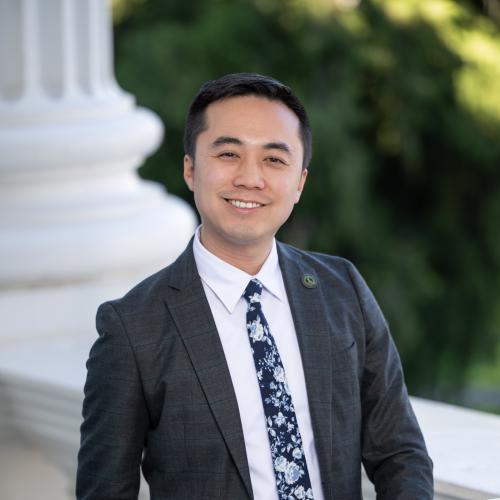
Rep. Alex Lee
Sponsored bills
(1) Existing law permits the name of the committee that paid for certain video, print, electronic media, or text message advertisements to be shortened, as specified. For purposes of this provision, this bill would clarify that a print advertisement includes a yard sign or a billboard and an electronic media advertisement means a graphic, image, animated graphic, or animated image that the online platform hosting the advertisement allows to link to an internet website paid for by the committee, as specified. For certain advertisements, the bill would permit the names of top contributors to be shortened by using approved abbreviations or leaving out words from the top contributor's name, as specified. For printed advertisements larger than those designed to be individually distributed, such as yard signs and billboards, existing law permits the text of the disclosure to be adjusted so that it does not appear on separate horizontal lines, with the names of the top contributors separated by a comma. This bill would define such advertisements as those that exceed 187 square inches. The bill would require the names of the top contributors to be separated by clearly visible bullet points or by inserting the applicable number (1, 2, or 3) before the names of the 3 largest contributors. The bill would specify the order in which required disclosures must appear on the advertisement. The bill would also extend these requirements to electronic advertisements displayed on a physical surface. (2) Under existing law, an advertisement supporting or opposing a candidate that is paid for by an independent expenditure must include a statement that it was not authorized by a candidate or a committee controlled by a candidate. If the advertisement was authorized or paid for by a candidate for another office, the expenditure must instead include a statement that "This advertisement was not authorized or paid for by a candidate for this office or a committee controlled by a candidate for this office." This bill would shorten the above statements, respectively, to "Not paid for by candidate" and "Not paid for by a candidate for this office." (3) The California Constitution requires the state to reimburse local agencies and school districts for certain costs mandated by the state. Statutory provisions establish procedures for making that reimbursement. This bill would provide that no reimbursement is required by this act for a specified reason. (4) The Political Reform Act of 1974, an initiative measure, provides that the Legislature may amend the act to further the act's purposes upon a 23 vote of each house of the Legislature and compliance with specified procedural requirements. This bill would declare that it furthers the purposes of the act.
Existing law contains numerous provisions governing the qualifications, standards, and training of peace officers. Existing law specifies circumstances that disqualify a person from holding office or being employed as a peace officer, including, among other things, any person previously employed in law enforcement in any state or United States territory or by the federal government whose name is listed in any of specified indexes whose certification as a law enforcement officer in that jurisdiction was revoked for misconduct or who, while employed as a law enforcement officer, engaged in serious misconduct that would have resulted in their certification being revoked by the commission if employed as a peace officer in this state. This bill would specify that, for purposes of the disqualification circumstances described above, the terms "employed in law enforcement" and "law enforcement officer" include a law enforcement officer employed in any state or United States territory or by the federal government who engages in immigration enforcement, as provided. The bill would make the provisions of the act severable. The bill would include findings that changes proposed by this bill address a matter of statewide concern rather than a municipal affair and, therefore, apply to all cities, including charter cities. This bill would incorporate additional changes to Section 1029 of the Government Code proposed by AB 1896 to be operative only if this bill and AB 1896 are enacted and this bill is enacted last.
Existing law allows an individual taxpayer to contribute amounts in excess of their personal income tax liability for the support of specified funds and accounts, including, among others, to the California Cancer Research Voluntary Tax Contribution Fund. This bill, for taxable years beginning on or after January 1, 2027, and before January 1, 2034, would allow an individual to designate on their tax return that a specified amount in excess of their tax liability be transferred to the continuously appropriated California Spinal Cord Injury Research Voluntary Tax Contribution Fund, which would be created by this bill. The bill would require the Franchise Tax Board to revise the tax return form to include a space for the designation of contributions to the fund. By establishing a new continuously appropriated fund, this bill would make an appropriation. The bill would repeal its provisions on December 1, 2034, except as specified.
The California Environmental Quality Act (CEQA) requires a lead agency, as defined, to prepare, or cause to be prepared, and certify the completion of, an environmental impact report on a project that it proposes to carry out or approve that may have a significant effect on the environment or to adopt a negative declaration if it finds that the project will not have that effect. CEQA also requires a lead agency to prepare a mitigated negative declaration for a project that may have a significant effect on the environment if revisions in the project would avoid or mitigate that effect and there is no substantial evidence that the project, as revised, would have a significant effect on the environment. CEQA defines various terms, including "natural and protected lands" for its purposes. This bill would revise the definition of that term to include habitats for protected species identified as candidate, sensitive, or species of special status by state or federal agencies. CEQA exempts from its requirement projects that consist exclusively of a day care center that is not located in a residential area and projects that consist exclusively of an advanced manufacturing facility located on a site zoned exclusively for industrial uses. This bill would additionally exempt projects consisting exclusively of a family day care home, as defined. The bill would, for the exemption for the day care center and family day care home, instead require the projects for those facilities not be located in an area zoned for industrial use or within 3,200 feet of a facility that actively extracts or refines oil or natural gas in order for the exemption to apply. The bill would revise the exemption for advanced manufacturing facility projects to require those projects to be used exclusively for final tier manufacturing, as defined. The bill would require an applicant of an advanced manufacturing project that is exempted from CEQA under the bill's requirement to enter into a bona fide community benefits agreement, as provided, and to comply with certain labor requirements, as provided. The bill would require the lead agency, before determining that an advanced manufacturing project is exempt from CEQA, to hold at least one public hearing on the project and to ensure that the applicant complies with the requirement to enter into a bona fide community benefits agreement and the labor requirements. CEQA exempts from its requirements a rezoning that implements the schedule of actions contained in an approved housing element. CEQA specifies that this exemption does not apply to a rezoning that would allow for the construction of certain facilities, including oil and gas infrastructure. CEQA also specifies that this exemption does not apply rezoning that would allow for construction to occur within the boundaries of any natural and protected lands, except as provided. This bill would repeal the exception from the CEQA exemption for rezoning that would allow for oil and gas infrastructure. The bill would specify that the definition of "natural and protected land" does not include habitats for protected species that would be added to that definition by this bill for purposes the exception for rezoning that would allow for construction to occur within the boundaries of any natural and protected lands to the CEQA exemption. CEQA specifies, for a proposed housing development project that would otherwise be exempt from its requirements but for a single condition required for the exemption to apply, that the application of CEQA is limited to the effects upon the environment that are caused by that single condition. CEQA provides that this limited application of CEQA does not apply if the proposed housing project is located on natural and protected land, but does not include "natural and protected land" that is a site within a very high fire hazard severity zone or within the state responsibility area, except as provided. This bill would additionally specify that "natural and protected land" does not include habitats for protected species that would be added to that definition by this bill. Because the bill would imposes additional duties on a lead agency, this bill would impose a state-mandated local program. The California Constitution requires the state to reimburse local agencies and school districts for certain costs mandated by the state. Statutory provisions establish procedures for making that reimbursement. This bill would provide that no reimbursement is required by this act for a specified reason.
Existing law, the Proprietary Security Services Act, prohibits a person from engaging in the business of a proprietary private security officer or a proprietary private security employer unless registered with the Department of Consumer Affairs. Existing law makes a violation of these provisions an infraction, as specified. Existing law requires a person who is registered and hired as a proprietary private security officer to complete training in security officer skills within 6 months from the date upon which registration is issued, or within 6 months of their employment with a proprietary private security employer, as specified. Existing law prohibits a proprietary private security employer from engaging in specified acts and authorizes the Director of Consumer Affairs to issue a citation, which may include an order to pay specified administrative fines for a violation of these provisions. This bill, commencing January 1, 2029, would recast those training provisions to require the training to be 42 hours, to require an applicant for a proprietary private security officer registration to complete, within the first 6 months of their employment date, a course in the exercise of the power to arrest and the appropriate use of force as a condition of issuance of the registration, and to require that the training be conducted through traditional classroom instruction, as defined. The bill would require 2 hours of training to be dedicated to training employees on specified workers' rights contained in a notice employers are required to provide employees, as specified. The bill would require the Bureau of Security and Investigative Services to administer certain provisions governing the approval of training providers, and would create a certificate authorizing a labor organization that represents security guards of a proprietary private security employer to provide the 2-hour training, as specified. The bill would also require a registered proprietary private security employee annually to complete a minimum of 12 hours of security officer skills training, with at least 4 hours of training dedicated to practicing deescalation skills, as specified, and that the time spent attending the annual training be compensated by the employer. The bill would require the bureau to determine the criteria to evaluate whether the deescalation trainings conform to the required principles and methods, as specified. This bill, commencing January 1, 2029, would increase the administrative fine that the director may impose upon a proprietary private security employer for failure to properly maintain accurate and current employment and training records or failure to administer to registered employees of the licensee the review or practice training, as specified, from $500 to $1,000, and would specify that the fine is for each violation. The bill would require a private security employer to ensure that the security skills training occurs and to compensate employees for training, as specified. The bill would authorize the director to impose an administrative fine for a violation of these provisions not exceeding $5,000 per violation and $2,500 per violation, respectively. Existing law requires a person registered as a proprietary private security employer to deliver to the director a written report describing the circumstances surrounding any physical altercation by a registered proprietary private security officer with a member of the public while on duty and while acting within the course and scope of their employment within 7 business days after the qualifying incident. The report is required only for certain physical altercations, including those resulting in a member of the public requiring first aid or other medical attention. This bill, commencing January 1, 2029, would expand the circumstances requiring a report to include those in which the physical altercation resulted in a security officer requiring first aid or other medical attention. The bill would expand the information required in the report to include the apparent race and gender of the member of the public and whether the security officer involved had received all required training at the time of the incident. The bill would require the bureau to release a report annually with respect to these reports describing the circumstances surrounding the physical altercations with members of the public containing specified information. Existing law, the Private Security Services Act, requires the director to administer its provisions. Existing law prohibits a person licensed as a private patrol operator from engaging in specified acts. Existing law requires a person registered as a security guard or patrolperson, and their employer, to deliver to the director a written report fully describing the circumstances surrounding any discharge of any firearm or physical altercation with a member of the public in which they were involved while acting within the course and scope of their employment within 7 days after the incident, as specified. Existing law makes any person who violates any of these provisions relating to private patrol operator licensure guilty of a misdemeanor. This bill, commencing January 1, 2029, would require the firearm discharge or altercation report to include the apparent race and gender of the member of the public and whether the security officer involved had received all required training at the time of the incident. The bill would also require the altercation report to specify whether a security officer required first aid or other medical attention. Because the bill would change the definition of a crime, it would impose a state-mandated local program. The bill would require the Bureau of Security and Investigative Services to release a report annually with respect to these reports describing the circumstances surrounding the discharge of any firearm, or physical altercation with a member of the public containing specified information. Existing law requires persons licensed under these provisions and persons who are employed and compensated by a licensee as a security guard or patrolperson, and who in the course of that employment or business carries a firearm, to undergo specified training in the exercise of the power to arrest and the appropriate use of force and a course of training in the carrying and use of firearms. This bill, commencing January 1, 2029, would require the department to develop and establish a standard course and curriculum that includes a minimum number of hours of instruction for training individuals on the role of implicit and explicit bias on racial profiling and the use of firearms in various settings. Existing law requires each applicant for a security guard registration to complete a course in the exercise of the power to arrest and the appropriate use of force as a condition for the issuance of the registration. Existing law requires a security guard registrant to, as specified, complete 32 hours of training in security officer skills within 6 months from the date of an initial registration, 16 of which are required to be completed within 30 days from the date that the registration is issued. This bill, commencing January 1, 2029, would recast these training provisions, increase the required hours of security guard training to 42, and require that the training be conducted through traditional in-person classroom instruction, as defined. The bill would increase the requirement that a registrant annually complete 8 hours of review or practice of security officer skills to 12 hours, require that 4 of those hours be dedicated to deescalation skills, as specified, and make other conforming changes. The bill would require 2 hours of training to be dedicated to training employees on specified workers' rights contained in a notice employers are required to provide employees, as specified. The bill would require the bureau to administer certain provisions governing the approval of training providers, and would create a certificate authorizing a labor organization that represents security guards of a proprietary private security employer to provide the 2-hour training, as specified. The bill would require a person licensed as a private patrol operator to ensure that security skills training occurs and to compensate employees for this training. The bill would require the bureau to determine the criteria to evaluate whether the deescalation trainings conform to the required principles and methods, as specified. This bill, commencing January 1, 2029, would revise provisions that describe those entities that are qualified to administer, test, and certify the course of training in the exercise of the power to arrest and the appropriate use of force. This bill, commencing January 1, 2029, would require the Bureau of Security and Investigative Services to annually solicit feedback from representatives from the security industry, as specified, regarding possible changes to a rule or regulation relating to the provisions described above for private patrol operators. Existing law authorizes the director to issue a citation to a licensee or registrant for violation of specified provisions which may contain an assessment of an administrative fine not exceeding $2,500. This bill would increase the amount of the administrative fine that may be assessed by the director to $10,000 per violation. Existing law authorizes the director to impose fines on licensed private patrol operators in the amount of $500 for each violation relating to a failure to properly maintain employment records or proof of completion of required training, as specified. Existing law also authorizes the director to impose fines on licensed private patrol operators in the amount of $250 for each violation relating to a failure to administer required security skills training, as specified. This bill, commencing January 1, 2029, would increase these fine amounts to $1,000 for each violation. Existing law authorizes the director to impose fines on licensed private patrol operators in the amount of $5,000 for each violation relating to a failure to deliver to the director a report describing the circumstances surrounding the discharge of any firearm or physical altercation with a member of the public while on duty, as specified. This bill, commencing January 1, 2029, would reduce the fine for violating these provisions to $2,500 per violation. This bill would declare the severability of its provisions. This bill would incorporate additional changes to Sections 7574.18 and 7583.6 of the Business and Professions Code proposed by SB 1148 to be operative only if this bill and SB 1148 are enacted and this bill is enacted last. The California Constitution requires the state to reimburse local agencies and school districts for certain costs mandated by the state. Statutory provisions establish procedures for making that reimbursement. This bill would provide that no reimbursement is required by this act for a specified reason.
Existing law imposes taxes upon income and real property, and taxes upon certain transactions and excise taxes. The Fee Collection Procedures Law provides procedures for the collection of certain fees and surcharges and is administered by the California Department of Tax and Fee Administration (CDTFA) . Under existing law, a violation of the Fee Collection Procedures Law is a crime. This bill would, beginning July 1, 2028, establish the Private Detention Facility Tax Law, which would impose an annual tax on each private detention facility operator, as defined, equal to 25% of the operator's gross income, as defined, for the prior fiscal year, as defined. The bill would establish the Due Process for All Fund in the State Treasury, except as provided, and would require all revenues collected, less refunds and reimbursement to the CDTFA, be deposited into the fund. In the event that Assembly Bill 2465 is enacted, the bill would instead require all revenues be deposited into the Due Process for All Fund as established by that bill. The bill would direct moneys in the fund, upon appropriation by the Legislature, be used for immigration-related services. The bill would require the CDTFA to administer and collect the tax pursuant to the Fee Collection Procedures Law. By expanding the application of the crimes associated with the Fee Collection Procedures Law, the bill would impose a state-mandated local program. This bill would include a change in state statute that would result in a taxpayer paying a higher tax within the meaning of Section 3 of Article XIIIA of the California Constitution, and thus would require for passage the approval of 23 of the membership of each house of the Legislature. The California Constitution requires the state to reimburse local agencies and school districts for certain costs mandated by the state. Statutory provisions establish procedures for making that reimbursement. This bill would provide that no reimbursement is required by this act for a specified reason. This bill would take effect immediately as a tax levy.
Existing law, the California Child Day Care Facilities Act, provides for the licensure and regulation of child daycare facilities, including daycare centers and family daycare homes, by the State Department of Social Services. Existing law imposes various training requirements on child daycare facilities, including, among others, at least 15 hours of specified health and safety training that includes pediatric first aid, pediatric CPR, and preventive health practices, and mandated reporter training. A person who willfully or repeatedly violates any provision of the act or any rule or regulation promulgated under the act is guilty of a crime. Existing law prohibits licensed child daycare facilities, employees of licensed child daycare facilities, and license-exempt California state preschool program facilities from collecting information or documents regarding citizenship or immigration status of children or their family members. Existing law also requires the Attorney General, by April 1, 2026, in consultation with the appropriate stakeholders, to publish model policies limiting assistance with immigration enforcement at child daycare facilities, as specified, and requires the State Department of Social Services to inform licensed daycare facilities of the model policies. This bill would require the State Department of Social Services to notify all licensed and license-exempt family daycare home providers of a person's rights under the Fourth Amendment to the United States Constitution, as specified, and would also require the department to designate a statewide entity to develop and provide a training program about those rights. The bill would require the designated statewide entity to offer the training program commencing 60 days after the effective date of the bill, and would require licensed family daycare home providers to complete the training within specified timeframes. The bill would specify that a violation of these requirements is not subject to criminal, civil, or administrative penalties, and does not subject a licensee to citation under the act. This bill would declare that it is to take effect immediately as an urgency statute.
Maddy summaryThis bill designates September 2026 as Childhood Cancer Awareness Month. It directly affects state agencies and organizations by encouraging them to recognize this specific month for awareness activities. The measure does not change laws or allocate funding but serves as a formal commemorative resolution.
Existing law establishes the California Community Colleges, under the administration of the Board of Governors of the California Community Colleges, the California State University, under the administration of the Trustees of the California State University, and the University of California, under the administration of the Regents of the University of California, as the 3 segments of public postsecondary education in the state. Existing law, the NextUp program, authorizes the office of the Chancellor of the California Community Colleges to enter into agreements with community college districts to provide, and allocate to selected community colleges within a community college district, funds for services in support of postsecondary education for foster youth. Existing law requires a student participant in the program to be a current or former foster youth whose dependency was established or continued by a court on or after the youth's 13th birthday and who is no older than 25 years of age at the commencement of the academic year in which the student first enrolls in the program. Existing law requires the California State University and each community college district, and requests the University of California, with respect to each campus in their respective jurisdictions that administers a priority enrollment system, to grant priority in that system to, among others, foster youth and former foster youth whose dependency was established or continued by a court on or after the youth's 13th birthday and who is no older than 25 years of age at the commencement of the academic year. This bill would extend the requirement and request for priority enrollment to current or former foster youth whose dependency was established or continued by a court on or after the youth's 13th birthday and who is older than 25 years of age so long as they are enrolled in the NextUp program. Existing law requests campuses of the California Community Colleges, requires campuses of the California State University, and, subject to the Regents of the University of California's agreement by resolution, requires University of California campuses, that maintain student housing facilities, to: (1) give priority for student housing to current and former foster youth and current and former homeless youth, and (2) as to campuses that maintain student housing facilities open for occupation during school breaks, or on a year-round basis, give first priority to current and former foster youth and current and former homeless youth for residence in housing facilities that are open for uninterrupted year-round occupation and next give priority to current and former foster youth and current and former homeless youth for housing that is open for occupation during the most days in the calendar year. This bill would require, instead of request, campuses of the California Community Colleges to give this priority for student housing to current and former foster youth and current and former homeless youth. The bill would require campuses of the California Community Colleges and campuses of the California State University, and, subject to the Regents of the University of California's agreement by resolution, require University of California campuses, that maintain student housing facilities, to, among other things: (1) include, in their student housing applications, questions designed to identify students who may be eligible for priority student housing as current and former foster youth and current and former homeless youth, (2) defer or waive the collection of housing-related costs, as defined, for those students granted this priority, and (3) post on its internet website information describing priority housing benefits and the eligibility criteria for those benefits, as specified. By adding to the duties of community colleges that maintain student housing facilities, this bill would impose a state-mandated local program. The California Constitution requires the state to reimburse local agencies and school districts for certain costs mandated by the state. Statutory provisions establish procedures for making that reimbursement. This bill would provide that, if the Commission on State Mandates determines that the bill contains costs mandated by the state, reimbursement for those costs shall be made pursuant to the statutory provisions noted above.