

(1) Existing law, the Warren-911-Emergency Assistance Act, requires every local public agency, as defined, to have an emergency communication system and requires the digits "911" to be the primary emergency telephone number within the system. Existing law specifies provisions governing the operation and financing of community mental health services for the mentally disordered in every county through locally administered and locally controlled community mental health programs. Existing law specifies that county mental health services should be organized to provide immediate response to individuals in precrisis and crisis and to members of the individual's support system on a 24-hour, 7-day-per-week basis and authorizes provision of crisis services offsite as mobile services. Existing federal law, the National Suicide Hotline Designation Act, designates the 3-digit telephone number "988" as the universal number within the United States for the purpose of the national suicide prevention and mental health crisis hotline system operating through the 988 Suicide and Crisis Lifeline maintained by the Assistant Secretary for Mental Health and Substance Abuse and the Veterans Crisis Line maintained by the Secretary of Veterans Affairs. This bill would enact the Miles Hall Lifeline and Suicide Prevention Act. The bill would require the Office of Emergency Services to verify, no later than July 16, 2022, that technology that allows for transfers between 988 centers as well as between 988 centers and 911 public safety answering points, is available to 988 centers and 911 public safety answering points throughout the state. The bill would require, no later than 90 days after passage of the act, the office to appoint a 988 system director, among other things. The bill would require, no later than July 1, 2024, the office to verify interoperability between and across 911 and 988. The bill would require the office to consult with specified entities on any technology requirements for 988 centers. This bill would require the California Health and Human Services Agency to create, no later than December 31, 2023, a set of recommendations to support a 5-year implementation plan for a comprehensive 988 system. The bill would require that agency to convene a state 988 advisory group, as described, for purposes of advising the agency on the set of recommendations. The bill would require the agency to report annually, on or before December 31, beginning December 31, 2024, and until December 31, 2029, to the Legislature on the status of 988 implementation in the state, as described. The Administrative Procedure Act generally governs the procedure for the adoption, amendment, or repeal of regulations by state agencies and for the review of those regulatory actions by the Office of Administrative Law. The bill would provide that regulations and other similar instruments made pursuant to these provisions by the Office of Emergency Services and the California Health and Human Services Agency are not subject to the rulemaking provisions of the Administrative Procedure Act. (2) Existing law, the Knox-Keene Health Care Service Plan Act of 1975, provides for the licensure and regulation of health care service plans by the Department of Managed Health Care and makes a willful violation of the act a crime. Existing law also provides for the regulation of health insurers by the Department of Insurance. Existing law requires a health care service plan contract or disability insurance policy issued, amended, or renewed on or after January 1, 2021, to provide coverage for medically necessary treatment of mental health and substance use disorders, as defined, under the same terms and conditions applied to other medical conditions. This bill would require health care service plans and insurers to cover medically necessary treatment of a mental health or substance use disorder, including behavioral health crisis services, provided by a 988 center or mobile crisis team, regardless of whether the service is provided by an in-network or out-of-network provider, at the in-network cost-sharing amount, as defined. By creating a new crime under the Knox-Keene Act, this bill would impose a state-mandated local program. (3) Existing law, the Emergency Telephone Users Surcharges Act, generally imposes a surcharge on each access line for each month or part thereof for which a service user subscribes with a service supplier, at an amount no greater than $0.80, based on the Office of Emergency Services' estimate of the number of access lines to which the surcharge will be applied per month for a calendar year period that it estimates, pursuant to a specified formula, will produce sufficient revenue to fund the current fiscal year's 911 costs. Existing law imposes a surcharge on the purchase of prepaid mobile telephony services at the time of each retail transaction in this state, at the rate equal to the monthly surcharge amount per access line, to be paid by prepaid consumers and collected by sellers, as defined. Existing law exempts certain lines from the surcharge, including lines supplying lifeline service. Existing law requires the surcharge to be remitted to, and administered by, the California Department of Tax and Fee Administration, in accordance with specified provisions. Existing law makes certain violations of the Emergency Telephone Users Surcharge Act a crime. Existing law requires amounts to be paid to the state pursuant to the Emergency Telephone Users Surcharge Act to be deposited into the State Emergency Telephone Number Account and that the amounts deposited, upon appropriation by the Legislature, be spent solely for specified purposes, including payment for the installation of, and ongoing expenses for, a basic system. This bill would create a separate surcharge, beginning January 1, 2023, on each access line for each month or part thereof for which a service user subscribes with a service supplier. The bill would set the 988 surcharge for the 2023 and 2024 calendar years at $0.08 per access line per month and, for years beginning January 1, 2025, at an amount based on a specified formula, but no greater than $0.30 per access line per month. This bill would make applicable relevant provisions of the Emergency Telephone Users Surcharge Act to the 988 surcharge, as provided, including existing surcharge exemptions. The bill would authorize the 911 and 988 surcharges to be combined into a single-line item, as described. The bill would provide for specified costs to be paid by the fees prior to distribution to the Office of Emergency Services. The bill would make conforming changes in regard to the 988 surcharge. This bill would create the 988 State Suicide and Behavioral Health Crisis Services Fund and would require the fees to be deposited along with other specified moneys into the fund. The bill would provide that the funds be used, upon appropriation by the Legislature, for specified purposes and in accordance with specified priorities. The bill would require the Office of Emergency Services to require an entity seeking moneys available through the fund to annually file an expenditure and outcomes report containing specified information. (4) This bill would appropriate $300,000 from the General Fund to the 988 State Suicide and Behavioral Health Crisis Services Fund for expenditure by the California Department of Tax and Fee Administration in the 2022–23 fiscal year for purposes of implementing the amendments to the Emergency Telephone Users Surcharge Act. (5) This bill would incorporate additional changes to Section 41100 of the Revenue and Taxation Code proposed by SB 1496 to be operative only if this bill and SB 1496 are enacted and this bill is enacted last. (6) By expanding the scope of crimes imposed by the Emergency Telephone Users Surcharge Act, this bill would impose a state-mandated local program. The California Constitution requires the state to reimburse local agencies and school districts for certain costs mandated by the state. Statutory provisions establish procedures for making that reimbursement. This bill would provide that no reimbursement is required by this act for a specified reason. (7) This bill would declare that it is to take effect immediately as an urgency statute.
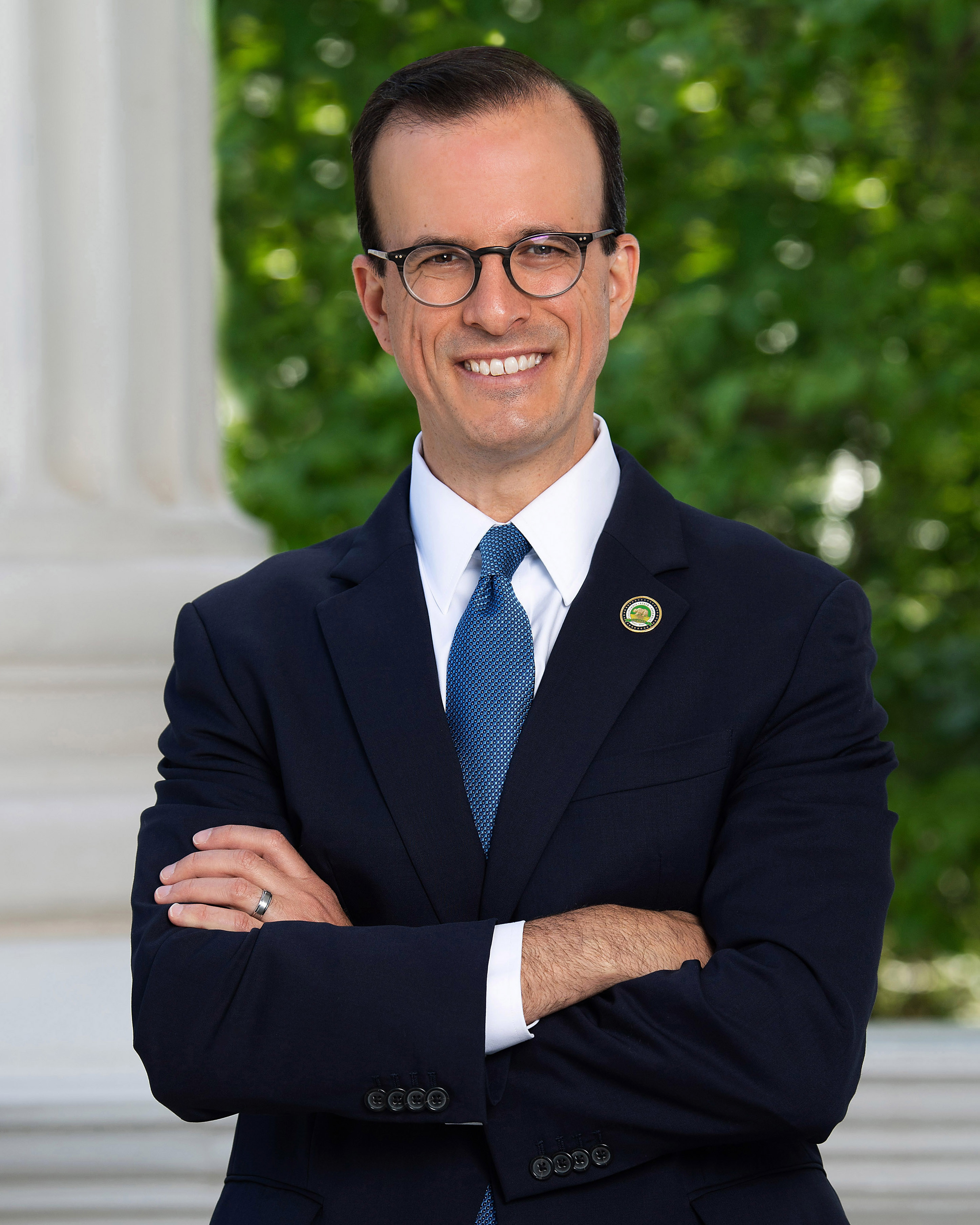
Asm. Marc Berman
Sponsored bills
Existing law designates specific days as holidays in this state. Existing law requires the Governor annually to proclaim the date corresponding with the second new moon following the winter solstice, or the third new moon following the winter solstice should an intercalary month intervene, as the "Lunar New Year." Existing law entitles state employees, with specified exceptions, to elect to receive 8 hours of holiday credit for "Native American Day," in lieu of receiving 8 hours of personal holiday credit, and to elect to use 8 hours of vacation, annual leave, or compensating time off, consistent with departmental operational needs and collective bargaining agreements, for "Native American Day," as specified. This bill would repeal provisions requiring the Governor to annually proclaim the "Lunar New Year," and would instead recognize the "Lunar New Year" as a state holiday. The bill would authorize state employees, with specified exceptions, to elect to receive 8 hours of holiday credit for the "Lunar New Year" in lieu of receiving 8 hours of personal holiday credit, and to elect to use 8 hours of vacation, annual leave, or compensating time off, consistent with departmental operational needs and collective bargaining agreements, for "Lunar New Year," as specified. Existing law designates specific days designated as holidays in this state, every Saturday and the day after Thanksgiving Day as judicial holidays, except "Admission Day," "Columbus Day," and any other day appointed by the President, but not by the Governor, for a public fast, thanksgiving, or holiday. This bill would additionally exclude "Lunar New Year" from designation as a judicial holiday. This bill would incorporate additional changes to Section 135 of the Code of Civil Procedure proposed by AB 1801 to be operative only if this bill and AB 1801 are enacted and this bill is enacted last. This bill would incorporate additional changes to Sections 6700, 19853, and 19853.1 of the Government Code proposed by AB 1655 and AB 1801 to be operative only if this bill and AB 1655, AB 1801, or both are enacted and this bill is enacted last.
Existing law, the Alatorre-Zenovich-Dunlap-Berman Agricultural Labor Relations Act of 1975, grants agricultural employees the right to form and join labor organizations and engage in collective bargaining with respect to wages, terms of employment, and other employment conditions, and authorizes employees to elect exclusive bargaining representatives for these purposes. Existing law creates the Agricultural Labor Relations Board and prescribes its composition, duties, and powers. Existing law authorizes the board to hold hearings and conduct investigations and requires that certain procedures be the exclusive method of redressing unfair labor practices. Under existing law, any person who willfully resists, prevents, or interferes with a member of the board or its agents or agencies in the performance of their duties is guilty of a misdemeanor. Existing law requires the board to certify the results of an election conducted by secret ballot of employees in a collective bargaining unit to designate a collective bargaining representative, unless the board determines there are sufficient grounds to refuse to do so. Existing law further provides that if the board refuses to certify an election because of employer misconduct that would render slight the chances of a new election reflecting the free and fair choice of employees, the labor organization shall be certified as the bargaining representative for the bargaining unit. This bill would refer to the election by secret ballot process as a polling place election. The bill would establish alternative procedures to the polling place election and authorize a labor organization to be certified as the exclusive bargaining representative of a bargaining unit through either a labor peace election or a non-labor peace election, as prescribed, dependent on whether an employer enrolls and agrees to a labor peace election for labor organization representation campaigns. The bill would provide that a labor peace election or a non-labor peace election permits a bargaining unit to summarily select a labor organization as its representative for collective bargaining purposes without using the existing polling place process. Under the bill, a labor peace election would be a mail ballot election and a non-labor peace election would establish a process for the submission of a petition with proof of majority support, subject to certification by the board. Among other provisions, the bill would require for both alternative procedures that an employer respond to the board with regard to a petition, including providing a specified list of employees to the board. By expanding the definition of a crime, this bill would impose a state-mandated local program. This bill would establish a schedule for agricultural employers to indicate to the board whether they agree to a labor peace compact, defined to mean an agreement by the employer to, among other things, make no statements for or against union representation to its employees or publicly, in any written or oral form, at any time during employee hire, rehire, or orientation, or after certain documents regarding organization are filed with the board. The bill would prohibit a labor peace compact from prohibiting an employer from communicating truthful statements to employees regarding workplace policies or benefits, as specified. The bill would require the board to develop an online web-based labor peace election process that will allow employers to indicate their labor peace choice online, and that will allow labor organizations to see whether a specific agricultural employer has agreed to a labor peace election campaign. This bill would repeal the above provisions on January 1, 2028. This bill would prescribe civil penalties to be imposed upon an agricultural employer who commits an unfair labor practice in an amount not to exceed $10,000 for each violation, and would increase that sum to an amount not to exceed $25,000 for specified violations. The bill would require the board to consider specified factors in determining the amount of a civil penalty pursuant to these provisions. The bill would also authorize the board to impose personal liability for these penalties upon a director or officer of an employer in certain circumstances. Existing law authorizes a person aggrieved by the final order of the board granting or denying in whole or in part the relief sought for an unfair labor practice, to obtain a review of the order in a specified court of appeal by filing in the court a written petition requesting that the order of the board be modified or set aside. This bill would require an employer who appeals or petitions for a writ of review of any order of the board involving make-whole, backpay, or other monetary awards to employees, to post an appeal bond in the amount of the entire economic value of the order, as specified, and would provide for the bond to be forfeited under specified conditions. This bill would state that its provisions are severable. The California Constitution requires the state to reimburse local agencies and school districts for certain costs mandated by the state. Statutory provisions establish procedures for making that reimbursement. This bill would provide that no reimbursement is required by this act for a specified reason.
Existing law establishes the Department of Housing and Community Development in the Business, Consumer Services, and Housing Agency and makes the department responsible for administering various housing programs throughout the state, including, among others, the Multifamily Housing Program, the Housing for a Healthy California Program, and the California Emergency Solutions Grants Program. Existing law establishes the California Housing Finance Agency within the Department of Housing and Community Development, with the primary purpose of meeting the housing needs of persons and families of low or moderate income. Existing law establishes the California Tax Credit Allocation Committee, composed of specified members, and requires that the California Tax Credit Allocation Committee, among other things, allocate specified federal low-income housing tax credits, as provided. This bill, on or before July 1, 2024, would require the Department of Housing and Community Development, the California Housing Finance Agency, and the California Tax Credit Allocation Committee to enter into a memorandum of understanding to streamline the compliance monitoring of affordable multifamily rental housing developments that are subject to a regulatory agreement with more than one of these entities. The bill would require the memorandum of understanding to ensure that only one entity conducts physical inspections for a particular project, eliminate the submission of duplicate information, and provide for an aligned process to obtain specified approvals.
The Planning and Zoning Law authorizes a development proponent to submit an application for a multifamily housing development that is subject to a streamlined, ministerial approval process and not subject to a conditional use permit if the development satisfies specified objective planning standards. This bill would create the Affordable Housing and High Road Jobs Act of 2022, which would authorize a development proponent to submit an application for a housing development that meets specified objective standards and affordability and site criteria, including being located within a zone where office, retail, or parking are a principally permitted use, and would make the development a use by right and subject to one of 2 streamlined, ministerial review processes. The bill would require a development proponent for a housing development project approved pursuant to the streamlined, ministerial review process to require, in contracts with construction contractors, that certain wage and labor standards will be met, including a requirement that all construction workers be paid at least the general prevailing rate of wages, as specified. The bill would require a development proponent to certify to the local government that those standards will be met in project construction. By expanding the crime of perjury, the bill would impose a state-mandated local program. This bill would require the Labor Commissioner to enforce the obligation to pay prevailing wages. The bill would require a development proponent for a development of 50 or more housing units approved by a local government pursuant to the above-described provisions to require construction contractors to participate in an apprenticeship program or request dispatch of apprentices from a state-approved apprenticeship program, and to make specified health care expenditures for construction craft employees. The bill would require the development proponent to certify compliance with those requirements to the local government and to report monthly to the local government that they are in compliance with those requirements. The bill would subject the development proponent and the construction contractors and subcontractors to specified civil penalties for failing to comply with those requirements, and would require the penalty funds to be deposited in the State Public Works Enforcement Fund. The bill would prohibit a local government from imposing any requirement, including increased fees, on the basis that the project is eligible to receive ministerial or streamlined approval. Because the bill would impose new duties on local governments, the bill would impose a state-mandated local program. This bill would require the Department of Housing and Community Development to undertake specified studies of the outcomes of the Affordable Housing and High Road Jobs Act of 2022, to publish reports on the findings of those studies, to post the reports on its internet website, and to submit the reports to the Legislature. This bill would repeal the provisions of the Affordable Housing and High Road Jobs Act of 2022 on January 1, 2033. The Planning and Zoning Law requires a city or county to adopt a general plan for land use development within its boundaries that includes, among other things, a housing element. The law also requires a planning agency to provide a specified annual report after the legislative body has adopted all or part of a general plan. This bill would require the annual report to include specified information about applications for housing developments submitted pursuant to the Affordable Housing and High Road Jobs Act of 2022. The Planning and Zoning Law also requires the Department of Housing and Community Development to notify the city, county, or city and county, and authorizes the department to notify the Attorney General, that the city, county, or city and county is in violation of state law if the department finds that the housing element or an amendment to that element, or any specified action or failure to act, does not substantially comply with the law as it pertains to housing elements or that any local government has taken an action in violation of certain housing laws. This bill would add the Affordable Housing and High Road Jobs Act of 2022 to that list of housing laws. The California Environmental Quality Act (CEQA) requires a lead agency, as defined, to prepare, or cause to be prepared, and certify the completion of, an environmental impact report on a project that it proposes to carry out or approve that may have a significant effect on the environment or to adopt a negative declaration if it finds that the project will not have that effect. CEQA also requires a lead agency to prepare a mitigated negative declaration for a project that may have a significant effect on the environment if revisions in the project would avoid or mitigate that effect and there is no substantial evidence that the project, as revised, would have a significant effect on the environment. CEQA does not apply to the approval of ministerial projects. This bill would define "use by right" for purposes of the Affordable Housing and High Road Jobs Act of 2022, in part, as a development project that is not a project for purposes of CEQA, and the approval process established by this bill would be ministerial in nature, thereby exempting the approval of development projects subject to that approval process from CEQA. This bill would incorporate additional changes to Section 65400 of the Government Code proposed by AB 1743, AB 2094, and AB 2653, to be operative only if this bill and any one or a combination of AB 1743, AB 2094, and AB 2653, are enacted, and this bill is enacted last, as described. This bill would incorporate additional changes to Section 65585 of the Government Code proposed by AB 2097 and AB 2653 to be operative only if this bill and either or both of AB 2097 and AB 2653 are enacted, and this bill is enacted last, as described. The California Constitution requires the state to reimburse local agencies and school districts for certain costs mandated by the state. Statutory provisions establish procedures for making that reimbursement. This bill would provide that with regard to certain mandates no reimbursement is required by this act for a specified reason. With regard to any other mandates, this bill would provide that, if the Commission on State Mandates determines that the bill contains costs so mandated by the state, reimbursement for those costs shall be made pursuant to the statutory provisions noted above. This bill would make its provisions operative on July 1, 2023.
Existing law establishes the Civil Rights Department within the Business, Consumer Services, and Housing Agency to enforce civil rights laws with respect to housing and employment and to protect and safeguard the right of all persons to obtain and hold employment without discrimination based on specified characteristics or status. Existing law requires a private employer that has 100 or more employees and is required to file an annual Employer Information Report (EEO-1) pursuant to federal law to submit a pay data report to the department that contains specified employee information on or before March 31, 2021, and on or before March 31 each year thereafter. Existing law prescribes the information that must be included in the pay data report, including the number of employees by race, ethnicity, and sex in specified job categories. Existing law requires employers with multiple establishments to submit a report for each establishment and a consolidated report that includes all employees. Existing law permits the department to develop, publish on an annual basis, and publicize aggregate reports, provided that the aggregate reports are reasonably calculated to prevent the association of any data with any individual business or person. Existing law provides that an employer is in compliance with the requirement that it submit a pay data report if it submits an EEO-1 to the department containing the same or substantially similar pay data information. Existing law permits the department to seek an order requiring an employer to comply with these provisions and permits it to recover the costs associated with seeking the order for compliance. This bill would, instead, require a private employer that has 100 or more employees to submit a pay data report to the department. This bill would revise the timeframe in which a private employer is required to submit this information to require that it be provided on or before the second Wednesday of May 2023, and for each year thereafter on or before the second Wednesday of May. This bill would also require a private employer that has 100 or more employees hired through labor contractors, as defined, to also submit a separate pay data report to the department for those employees in accordance with the above timeframe, as specified. This bill would require the pay data reports to include the median and mean hourly rate for each combination of race, ethnicity, and sex within each job category. This bill would delete a provision requiring employers with multiple establishments to submit a consolidated report. This bill would delete the provision authorizing an employer to submit an EEO-1 in lieu of a pay data report. This bill would permit a court to impose a civil penalty not to exceed one hundred dollars ($100) per employee upon any employer who fails to file the required report and not to exceed two hundred dollars ($200) per employee upon any employer for a subsequent failure to file the required report. The bill would require those penalties to be deposited in the Civil Rights Enforcement and Litigation Fund. Existing law creates the Division of Labor Standards Enforcement, under the direction of the Labor Commissioner, within the Department of Industrial Relations to enforce labor laws. Existing law requires an employer, upon reasonable request, to provide the pay scale for a position to an applicant applying for employment. Existing law defines pay scale for these purposes to mean salary or hourly wage range. This bill would also require an employer, upon request, to provide to an employee the pay scale for the position in which the employee is currently employed. The bill would require an employer with 15 or more employees to include the pay scale for a position in any job posting. The bill would require an employer to maintain records of a job title and wage rate history for each employee for a specified timeframe, to be open to inspection by the Labor Commissioner. The bill would create a rebuttable presumption in favor of an employee's claim if an employer fails to keep records in violation of these provisions. The bill would require an employer with 15 or more employees that engages a third party to announce, post, publish, or otherwise make known a job posting to provide the pay scale to the third party and would require the third party to include the pay scale in the job posting. The bill would require the Labor Commissioner to investigate complaints alleging violations of these requirements and would authorize the commissioner to order an employer to pay a civil penalty upon finding an employer has violated these provisions. The bill would also authorize a person aggrieved by a violation of these provisions to bring a civil action for injunctive and any other appropriate relief. This bill would require deposit of the civil penalties collected pursuant to these provisions into the Labor Enforcement and Compliance Fund, and would authorize these funds to be used, upon appropriation by the Legislature, for administration and enforcement of these provisions.
Existing law, the Chiropractic Act, enacted by an initiative measure, provides for the licensure and regulation of chiropractors in this state by the State Board of Chiropractic Examiners. Existing law requires that the powers and duties of the board, as provided, be subject to review by the appropriate policy committees of the Legislature as if that act were scheduled to be repealed on January 1, 2023. This bill would instead require that the powers and duties of the board, as provided, be subject to review by the appropriate policy committees of the Legislature as if that act were scheduled to be repealed on January 1, 2027. Existing law requires the board to annually compile a complete directory of all licensees within the state that contains, among other things, the names and addresses of licensees, and requires a licensee to report immediately any change in residence, as specified. This bill would require the directory to additionally include the telephone numbers and emails of licensees, and would require a licensee to report immediately any change in residence or contact information, as specified. Existing law requires the board to submit a report to the appropriate policy and fiscal committees of the Legislature that contains, but is not limited to, the status of the board's fee audit and an update on the board's plans for restructuring its license fees, among other things, by July 1, 2018. This bill would instead require the board to submit a report to the appropriate policy and fiscal committees of the Legislature that contains, but is not limited to, an update on the status of the board's license fee structure and whether the board needs to consider plans for restructuring its license fees by January 1, 2027. Existing law establishes a schedule of regulatory fees necessary to carry out the responsibilities required by the Chiropractic Initiative Act, including, among others, application and renewal fees for licensure, fees to apply for approval for a continuing education course, and satellite office certificate fees. Existing law authorizes the Legislature to fix the amounts of the fees payable by applicants and licensees, and directs the deposit of these fees into the State Board of Chiropractic Examiners' Fund, a continuously appropriated fund. This bill would change the amount of those fees, as provided. By increasing specified fees for deposit into a continuously appropriated fund, the bill would make an appropriation. Existing law requires the board to require a licensee to provide a separate disclosure to a patient, patient's guardian, or patient's health care surrogate that includes specified information on the licensee's probationary status, subject to certain exemptions. This bill would remove specified exemptions from the requirement on licensees to provide the above-described separate disclosure.
(1) Existing law, the Respiratory Care Practice Act, establishes the Respiratory Care Board of California for the licensure and regulation of respiratory therapy practitioners. Existing law makes a violation of that act a crime and repeals the act on January 1, 2023. This bill would extend the operation of the act to January 1, 2027. By extending the operation of the act, a violation of which would be a crime, the bill would impose a state-mandated local program. (2) Existing law requires the employer of a respiratory care practitioner to report to the board the suspension or termination for cause of any practitioner in their employ. Existing law defines suspension or termination for cause to mean suspension or termination from employment for specified reasons, including gross incompetence or negligence, falsification of medical records, and the use of controlled substances or alcohol to the extent that it impairs the ability to safely practice respiratory care. This bill would additionally require an employer of a respiratory care practitioner to report to the board the leave or resignation for cause of a practitioner whom they employ. The bill would define "leave, resignation, suspension, or termination for cause" for these purposes to include administrative leave, employee leave, resignation, suspension, or termination from employment for specified reasons that would additionally include suspected acts, such as suspected gross incompetence or negligence, suspected falsification of medical records, and the suspected use of controlled substances or alcohol to such an extent that it impairs the ability to safely practice respiratory care. The bill would also require an owner, director, partner, or manager of a registry or agency that places one or more practitioners at a facility to practice respiratory care to report those specified suspected or actual acts to the board under specified circumstances. Because a violation of these requirements would be a crime, the bill would impose a state-mandated local program. The bill would also make conforming changes. (3) Existing law, the Respiratory Care Practice Act, prohibits a person from engaging in the practice of respiratory care unless the person is a licensed respiratory care practitioner, except for specified acts, including, among others, the performance of respiratory care services in case of an emergency, including an epidemic or public disaster. Under this bill, the temporary performance of respiratory care services as identified and authorized by the board in the event of an epidemic, pandemic, public disaster, or emergency would not violate the Respiratory Care Practice Act. (4) Existing law, the Vocational Nursing Practice Act, until January 1, 2025, establishes the Board of Vocational Nursing and Psychiatric Technicians of the State of California to license and regulate vocational nurses and psychiatric technicians. Existing law authorizes a licensed vocational nurse to withdraw blood, administer medications, and start and superimpose intravenous fluids, as described, when directed by a licensed physician and surgeon. This bill would provide that a licensed vocational nurse is authorized to perform respiratory tasks and services that do not require a respiratory assessment and only require manual, technical skills, or data collection, as identified by the Respiratory Care Board of California, if the licensed vocational nurse has received training and demonstrated competency satisfactory to their employer and when directed by a physician and surgeon. The bill would also provide that a licensed vocational nurse who is employed by a licensed home health agency who performs respiratory tasks or services identified by the Respiratory Care Board of California does not violate the Respiratory Care Practice Act if, before January 1, 2025, the licensed vocational nurse has completed patient-specific training satisfactory to their employer, and, on or after January 1, 2025, the licensed vocational nurse has completed patient-specific training by the employer pursuant to guidelines that the bill would require the Respiratory Care Board of California to promulgate in collaboration with the Board of Vocational Nursing and Psychiatric Technicians of the State of California. This bill would require the Board of Vocational Nursing and Psychiatric Technicians of the State of California to share all complaints and information related to investigations involving respiratory care services with the Respiratory Care Board of California, as specified. The bill would require the Respiratory Care Board of California to share all complaints and information related to investigations involving a person licensed under the Vocational Nursing Practice Act with the Board of Vocational Nursing and Psychiatric Technicians of the State of California, as specified. (5) The California Constitution requires the state to reimburse local agencies and school districts for certain costs mandated by the state. Statutory provisions establish procedures for making that reimbursement. This bill would provide that no reimbursement is required by this act for a specified reason.
Existing federal law, the Patient Protection and Affordable Care Act (PPACA) , requires each state to establish an American Health Benefit Exchange to facilitate the purchase of qualified health benefit plans by qualified individuals and qualified small employers. Existing state law creates the California Health Benefit Exchange (Exchange) , also known as Covered California, to facilitate the enrollment of qualified individuals and qualified small employers in qualified health plans as required under PPACA. If a qualified health plan covers abortion services, PPACA requires the plan to deposit the premium amounts that equal the actuarial value of the coverage of those services into a separate account, as specified. Existing law, the Knox-Keene Health Care Service Plan Act of 1975, requires the Department of Managed Health Care to license and regulate health care service plans and makes a willful violation of the act a crime. Existing law also requires the Department of Insurance to regulate health insurers. This bill would require, beginning July 1, 2023, a health care service plan or health insurer offering qualified health plans, as defined, through the Exchange to annually report the total amount of funds in the segregated account maintained pursuant to PPACA. The bill would require the annual report to include the ending balance of the account and the total dollar amount of claims paid during a reporting year. By expanding the scope of a crime, this bill would impose a state-mandated local program. The California Constitution requires the state to reimburse local agencies and school districts for certain costs mandated by the state. Statutory provisions establish procedures for making that reimbursement. This bill would provide that no reimbursement is required by this act for a specified reason.
(1) Existing law requires a county coroner to hold inquests to inquire into and determine the circumstances, manner, and cause of violent, sudden, or unusual deaths, including deaths related to or following known or suspected self-induced or criminal abortion. Existing law requires a coroner to register a fetal death after 20 weeks of gestation, unless it is the result of a legal abortion. If a physician was not in attendance at the delivery of the fetus, existing law requires the fetal death to be handled as a death without medical attendance. Existing law requires the coroner to state on the certificate of fetal death the time of fetal death, the direct causes of the fetal death, and the conditions, if any, that gave rise to these causes. This bill would delete the requirement that a coroner hold inquests for deaths related to or following known or suspected self-induced or criminal abortion, and would delete the requirement that an unattended fetal death be handled as a death without medical attendance. The bill would prohibit using the coroner's statements on the certificate of fetal death to establish, bring, or support a criminal prosecution or civil cause of damages against a person who is immune from liability based on their actions or omissions with respect to their pregnancy or actual, potential, or alleged pregnancy outcome, or who aids a pregnant person in exercising their rights under the Reproductive Privacy Act, as specified. (2) Existing law, the Reproductive Privacy Act, provides that every individual possesses a fundamental right of privacy with respect to their personal reproductive decisions. Existing law prohibits the state from interfering with a pregnant person's right to choose or obtain an abortion before the fetus is viable or when it is necessary to protect the life and health of the pregnant person. Under existing law, an abortion is unauthorized if either the person performing the abortion is not a health care provider that is authorized to perform an abortion or the fetus is viable. Existing law, the Tom Bane Civil Rights Act, authorizes an individual whose exercise or enjoyment of rights secured by the Constitution or laws of the United States, or of rights secured by the Constitution or laws of this state, has been interfered with, or attempted to be interfered with, to institute or prosecute in their own name and on their own behalf an action for damages, as prescribed. This bill would prohibit a person from being subject to civil or criminal liability, or otherwise deprived of their rights, based on their actions or omissions with respect to their pregnancy or actual, potential, or alleged pregnancy outcome or based solely on their actions to aid or assist a woman or pregnant person who is exercising their reproductive rights. The bill would clarify that an abortion is unauthorized if performed by a person other than the pregnant person and either the person performing the abortion is not a health care provider that is authorized to perform an abortion or the fetus is viable. The bill would authorize a party whose rights are protected by the Reproductive Privacy Act to bring a civil action against an offending state actor when those rights are interfered with by conduct or by statute, ordinance, or other state or local rule, regulation, or enactment in violation of the act, as specified, and would require a court, upon a motion, to award reasonable attorneys' fees and costs to a prevailing plaintiff. The bill would also authorize a person aggrieved by a violation of the Reproductive Privacy Act to bring a civil action pursuant to the Tom Bane Civil Rights Act. The bill would provide for the indemnification of employees or former employees of public agencies who were acting within the scope of their employment. (3) This bill would incorporate additional changes to Section 123466 of the Health and Safety Code proposed by AB 2091 to be operative only if this bill and AB 2091 are enacted and this bill is enacted last.