

Existing law establishes the Government Operations Agency, which consists of several departments, including the Department of General Services. Existing law requires that the department develop and enforce policy and procedures and institute or cause the institution of those investigations and proceedings as it deems proper to assure effective operation of all functions performed by the department and to conserve the rights and interests of the state. Under existing law, the Government Operations Agency is under the direction of an executive officer known as the Secretary of Government Operations, who is appointed by, and holds office at the pleasure of, the Governor, subject to confirmation by the Senate. Existing law also provides it is unlawful for a person doing business in California and advertising to consumers in California to make any false or misleading advertising claim. Existing law prohibits a person from registering, trafficking in, or using in bad faith a domain or subdomain name that is identical or confusingly similar to another domain or subdomain name, because of, among other things, misspelling of the domain or subdomain name, as specified. This bill, until January 1, 2025, would require the Secretary of Government Operations, upon appropriation by the Legislature, to evaluate, among other things, the impact the proliferation of deepfakes, as defined, has and the risks, including privacy risks, associated with the deployment of digital content forgery technologies and deepfakes on government, businesses, and residents of the state. The bill would require the secretary to develop a coordinated plan to accomplish specified objectives, including investigating the feasibility of, and obstacles to, developing standards and technologies for state departments for determining digital content provenance. The bill, on or before October 1, 2024, would require the secretary to report to the Legislature on the potential uses and risks of deepfake technology to the state and businesses, as specified.
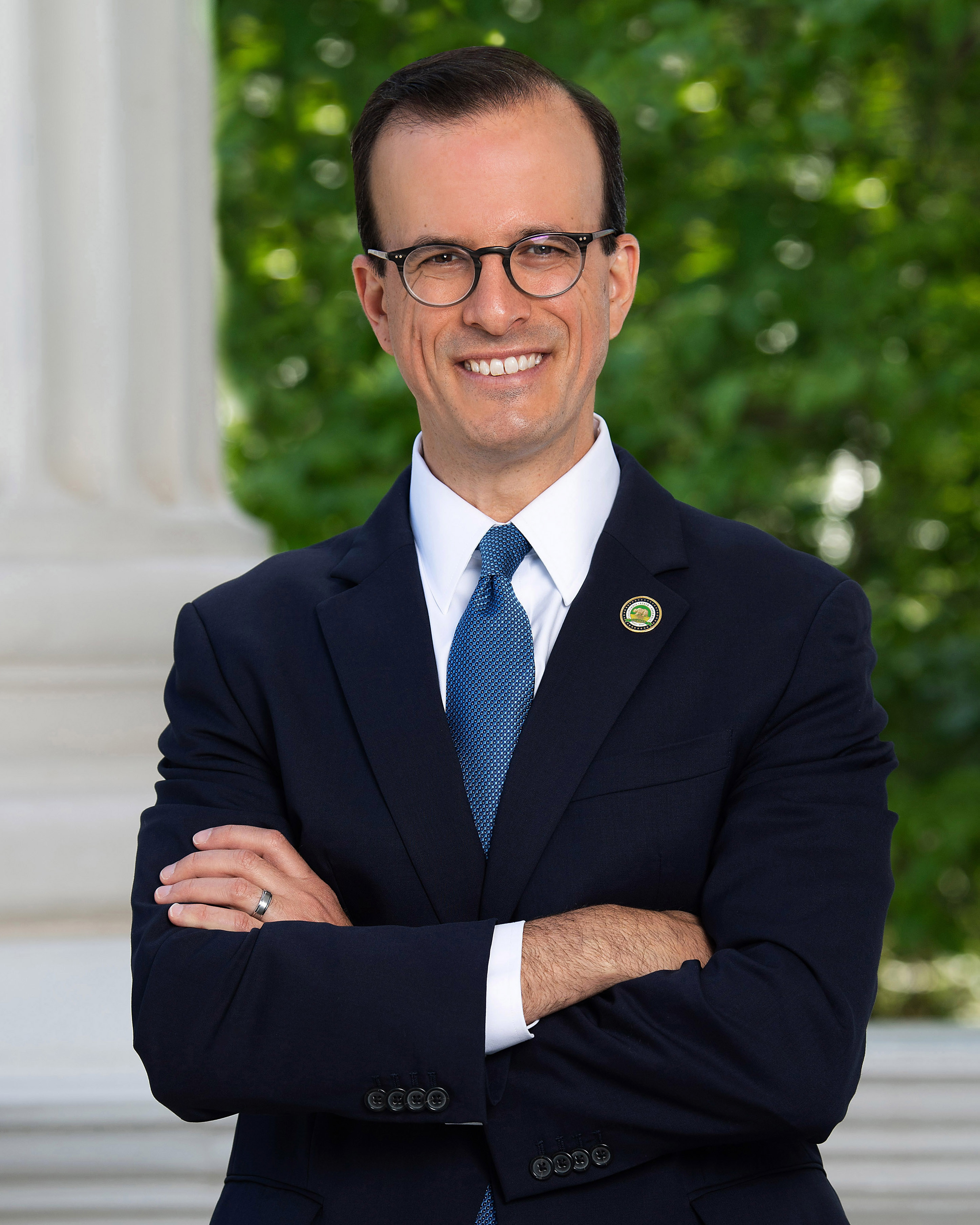
Asm. Marc Berman
Sponsored bills
Existing law establishes the California Community Colleges, under the administration of the Board of Governors of the California Community Colleges, as one of the segments of public postsecondary education in this state. Existing law requires community college districts to charge students an enrollment fee of $46 per unit per semester. This bill would authorize the San Mateo County Community College District to adopt a policy that uses local unrestricted general funds to provide fee waivers to students with the greatest financial need when other fee waivers are not provided to those students, and would require the policy to include a requirement to prepare a fiscal impact statement, including a 3-year projection of the fiscal impact of the fee waiver on the community college district, as specified. Existing law establishes the California College Promise, to be administered by the Chancellor of the California Community Colleges. Existing law requires the chancellor to distribute funding, upon appropriation by the Legislature, to community college districts to fund colleges that meet prescribed requirements. Existing law authorizes a community college that receives funding under the program to, among other things, waive some or all of the fees for up to 2 academic years for first-time students who are enrolled in 12 or more semester units or the equivalent at the college and complete and submit either a Free Application for Federal Student Aid or a California Dream Act application. This bill would authorize the San Mateo County Community College District to use local unrestricted general funds, in addition to funding received under the California College Promise, to provide assistance to students for the total cost of attendance. The bill would define total cost of attendance for a student attending a community college as including the student's tuition and fees, books and supplies, living expenses, transportation expenses, and any other student expenses used to calculate a student's financial need for purposes of federal Title IV student aid programs. This bill would require the San Mateo County Community College District to use local unrestricted general funds for the purposes of these provisions only for students who reside within the boundary of the community college district. This bill would require the governing board of the San Mateo County Community College District, on or before March 1, 2026, to submit a report to the Chancellor's Office of the California Community Colleges, the Department of Finance, and the appropriate committees of the Legislature on the implementation of these provisions, as specified. This bill would make these provisions inoperative on July 1, 2028, and would repeal these provisions on January 1, 2029. This bill would make legislative findings and declarations as to the necessity of a special statute for the San Mateo County Community College District.
(1) The federal Americans with Disabilities Act of 1990 and the California Building Standards Code require that specified buildings, structures, and facilities be accessible to, and usable by, persons with disabilities. Existing law establishes a Disability Access and Education Revolving Fund, a continuously appropriated fund, within the Division of the State Architect for purposes of increasing disability access and compliance with construction-related accessibility requirements and developing educational resources for businesses to facilitate compliance with federal and state disability laws, as specified. Existing law requires the State Architect to establish and publicize a program for voluntary certification by the state of any person who meets specified criteria as a certified access specialist (CASp) , as provided. Existing law, on and after January 1, 2018, and until December 31, 2023, inclusive, requires any applicant for an original or renewal of a local business license or equivalent instrument or permit to pay an additional fee of $4 for that license, instrument, or permit, or in any city, county, or city and county that does not issue a business license or an equivalent instrument or permit, existing law requires an applicant for a building permit to pay an additional fee of $4, to be collected by the city, county, or city and county that issued the license, instrument, or permit for specified purposes related to disability access, including the CASp program. Commencing January 1, 2024, that fee is reduced to $1. Existing law requires a portion of those fees to be deposited in the Disability Access and Education Revolving Fund. This bill would repeal the provision reducing the fee to $1 commencing January 1, 2024, thereby extending the operation of this fee at the amount of $4 indefinitely. By expanding the increased fee deposited into the Disability Access and Education Revolving Fund, this bill would make an appropriation. (2) Existing law requires that the city, county, or city and county retain a specified percentage of the fees collected under the above-described provision, to fund administrative costs and the remainder to be deposited in a special fund, established by the city, county, or city and county to be known as the "CASp Certification and Training Fund," and used for increased CASp training and certification within that local jurisdiction. On and after January 1, 2018, and until December 31, 2023, the specified percentage to be retained is 90%. Commencing January 1, 2024, the percentage is reduced to 70%. Existing law requires that the remaining percentage of the fees be transmitted on a quarterly basis to the Division of the State Architect for deposit in the Disability Access and Education Revolving Fund. This bill would repeal the provision reducing the percentage to be retained, thereby allocating 90% of the fees to be retained by the city, county, or city and county indefinitely. The bill would expand the purpose for which the moneys in the special fund may be used to include providing financial assistance to small business owners for accessibility-related inspection, renovation, and construction and would rename the fund to be known as the "Accessibility Compliance Fund." (3) Existing law requires a city, county, or city and county to submit a report to the Division of the State Architect on the total fees collected in the prior calendar year and distribution of the proceeds, as specified. This bill would require a city, county, or city and county to include additional information in that report regarding financial assistance provided to small businesses for construction of physical accessibility improvements. By imposing an additional requirement on a local government, this bill would impose a state-mandated local program. The California Constitution requires the state to reimburse local agencies and school districts for certain costs mandated by the state. Statutory provisions establish procedures for making that reimbursement. This bill would provide that no reimbursement is required by this act for a specified reason.
(1) Existing law establishes the California Community Colleges, the California State University, and the University of California as the 3 public segments of postsecondary education in the state. The missions and functions of these segments are set forth in the Donahoe Higher Education Act. This bill would require the California State University and each community college district, and request the University of California, with respect to each campus in their respective jurisdictions that administers a priority enrollment system, to grant priority in that system for registration for enrollment to a student parent, as defined, by no later than July 1, 2023. By imposing additional duties on community college districts, the bill would impose a state-mandated local program. (2) Existing law requires each campus of the California Community Colleges to establish a Basic Needs Center, defined as a central location on campus where basic needs services, resources, and staff are made available to students, by no later than July 1, 2022. Existing law requires each Basic Needs Center to help ensure that students have the information they need to enroll in CalFresh and other relevant government benefits programs. This bill would specifically require each Basic Needs Center to also ensure that students have the information they need to enroll in the California Earned Income Tax Credit (CalEITC) , the Young Child Tax Credit (YCTC) , and the California Special Supplemental Food Program for Women, Infants, and Children (WIC) . To the extent the bill imposes additional duties on community college districts, the bill would impose a state-mandated local program. (3) Existing law requires the Trustees of the California State University and each campus of the California Community Colleges, and requests the Regents of the University of California, as a part of campus orientation for all campuses of their respective segments, to provide educational information about CalFresh and the student eligibility requirements for CalFresh to all incoming students. This bill would add educational information and eligibility requirements for the California Earned Income Tax Credit (CalEITC) , the Young Child Tax Credit (YCTC) , and the California Special Supplemental Food Program for Women, Infants, and Children (WIC) to that requirement and request. By imposing additional duties on community college districts, the bill would impose a state-mandated local program. (4) Existing law requires each campus of the California State University and the California Community Colleges, and requests each campus of the University of California, to include on the internet website-based student account associated with a student's attendance at the institution notice of the specified public services and programs, including CalFresh. This bill would specifically add the California Earned Income Tax Credit (CalEITC) , the Young Child Tax Credit (YCTC) , and the California Special Supplemental Food Program for Women, Infants, and Children (WIC) to that list of public services and programs. The bill would also require each campus of the California State University and of the California Community Colleges, and request each campus of the University of California, by no later than February 1, 2023, to host on its internet website, as provided, a student parent internet web page that includes information on all on- and off-campus student parent services and resources, as specified. By imposing additional duties on community college districts, the bill would impose a state-mandated local program. The bill would include legislative findings and declarations, and state legislative intent, relating to these provisions. (5) The California Constitution requires the state to reimburse local agencies and school districts for certain costs mandated by the state. Statutory provisions establish procedures for making that reimbursement. This bill would provide that, if the Commission on State Mandates determines that the bill contains costs mandated by the state, reimbursement for those costs shall be made pursuant to the statutory provisions noted above.
Existing law, the Alcoholic Beverage Control Act, prohibits a beer manufacturer, regardless of the number of beer manufacturer licenses that are held by the beer manufacturer, as specified, from exercising any combination of specified retail privileges that would result in that beer manufacturer exercising retail privileges at more than 6 locations. Existing law prohibits an on-sale retailer that is a beer manufacturer, as specified, from purchasing alcoholic beverages for sale in this state other than from specified persons, but excepts from this prohibition the purchase of any alcoholic beverages manufactured by the beer manufacturer at a single location contiguous or adjacent to the premises of the on-sale retailer. This bill would revise the exception to the prohibition described above that requires the single location to be contiguous or adjacent to the premises of the on-sale retailer to authorize, instead, the purchase of any alcoholic beverages from a licensed beer manufacturer whose premises of production are located no more than 5 miles from the licensed on-sale premises. This bill would incorporate additional changes to Section 25503.28 of the Business and Professions Code proposed by AB 2307 to be operative only if this bill and AB 2307 are enacted and this bill is enacted last.
Existing law, the Alcoholic Beverage Control Act, which is administered by the Department of Alcoholic Beverage Control, regulates the application, issuance, and suspension of alcoholic beverage licenses. Existing law authorizes the Department of Alcoholic Beverage Control to issue to a beer manufacturer a duplicate of its original license for a location or locations other than its licensed premises of production or manufacture. Existing law authorizes a licensed beer manufacturer to exercise the privileges under its manufacturer's license at branch offices, subject to certain exceptions and qualifications. In this regard, existing law prohibits a beer manufacturer from selling alcoholic beverages to consumers for consumption on or off the licensed premises, or providing authorized tastings to consumers, at more than 6 branch office locations, regardless of how many beer manufacturer licenses the beer manufacturer holds, either alone or under common ownership with any other licensed beer manufacturer. Existing law further prohibits more than 2 of these 6 branch locations from being bona fide public eating places owned and operated by and for the beer manufacturer. This bill would increase the number of authorized branch office locations for purposes of the provisions described above from 6 to 8 and would prohibit more than 4 of these locations from being bona fide public eating places owned and operated by and for the beer manufacturer. The bill would prohibit a beer manufacturer from being eligible to receive a 7th or an 8th duplicate license until it has held a 6th duplicate license for a minimum of one year. Existing law, applicable to a beer manufacturer with an authorized branch office location selling beer and wine to consumers for consumption on the premises of a bona fide public eating place, restricts the types of alcoholic beverages that may be sold. Existing law authorizes the sale, in this context, of beer and wine that is purchased by the beer manufacturer from a licensed wholesaler that is not owned, either alone or under common ownership, by the beer manufacturer. This bill, with regard to the beer and wine sold that is purchased from a wholesaler, as described above, would delete the requirement that the wholesaler not be owned, either alone or under common ownership, by the beer manufacturer. Existing law, known as tied-house restrictions, generally prohibits specified licensees, or the officers, directors, or agents of those licensees, from giving or lending money or a thing of value to a person operating, owning, or maintaining any on-sale premises where alcoholic beverages are sold. Existing law prohibits beer manufacturers, as specified, regardless of how many beer manufacturer licenses they hold, from exercising retail privileges that would result in the exercise of those privileges at more than 6 locations, as specified. This bill would increase the number of locations to 8 at which beer manufacturers may exercise retail privileges, provided that no more than 6 of the locations may be on-sale licenses. This bill would incorporate additional changes to Section 25503.28 of the Business and Professions Code proposed by AB 2301 to be operative only if this bill and AB 2301 are enacted and this bill is enacted last.
Existing law creates within the Ocean Protection Council the California Sea Level Rise State and Regional Support Collaborative to provide state and regional information to the public and support to local, regional, and other state agencies for the identification, assessment, planning, and, where feasible, the mitigation of the adverse environmental, social, and economic effects of sea level rise within the coastal zone, as provided. This bill would require a local government, as defined, lying, in whole or in part, within the coastal zone, as defined, or within the jurisdiction of the San Francisco Bay Conservation and Development Commission, as defined, to implement sea level rise planning and adaptation through either submitting, and receiving approval for, a local coastal program, as defined, to the California Coastal Commission or submitting, and receiving approval for, a subregional San Francisco Bay shoreline resiliency plan to the San Francisco Bay Conservation and Development Commission, as applicable, on or before January 1, 2033. By imposing additional requirements on local governments, the bill would impose a state-mandated local program. The bill would require local governments that receive approval for sea level rise planning and adaptation on or before January 1, 2028, to be prioritized for sea level rise funding, upon appropriation by the Legislature, for the implementation of projects in the local government's approved sea level rise adaptation plan. The bill would require, on or before December 31, 2023, the California Coastal Commission and the San Francisco Bay Conservation and Development Commission, in close coordination with the Ocean Protection Council and the California Sea Level Rise State and Regional Support Collaborative, to establish guidelines for the preparation of that planning and adaptation. The bill would make the operation of its provisions contingent upon an appropriation for its purposes by the Legislature in the annual Budget Act or another statute. The California Constitution requires the state to reimburse local agencies and school districts for certain costs mandated by the state. Statutory provisions establish procedures for making that reimbursement. This bill would provide that, if the Commission on State Mandates determines that the bill contains costs mandated by the state, reimbursement for those costs shall be made pursuant to the statutory provisions noted above.
The California Constitution reserves to the electors the power to recall an elective officer and requires the Legislature to provide for recall of local officers. Existing law requires a recall election to include the question of whether the officer sought to be recalled shall be removed from office and an election for the officer's successor in the event the officer is removed from office. This bill would instead require a recall election for a local officer to include only the question of whether the officer sought to be recalled shall be removed from office. If a local officer is removed from office in a recall election, the bill would provide that the office is vacant until it is filled according to law. The bill would make related conforming and clarifying changes. This bill would incorporate additional changes to Section 11041 of the Elections Code proposed by AB 2584 to be operative only if this bill and AB 2584 are enacted and this bill is enacted last.
Existing law, until January 1, 2023, prohibits a person, committee, or other entity, within 60 days of an election at which a candidate for elective office will appear on the ballot, from distributing with actual malice materially deceptive audio or visual media of the candidate with the intent to injure the candidate's reputation or to deceive a voter into voting for or against the candidate, unless the media includes a disclosure stating that the media has been manipulated, subject to specified exemptions. Existing law, until January 1, 2023, authorizes a candidate for elective office whose voice or likeness appears in audio or visual media distributed in violation of this section to seek injunctive or other equitable relief prohibiting the distribution of the deceptive audio or visual media; authorizes a candidate whose voice or likeness appears in the deceptive audio or visual media to bring an action for general or special damages against the person, committee, or other entity that distributed the media; and authorizes the court to award a prevailing party reasonable attorney's fees and costs. A court is required to place such proceedings on the calendar in the order of their date of filing and give them precedence. This bill would extend the repeal date of these provisions to January 1, 2027.
Existing law authorizes a registered voter of an electoral jurisdiction to seek the recall of an officer of that jurisdiction by publishing or posting a notice of intention to circulate a recall petition. Existing law requires the notice of intention to contain, among other things, a statement of the reasons for the proposed recall and the signatures of a specified number of proponents of the recall. Under existing law, within 7 days of the filing of the notice of intention, the officer sought to be recalled may file an answer to the proponents' statement of reasons for the recall. Existing law requires a recall petition to include, among other things, the notice of intention and the officer's answer. This bill would increase the number of signatures required to be included in the notice of intention, with the total number of necessary signatures determined by the type of office held by the officer sought to be recalled, as provided. The bill would require, for a recall of a member of the governing board of a school district, the recall petition to include an estimate of the cost of conducting the special election. The bill would require, for a recall of a local officer, the county elections official to make a copy of the recall petition available for public examination for 10 days, as provided. The bill would authorize a voter of the applicable electoral jurisdiction or the elections official, during those 10 days, to seek a writ of mandate or injunction requiring any or all of the statement of the proponents or the answer of the officer to be amended or deleted. The bill would require a court to issue a writ of mandate or injunction only upon clear and convincing proof that the material in question is false, misleading, or inconsistent with the applicable requirements for recall petitions. By requiring local elections officials to make recall petitions available for public inspection, the bill would create a state-mandated local program. Existing law requires the governing board of a local government entity to issue an order calling an election if the elections official certifies to the board that the recall proponents gathered sufficient signatures to hold a recall election for an officer of the local government entity. Existing law requires the election to be held not less than 88 days and not more than 125 days from the issuance of the order. This bill would permit the election to be consolidated with a regularly scheduled election conducted within 180 days after the issuance of the order. This bill would incorporate additional changes to Section 11041 of the Elections Code proposed by AB 2582 to be operative only if this bill and AB 2582 are enacted and this bill is enacted last. The California Constitution requires the state to reimburse local agencies and school districts for certain costs mandated by the state. Statutory provisions establish procedures for making that reimbursement. This bill would provide that, if the Commission on State Mandates determines that the bill contains costs mandated by the state, reimbursement for those costs shall be made pursuant to the statutory provisions noted above.