

Existing law, until January 1, 2027, prohibits a person, committee, or other entity, within 60 days of an election at which a candidate for elective office will appear on the ballot, from distributing with actual malice materially deceptive audio or visual media of the candidate with the intent to injure the candidate's reputation or to deceive a voter into voting for or against the candidate, unless the media includes a disclosure stating that the media has been manipulated, subject to specified exemptions. Existing law, until January 1, 2027, authorizes a candidate for elective office whose voice or likeness appears in audio or visual media distributed in violation of this section to seek injunctive or other equitable relief prohibiting the distribution of the deceptive audio or visual media; authorizes a candidate whose voice or likeness appears in the deceptive audio or visual media to bring an action for general or special damages against the person, committee, or other entity that distributed the media; and authorizes the court to award a prevailing party reasonable attorney's fees and costs. A court is required to place such proceedings on the calendar in the order of their date of filing and give them precedence. This bill would extend the repeal date of these provisions to January 1, 2031.
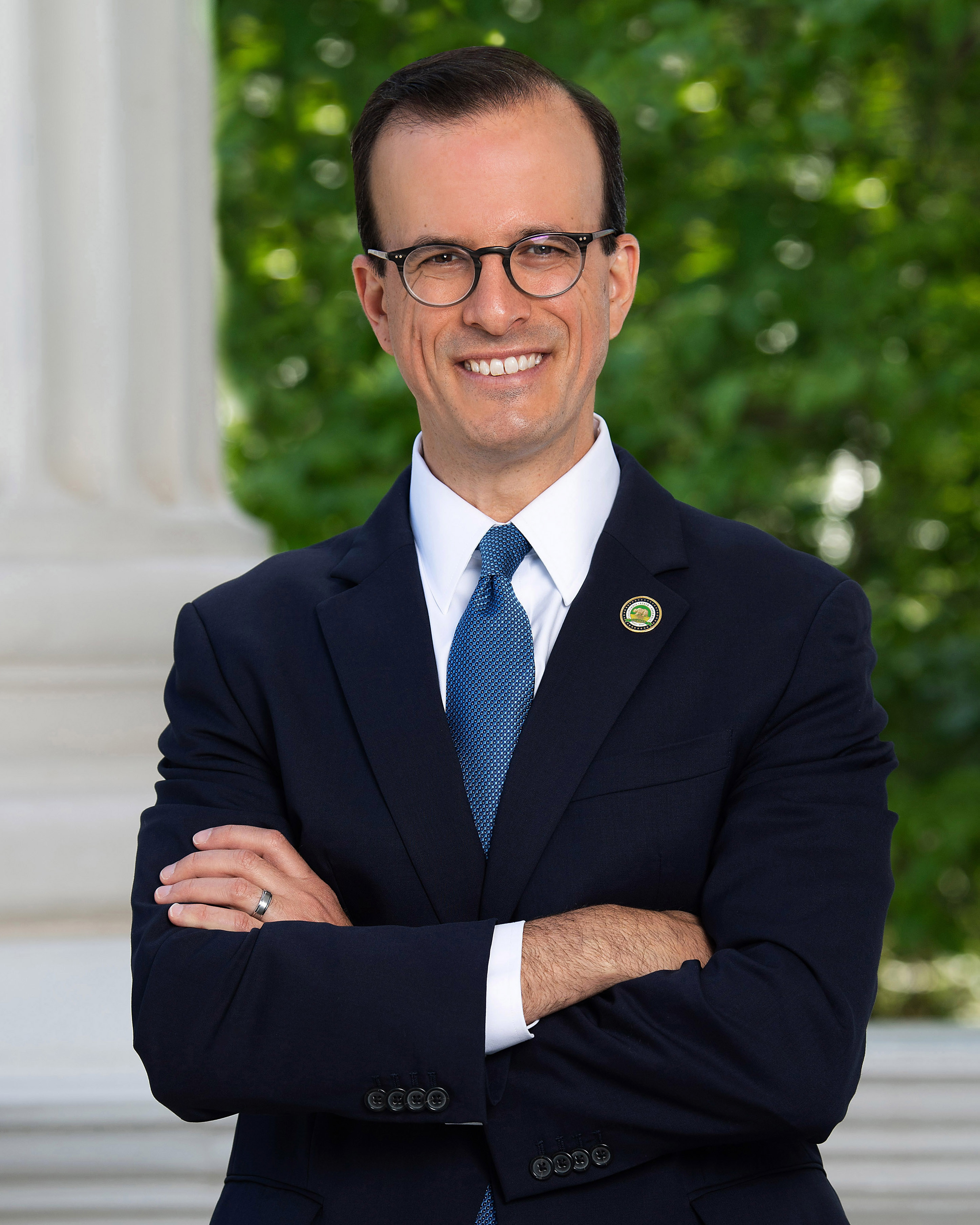
Rep. Marc Berman
Sponsored bills
Existing law, the Political Reform Act of 1974, requires a person paid by a committee to post content supporting or opposing a candidate or ballot measure on an internet website, web application, or digital application to include a disclaimer stating that they were paid by the committee in connection with the post, except as specified. Existing law requires the committee to notify the person paid to post the content of this requirement. Existing law authorizes the Fair Political Practices Commission to seek injunctive relief to compel compliance with this disclaimer requirement. Existing law exempts a person who violates the disclaimer requirement from administrative, civil, and criminal penalties established by the act. This bill would remove the exemption for administrative, civil, and criminal penalties and instead provide that if the required disclaimer is not included, the person paid to post the content and the committee who paid them are jointly and severally liable for any administrative or civil penalties incurred for the violation. The bill would require the committee to inform the person that failure to include the disclaimer may result in penalties under the Political Reform Act of 1974. The bill would also require the committee to include a statement on their campaign report, as specified, that the payment was provided for a paid thirty party post. A violation of the Political Reform Act of 1974 is punishable as a misdemeanor. By creating a new crime under the act, the bill would establish a state-mandated local program. The California Constitution requires the state to reimburse local agencies and school districts for certain costs mandated by the state. Statutory provisions establish procedures for making that reimbursement. This bill would provide that no reimbursement is required by this act for a specified reason. The Political Reform Act of 1974, an initiative measure, provides that the Legislature may amend the act to further the act's purposes upon a 23 vote of each house of the Legislature and compliance with specified procedural requirements. This bill would declare that it furthers the purposes of the act.
Existing law vests the Public Utilities Commission with regulatory authority over public utilities, including gas corporations. Existing law requires, until January 1, 2031, gas corporations to submit to the commission an annual map that includes, among other things, the location of all potential gas distribution line replacement projects identified in its distribution integrity management plan and any foreseeable gas distribution pipeline replacements. This bill, the Home Energy Choice Act, would require the commission, in a new or existing proceeding, to solicit proposals for, and require each gas corporation to offer, a Gas Distribution Service Line Replacement Alternatives Program, on or before January 1, 2028, to provide certain residential gas customers served by a gas distribution service line that will be replaced with a monetary incentive to deploy gas distribution service line replacement alternatives, as defined, and cease gas service to avoid the gas distribution service line replacement, as specified. The bill would require the commission to exempt from the program the emergency replacement of a gas distribution service line. The bill would require the commission to annually review the program to determine whether adjustments should be made to program design to increase program participation. The bill would require the commission, on or before January 1, 2029, and annually thereafter, to report to the Legislature on the progress of each implemented program, as provided. The bill would repeal its provisions on January 1, 2035. Under existing law, a violation of any order, decision, rule, direction, demand, or requirement of the commission is a crime. Because a violation of a commission action implementing the bill's requirements would be a crime, the bill would impose a state-mandated local program. The California Constitution requires the state to reimburse local agencies and school districts for certain costs mandated by the state. Statutory provisions establish procedures for making that reimbursement. This bill would provide that no reimbursement is required by this act for a specified reason.
Existing law defines, for certain school-related purposes, "ultraprocessed food" as any food or beverage that contains a specified substance and either high amounts of saturated fat, sodium, or added sugar or a nonnutritive sweetener or other substance, as specified. Existing law requires the department to adopt regulations, on or before June 1, 2028, to define "ultraprocessed foods of concern" and "restricted school foods," as specified, and requires the department, when defining ultraprocessed foods of concern and restricted school foods, to consider specified factors, including, among others, whether the substance or group of substances are banned or restricted in other state, federal, or international jurisdictions due to concerns about adverse health consequences. This bill would require the department, no later than June 1, 2029, to accredit certification agents that can certify food products as "Non-Ultraprocessed Certified." The bill would prohibit an accredited certification agent from certifying a food product as "Non-Ultraprocessed Certified" if it is an ultraprocessed food, ultraprocessed food of concern, or a restricted school food, as defined. The bill would require the department to create a specified standardized "Non-Ultraprocessed Certified" seal. The bill would authorize a food product to bear the seal only if the product has been certified by an accredited certification agent. The bill would require an accredited certification agent to, among other things, register with the department and provide specified information to the department for each food product certified by the accredited certification agent. The bill would require any registration information submitted by an accredited certification agent to the department to be made available to the public for inspection and copying. This bill would require an accredited certification agent to immediately make specified records available to the department for inspection, as specified, and would authorize the department to audit the accredited certification agent's certification procedures and records at any time. The bill would require any records of the accredited certification agent not otherwise required to be disclosed to be kept confidential by the department. The bill would require the department to maintain a public internet webpage that lists all of the products currently certified as "Non-Ultraprocessed Certified" as reported by the accredited certification agent. This bill would make it unlawful for a person to certify products as "Non-Ultraprocessed Certified" unless duly registered as an accredited certification agent, for a person to willfully make a false statement or representation or knowingly fail to disclose a fact required to be disclosed in registration as an accredited certification agent, for a person to willfully make a false statement or representation or knowingly fail to disclose a fact required to be disclosed to an accredited certification agent, and for a person to use the "Non-Ultraprocessed Certified" seal on a product that does not meet the above-described provisions. The bill would authorize the department, among others, to enjoin a person who engages, has engaged, or proposes to engage in the misuse of the "Non-Ultraprocessed Certified" seal. This bill would create the Public Health Food and Nutrition Education Fund for the purposes of supporting the implementation of the "Non-Ultraprocessed Certified" label requirements and educating the public and stakeholders about the label requirements, food products, and nutrition. The bill would authorize the department to establish fees for the registration and renewal of accredited certification agents and certification of food at levels not exceeding the reasonable costs of administering and enforcing these provisions. The bill would require the fees to be deposited in the Public Health Food and Nutrition Education Fund. Upon appropriation by the Legislature, the bill would make moneys in the Public Health Food and Nutrition Education Fund available to the department for expenditure. Existing law, the California Retail Food Code (Code) , establishes uniform health and sanitation standards for, and provides for regulation by the State Department of Public Health of, retail food facilities, as defined, and requires local enforcement agencies to enforce these provisions. Existing law provides that a violation of the code is punishable as a misdemeanor or a fine. Existing law defines a grocery store as a store primarily engaged in the retail sale of canned food, dry goods, fresh fruits and vegetables, and fresh meats, fish, and poultry and any area that is not separately owned within the store where food is prepared and served, including a bakery, deli, and meat and seafood counter. This bill, upon the creation of the "Non-Ultraprocessed Certified" seal described above, would require a grocery store with gross annual store sales of more than $10,000,000 to make clearly identifiable, as defined, at least 3 or more "Non-Ultraprocessed Certified" items if the grocery store offers for sale more than 25 certified items. The bill would authorize the Attorney General, county counsel, city attorney, or city prosecutor, as specified, to enjoin a grocery store that fails to meet these requirements. The bill would exempt a violation of these provisions from criminal liability under the California Retail Food Code. The bill would repeal these provisions on January 1, 2040. By imposing a higher level of service on local enforcement agencies required to enforce these provisions, this bill would impose a state-mandated local program. The California Constitution requires the state to reimburse local agencies and school districts for certain costs mandated by the state. Statutory provisions establish procedures for making that reimbursement. This bill would provide that, if the Commission on State Mandates determines that the bill contains costs mandated by the state, reimbursement for those costs shall be made pursuant to the statutory provisions noted above. Existing constitutional provisions require that a statute that limits the right of access to the meetings of public bodies or the writings of public officials and agencies be adopted with findings demonstrating the interest protected by the limitation and the need for protecting that interest. This bill would make legislative findings to that effect.
Existing law declares that it is the policy of the state to afford all persons in public schools, regardless of specified characteristics, including race or ethnicity, equal rights and opportunities in the educational institutions of the state, and states that the purpose of related existing law is to prohibit acts that are contrary to that policy and to provide remedies. Existing law defines "race or ethnicity" to include ancestry, color, ethnic group identification, and ethnic background. This bill would define ethnicity to include Jewish identity. Existing law specifies certain requirements relative to state agencies, boards, and commissions that directly or by contract collect demographic data as to the ancestry or ethnic origin of Californians, including the requirement to use separate collection categories and tabulations for each major Asian group and each major Pacific Islander group, as specified. Existing law requires these state agencies to include the demographic data in every demographic report on ancestry or ethnic origins of Californians by the state agency published or released on or after July 1, 2012. Existing law further requires these state agencies to make the collected data available to the public pursuant to state and federal law, except for personal identifying information, which existing law deems confidential. This bill would require a state agency that directly or by contract collects demographic data as to the ancestry or ethnic origin of Californians to use a separate collection category and tabulation for Jewish ancestry or ethnicity, as specified and subject to a certain exception. The bill would require these state agencies to include the demographic data in every demographic report on ancestry or ethnic origins of Californians by the state agency published on or after January 1, 2030. The bill would further require these state agencies to make the collected data available to the public pursuant to state and federal law. The bill would prohibit state agencies from disclosing personal identifying information about any person whose demographic data is collected, and would require those agencies to apply deidentification and privacy protection methods to that data. The bill would limit the purposes for which state agencies can use the demographic data collected under these provisions. The bill would exempt any state agency administering a multiyear grant program with an established end date that began collecting demographic data prior to January 1, 2029, from being required to include or use the demographic category described above for interim or final reports. Existing law requires the Department of Corrections and Rehabilitation to collect voluntary self-identification information pertaining to race or ethnic origin of people admitted, in custody, and released and paroled, including, but not limited to, specified races and ethnic origins. Existing law requires the Department of Corrections and Rehabilitation, based on that voluntary self-identification information, to prepare and publish monthly demographic data pertaining to the race or ethnic origin of people admitted, in custody, and released and paroled, disaggregated by the same race and ethnicity categories used by the department for the purpose of voluntary self-identification information. Existing law requires the data, except for personally identifying information, which existing law deems confidential, to be publicly available on the Department of Corrections and Rehabilitation's internet website via the Offender Data Points dashboard. This bill would include Jewish among those specified races and ethnic origins for self-identification. Existing law requires the Employment Development Department, in the administration of existing law relating to disability compensation, to collect demographic data for individuals who claim disability benefits or family temporary disability insurance benefits, including race and ethnicity data and sexual orientation and gender identity data, as prescribed. Existing law requires the Employment Development Department to develop and make available online a public-facing dashboard that publishes disaggregated demographic data pertaining to program participation by individuals and is updated on at least a quarterly basis. Existing law requires the Employment Development Department to implement these requirements by July 1, 2026. This bill would require the Employment Development Department to collect data on Jewish ancestry or ethnicity for these purposes in accordance with specified demographic data collection requirements for state agencies added by the bill. This bill would become operative on January 1, 2029. Existing constitutional provisions require that a statute that limits the right of access to the meetings of public bodies or the writings of public officials and agencies be adopted with findings demonstrating the interest protected by the limitation and the need for protecting that interest. This bill would make legislative findings to that effect.
Existing law authorizes the Public Utilities Commission to fix the rates and charges for public utilities, including electrical corporations and gas corporations, and requires those rates and charges to be just and reasonable. Under existing law, a regulated public utility is prohibited from using ratepayer funds for advocacy-related activities that are political or do not otherwise benefit ratepayers. Existing law prohibits each electrical corporation or gas corporation from recording to an above-the-line account, or otherwise recovering from ratepayers, direct or indirect costs of specified activities. This bill would include in those activities for which costs may not be recovered from ratepayers any activities related to opposing the municipalization of electrical or gas utility service, as specified. Existing law authorizes the commission, each commissioner, and each officer and person employed by the commission to inspect the accounts, books, papers, and documents of any public utility. Existing law establishes within the commission an independent Public Advocate's Office of the Public Utilities Commission and authorizes the office to require an entity regulated by the commission to produce or disclose any information the office deems necessary to perform its duties, as provided. This bill would additionally authorize the office to require an entity regulated by the commission to produce or disclose any information the office deems necessary to support the commission's duties. The bill would also specify that the office has the same authority to discover information and review the accounts of a public utility as the commission and would change the timing of a specified annual report by the office to the Legislature. Under existing law, a violation of the Public Utilities Act or any order, decision, rule, direction, demand, or requirement of the commission is a crime. Because the above-described provisions would be part of the act and a violation of a commission action implementing the bill's requirements would be a crime, this bill would impose a state-mandated local program. The California Constitution requires the state to reimburse local agencies and school districts for certain costs mandated by the state. Statutory provisions establish procedures for making that reimbursement. This bill would provide that no reimbursement is required by this act for a specified reason.
Existing law, the Veterinary Medicine Practice Act, establishes the Veterinary Medical Board for the licensure and regulation of the practice of veterinary medicine and makes a violation of those provisions a crime. Existing law creates various exemptions from the act. Among those exemptions, existing law exempts practicing veterinary medicine as a bona fide owner of one's own animal, as specified. This bill would exclude a surgical or dental operation, as defined, from this exemption. The bill would also, except as specified, exempt from the act an organization accredited by the Association of Zoos and Aquariums or a university, college, or governmental research agency practicing veterinary medicine on an animal owned by that entity. The bill would also exempt from the act an unlicensed person who provides teleconsultation to a California-licensed veterinarian, as specified. Existing law generally prohibits a veterinarian from treating an animal unless a veterinarian-client-patient relationship exists, except when the animal patient is a wild animal or the owner of the animal patient is unknown. This bill would create an additional exception for when a rabies vaccination is prophylactically administered to the animal patient to prevent disease or loss of life. Under existing law, a veterinarian-client-patient relationship exists if certain conditions are met, including that the veterinarian possesses sufficient knowledge of the animal patient and has communicated with the client a medical, treatment, diagnostic, or therapeutic plan, as specified. Existing law places limits on the duration of a veterinarian's prescription of a drug that varies depending on how the veterinarian-client-patient relationship was established. If the veterinarian established the relationship by examining the animal patient in person or by making medically appropriate and timely visits to the premises on which the animal patient is kept, existing law prohibits the veterinarian from prescribing a drug for a duration that is longer than one year from the date that the veterinarian examined the animal patient in person or visited the premises and prescribed the drug. If the veterinarian established the relationship using synchronous audio-video communication, existing law limits the duration of the prescription to 6 months from the date that the veterinarian examined the animal patient or prescribed the drug. This bill would revise and recast provisions regulating the veterinarian-client-patient relationship. In this regard, the bill, among other revisions, would remove the requirement that the veterinarian has communicated with the client a medical, treatment, diagnostic, or therapeutic plan to establish the veterinarian-client-patient relationship. Instead, the bill would make that communication a requirement for each medical condition for which the veterinarian may prescribe, dispense, or administer treatment. Additionally, the bill would delete the above-described time limitation on the duration of a veterinarian prescription of a drug, and would instead impose similar time limitations on the veterinarian-client-patient relationship. Specifically, the bill would make the veterinarian-client-patient relationship expire one year after examining the animal patient in person, one year after making medically appropriate and timely visits to the premises on which the animal patient is kept, or 6 months after examining the animal patient by use of synchronous audio-video communication. Additionally, the bill would authorize a veterinarian-client-patient relationship to continue in the absence of the veterinarian if, among other things, the subsequent veterinarian has assumed responsibility for making medical judgments regarding the health of the animal patient. The bill would also authorize a subsequent veterinarian, in the absence of the originally prescribing veterinarian, to prescribe, dispense, or furnish a refill of drugs for use on the animal patient on an emergency basis for a traveling animal patient or if the subsequent veterinarian serves at the same location as the originally prescribing veterinarian, as specified. Existing law creates various exceptions under, and exemptions from, the Veterinary Medicine Practice Act related to the practice of veterinary medicine in the context of animal shelters. This bill would create a new veterinarian license category referred to as a "shelter veterinarian license" under which the holder would be allowed to practice veterinary medicine solely for an animal shelter or under certain emergency circumstances, as specified. The shelter veterinarian license would be available to the holder of a veterinarian license from any state, a United States territory, or a Canadian province if they meet certain continuing education, examination, criminal background check, and other requirements, as applicable. Among the requirements for a shelter veterinarian license, the bill would require the applicant to certify that the sole purpose of the license is to practice veterinary medicine for an animal shelter. By expanding the scope of the crime of perjury, this bill would impose a state-mandated local program. Existing law authorizes a licensee, registrant, or permitholder to apply for their license, registration, or permit to be placed in inactive status, as specified. Existing law prohibits the holder of an inactive license, registration, or permit from engaging in any activity for which an active license, registration, or permit is required. Existing law subjects the holder to the normal renewal fee, but exempts the holder from any continuing education requirements for renewal. This bill would create 2 new status categories referred to as "retired status" and "retired volunteer status," respectively. The retired status would be available to a veterinarian or registered veterinary technician who meets specified requirements, including completing an application and paying a specified fee. A licensee or registrant with a retired status would be prohibited from practicing veterinary medicine, and would be exempt from renewal requirements, as specified. The 2nd status category, the retired volunteer status, would allow the holder to practice veterinary medicine only for an animal shelter or under emergency circumstances, as specified. The retired volunteer status would be available to the holder of a veterinarian license or veterinary technician registration from any state, a United States territory, or a Canadian province if they meet certain continuing education, criminal background check, examination, and other requirements, as applicable. Among the requirements for a retired volunteer status, the bill would require the applicant to certify that the sole purpose of the retired volunteer status is to provide voluntary, unpaid, veterinary medical services to an animal shelter. By expanding the scope of the crime of perjury, this bill would impose a state-mandated local program. Existing law makes a license, registration, or permit expire within a specified period of time if it is not renewed, as specified. Existing law authorizes a licensee, registrant, or permitholder to renew an expired license, registration, or permit within 5 years of its expiration if certain delinquency fees are paid. If 5 years or longer have elapsed since the expiration, existing law prohibits the license, registration, or permit from being restored, reissued, or reinstated, but authorizes the person to apply for and obtain a new license, registration, or permit. This bill, instead, would allow restoration of a license, registration, or permit that has been expired or assigned retired status for 5 years or longer if the licensee, registrant, or permitholder meets the requirements for initial issuance of the license, registration, or permit. The bill would prohibit the restoration of an out-of-state veterinarian license or veterinary technician registration with retired volunteer status. Existing law requires all veterinary premises to be registered with the board. To register a veterinary premises, existing law requires the owner or operator of the veterinary premises to submit an application that includes, among other information, the name of the responsible licensee manager. Existing law authorizes substitution of the responsible licensee manager by application to the board, as specified. If the owner or operator of a veterinary premises is a corporation or other artificial legal entity, existing law requires certain changes in the owners, officers, directors, shareholders, general partners, or agent for service of process, as specified, to be reported to the board within 30 days. This bill would require the premises registration holder to satisfy the above-described requirements and confirm that the information provided to the board is current and valid to renew the premises registration. By expanding the scope of the crime of perjury, this bill would impose a state-mandated local program. This bill would incorporate additional changes to Sections 4858.1 and 4858.2 of the Business and Professions Code proposed by AB 1733 to be operative only if this bill and AB 1733 are enacted and this bill is enacted last. Because this bill would create new requirements within the Veterinary Medicine Practice Act, the violation of which would be a crime, the bill would impose a state-mandated local program. The California Constitution requires the state to reimburse local agencies and school districts for certain costs mandated by the state. Statutory provisions establish procedures for making that reimbursement. This bill would provide that no reimbursement is required by this act for a specified reason. The bill would make related and conforming changes.
Maddy summaryThis bill designates September 2026 as Childhood Cancer Awareness Month. It directly affects state agencies and organizations by encouraging them to recognize this specific month for awareness activities. The measure does not change laws or allocate funding but serves as a formal commemorative resolution.
Existing law establishes various boards, including advisory boards, commissions, examining committees, committees, or other similarly constituted bodies, within the Department of Consumer Affairs for the licensure and regulation of various professions and vocations. Existing law prohibits a public member of a board from being a current or past licensee of that board or a close family member of a licensee of that board. This bill would define "close family member" for purposes of that provision to include a parent or a child. The bill would require each board within the department to adopt regulations consistent with these provisions that provide guidance on how to determine whether the existence of a relationship other than a parent-child relationship prohibits an individual from serving as a public member of a board.
Existing law requires the State Department of Public Health to establish an advisory committee to advise the Legislature and the Governor on human cloning and other issues relating to human biotechnology. Existing law requires the California State University, and requests the University of California, to develop systemwide guidance for purchasing gene synthesis equipment or gene synthesis products from gene synthesis providers who prevent the misuse of synthetic genes and safeguard the benefits of gene synthesis technology while minimizing risk, as specified. This bill would prohibit a manufacturer of benchtop nucleic acid synthesis equipment, as defined, from producing equipment in this state or selling or delivering that equipment to a customer in this state unless the manufacturer adheres to the Framework for Nucleic Acid Synthesis Screening issued by the Fast Track Action Committee on Synthetic Nucleic Acid Procurement Screening of the National Science and Technology Council, as revised in September 2024, with respect to that equipment, attests that they comply with the framework with respect to that equipment, and posts that attestation on a public internet website, and would prohibit a provider of specified synthetic nucleic acids from producing those nucleic acids in this state or selling or delivering those nucleic acids to a customer in this state unless the provider adheres to the framework described above with respect to those nucleic acids, attests to complying with the framework with respect to those nucleic acids, and posts that attestation on a public internet website. The bill would make a violation of the prohibitions described above subject to a civil penalty in an amount dependent on the severity of the violation that does not exceed $5,000 per day that the violation continues. The bill would make related findings and declarations. This bill would provide that the provisions of this bill are severable.