

Existing law, the California Consumer Privacy Act of 2018, beginning on January 1, 2020, grants a consumer various rights with regard to personal information relating to that consumer that is held by a business, including the right to direct a business not to sell, as defined, personal information about the consumer to third parties, as defined. This right is known as the right to opt out. Under the act, a consumer also has the right to request that a business delete personal information about the consumer that the business has collected from the consumer, subject to certain conditions. Existing law excepts from the act certain categories of personal information from its provisions. This bill would except from the right to opt out vehicle information or ownership information retained or shared between a new motor vehicle dealer and the vehicle's manufacturer, if the information is shared for the purpose of effectuating or in anticipation of effectuating a vehicle repair covered by a vehicle warranty or a recall, as specified. The bill would define terms for that purpose. The bill would also except from the right to request a business to delete personal information about the consumer the personal information that is necessary for the business to maintain in order to fulfill the terms of a written warranty or product recall conducted in accordance with federal law. This bill would incorporate additional changes to Section 1798.145 of the Civil Code proposed by AB 25 and AB 1355 to be operative only if either or both of those bills are enacted and this bill is enacted last.
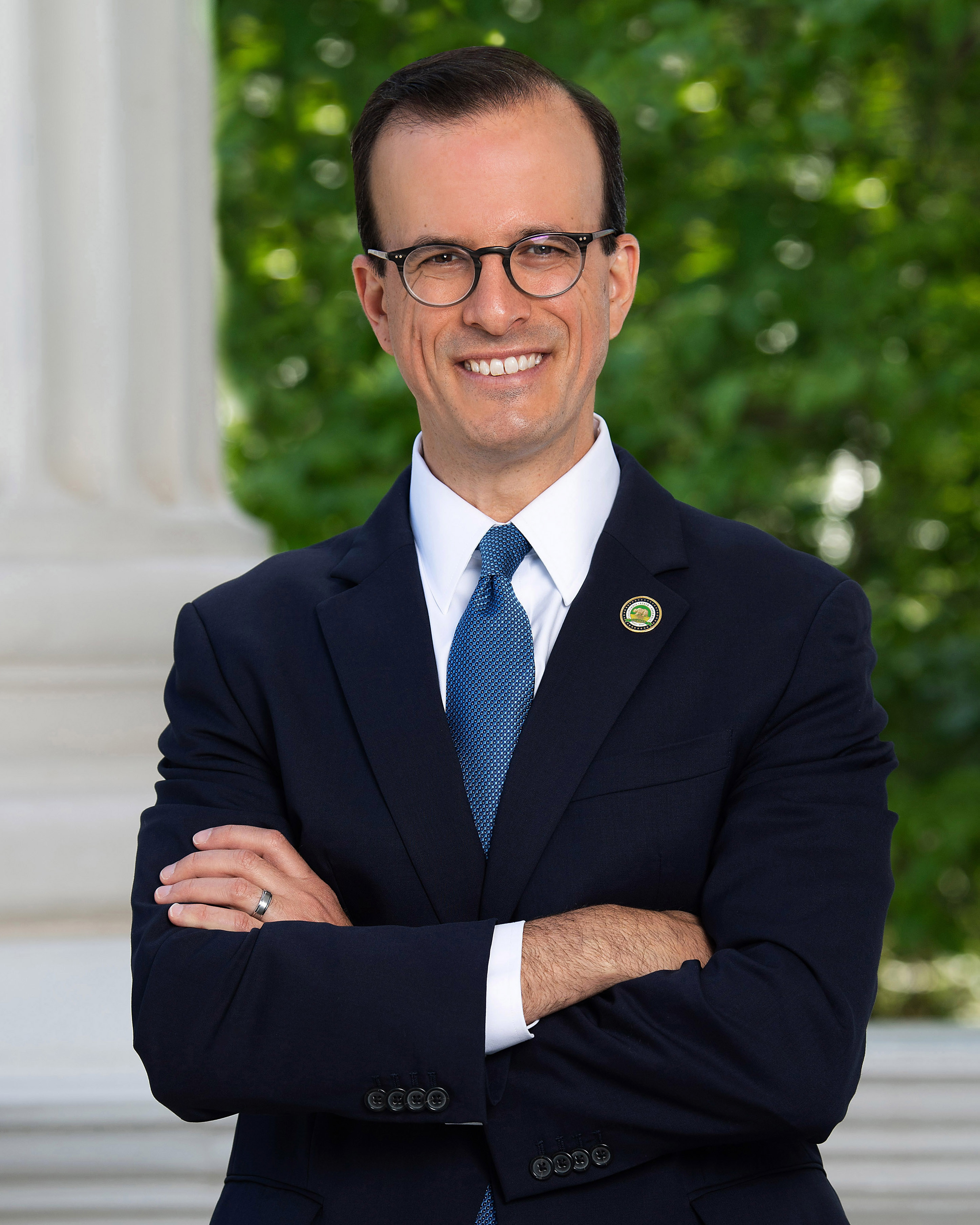
Asm. Marc Berman
Sponsored bills
Existing law establishes the University of California, under the administration of the Regents of the University of California, and the California State University, under the administration of the Trustees of the California State University, as 2 of the segments of public postsecondary education in this state. This bill would express findings and declarations of the Legislature relating to the availability of abortion by medication techniques at on-campus student health centers at public postsecondary educational institutions in the state. The bill would require, on and after January 1, 2023, each student health care services clinic on a California State University or University of California campus to offer abortion by medication techniques, as specified. The bill would require the Commission on the Status of Women and Girls to administer the College Student Health Center Sexual and Reproductive Health Preparation Fund, which the bill would establish. The bill would continuously appropriate the moneys in that fund to the commission for allocations to each public university student health care services clinic for specified activities in preparation for providing abortion by medication techniques, thereby making an appropriation. The bill would provide that its requirements would be implemented only if, and to the extent that, a total of at least $10,290,000 in private moneys is made available to the fund in a timely manner on or after January 1, 2020. The bill would require the commission to submit a report to the Legislature, on or before December 31, 2021, and on or before December 31 of every year thereafter until December 31, 2026, that includes, but is not necessarily limited to, specified information relating to abortion by medication techniques at these student health clinics.
Existing law establishes the Office of Emergency Services within the office of the Governor and under the supervision of the Director of Emergency Services and makes the Office of Emergency Services responsible for the state's emergency and disaster response services for natural, technological, or manmade disasters and emergencies. This bill would establish the California State Nonprofit Security Grant Program under the administration of the director to improve the physical security of nonprofit organizations that are at high risk of violent attacks or hate crimes due to ideology, beliefs, or mission, as specified. The bill would make the operation of the program contingent upon an appropriation in the annual Budget Act for these purposes. The bill would repeal those provisions on January 1, 2025. This bill would declare that it is to take effect immediately as an urgency statute.
Existing law, the California Consumer Privacy Act of 2018, commencing January 1, 2020, grants a consumer various rights with regard to the consumer's personal information that a business collects, discloses for a business purpose, or sells. Among these rights, the act authorizes a consumer to request that a business that collects, discloses for a business purpose, or sells the consumer's personal information to disclose to the consumer specified information related to those activities. The act imposes certain responsibilities on the Attorney General in connection with the act, including the creation of regulations and providing guidance on how to comply with the act. The act provides that an above-described business is required, in a form that is reasonably accessible to consumers, to make available to consumers 2 or more designated methods for submitting requests for specified information required to be disclosed, including, at a minimum, a toll-free telephone number, and, if the business maintains an internet website, a website address. This bill would provide that a business that operates exclusively online and has a direct relationship with a consumer from whom it collects personal information is only required to provide an email address for submitting requests for information required to be disclosed, as specified. The bill would, if the business maintains an internet website, require the business to make the internet website address available to consumers to submit requests for information required to be disclosed, as specified. This bill would incorporate additional changes to Section 1798.130 of the Civil Code proposed by AB 25 and AB 1355 to be operative only if either or both of those bills are enacted and this bill is enacted last.
Existing law establishes and funds various research centers and programs in conjunction with the University of California. Under existing law the University of California has the authority to establish and administer a Firearm Violence Research Center to research firearm violence. The bill would, upon adoption of a specified resolution by the Regents of the University of California, require the center to develop multifaceted education and training programs for medical and mental health providers on the prevention of firearm-related injury and death, as specified. The bill would, upon adoption of that resolution, require the university to report, on or before December 31, 2020, and annually thereafter, specified information regarding the activities of, and financial details relating to, the program. The bill would also make conforming changes.
Existing law authorizes a law enforcement officer to request, and a judicial officer to issue on an ex parte basis, a temporary emergency gun violence restraining order that prohibits a person from having custody or control of any firearms or ammunition if the person poses a significant danger of causing personal injury to themselves or another by having a firearm or ammunition. Existing law establishes a civil restraining order process to accomplish that purpose. Existing law also authorizes an immediate family member to petition the court for an ex parte temporary gun violence restraining order. Existing law authorizes a court, after notice and hearing, to issue a gun violence restraining order for a period of one year which may be renewed, as specified. This bill would require each specified law enforcement agency to develop and adopt written policies and standards, as described, regarding the use of gun violence restraining orders. By requiring local law enforcement agencies to develop new policies, this bill would impose a state-mandated local program. The California Constitution requires the state to reimburse local agencies and school districts for certain costs mandated by the state. Statutory provisions establish procedures for making that reimbursement. This bill would provide that, if the Commission on State Mandates determines that the bill contains costs mandated by the state, reimbursement for those costs shall be made pursuant to the statutory provisions noted above.
Existing law, the California Fair Employment and Housing Act, makes specified employment and housing practices unlawful, including discrimination against or harassment of employees and tenants, among others. Existing law authorizes a person claiming to be aggrieved by an alleged unlawful practice to file a verified complaint with the Department of Fair Employment and Housing within one year from the date upon which the unlawful practice occurred, unless otherwise specified. This bill would extend the above-described period to 3 years for complaints alleging employment discrimination, as specified. The bill would specify that the operative date of the verified complaint is the date that the intake form was filed with the Labor Commissioner. The bill would make conforming changes in provisions that grant a person allegedly aggrieved by an unlawful practice who first obtains knowledge of the facts of the alleged unlawful practice after the expiration of the limitations period, as specified. Existing law authorizes the Director of Fair Employment and Housing to bring a civil action in the name of the department on behalf of a person claiming to be aggrieved in the case of failure to eliminate an unlawful practice through conference, conciliation, mediation, or persuasion. Existing law requires the director to bring the civil action within a specified time after the filing of the complaint. This bill would, for those purposes, define filing a complaint to mean filing an intake form with the department, and would specify that the operative date of the verified complaint relates back to the filing of the form. This bill would prohibit its provisions from being interpreted to revive lapsed claims.
Existing law requires the Office of Emergency Services to establish a protocol for the examination and treatment of victims of sexual assault and attempted sexual assault and the collection and preservation of evidence therefrom. Existing law requires the office to adopt a standard and a complete form or forms for the recording of medical and physical evidence data disclosed by a victim of sexual assault or attempted sexual assault. This bill would authorize the form to be issued as a paper version or as an electronic version, or as both the paper and electronic version. Existing law requires a qualified health care professional who conducts an examination for evidence of a sexual assault or an attempted sexual assault to use the standard form and to make those observations and perform those tests required to record the data required by the form. Existing law defines qualified health care professional for this purpose to include a physician and surgeon and a currently licensed nurse who is working in consultation with a physician and surgeon who conducts examinations or provides treatment in a general acute care hospital or in a physician and surgeon's office. This bill would include in the definition of "qualified health care professional" a currently licensed nurse practitioner or a physician assistant who is working in consultation with a physician and surgeon and who conducts examinations or provides treatment in a general acute care hospital or in a physician and surgeon's office. Existing law requires a hospital-based training center to be established through a competitive bidding process, to train medical personnel on how to perform medical evidentiary examinations for victims of specified crimes, including, among other things, child abuse or neglect, domestic violence, and sexual assault. This bill would require that center to be identified as the California Clinical Forensic Medical Training Center and would require the center to train qualified health care professionals, as defined above. The bill would require the training to additionally include specified training regarding victims of child sexual abuse, intimate partner violence, and sex trafficking. The bill would require the center to, among other things, develop and maintain updated standardized medical evidentiary examination forms and protocols for examinations of specified crimes, and to provide training and technical assistance for sexual assault forensic examination teams on the science of medical evidentiary examinations, emerging trends, and sound operational practices. Existing law requires any victim of a sexual assault who seeks a medical evidentiary examination to be provided with one, as specified. This bill would authorize data from a medical evidentiary examination, with the patient's identity removed, to be collected for health and forensic purposes in accordance with state and federal privacy laws. Existing law prohibits costs incurred by a qualified health care professional, hospital, or other emergency medical facility for the medical evidentiary examination portion of the examination of the victim of a sexual assault, as described in a specified protocol, when the examination is performed as specified, from being charged directly or indirectly to the victim of the assault. This bill would make that prohibition on charging a victim of sexual assault applicable to costs incurred by a clinic or sexual assault forensic examination team, and would include nurse practitioners and physician's assistants as qualified health care professionals. Existing law requires the cost of a medical evidentiary examination performed by a qualified health care professional, hospital, or other emergency medical facility for a victim of a sexual assault to be treated as a local cost and charged to the local law enforcement agency in whose jurisdiction the alleged offense was committed. Existing law authorizes a local law enforcement agency to seek reimbursement from the Office of Emergency Services for the cost of conducting the medical evidentiary examination portion of a medical examination of a sexual assault victim who does not participate in the criminal justice system and limits the amount that may be charged and reimbursed for that portion of the exam to $300. This bill, instead, would authorize a local law enforcement agency to seek reimbursement for the cost of conducting the medical evidentiary examination of a sexual assault victim who is undecided at the time of an examination whether to report to law enforcement. The bill would repeal the provision limiting the amount that may be charged and reimbursed to $300, and would instead require the Office of Emergency Services to determine the amount that may be reimbursed to offset the cost of a medical evidentiary exam once every 5 years, not to exceed 50% of the most recently determined reimbursement amount. The bill would authorize the Office of Emergency Services to redetermine the amount that may be reimbursed to offset the cost of a medical evidentiary exam, at any time, if the federal government reduces the amount of specified federal grants awarded to the office. Existing law authorizes a minor to consent to hospital, medical, and surgical care related to a sexual assault without the consent of a parent or guardian. This bill would also authorize a minor to consent to, or withhold consent for, a medical evidentiary examination without the consent of a parent or guardian. Existing law requires the collection of physical evidence to conform to specified procedures, including, but not limited to, requiring that a baseline gonorrhea culture and syphilis serology be taken, if indicated by the history of contact, that specimens for a pregnancy test be taken, if indicated by the history of contact, and the taking of both swabs and slides, as specified. This bill, instead, would authorize sexually transmitted infection testing and presumptive treatment to be provided, if indicated by the history of the contact. The bill would require that specimens for a pregnancy test be taken if indicated by the history of contact and age of the victim. The bill would require baseline testing for sexually transmitted infections to be done for a child, a person with a disability, or a person who is residing in a long-term care facility, if forensically indicated. The bill would also require, for victims of sexual assault with an assault history of strangulation, best practices to be followed for a complete physical examination and diagnostic testing to prevent adverse outcomes or morbidity and documentation on a supplemental medical evidentiary examination form. The bill would also delete the requirement to take slides as part of the procedure to collect physical evidence and would make a conforming change. The bill would further require, on or before January 1, 2021, a hospital, clinic, or other emergency medical facility at which medical evidentiary examinations are conducted to implement a system to maintain medical evidentiary examination reports in a manner that facilitates their release only as required or authorized by law.
Existing law requires the governing board or body of a local educational agency that serves pupils in grades 7 to 12, inclusive, to adopt a policy on pupil suicide prevention that specifically addresses the needs of high-risk groups. This bill would require the governing board or body of a local educational agency that serves pupils in kindergarten and grades 1 to 6, inclusive, to, before the beginning of the 2020–21 school year, adopt, and update as prescribed, a policy on pupil suicide prevention that specifically addresses the needs of high-risk groups. The bill would require this policy to be age appropriate and delivered and discussed in a manner that is sensitive to the needs of young pupils. The bill would also require this policy to be written to ensure proper coordination and consultation with the county mental health plan for a referral for mental health or related services made on behalf of a pupil who is a Medi-Cal beneficiary. The bill would require the policy to address any training on suicide awareness and prevention to be provided to teachers of pupils in all of the grades served by the local educational agency. By imposing additional duties on local educational agencies, the bill would impose a state-mandated local program. The California Constitution requires the state to reimburse local agencies and school districts for certain costs mandated by the state. Statutory provisions establish procedures for making that reimbursement. This bill would provide that, if the Commission on State Mandates determines that the bill contains costs mandated by the state, reimbursement for those costs shall be made pursuant to the statutory provisions noted above.
Existing law authorizes an elector who is otherwise qualified to register to vote to complete a conditional voter registration and cast a provisional ballot during the 14 days immediately preceding an election or on election day, as prescribed. A county elections official is required to offer conditional voter registration and provisional voting at all permanent offices of the county elections official in the county in accordance with specified procedures. Existing law also permits the county elections official to offer conditional voter registration and provisional voting at satellite offices of the county elections office. This bill would specifically require, rather than permit, the county elections official to offer conditional voter registration and provisional voting at all satellite offices of the county elections official and all polling places in the county. If the elections official is able to determine a conditionally registered voter's precinct, and the ballot for that precinct is available, the bill would require the elections official to provide the voter with a ballot for the voter's precinct. If the elections official is unable to determine the conditionally registered voter's precinct, or a ballot for the precinct is unavailable, the bill would require the elections official to provide the voter with a ballot and inform the voter that only the votes for the candidates and measures on which the voter would be entitled to vote in the voter's assigned precinct may be counted. By requiring county elections officials to offer conditional voter registration and provisional voting at all satellite offices and all polling places, and by imposing additional duties on elections officials with respect to provisional ballots, this bill would create a state-mandated local program. The California Constitution requires the state to reimburse local agencies and school districts for certain costs mandated by the state. Statutory provisions establish procedures for making that reimbursement. This bill would provide that, if the Commission on State Mandates determines that the bill contains costs mandated by the state, reimbursement for those costs shall be made pursuant to the statutory provisions noted above. This bill would incorporate additional changes to Section 2170 of the Elections Code proposed by AB 693 to be operative only if this bill and AB 693 are enacted and this bill is enacted last.