

Passed Jan 27, 2020
1 co-sponsor
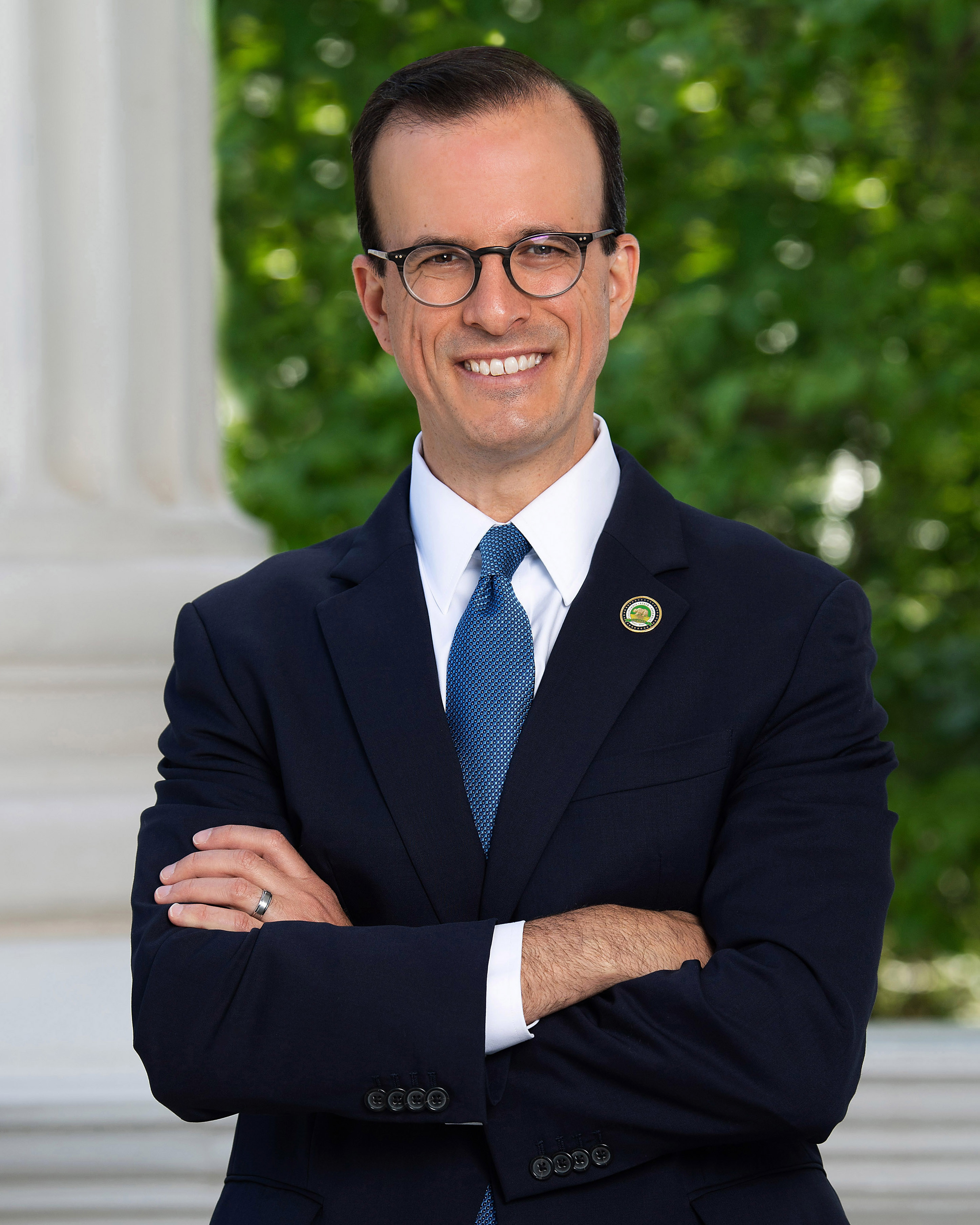
Asm. Marc Berman
Total votes
21,430
all sessions
Attendance
95%
1,013 missed
Near the chamber average
With party
99%
of cast votes
Near the chamber average
Bipartisan score
0%
crosses aisle rarely
Near the chamber average
Sponsored
2,112
bills & resolutions
Near the chamber average
Committees
8
assignments
2,112 bills and resolutions
Sponsored bills
Total
2,112
Primary
229
Co-sponsor
1,883
This page
2,112
matching current filters
Relative to the Willie L. Brown, Jr. Circle and Plaza.
This measure would name the public street, circle, and plaza at 914 and 915 Capitol Mall in the City of Sacramento as the Willie L. Brown, Jr. Circle and Plaza. The measure would request the Department of General Services to determine the cost of erecting the appropriate signage commemorating this special designation and, upon receiving donations from nonstate sources, to cover that cost to erect that signage.
Signed into law Jan 24, 2020
1 co-sponsor
Firearms: armed prohibited persons.
Existing law requires the Attorney General to establish and maintain an online database known as the Prohibited Armed Persons File, sometimes referred to as the Armed Prohibited Persons System, to cross-reference persons who have ownership or possession of a firearm on or after January 1, 1996, and who, subsequent to the date of that ownership or possession of a firearm, fall within a class of persons who are prohibited from owning or possessing a firearm. The Budget Act of 2019 appropriated $3,000,000 to the Counties of Alameda, San Diego, Santa Cruz, and Ventura to support local law enforcement activities related to seizing weapons and ammunition from persons who are prohibited from possessing them through a Gun Violence Reduction Pilot Program. This bill would require the Counties of Alameda, San Diego, Santa Cruz, and Ventura on or before 15 months after receiving these funds appropriated in the Budget Act of 2019, to submit a report to the Department of Justice and to the Legislature containing specified information relating to the efficacy of their programs.
Vetoed Jan 21, 2020
1 co-sponsor
School-based health programs.
Existing law provides for the Medi-Cal program, which is administered by the State Department of Health Care Services, under which qualified low-income individuals receive health care services. The Medi-Cal program is, in part, governed by, and funded pursuant to, federal Medicaid program provisions. Existing law establishes the Administrative Claiming process under which the department is authorized to contract with local governmental agencies and local educational consortia for the purpose of obtaining federal matching funds to assist with the performance of administrative activities relating to the Medi-Cal program that are provided by a local governmental agency or local educational agency (LEA) . Existing law also provides that specified services provided by LEAs are covered Medi-Cal benefits and are reimbursable on a fee-for-service basis under the LEA Medi-Cal billing option. Existing law requires the department to engage in specified activities relating to the LEA Medi-Cal billing option, such as amending the Medicaid state plan to ensure that schools are reimbursed for all eligible services and examining methodologies for increasing school participation in the LEA Medi-Cal billing option. Existing law requires that these activities be funded and staffed by proportionately reducing federal Medicaid payments allocable to LEAs for the provision of benefits funded by federal Medicaid program payments under the LEA Medi-Cal billing option in an amount not to exceed $1,500,000 annually. This bill would require the State Department of Education to, no later than July 1, 2020, establish a School-Based Health Unit for the purpose of administering current health-related programs under the purview of the State Department of Education and advising it on issues related to the delivery of school-based Medi-Cal services in the state. The bill would require the unit to, among other things, provide technical assistance, outreach, and informational materials to LEAs on allowable services and on the submission of claims. The bill would authorize the unit to form advisory groups, as specified, and, to the extent necessary, would require the State Department of Health Care Services to make available to the unit any information on other school-based dental, health, and mental health programs, and school-based health centers, that may receive Medi-Cal funding. The bill would require the unit to be supported through an interagency agreement with the State Department of Health Care Services, and would authorize the unit to receive additional funds from grants and other sources. The bill would increase the annual funding limit for the activities of the State Department of Health Care Services that support the LEA Medi-Cal billing option to $2,000,000, and would require that $500,000 of that amount be available for transfer to the State Department of Education to support the unit pursuant to that interagency agreement, with any unexpended funds to be returned. The bill would require the State Department of Health Care Services to collaborate with the unit, as specified, and would require a certain summary of activities prepared by the State Department of Health Care Services to include, among other things, activities conducted in coordination with the unit.
Vetoed Jan 21, 2020
0 co-sponsors
Peace officers: deputy sheriffs.
Existing law establishes categories of peace officers with varying powers and authority to make arrests and carry firearms. Under existing law, in certain counties, a deputy sheriff, who is employed to perform duties exclusively or initially relating to custodial assignments with responsibilities for maintaining the operations of county custodial facilities, is a peace officer whose authority extends to any place in the state only while engaged in the performance of the duties of the officer's employment and for the purpose of carrying out the primary function of employment relating to the officer's custodial assignments, or when performing other law enforcement duties directed by the officer's employing agency during a local state of emergency. This bill would include a deputy sheriff employed by the County of Del Norte, the County of Mono, or the County of San Mateo within that definition of peace officers.
Vetoed Jan 21, 2020
1 co-sponsor
Passed Jan 21, 2020
1 co-sponsor
Veterans: Medical Foster Home Pilot Program.
Existing law establishes the Department of Veterans Affairs, which is responsible for administering various programs and services for the benefit of veterans. Existing law provides for the licensure of residential care facilities for the elderly, community care facilities, and residential care facilities for persons with chronic, life-threatening illness by the State Department of Social Services. Existing law exempts from the application of these provisions specified facilities, including general acute care hospitals and clinics. Existing law authorizes the California State Auditor, upon the request by the Joint Legislative Audit Committee and to the extent funding is available, to audit a state or local governmental agency, as defined, or any other publicly created entity. This bill would establish the Medical Foster Home Pilot Program until January 1, 2023, under which a United States Department of Veterans Affairs (USDVA) facility may establish a medical foster home that is not subject to licensure or regulation as a residential care facility for the elderly, a community care facility, or a residential care facility for persons with chronic, life-threatening illness, pursuant to specified federal requirements. The bill would require a USDVA facility establishing the home to agree to be subject to the jurisdiction of the California State Auditor, and would require a medical foster home caregiver or an individual, other than a veteran resident, who is over 18 years of age and is residing in the medical foster home to be a registered independent home care aide, as specified. The bill would state the intent of the Legislature that the California State Auditor, in response to a request to the Joint Legislative Audit Committee, conduct an audit evaluating the pilot program created by this bill no sooner than January 1, 2021, as specified.
Vetoed Jan 21, 2020
1 co-sponsor
Sickle Cell Disease Awareness Month.
This measure would recognize September 2020 as Sickle Cell Disease Awareness Month and encourage the Legislature to appropriate funds for research, treatment, and monitoring of sickle cell disease, and for related education and outreach.
Passed Jan 15, 2020
1 co-sponsor
Relative to mental health and substance use treatment.
This measure would urge specified state departments and the Attorney General to use their authority to ensure that health care service plans and health insurers subject to their authority comply with the federal Paul Wellstone and Pete Domenici Mental Health Parity and Addiction Equity Act of 2008.
Passed Jan 9, 2020
1 co-sponsor
Elections: printing requirements and ballot design.
Existing law imposes ballot layout specifications, including specific requirements relating to the size and font of text. The bill would delete various provisions requiring certain text be printed in a particular font and make other ballot-related changes allowing more flexibility. Existing law also prescribes the format that must be used for county voter information guides. Existing law specifically requires that a notice regarding vote by mail applications be made in heavy-faced gothic type, not smaller than 12-point. The bill would delete the requirement that the notice be in gothic type. The bill would require the Secretary of State to establish a ballot design advisory committee to assist the Secretary of State in promulgating regulations that prescribe ballot design and format. This bill would incorporate additional changes to Section 13119 of the Elections Code proposed by SB 268 to be operative only if this bill and SB 268 are enacted and this bill is enacted last.
Signed into law Oct 13, 2019
0 co-sponsors
Ask Maddy
·
AI policy assistant
Ask Maddy about Marc Berman
Scope: CA
Hi! I can help you understand Marc Berman's legislative record. What would you like to know?
Try one of these
i
Maddy answers using official bill text and legislative records. Always verify before sharing.
Sources cited inline