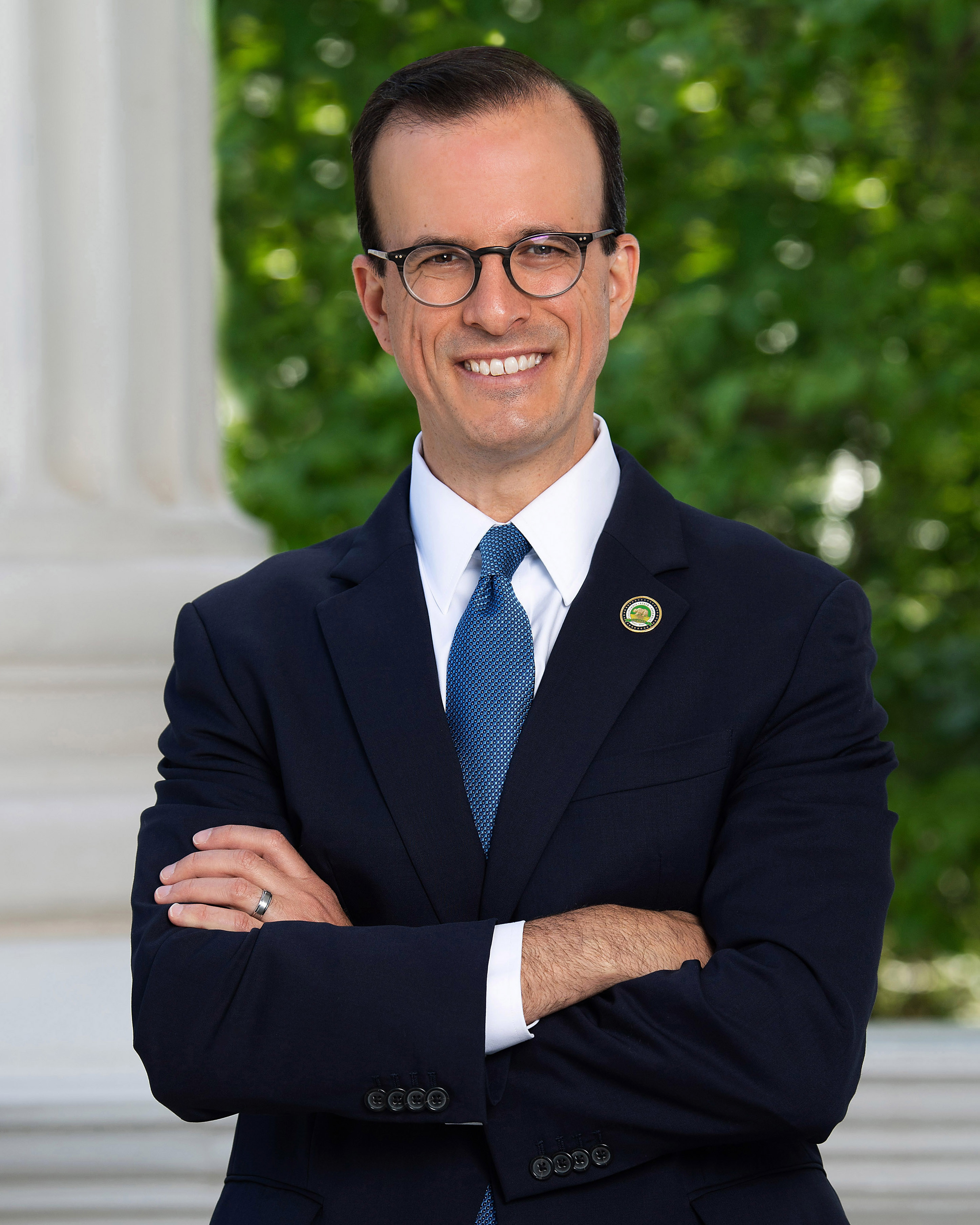
Photo of Marc Berman
D California Assembly · District 23 On the 2026 ballot

Asm. Marc Berman

Compare
Total votes
21,430
all sessions
Attendance
95%
1,013 missed
Near the chamber average
With party
99%
of cast votes
Near the chamber average
Bipartisan score
0%
crosses aisle rarely
Near the chamber average
Sponsored
2,112
bills & resolutions
Near the chamber average
Committees
8
assignments
2,112 bills and resolutions

Sponsored bills

Total
2,112
Primary
229
Co-sponsor
1,883
This page
2,112
matching current filters
Co-sponsor ACR 110
Passed · California Assembly · Co-sponsor
Relative to reproductive care and abortion services.

This measure, among other things, would declare that California is a Reproductive Freedom State for All and provide that the Legislature is committed to guaranteeing the constitutionally protected right to an abortion and supporting efforts to increase access to the best available reproductive and pregnancy-related care for women and pregnant individuals.

Passed Feb 12, 2020 1 co-sponsor
Co-sponsor AB 322
died · California Assembly · Co-sponsor
Political Reform Act of 1974: online filing and disclosure system.

The Political Reform Act of 1974 requires the filing of specified statements, reports and other documents. Under the act, a local government agency may require these filings to be made online or electronically with the local filing officer, as specified. The act requires the local filing officer to make all data so filed available on the internet in an easily understood format that provides the greatest public access. Beginning January 1, 2022, this bill would require a local government agency to post on its internet website a copy of any specified statement, report, or other document filed with that agency in paper format. This bill would require that the statement, report, or other document be made available for four years from the date of the election associated with the filing. By imposing a new duty on local government agencies, this bill would impose a state-mandated local program. The California Constitution requires the state to reimburse local agencies and school districts for certain costs mandated by the state. Statutory provisions establish procedures for making that reimbursement. This bill would provide that, if the Commission on State Mandates determines that the bill contains costs mandated by the state, reimbursement for those costs shall be made pursuant to the statutory provisions noted above. The Political Reform Act of 1974, an initiative measure, provides that the Legislature may amend the act to further the act's purposes upon a 23 vote of each house of the Legislature and compliance with specified procedural requirements. This bill would declare that it furthers the purposes of the act.

died Feb 3, 2020 1 co-sponsor
Co-sponsor AB 124
Failed · California Assembly · Co-sponsor
Childcare: local planning councils.

Existing law states the intent of the Legislature that local childcare and development planning councils provide a forum for the identification of local priorities for childcare and the development of policies to meet the needs identified within those priorities. Existing law requires the county board of supervisors and the county superintendent of schools to select members for the local planning council for that county. Existing law requires local planning councils, upon approval by the county board of supervisors and the county superintendent of schools, to submit to the State Department of Education the local priorities it has identified that reflect all childcare needs in the county, as provided. This bill would require local planning councils to provide information to cities and counties regarding facility needs for early childhood education, including, but not limited to, childcare and preschool, in their jurisdictions. By imposing new duties on local planning councils, the bill would impose a state-mandated local program. The California Constitution requires the state to reimburse local agencies and school districts for certain costs mandated by the state. Statutory provisions establish procedures for making that reimbursement. This bill would provide that, if the Commission on State Mandates determines that the bill contains costs mandated by the state, reimbursement for those costs shall be made pursuant to the statutory provisions noted above.

Failed Feb 3, 2020 1 co-sponsor
Co-sponsor AB 739
Failed · California Assembly · Co-sponsor
Flavored tobacco products.

Existing law, the Stop Tobacco Access to Kids Enforcement (STAKE) Act, prohibits a person from selling or otherwise furnishing tobacco products, as defined, to a person under 21 years of age. Existing law also prohibits the use of tobacco products in county offices of education, on charter school or school district property, or near a playground or youth sports event, as specified. This bill would prohibit a tobacco retailer from selling, offering for sale, or possessing with the intent to sell or offer for sale, a flavored tobacco product, as defined. The bill would make a violation of this prohibition an infraction punishable by a fine of $250 for each violation. The bill would state the intent of the Legislature that these provisions not be construed to preempt or prohibit the adoption and implementation of local ordinances related to the prohibition on the sale of flavored tobacco products. The bill would state that its provisions are severable. By creating a new crime, the bill would impose a state-mandated local program. The California Constitution requires the state to reimburse local agencies and school districts for certain costs mandated by the state. Statutory provisions establish procedures for making that reimbursement. This bill would provide that no reimbursement is required by this act for a specified reason.

Failed Feb 3, 2020 1 co-sponsor
Primary AB 20
Failed · California Assembly · Lead sponsor
Computer science strategic implementation plan: California Computer Science Coordinator.

Existing law, until July 31, 2020, requires the Superintendent of Public Instruction to convene a computer science strategic implementation advisory panel with a specified membership to develop and submit recommendations for a computer science strategic implementation plan to the Superintendent, the State Board of Education, and the Legislature. This bill would create the California Computer Science Coordinator in the State Department of Education to provide statewide coordination in implementing the computer science strategic implementation plan once it has been adopted by the state board and submitted to the Legislature. The bill would declare it is the intent of the Legislature that the California Computer Science Coordinator work to advance the mission of the computer science strategic implementation plan and provide state-level leadership and support for initiatives related to 4 specified overarching strategies for implementing computer science education across the state.

Failed Feb 3, 2020 0 co-sponsors
Primary AB 52
Failed · California Assembly · Lead sponsor
Computer science strategic implementation plan.

Existing law, until July 31, 2020, requires the Superintendent of Public Instruction to convene a computer science strategic implementation advisory panel with a specified membership to develop and submit recommendations for a computer science strategic implementation plan to the Superintendent, the State Board of Education, and the Legislature. Existing law requires the Superintendent to develop, and requires the state board to consider adopting, a computer science strategic implementation plan on or before July 15, 2019. This bill would additionally require the computer science strategic implementation plan to be updated every 7 years. The bill also would make these provisions apply indefinitely.

Failed Feb 3, 2020 0 co-sponsors
Co-sponsor SB 724
In committee · California Senate · Co-sponsor
The California Beverage Container Recycling and Litter Reduction Act.

(1) Existing law, the California Beverage Container Recycling and Litter Reduction Act, requires the Department of Resources Recycling and Recovery to annually designate convenience zones and requires that at least one certified recycling center that meets certain requirements be located within every convenience zone. Existing law authorizes the department to grant a convenience zone an exemption from certain redemption requirements, including certain dealer and recycling center redemption requirements, based on certain factors. Existing law limits the total number of exemptions that may be granted to 35% of the total number of convenience zones identified as having one or more of those factors applicable. This bill would increase the total number of exemptions that may be granted to 50% of the number identified as eligible. The bill would require the department to review exemptions every 5 years to determine if each exemption still meets the prescribed exemption criteria. (2) The act requires dealers within a convenience zone where no recycling location has been established, or within a convenience zone that is unserved for 60 days and not exempt from convenience zone requirements, to submit an affidavit to the department stating that the dealer has met specified standards for redemption, including, among others, that the dealer is redeeming all empty beverage container types at all open cash registers or at one designated location on the dealer's premises, during all hours that the dealer is open for business. If the dealer does not submit that affidavit, existing law requires the dealer to pay $100 per day to the department, for deposit in the California Beverage Container Recycling Fund, a continuously appropriated fund described in (3) , until a recycling location is established or until the dealer meets the standards for redemption specified in the affidavit provision. This bill would revise these convenience zone redemption duties and exempt from those duties dealers with gross annual sales of less than $2,000,000 and dealers that are not supermarkets and that have less than 5,000 square feet of interior retail space. The bill, until January 1, 2022, would also exempt certain other dealers from these requirements. (3) The act establishes the California Beverage Container Recycling Fund and, except for administrative costs, continuously appropriates moneys in the fund to the department for specified purposes, including the amount necessary to pay handling fees to certain types of recyclers to provide an incentive for the redemption of empty beverage containers in convenience zones. This bill would require the department to offer a handling fee payment from the fund to certain certified recyclers within unserved convenience zones. The bill would make an appropriation by changing the terms and conditions under which the department is authorized to make payments from a continuously appropriated fund. The bill, until July 1, 2022, would require the handling fee to be set at the rate in effect on July 1, 2015. The bill would authorize the department, until July 1, 2022, to annually expend $3,000,000 from the fund for specified supplemental handling fee payments to low-volume recycling centers. By authorizing the expenditure of a continuously appropriated fund for new purposes, this bill would make an appropriation. The bill would require the department to develop and submit to the Legislature recommended revisions to the handling fee provisions, as specified. (4) The act also continuously appropriates from the California Beverage Container Recycling Fund $10,500,000 annually for payments to cities and counties for beverage container recycling and litter cleanup activities. The act authorizes the department to withhold those payments to any city, county, or city and county that has restricted or prohibited the siting of a supermarket site, as provided. This bill would require the department, on or before July 1, 2020, to convene a public hearing, as specified, for purposes of discussing and receiving public testimony on the development of guidelines for evaluating the circumstances that might prompt the department to withhold beverage container recycling and litter cleanup activities payments to any city, county, or city and county that has restricted or prohibited the siting of a supermarket site. (5) The act requires the department to pay a market development payment to a reclaimer, as defined, for empty plastic beverage containers that have been collected for recycling in the state, and that the reclaimer washes and processes into flake, pellet, sheet, or any other form that is then usable as input for the manufacture of new plastic products, as defined, by product manufacturers in the state. The act also requires the department to pay a market development payment to a product manufacturer, as defined, for plastic flake, pellet, sheet, or any other form of plastic purchased from a reclaimer and used by that product manufacturer to manufacture a plastic product in the state. The act makes these provisions inoperative on July 1, 2022. This bill would delay the inoperative date of these provisions from July 1, 2022, to July 1, 2023. The act authorizes the department, for the 2019–20 fiscal year to the 2021–22 fiscal year, inclusive, to expend up to $10,000,000 each fiscal year from the fund for market development payments to reclaimers and product manufacturers. This bill would additionally authorize the department to expend up to $10,000,000 from the fund for those purposes for the 2022–23 fiscal year, thereby making an appropriation. (6) Under the act, the department is required to calculate a processing fee for each beverage container with a specified scrap value, which is required to be paid by beverage manufacturers for each beverage container sold or transferred to a distributor or dealer. The department is required to calculate the processing fee in a specified manner, so that the processing fee generally equals 65% of the processing payment that the department is required to pay to processors if the scrap value of the container having a refund value pursuant to the act is less than the cost of recycling. The department is required to determine the statewide weighted average cost to recycle each beverage container type by conducting a survey, as specified. The department is required to establish a processing fee account in the continuously appropriated California Beverage Container Recycling Fund for each material type and to deposit processing fees and other amounts in the applicable account. This bill would, for purposes of calculating processing payments, require the department, until January 1, 2022, to use the actual cost of recycling that was in effect on December 30, 2015, adjusted as specified. The bill would make an appropriation by changing the terms and conditions under which the department is authorized to make payments from a continuously appropriated fund. The bill would provide that the processing fees established by the department between the effective date of the bill and December 31, 2019, inclusive, shall not be higher than they would be absent these new provisions. The bill would require the department to suspend usage of surveys and calculations of recycling costs until at least January 1, 2021, and would authorize the department to redirect any contract funds for cost surveys and calculations to provide for a specified assessment and to utilize any contract funds available for the development of amendments to be recommended to the Legislature regarding specified provisions of the act. (7) This bill would declare that it is to take effect immediately as an urgency statute.


In committee Feb 3, 2020 1 co-sponsor
Showing 1,491 to 1,500 of 2,112 bills