

Existing law generally requires a voter to disclose a preference for a political party in order to participate in the political party's primary election. Existing law permits a voter who has declined to disclose a political party preference to request the ballot of a political party at a partisan primary election if the political party, by party rule duly noticed to the Secretary of State, authorizes a voter who has declined to disclose a political party preference to vote the ballot of the political party at that election. Existing law requires, at a partisan primary election, a member of the precinct board to provide a no party preference voter with a uniform notification informing the voter that the voter may request a political party's ballot, as specified. This bill would authorize, at a partisan primary election, a nonpartisan ballot to include a statement informing a no party preference voter of the procedure for that voter to obtain a ballot that includes candidates for partisan office. The statement would be required to include an explanation of how the voter may change the voter's party preference and how the voter may request a ballot of one of the political parties that has authorized no party preference voters to vote in its primary election.
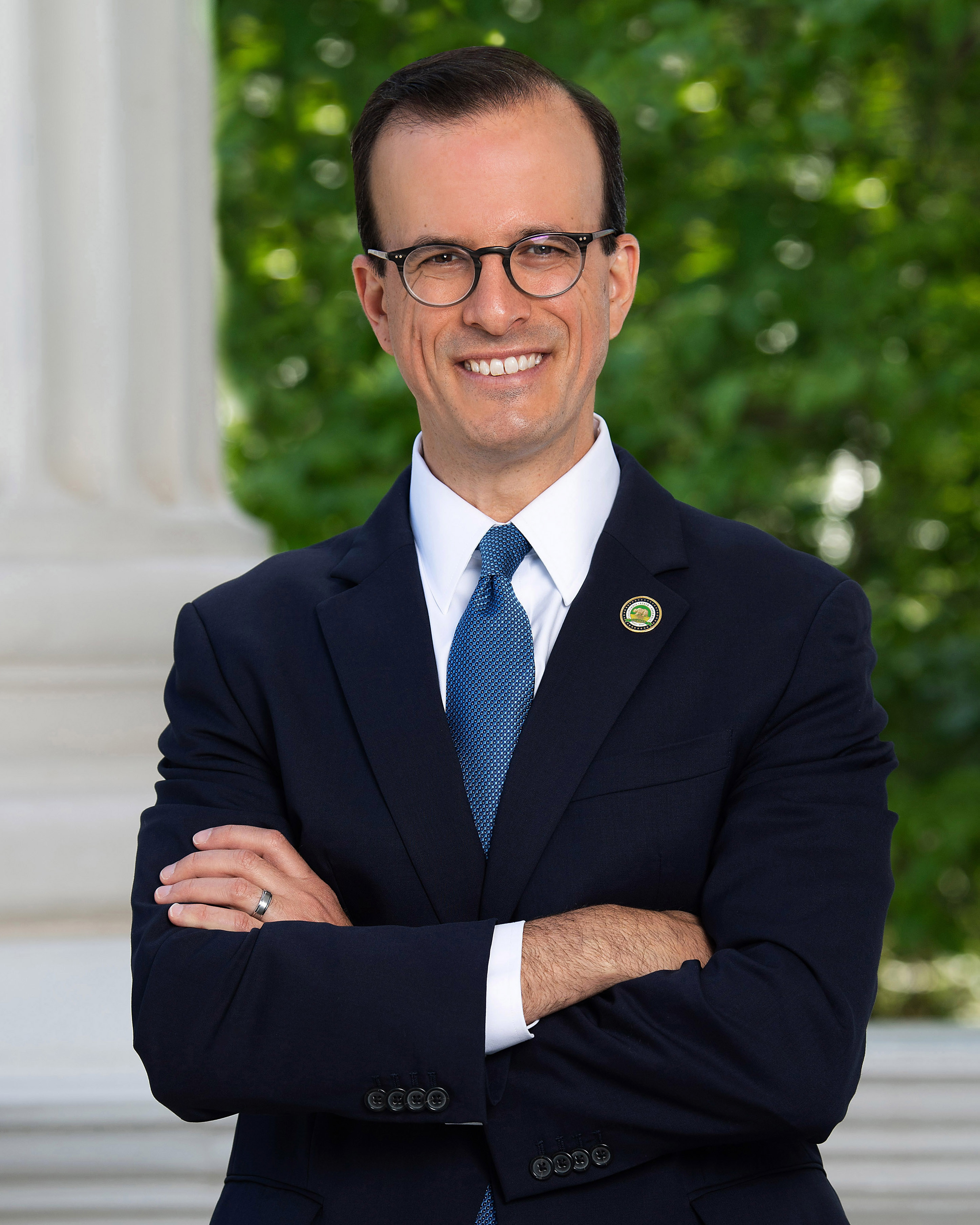
Asm. Marc Berman
Sponsored bills
Existing law requires specified categories of law enforcement officers to meet training standards pursuant to courses of training certified by the Commission on Peace Officer Standards and Training. Existing law requires the commission to implement a course or courses of instruction for the training of law enforcement officers in California in the handling of domestic violence complaints and also to develop guidelines for law enforcement response to domestic violence. Existing law authorizes an immediate family member of a person or a law enforcement officer to request a court to issue a gun violence restraining order that would prohibit a person from, among other things, purchasing or possessing a firearm or ammunition, as specified. This bill would require the commission to develop and implement, on or before January 1, 2022, a course of training for those law enforcement officers regarding gun violence restraining orders. The bill would require the course to be incorporated into the course or courses of basic training for law enforcement officers on or before January 1, 2022, and would require the course or courses to include specified topics, including the process of filing a petition for a gun violence restraining order and situational training to assist officers in identifying when a gun violence restraining order is appropriate. The bill would authorize law enforcement officers and administrators to participate in supplementary training that includes these topics.
The Political Reform Act of 1974 provides for the comprehensive regulation of campaign financing, including requiring the reporting of campaign contributions and expenditures, as defined, and imposing other reporting and recordkeeping requirements. The Fair Political Practices Commission administers and enforces the act. A violation of the act's provisions, with certain exceptions, is punishable as a misdemeanor. The act prohibits the use of campaign funds for certain purposes, including expenditures that confer substantial personal benefit that are not directly related to a political, legislative, or governmental purpose. These prohibitions are not subject to certain penalties, including the misdemeanor penalty described above. This bill would subject a person who misuses campaign funds in violation of these requirements resulting in an unlawful direct personal benefit with a monetary value of $10,000 or more to that misdemeanor penalty and an administrative penalty collected by the Commission of up $10,000 for each violation or three times the amount of the unlawful direct personal benefit. By expanding the scope of the act's criminal provision, the bill would impose a state-mandated local program. The California Constitution requires the state to reimburse local agencies and school districts for certain costs mandated by the state. Statutory provisions establish procedures for making that reimbursement. This bill would provide that no reimbursement is required by this act for a specified reason. The Political Reform Act of 1974, an initiative measure, provides that the Legislature may amend the act to further the act's purposes upon a 23 vote of each house of the Legislature and compliance with specified procedural requirements. This bill would declare that it furthers the purposes of the act.
The Political Reform Act of 1974 provides for the comprehensive regulation of campaign financing, including requiring elected officials, candidates for elective office, and committees to file periodic campaign statements. The act requires that these campaign statements contain prescribed information related to campaign contributions and expenditures of the filing entities. A violation of the act is a misdemeanor. This bill would require a committee to include within a campaign statement the name of each individual who owns or controls, or controls the contributions or expenditures of, a limited liability company or foreign limited liability company from which the committee received a campaign contribution. Because a violation of this requirement would be a crime, the bill would impose a state-mandated local program. The California Constitution requires the state to reimburse local agencies and school districts for certain costs mandated by the state. Statutory provisions establish procedures for making that reimbursement. This bill would provide that no reimbursement is required by this act for a specified reason. The Political Reform Act of 1974, an initiative measure, provides that the Legislature may amend the act to further the act's purposes upon a 23 vote of each house of the Legislature and compliance with specified procedural requirements. This bill would declare that it furthers the purposes of the act.
Existing law establishes the Department of Veterans Affairs, which is responsible for administering various programs and services for the benefit of veterans. Existing law provides for the licensure of residential care facilities for the elderly, community care facilities, and residential care facilities for persons with chronic, life-threatening illness by the State Department of Social Services. Existing law exempts from the application of these provisions specified facilities, including general acute care hospitals and clinics. Existing law authorizes the California State Auditor, upon the request by the Joint Legislative Audit Committee and to the extent funding is available, to audit a state or local governmental agency, as defined, or any other publicly created entity. This bill would establish the Medical Foster Home Pilot Program until January 1, 2024, under which a United States Department of Veterans Affairs (USDVA) facility may establish a medical foster home that is not subject to licensure or regulation as a residential care facility for the elderly, a community care facility, or a residential care facility for persons with chronic, life-threatening illness, pursuant to specified federal requirements. The bill would require a USDVA facility establishing the home to agree to be subject to the jurisdiction of the California State Auditor, and would require a medical foster home caregiver or an individual, other than a veteran resident, who is over 18 years of age and is residing in the medical foster home to be a registered independent home care aide, as specified. The bill would state the intent of the Legislature that the California State Auditor, in response to a request to the Joint Legislative Audit Committee, conduct an audit evaluating the pilot program created by this bill no sooner than January 1, 2022, as specified.
This measure would proclaim January 23, 2020, as Maternal Health Awareness Day, to draw attention to the efforts that have improved maternal health in California and to highlight the need for continued improvement of maternal health for all women.
This measure would call on the Department of Homeland Security (DHS) to extend the REAL ID deadline for air travel by at least 3 years to ensure there is not a disruption in air travel.
This measure would designate the month of January 2020 as Positive Parenting Awareness Month in California.