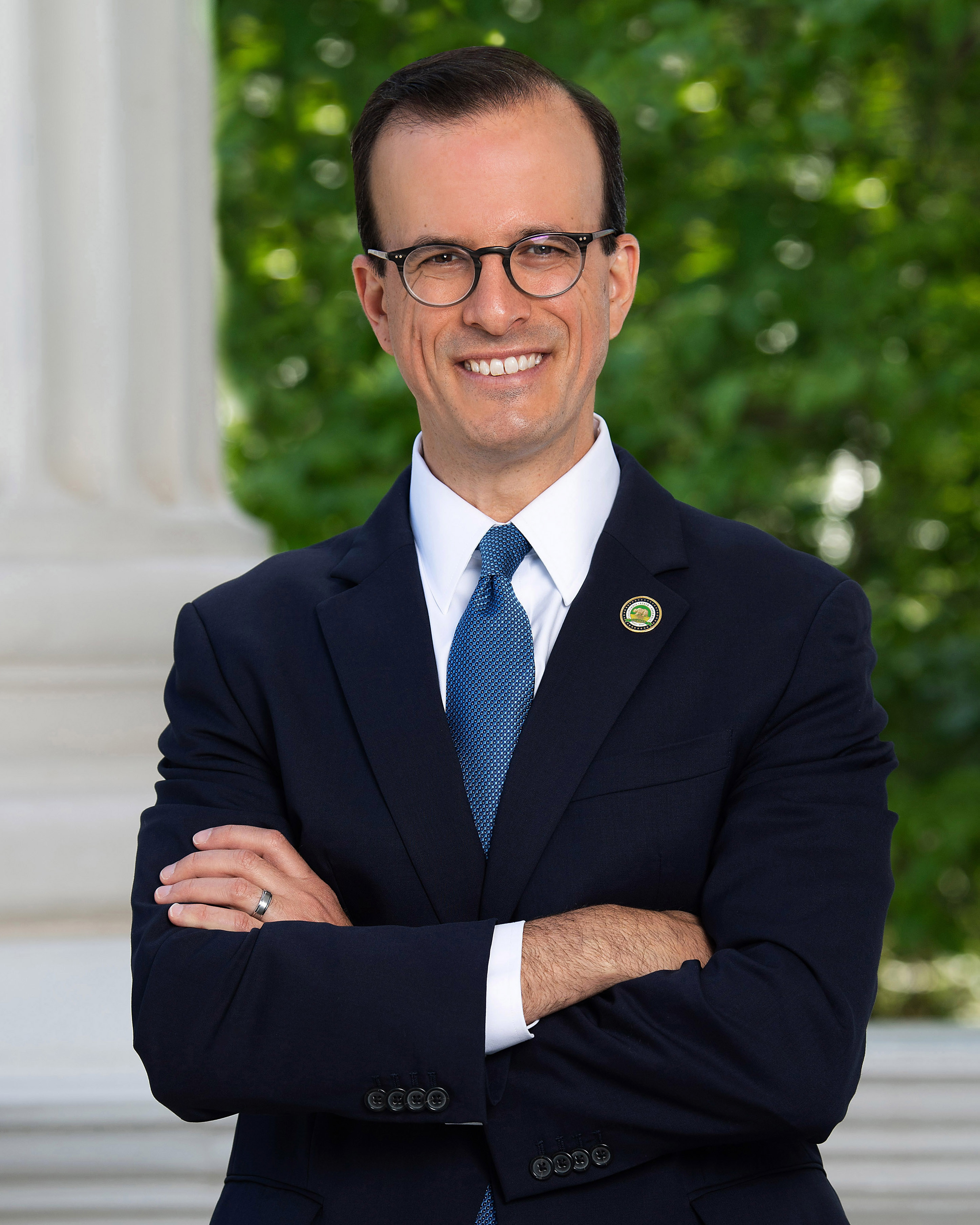
Photo of Marc Berman
D California Assembly · District 23 On the 2026 ballot

Asm. Marc Berman

Compare
Total votes
21,430
all sessions
Attendance
95%
1,013 missed
Near the chamber average
With party
99%
of cast votes
Near the chamber average
Bipartisan score
0%
crosses aisle rarely
Near the chamber average
Sponsored
2,112
bills & resolutions
Near the chamber average
Committees
8
assignments
2,112 bills and resolutions

Sponsored bills

Total
2,112
Primary
229
Co-sponsor
1,883
This page
2,112
matching current filters
Primary AB 1707
Signed into law · California Assembly · Lead sponsor
Polling places: handheld devices.

Existing law sets forth various restrictions relating to permissible conduct at polling places, including, among others, that a person is prohibited from photographing, video recording, or otherwise recording a voter entering or exiting a polling place with the intent of dissuading another person from voting, as specified. This bill would provide that a voter or any other person may not be prohibited from using an electronic device, including a smartphone, tablet, or other handheld device, at a polling place provided that the use of the device does not result in a violation of other provisions of law.

Signed into law Oct 8, 2019 0 co-sponsors
Co-sponsor AB 1346
Signed into law · California Assembly · Co-sponsor
Postsecondary education: California Private Postsecondary Education Act of 2009: Student Tuition Recovery Fund.

The California Private Postsecondary Education Act of 2009 provides for the regulation of private postsecondary educational institutions by the Bureau for Private Postsecondary Education in the Department of Consumer Affairs. The act also establishes the Student Tuition Recovery Fund and requires the bureau to adopt regulations governing the administration and maintenance of the fund, including requirements relating to assessments on students and student claims against the fund, and establishes that the moneys in this fund are continuously appropriated to the bureau for specified purposes. The act authorizes a California student of a Corinthian Colleges, Inc., institution who meets all of the other eligibility requirements, including that the student was enrolled as of June 20, 2014, or withdrew within 120 days of that date, to receive payment from the fund. The act defines economic loss, for the purposes of a student's loss that may be relieved or mitigated through the fund, to include but not necessarily be limited to, pecuniary loss, which is the sum of the student's tuition, all other institutional charges, the cost of equipment and materials required for the educational program, and interest on any student loan used to pay for such charges. This bill would instead allow a California student of a Corinthian Colleges, Inc., institution who was residing in California and attending a campus on or after January 1, 2010, and who would be eligible but for the Corinthian College's exemption from the act, or a student of a Corinthian College who was enrolled as of June 20, 2014, or withdrew within 120 days of that date, as specified, to receive payment from the fund. The bill would expand the definition of economic loss to include all cash or other consideration paid by the student to an institution, all expenses related to private or government student loans in connection with the student's attendance, and all third-party payments paid to the student or to the institution in connection with the student's attendance at the institution, as specified. To the extent that the bill expands the purposes of the fund, the bill would make an appropriation.

Signed into law Oct 4, 2019 1 co-sponsor
Co-sponsor AB 1340
Signed into law · California Assembly · Co-sponsor
Private postsecondary education: California Private Postsecondary Education Act of 2009: labor market outcome data reporting.

(1) Existing law, the California Private Postsecondary Education Act of 2009, provides, among other things, for student protections and regulatory oversight of private postsecondary schools in the state. The act is enforced by the Bureau for Private Postsecondary Education within the Department of Consumer Affairs. This bill would require an institution subject to the act to collect and retain for each graduate completing a program at that institution on or after January 1, 2020, individual identifying information, the program the graduate was enrolled in, and specified student loan debt information. The bill would require the institution to report that information to the bureau annually according to a schedule and format determined by the bureau. The bill would require the bureau to match the data reported by institutions pursuant to this provision with wage data from the Employment Development Department, as specified. The bill would require this data to be reported to the Employment Development Department to fulfill specified requirements of the federal Workforce Innovation and Opportunity Act. The bill would require the bureau to make available on its internet website certain program-level and institution-level statistics regarding the earnings levels of students and student debt burdens. The bill would require the labor market outcome data reported under the bill to, at a minimum, provide data relating to graduates at 2 years and at 5 years after their graduation. The provisions related to reporting, matching, and internet posting would not be operative until the Director of Consumer Affairs certifies that the bureau's information technology system has been updated and is capable of processing data as required by this bill. The bill would require the bureau to notify institutions subject to the act when this certification has occurred, and would require institutions to comply with the bill's provisions within 120 days from the date they receive this notification. (2) Existing law requires the Director of Employment Development to permit the bureau to access relevant quarterly wage data, as necessary, for the bureau's evaluation and reporting of program performance outcomes as required and permitted by various state and federal laws, including the federal Workforce Innovation and Opportunity Act of 2014. Existing law makes a person who knowingly accesses, uses, or discloses this confidential information without authorization guilty of a misdemeanor. This bill would permit the bureau to access and use any relevant quarterly wage data necessary for the labor market outcome reporting data match requirement described above. The bill would specify that this data would be provided to the extent permitted by state and federal law and regulations. By providing this information to the bureau, the bill would expand the crime related to unauthorized access, use, or disclosure of this information, thereby imposing a state-mandated local program. (3) This bill would incorporate additional changes to Section 1095 of the Unemployment Insurance Code proposed by AB 593 and AB 1296 to be operative only if this bill and either AB 593 or AB 1296, or both, are enacted and this bill is enacted last. (4) The California Constitution requires the state to reimburse local agencies and school districts for certain costs mandated by the state. Statutory provisions establish procedures for making that reimbursement. This bill would provide that no reimbursement is required by this act for a specified reason.


Signed into law Oct 4, 2019 1 co-sponsor
Co-sponsor AB 1344
Signed into law · California Assembly · Co-sponsor
Private postsecondary education: California Private Postsecondary Act of 2009.

Existing law, the California Private Postsecondary Education Act of 2009, provides for student protections and regulatory oversight of private postsecondary institutions in the state. The act is enforced by the Bureau for Private Postsecondary Education within the Department of Consumer Affairs. The act requires an out-of-state private postsecondary educational institution to comply with specified requirements, including providing the bureau evidence of the institution's accreditation, evidence that the institution is approved to operate in the state where the institution maintains its main administrative location, the agent for service of process, and a copy of the institution's catalog and sample agreement. Under existing law registration with the bureau is valid for 2 years. Existing law repeals the act on January 1, 2021. If the operation of the act is extended by another measure, this bill would, effective July 1, 2022, specify additional duties under the act. In particular, the bill would require an out-of-state private postsecondary educational institution to provide the bureau with specified information regarding whether or not the institution, or a controlling officer of, or a controlling interest or controlling investor in, the institution, or in the parent entity of the institution, has been subject to certain adverse state or federal actions in the previous 5 years before seeking authorization to operate in California, and with any additional documentation the bureau deems necessary for consideration in the registration process. The bill would require an institution that is registered with the bureau and enrolls any student residing in California to notify the bureau of any of specified indicators of potential suspect activities of the institution or a controlling officer of, or a controlling interest or controlling investor in, the institution or in the parent entity of the institution, and would authorize the bureau to determine, within 30 days of receipt of the notification, whether the institution should be permitted to continue to enroll California residents. The bill would authorize the bureau, in its discretion, to limit enrollments, permitting the institution to enroll California residents pending the completion of a review by the bureau. The bill would authorize an institution to seek review of a bureau decision through a writ of mandate action. The bill would require the bureau to adopt through emergency regulations an updated registration form. The bill would require the bureau to disclose on its internet website a list of registered institutions and disclose a designated email address for a California resident to send a complaint to the bureau about an institution. Existing law specifies conduct by regulated institutions that, if undertaken, is a crime. Because this bill would extend the application of those criminal provisions, it would impose a state-mandated local program. The California Constitution requires the state to reimburse local agencies and school districts for certain costs mandated by the state. Statutory provisions establish procedures for making that reimbursement. This bill would provide that no reimbursement is required by this act for a specified reason.
Signed into law Oct 4, 2019 1 co-sponsor
Primary AB 730
Signed into law · California Assembly · Lead sponsor
Elections: deceptive audio or visual media.

Existing law prohibits a person or specified entity from, with actual malice, producing, distributing, publishing, or broadcasting campaign material, as defined, that contains (1) a picture or photograph of a person or persons into which the image of a candidate for public office is superimposed or (2) a picture or photograph of a candidate for public office into which the image of another person or persons is superimposed, unless the campaign material contains a specified disclosure. This bill would, until January 1, 2023, instead prohibit a person, committee, or other entity, within 60 days of an election at which a candidate for elective office will appear on the ballot, from distributing with actual malice materially deceptive audio or visual media of the candidate with the intent to injure the candidate's reputation or to deceive a voter into voting for or against the candidate, unless the media includes a disclosure stating that the media has been manipulated. The bill would restore the existing provisions described above on January 1, 2023. The bill would define "materially deceptive audio or visual media" to mean an image or audio or video recording of a candidate's appearance, speech, or conduct that has been intentionally manipulated in a manner such that the image or audio or video recording would falsely appear to a reasonable person to be authentic and would cause a reasonable person to have a fundamentally different understanding or impression of the expressive content of the image or audio or video recording than that person would have if the person were hearing or seeing the unaltered, original version of the image or audio or video recording. The bill would authorize, until January 1, 2023, a candidate for elective office whose voice or likeness appears in audio or visual media distributed in violation of this section to seek injunctive or other equitable relief prohibiting the distribution of the deceptive audio or visual media. It would also authorize a candidate whose voice or likeness appears in the deceptive audio or visual media to bring an action for general or special damages against the person, committee, or other entity that distributed the media, and would authorize the court to award a prevailing party reasonable attorney's fees and costs. The bill would provide exemptions for all of the following: (1) a radio or television broadcasting station, including a cable or satellite television operator, programmer, or producer, when it is paid to broadcast materially deceptive audio or visual media, (2) materially deceptive audio or visual media that constitutes satire or parody, (3) a radio or television broadcasting station, including a cable or satellite television operator, programmer, or producer, that broadcasts materially deceptive audio or visual media as part of a bona fide newscast, news interview, news documentary, or on-the-spot coverage of bona fide news events, if the broadcast clearly acknowledges through content or a disclosure that there are questions about the authenticity of the materially deceptive audio or visual media, and (4) an internet website, or a regularly published newspaper, magazine, or other periodical of general circulation, including an internet or electronic publication, that routinely carries news and commentary of general interest, and that publishes the materially deceptive audio or visual media, if the publication clearly states that the materially deceptive audio or visual media does not accurately represent the speech or conduct of the candidate.

Signed into law Oct 3, 2019 0 co-sponsors
Primary AB 602
Signed into law · California Assembly · Lead sponsor
Depiction of individual using digital or electronic technology: sexually explicit material: cause of action.

Existing law creates a private right of action against a person who intentionally distributes a photograph or recorded image of another that exposes the intimate body parts of that person or of a person engaged in a sexual act without the person's consent if specified conditions are met. This bill would provide that a depicted individual, as defined, has a cause of action against a person who either (1) creates and intentionally discloses sexually explicit material if the person knows or reasonably should have known the depicted individual did not consent to its creation or disclosure or (2) who intentionally discloses sexually explicit material that the person did not create if the person knows the depicted individual did not consent to its creation. The bill would specify exceptions to those provisions, including if the material is a matter of legitimate public concern or a work of political or newsworthy value. The bill would authorize a prevailing plaintiff who suffers harm to seek injunctive relief and recover reasonable attorney's fees and costs as well as specified monetary damages, including statutory and punitive damages.

Signed into law Oct 3, 2019 0 co-sponsors
Co-sponsor SB 726
Signed into law · California Senate · Co-sponsor
Hazardous waste: public agencies: materials exchange program.

Existing law, as part of the hazardous waste control laws, authorizes a public agency or its contractor to operate a household hazardous waste collection facility for the purpose of collecting, handling, treating, storing, recycling, or disposing of household hazardous waste. Existing law authorizes a public agency to conduct a materials exchange program as a part of its household hazardous waste collection program if the public agency determines which reusable household hazardous products or materials are suitable and acceptable for distribution to the public in accordance with a quality assurance plan prepared by the public agency. Existing law imposes certain requirements for a quality assurance plan. Existing law requires a public agency to instruct a recipient to use the product in a manner consistent with the instructions on the label. A violation of the hazardous waste control laws is a crime. This bill would define "materials exchange program" for these purposes to mean a program conducted at a household hazardous waste collection facility that makes reusable household hazardous products or materials available to recipients. The bill would additionally authorize a public agency's contractor to conduct a materials exchange program and would require the contractor to provide the same instructions to a recipient. The bill would revise the requirements for the preparation and implementation of a quality assurance plan to require, among other things, a quality assurance plan prepared by a public agency, or its contractor, to be implemented at each household hazardous waste collection facility operated by the public agency, or its contractor, at which a materials exchange program is operated. The bill would require a recipient of a reusable household hazardous product or material to use the product or material in conformance with its label, use appropriate personal protection, and manage unused products or materials as required by applicable California law, or as required by any applicable law in the state in which the product or material is discarded. The bill would impose additional requirements on certain recipients that are commercial entities, including, among other requirements, that those commercial entities sign a statement certifying the accuracy of certain information under penalty of perjury. Because the bill would expand the application of a crime, it would impose a state-mandated local program. The bill would require a public agency or its contractor to immediately discontinue providing reusable household hazardous products or materials to a commercial entity if the commercial entity cannot verify its compliance with the additional requirements. Existing law requires hazardous waste to be transported to a household hazardous waste collection facility by specified entities, including, among others, a temporary household hazardous waste collection facility or a registered hazardous waste transporter carrying hazardous waste from a solid waste landfill loadcheck program or a transfer station loadcheck program under agreement with the household hazardous waste collection facility. Existing law prohibits an individual from transporting hazardous waste that exceeds a specified maximum volume or weight. This bill would additionally authorize a permanent household hazardous waste collection facility to transport hazardous waste. The bill would prohibit an individual from transporting reusable household hazardous products or materials that exceed the above-mentioned maximum volume or weight. The bill would require transportation of a reusable household hazardous product or material by a public agency or its contractor, or by a recipient, to be in compliance with all applicable shipping requirements of the United States Department of Transportation. Because a violation of these provisions would be a crime, the bill would impose a state-mandated local program. This bill would incorporate additional changes to Sections 25218.1 and 25218.5 of the Health and Safety Code proposed by SB 552 to be operative only if this bill and SB 552 are enacted and this bill is enacted last. The California Constitution requires the state to reimburse local agencies and school districts for certain costs mandated by the state. Statutory provisions establish procedures for making that reimbursement. This bill would provide that no reimbursement is required by this act for a specified reason.

Signed into law Oct 2, 2019 1 co-sponsor
Co-sponsor AB 65
Signed into law · California Assembly · Co-sponsor
Coastal protection: climate adaption: project prioritization: natural infrastructure: local general plans.

(1) Existing law establishes the State Coastal Conservancy, and prescribes the membership and functions and duties of the conservancy with regard to the protection, preservation, and enhancement of specified coastal lands in the state. Existing law authorizes the conservancy to address the impacts and potential impacts of climate change on resources within its jurisdiction, and to undertake certain projects within that designated area. Existing law authorizes the conservancy to award grants to public agencies and nonprofit organizations for certain projects that address the effects of climate change, and, to the extent allowed, to prioritize projects that maximize public benefits, including, but not limited to, reducing emissions of greenhouse gases, reducing hazards to harbors and ports, preserving and enhancing coastal wetlands and natural lands, conserving biodiversity, and providing recreational opportunities. The California Drought, Water, Parks, Climate, Coastal Protection, and Outdoor Access For All Act of 2018, approved by the voters at the June 5, 2018, statewide primary direct election as Proposition 68, authorizes the issuance of bonds in the amount of $4,000,000,000 for the purpose of financing a drought, water, parks, climate, coastal protection, and outdoor access for all program. The act authorizes, upon appropriation by the Legislature, $40,000,000 of those bond funds for projects that assist coastal communities, including those reliant on commercial fisheries, with adaption to climate change, including projects that address ocean acidification, sea level rise, or habitat restoration and protection, among other things. Existing law requires the Office of Planning and Research, in coordination with appropriate entities, to establish a clearinghouse for climate adaption information, as provided. This bill would require specified things of the conservancy when it allocates any funding appropriated pursuant to the act, including that it prioritize projects that use natural infrastructure, as defined, in coastal communities to help adapt to climate change. The bill would require the conservancy to provide information to the Office of Planning and Research on any projects funded pursuant to the above provision to be considered for inclusion into the clearinghouse for climate adaption information. The bill would authorize the conservancy to provide technical assistance to coastal communities to better assist them with their projects that use natural infrastructure. (2) Existing law requires the Natural Resources Agency every 3 years to update the state's climate adaptation strategy, known as the plan. As part of the update, existing law requires the agency to coordinate with other state agencies to identify a lead agency or group of agencies to lead adaptation efforts in each sector. Existing law requires state agencies to work to maximize specified objectives, including the objective of promoting the use of the plan to inform planning decisions and ensure that state investments consider climate change impacts, as well as promote the use of natural systems and natural infrastructure, when developing physical infrastructure to address adaptation. Existing law defines natural infrastructure for these purposes. This bill would revise the definition of natural infrastructure. (3) Existing law requires each local planning agency to prepare and the legislative body of each county and city to adopt a comprehensive, long-term general plan for the physical development of the county or city, and of any land outside its boundaries that in the planning agency's judgment bears relation to its planning. Existing law requires the plan to contain specified elements, including a safety element, which existing law requires to be reviewed and updated as necessary to address climate adaption and resiliency strategies, as provided. Existing law requires the review to include specified things, including a set of feasible implementation measures designed to carry out goals, policies, and objectives, as provided, including the identification of natural infrastructure that may be used in adaption projects. Existing law defines natural infrastructure for these purposes. This bill would revise the definition of natural infrastructure. To the extent the bill would impose additional duties on a local planning agency, the bill would create a state-mandated local program. (4) This bill would incorporate additional changes to Section 65302 of the Government Code proposed by SB 99 and SB 182 to be operative only if this bill and SB 99 or SB 182, or both, are enacted and this bill is enacted last. (5) This bill would incorporate additional changes to Section 31113 of the Public Resources Code proposed by SB 576 to be operative only if this bill and SB 576 are enacted and this bill is enacted last. (6) The California Constitution requires the state to reimburse local agencies and school districts for certain costs mandated by the state. Statutory provisions establish procedures for making that reimbursement. This bill would provide that no reimbursement is required by this act for a specified reason.

Signed into law Sep 27, 2019 1 co-sponsor
Co-sponsor ACR 1
Signed into law · California Assembly · Co-sponsor
Relative to the Immigration and Nationality Act.

This measure would condemn regulations recently adopted by the Department of Homeland Security to prescribe how a determination of inadmissibility for a person who is not a citizen or national is made based on the likelihood that the person will become a public charge. This measure would also urge the federal government to repeal the new regulations.

Signed into law Sep 26, 2019 1 co-sponsor
Co-sponsor AJR 10
Signed into law · California Assembly · Co-sponsor
Relative to vehicular air pollution.

This measure would state that the Legislature strongly and unequivocally supports the existing fuel economy and greenhouse gas emissions standards, the preservation of California's authority to enact stricter air pollution standards pursuant to its federal Clean Air Act waiver, and the enactment of a voluntary agreement between the State Air Resources Board and automobile manufacturers that preserves California's status as a leader in the fight for clean air; will consider any and all appropriate actions to maintain and enact vehicle emissions standards for the protection of public health, California residents, and the economy; supports any and all appropriate actions that enhance longstanding protections for the public's health, California residents, and the economy; and strongly urges the President and Vice President of the United States, the Secretary of the United States Department of Transportation, and the Administrator of the United States Environmental Protection Agency to reject the Safer Affordable Fuel-Efficient Vehicles Proposed Rule for Model Years 2021–2026.

Signed into law Sep 26, 2019 1 co-sponsor
Showing 1,521 to 1,530 of 2,112 bills