

The California Constitution requires the Legislature to convene in regular session on specified dates and provides that a majority of the membership constitutes a quorum, although a lesser number may recess from day to day and compel the attendance of absent members. The California Constitution requires the proceedings of each house of the Legislature to be open and public and recognizes the right of the public to attend, record, and broadcast those proceedings. The California Constitution authorizes the Legislature to provide for the convening of the Legislature to meet the needs resulting from a war-caused or enemy-caused disaster in the state. This measure would permit Members to remotely attend and vote in a legislative proceeding, or to vote by proxy in a legislative proceeding if permitted by their house, during the pendency of a state of emergency declared by the Governor or the President of the United States, under specified conditions. The measure would provide, among other conditions, that a Member may remotely attend and vote, or vote by proxy as authorized, in a proceeding only if the state of emergency prevents the Member from safely attending the proceeding in person. The measure would also provide that a Member attending remotely would be included in the determination of a quorum. The measure would provide that if 15 or more of the Members of a house cannot attend a proceeding during a state of emergency because they are deceased, disabled, or missing, a quorum may be established by a majority of those Members able to attend. The measure would specify that the Legislature may provide by statute for temporarily filling the vacant offices of Members with pro tempore members in the event that 15 or more of the Members of a house are deceased, disabled, or missing during a state of emergency. The measure would require the Legislature by concurrent resolution, or each house by separate resolutions, 23 of the membership concurring, to adopt rules to implement this provision no later than the end of the biennial legislative session in which this measure takes effect, except as specified.
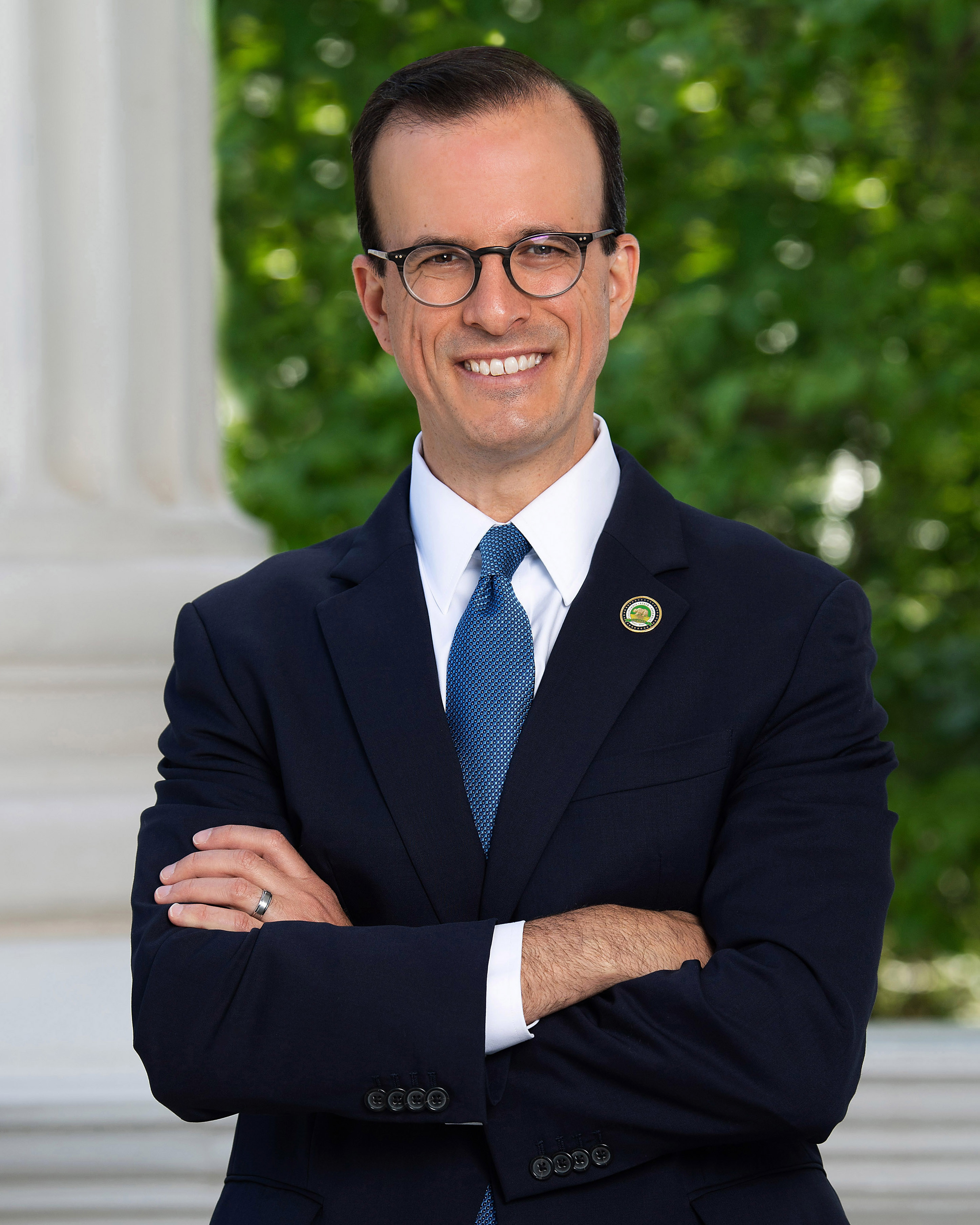
Asm. Marc Berman
Sponsored bills
The California Constitution creates the Citizens Redistricting Commission, which is required to adjust the boundary lines of the congressional, State Senatorial, Assembly, and State Board of Equalization districts in the year following the year in which the national census is taken under the direction of Congress at the beginning of each decade. The California Constitution requires the commission to be created no later than December 31 in each year ending in the number zero and requires the commission to approve 4 final maps by August 15 in each year ending in the number one. Existing statutory law also requires the commission, no later than July 1 in each year ending in the number one, to publicly display the first preliminary statewide maps for public comment. This measure would authorize the commission, for 2021 only, to extend the deadlines for final map approval and public display of preliminary maps if the United States Census Bureau fails to provide the commission with necessary state redistricting population data within one year after the decennial census date. The measure would not allow the commission to extend the deadline for final map approval beyond December 15, 2021.
Existing law requires the Commission on Peace Officer Standards and Training (POST) to develop and implement a course of instruction and training for specified peace officers on the topic of hate crimes. Existing law requires that training to be implemented into the basic course and requires, as specified, all state and local law enforcement agencies to provide the training to all peace officers they employ. This bill would require POST to develop and periodically update an interactive refresher course on hate crimes for in-service peace officers, and require specified peace officers to take the course every 5 years.
This measure would proclaim March 15, 2020, to March 22, 2020, as California Down Syndrome Awareness Week and March 21, 2020, as California Down Syndrome Day, and would encourage all Californians to support and participate in related activities.
Existing law authorizes a governing body of a political subdivision, as those terms are defined, to declare a shelter crisis if the governing body makes a specified finding. Upon declaration of a shelter crisis, existing law, among other things, suspends certain state and local laws, regulations, and ordinances to the extent that strict compliance would prevent, hinder, or delay the mitigation of the effects of the shelter crisis. This bill would provide that a political subdivision is immune from liability for ordinary negligence in the provision of a safe parking program during a declared shelter crisis and would suspend the application of the Special Occupancy Parks Act, the Mobilehome Parks Act, the Mobilehome Residency Law, and the Recreational Vehicle Park Occupancy Law to the safe parking program. The bill would define "safe parking program" for these purposes as a program that provides homeless individuals and families living in a vehicle a safe place to park while accessing services to end their homelessness.
Existing law establishes various environmental and economic policies. This bill would enact the California COVID-19 Recovery Deal. The bill would make a series of legislative findings and declarations pertaining to the coronavirus (COVID-19) pandemic and various economic, environmental, and social conditions in the state. The bill would state the intent of the Legislature that the state adopt a policy framework with principles and goals committed to accomplish specified economic, environmental, and social objectives and priorities as part of the state's COVID-19 recovery spending. The bill would state that the Legislature establishes various spending rules for the COVID-19 recovery, including adopting spending measures that prohibit businesses, organizations, or agencies from accepting public funds for any long-term projects that prolong the emission of greenhouses gases or lead to the expansion of fossil fuel projects and ensuring that recovery spending includes specific measures for California populations and communities most negatively impacted by COVID-19.
The Bay Area County Traffic and Transportation Funding Act authorizes each of the 9 counties in the San Francisco Bay area to impose a 12 of 1% or 1% sales tax for transportation purposes, subject to voter approval. Existing law provides for the establishment of a county transportation authority in each county imposing a sales tax under these provisions, requires the development of a county transportation expenditure plan, and specifies the powers and duties of a county board of supervisors and the county transportation authority in this regard. Existing law requires each county transportation authority to award contracts for the purchase of supplies, equipment, and materials in excess of $75,000 to the lowest responsible bidder after competitive bidding, except in an emergency declared by the vote of 23 of the voting membership of the county transportation authority. This bill would require each county transportation authority to award contracts for the purchase of supplies, equipment, and materials in excess of $150,000, rather than $75,000, either to the lowest responsible bidder or to the responsible bidder whose proposal provides the best value, as defined, on the basis of the factors identified in the solicitation, except in a declared emergency, as specified. The bill would specify that the requirement does not apply to construction contracts.
Existing law requires the State Energy Resources Conservation and Development Commission to prepare a statewide assessment of the electric vehicle charging infrastructure needed to support the levels of electrical vehicle adoption required for the state to meet the goal of deploying at least 5,000,000 vehicles by 2030 and of reducing emissions of greenhouse gases to 40% below 1990 levels by 2030. Existing law requires the commission to update the assessment at least once every 2 years. This bill, on and after January 1, 2021, would require the assessment to consider the different electric vehicle charging infrastructure needs of metropolitan planning areas. The bill would require each metropolitan transportation organization to submit to the commission a zero-emission readiness plan, as specified. By imposing additional duties on metropolitan transportation organizations, this bill would impose a state-mandated local program. The California Constitution requires the state to reimburse local agencies and school districts for certain costs mandated by the state. Statutory provisions establish procedures for making that reimbursement. This bill would provide that, if the Commission on State Mandates determines that the bill contains costs mandated by the state, reimbursement for those costs shall be made pursuant to the statutory provisions noted above.
Existing law establishes the California Community Colleges, under the administration of the Board of Governors of the California Community Colleges, as one of the segments of public postsecondary education in this state. Existing law authorizes community colleges to charge students a fee of $46 per unit per semester, and also authorizes the waiver of this fee for students who meet specified criteria. This bill would require the governing board of each community college district to waive the fee requirement for any student enrolled in certain child development courses who has declared a specified child development major and who has completed and submitted either a Free Application for Federal Student Aid or a California Dream Act application. To the extent this bill would impose a new duty on a community college district, this bill would create a state-mandated local program. The California Constitution requires the state to reimburse local agencies and school districts for certain costs mandated by the state. Statutory provisions establish procedures for making that reimbursement. This bill would provide that, if the Commission on State Mandates determines that the bill contains costs mandated by the state, reimbursement for those costs shall be made pursuant to the statutory provisions noted above.