

Existing law authorizes each county to establish an interagency sexual assault response team (SART) program for the purpose of providing a forum for interagency cooperation and coordination to effectively address the problem of sexual assault. Existing law requires each SART to, among other things, evaluate the effectiveness of individual agency and interagency protocols and systems by conducting case reviews involving sexual assault. This bill would require an unspecified department to establish a statewide sexual assault response team (SART) advisory council to advocate for the establishment and advancement of SARTs in the state for the purpose of promoting swift, coordinated, competent, and efficient sexual assault intervention in every county. The bill would require the council to consist of representatives from sexual assault forensic examination teams, law enforcement agencies, county district attorneys' offices, crime laboratories, and rape crisis centers, as specified. The bill would establish procedures for the council and require the council to, among other things, review statewide sexual assault intervention, advise county sexual assault response team programs, and make recommendations to the Legislature and appropriate state agencies.
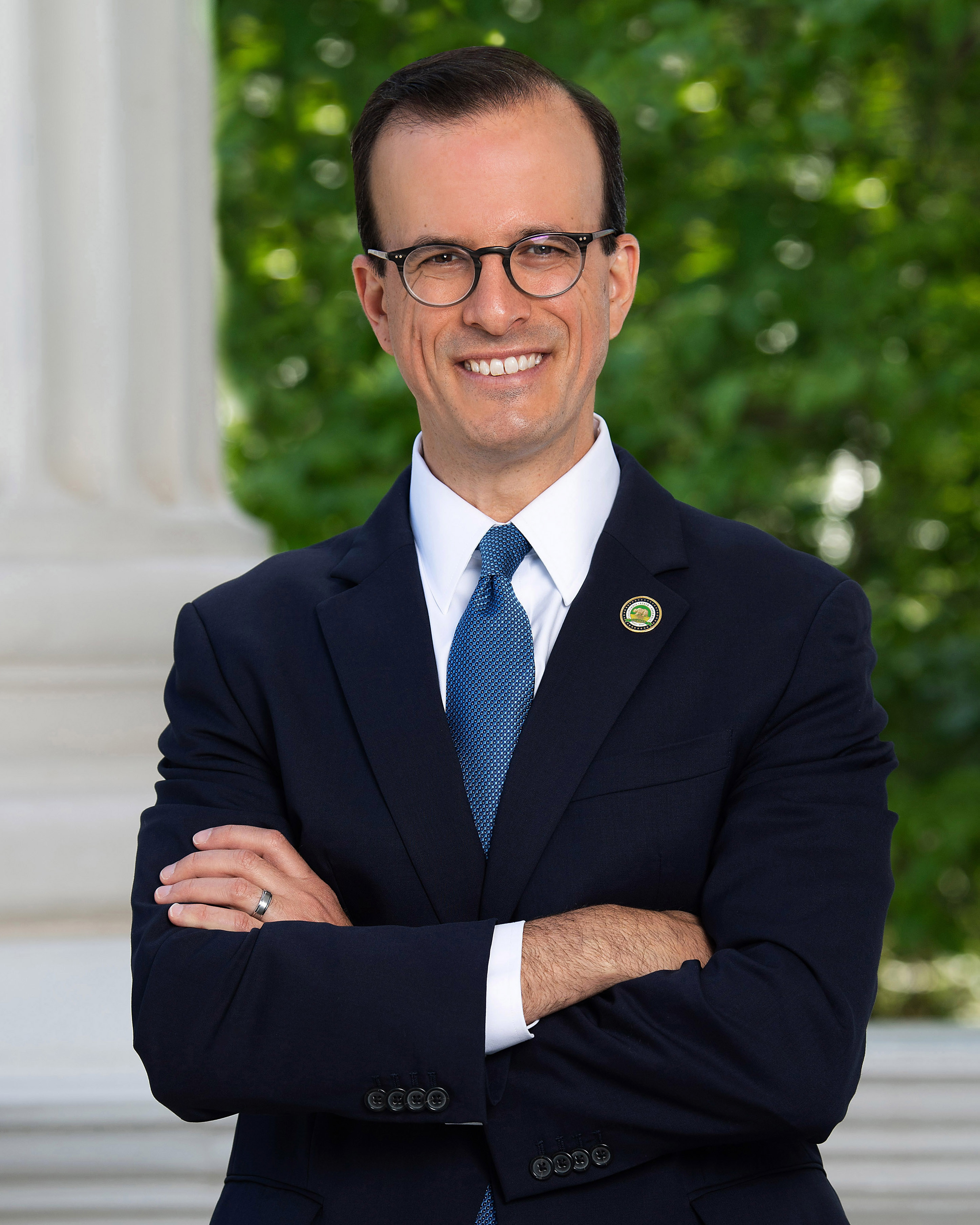
Asm. Marc Berman
Sponsored bills
(1) Existing law establishes a public school financing system that requires state funding for school districts and charter schools to be calculated pursuant to a local control funding formula, as specified. Existing law requires funding pursuant to the local control funding formula to include, in addition to a base grant, supplemental and concentration grant add-ons that are based on the percentage of pupils who are English learners, foster youth, or eligible for free or reduced-price meals, as specified, served by the school district or charter school. Existing law authorizes schools participating in certain federal school meals programs to establish a base year for purposes of calculating the number of pupils at the school who are eligible for free or reduced-price meals by determining each pupil's eligibility status in that base year and using that number to report eligibility for up to each of the following 3 school years. This bill would additionally allow schools participating in those federal school meals programs to establish a base year by carrying over the number of pupils at the school who were eligible for free or reduced-price meals from the school year in which the school applied to use a federal universal school meal provision. (2) Existing law requires a school district or county superintendent of schools maintaining kindergarten or any of grades 1 to 12, inclusive, to provide a needy pupil with one nutritionally adequate free or reduced-price meal during each schoolday, and authorizes the school district or county superintendent of schools to use funds available from any federal or state school meals program to comply with that requirement. Existing law sets the reimbursement rates a school receives for free or reduced-price meals sold or served to pupils in elementary, middle, or high schools in the annual Budget Act in prescribed amounts. Existing law generally requires a school district or a county superintendent of schools to provide breakfast and lunch free of charge to all pupils at a very high poverty school, as defined. This bill would provide that, on and after July 1, 2021, a school district, county superintendent of schools, or charter school that participates in a specified school meal service provision under federal law at a high poverty school, as defined, in its jurisdiction qualifies for supplemental state reimbursement, calculated as prescribed. The bill would require the supplemental state reimbursement to be provided, upon appropriation by the Legislature, in addition to existing state reimbursement for school meals.
The California Emergency Services Act, among other things, establishes the Office of Emergency Services within the office of the Governor, under the charge of a Director of Emergency Services appointed by the Governor. The act and other existing laws set forth the duties and authority of the office and the director, with respect to specified emergency preparedness, mitigation, and response activities within the state. This bill would require the office to prepare for the planning, resourcing, management, and delivery of safety and security at the potential 2026 FIFA World Cup hosting sites in the City of Los Angeles and the San Francisco Bay area. The bill would require the office, no later than one year from the date the final selection of host cities is made, to enter into a memorandum of understanding with the cities hosting the 2026 FIFA World Cup games, the chosen host committees, and with other necessary parties to implement those safety and security activities. The bill would repeal these provisions on January 1, 2027. The California Constitution requires the state to reimburse local agencies and school districts for certain costs mandated by the state. Statutory provisions establish procedures for making that reimbursement. This bill would provide that, if the Commission on State Mandates determines that the bill contains costs mandated by the state, reimbursement for those costs shall be made pursuant to the statutory provisions noted above.
Existing law provides for the licensure and regulation of health facilities, including general acute care hospitals, by the State Department of Public Health. Existing law requires the department to appoint a Healthcare Associated Infection Advisory Committee to make recommendations related to methods of reporting cases of hospital-acquired infections in general acute care hospitals and on the use of national guidelines and the public reporting process measures for preventing the spread of hospital-acquired infections. This bill would require the department to establish a Sepsis Advisory Committee, to meet at the department's discretion, comprised of persons with expertise in the surveillance, prevention, and treatment of, or training related to, sepsis, including representatives from relevant state departments and health care provider groups. The bill would require the committee to collect and provide to the department the most relevant research, studies, and best practices for the prevention and treatment of sepsis, including any relevant reporting on sepsis morbidity and mortality, and recommend best practices for evidence-based sepsis prevention, training, and treatment guidelines for licensed health care facilities and health care professionals. The bill would also require the department to establish and maintain a public web-based clearinghouse for information related to sepsis prevention, treatment, and training, as specified.
This measure would designate the week of February 24, 2020, to March 1, 2020, as Eating Disorders Awareness Week.
Existing federal law provides for allocation of federal funds through the federal Temporary Assistance for Needy Families (TANF) block grant program to eligible states. Existing law provides for the California Work Opportunity and Responsibility to Kids (CalWORKs) program, under which, through a combination of state and county funds and federal funds received through the TANF program, each county provides cash assistance and other benefits to qualified low-income families. Under existing law, certain types of payments received by recipients of aid under the CalWORKs program, including, among others, specified amounts of disability-based unearned income and earned income and an award or scholarship provided by a public or private entity to, or on behalf of, a dependent child, are exempt from consideration as income for purposes of determining eligibility and aid amount. The bill would also exempt child support payments paid by a member of the assistance unit to or for an individual living outside of the assistance unit's home from being included as income for these purposes. This bill would require the department to implement the bill through an all-county letter or similar instruction until the regulations are adopted. By expanding the scope of eligibility for CalWORKs, the bill would impose a state-mandated local program. Existing law continuously appropriates moneys from the General Fund to defray a portion of county costs under the CalWORKs program. This bill would provide that the continuous appropriation would not be made for purposes of implementing the bill. The California Constitution requires the state to reimburse local agencies and school districts for certain costs mandated by the state. Statutory provisions establish procedures for making that reimbursement. This bill would provide that, if the Commission on State Mandates determines that the bill contains costs mandated by the state, reimbursement for those costs shall be made pursuant to the statutory provisions noted above.
Existing law requires the State Department of Health Care Services to license and regulate facilities that provide residential nonmedical services to adults who are recovering from problems related to alcohol, drug, or alcohol and drug misuse or abuse, and who need alcohol, drug, or alcohol and drug recovery treatment or detoxification services. Existing law also requires the department to implement a voluntary certification procedure for alcohol and other drug treatment recovery services. This bill would require a licensed facility or a certified program to assess a patient or client for tobacco use at the time of the initial intake, take certain actions if the patient or client has tobacco use disorder, and report the results of these assessments to the department, as specified. The bill would require the department to develop appropriate mechanisms for the collection and reporting of data collected by these facilities and programs.
Existing law, until July 31, 2020, requires the Superintendent of Public Instruction to convene a computer science strategic implementation advisory panel with a specified membership to develop and submit recommendations for a computer science strategic implementation plan to the Superintendent, the State Board of Education, and the Legislature. Existing law requires the Superintendent to develop, and the state board to consider adopting, a computer science strategic implementation plan on or before July 15, 2019. This bill would require the State Department of Education to annually compile specified computer science education data and post on its internet website a standalone report on that data from the 2019–20 school year and each subsequent school year until the department publicly includes the data in its existing data system, or a successor statewide data system, for collecting data on enrollment and achievement in elementary and secondary education, as provided. The bill would require the department to incorporate the computer science education data into a successor statewide data system, when implemented.
Existing law requires the Commission on Teacher Credentialing to, among other duties, establish standards for the issuance and renewal of credentials, certificates, and permits. Existing law authorizes the commission to grant an added or supplementary authorization to a credentialholder who has met the requirements and standards of the commission for the added or supplementary authorization. Existing law requires the Superintendent of Public Instruction to convene a computer science strategic implementation advisory panel to develop recommendations for a computer science strategic implementation plan, including recommendations on broadening the pool of teachers to teach computer science. Existing law requires the panel, on or before January 15, 2019, to submit those recommendations to the Superintendent, the State Board of Education, and the Legislature. Existing law requires the Superintendent to develop and, if adopted by the state board, to submit to the Legislature a computer science strategic implementation plan on or before July 15, 2019. This bill would require the commission, upon the appropriation of funds for these purposes, to develop and implement the Computer Science Preparing Educators Grant Program to award competitive grants to postsecondary educational institutions for the development of preservice credential programs for individuals seeking a teaching credential, and the expansion of programs of study for single subject or multiple subject credentialed teachers seeking a supplementary authorization in computer science. The bill would authorize grant funds to be used for specified purposes and would require the commission to give priority to proposals for current commission-approved multiple subject credentialing programs and programs that fulfill the course requirements needed to obtain a supplementary authorization in computer science. The bill would require a grantee to provide certain information and data to the commission for at least 3 years after receiving a grant.