

(1) The Child Care and Development Services Act, administered by the State Department of Education, requires the Superintendent of Public Instruction to administer childcare and development programs that offer a full range of services to eligible children from infancy to 13 years of age, inclusive. The act requires that families meet specified requirements to be eligible for federal- and state-subsidized childcare and development services. This bill would extend eligibility to a family in which a member of that family has been certified as fully eligible to receive CalFresh or Medi-Cal benefits. The bill would require a parent to provide documentation of current enrollment in CalFresh or Medi-Cal, unless the contractor providing childcare and development services has, and elects to use, other means of obtaining verification of that enrollment. The bill would authorize a family to submit a self-certification of income that is signed by the parent for the purpose of prioritizing enrollment and calculating family fees. (2) Existing law requires the department to arrange intraagency adjustments between California state preschool contracts and general childcare contracts for the same agency and funding allocation, and to establish timelines for intraagency contract fund transfers. This bill would additionally require the department to allow and arrange for interagency adjustments between those contracts for the same agency or different agencies and the same funding allocation, and to establish timelines for those interagency contract fund transfers. (3) Existing law requires the Superintendent to implement a plan establishing assigned reimbursement rates, per unit of average daily enrollment, to be paid by the state to provider agencies for the provision of childcare and development services. Existing law provides for an adjustment factor to be applied to units of average daily enrollment if a provider agency serves children who meet specified criteria. Existing law sets the adjustment factor based on the age of the child served, among other criteria. This bill would require those adjustment factors to continue to apply irrespective of whether a child is served in a commingled classroom that serves children from 0 to 12 years of age. The bill, during the 2020–21 fiscal year, would authorize a contractor providing childcare and development services under the act to provide those services to children from 0 to 12 years of age in classrooms with children of varying ages. (4) Existing law requires the Superintendent to establish a fee schedule for families using preschool and childcare and development services, as specified, and requires family fees to be assessed at initial enrollment and reassessed at the update of certification or recertification. Existing law encourages child development contractors to develop and maintain a reserve within the child development fund in the county treasury, derived from earned but unexpended funds. Existing law authorizes reserve funds to be expended for specified purposes. Existing law requires that 10% of specified reserve funds to be used solely for the purpose of professional development for California state preschool program instructional staff. This bill would authorize a contractor to waive family fees for families who are enrolled but who receive services only through distance learning. The bill would provide that the cost of waiving family fees under the above-described provision is an allowable use of contract funds received for providing childcare and development services, and would authorize a contractor to use reserve funds to cover the costs of a waiver. The bill would also delete the requirement that 10% of the specified reserve funds be used for that professional development purpose.
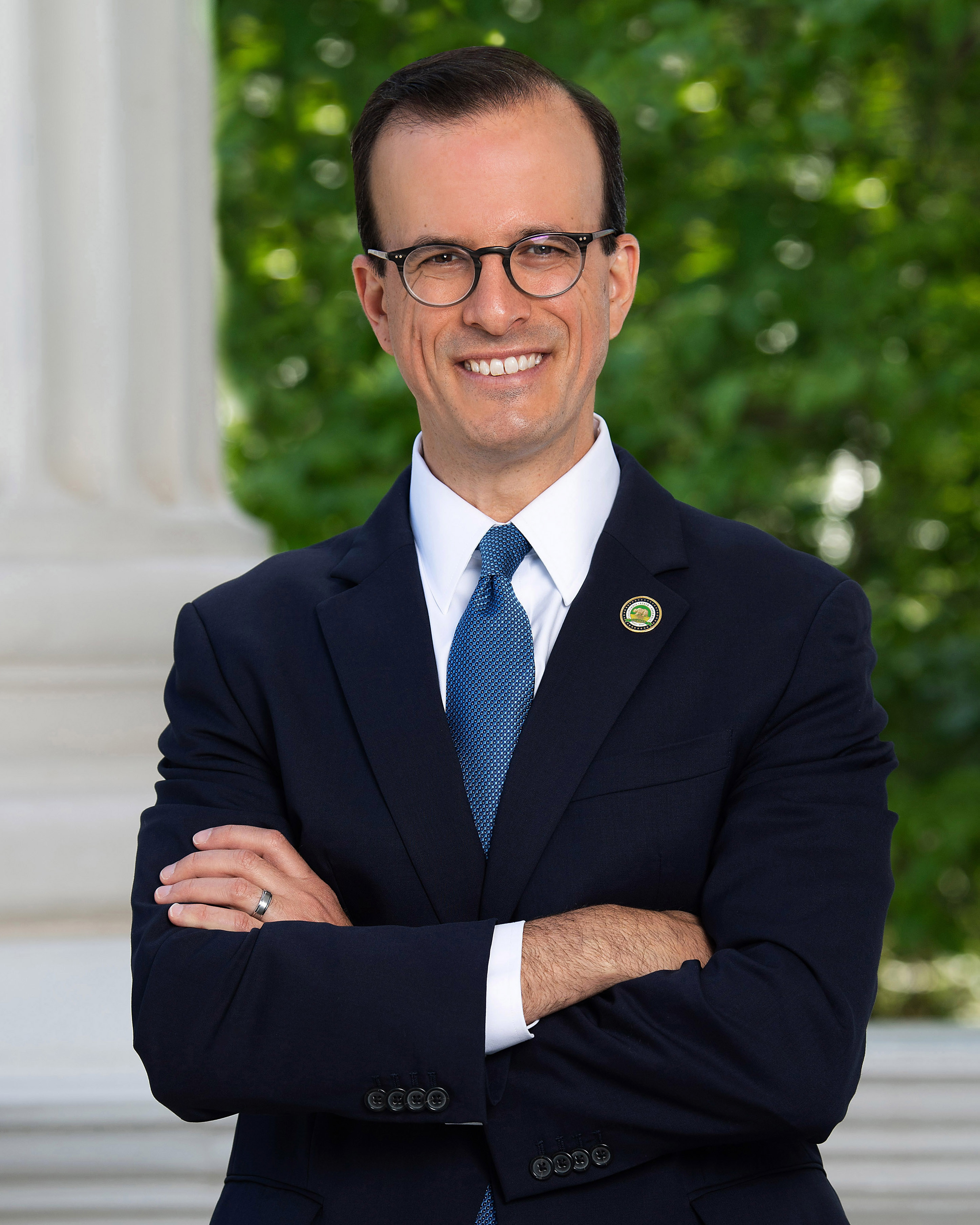
Asm. Marc Berman
Sponsored bills
Existing law authorizes counties, on or after specified dates, to conduct any election as an all-mailed ballot election if, among other conditions, the county elections official provides for ballot drop-off locations and vote centers meeting minimum requirements. Vote centers are required to be open from the 10th day before the election until election day, as specified. This bill would authorize a county for the November 3, 2020, statewide general election to not have its vote centers open before the 3rd day prior to the election. In counties without all-mailed ballot procedures, existing law requires the elections official to divide the jurisdiction into precincts meeting certain requirements and to designate a polling place for each precinct. This bill would provide an alternative procedure for the November 3, 2020, statewide general election authorizing the elections official to establish consolidated precinct boards, located within the same physical polling place, serving the voters residing in multiple adjacent precincts, as provided. For the November 3, 2020, statewide general election, the bill would also (1) require elections officials to conduct a voter education and outreach campaign, (2) urge counties to provide drive-through ballot drop-off or voting locations, (3) authorize elections officials to establish vote centers, polling places, or consolidated polling places in locations whose primary purpose is the sale and dispensation of alcoholic beverages, (4) require the Secretary of State to establish a process to consider requests from counties to adjust or partially waive the minimally required number, location, or operational duration, of vote centers, consolidated polling places, or ballot drop-off locations, (5) require the Secretary of State to conduct a statewide voter education and outreach campaign regarding new procedures in place for the election, and (6) require the Secretary of State to establish a strike team to assist counties as needed to acquire suitable locations for vote centers, polling places, and consolidated polling places as well as other assets necessary for the safe and successful conduct of the election. By imposing new requirements on counties, the bill would impose a state-mandated local program. The California Constitution requires the state to reimburse local agencies and school districts for certain costs mandated by the state. Statutory provisions establish procedures for making that reimbursement. This bill would provide that, if the Commission on State Mandates determines that the bill contains costs mandated by the state, reimbursement for those costs shall be made pursuant to the statutory provisions noted above. This bill would declare that it is to take effect immediately as an urgency statute.
Existing sales and use tax laws impose a tax on retailers measured by the gross receipts from the sale of tangible personal property sold at retail in this state, or on the storage, use, or other consumption in this state of tangible personal property purchased from a retailer for storage, use, or other consumption in this state. Those laws provide various exemptions from those taxes, including, until July 1, 2023, an exemption for the sale of, or the storage, use, or other consumption of, menstrual hygiene products, defined as tampons, specified sanitary napkins, menstrual sponges, and menstrual cups. Existing law requires the Department of Finance, beginning on May 15, 2020, to estimate the total dollar amount of revenue that would have been credited to the Local Revenue Fund 2011 if not otherwise exempted under the sales and use tax exemption for menstrual hygiene products and requires the Controller to transfer that amount from the General Fund to the Local Revenue Fund 2011, a continuously appropriated fund, no later than June 30 of each fiscal year. This bill would establish a similar exemption for the sale of, or the storage, use, or other consumption of, menstrual hygiene products beginning July 1, 2023, and would define menstrual hygiene products to additionally include menstrual underwear. The bill would provide that the Department of Finance is required to calculate, and the Controller is required to transfer, the total dollar amount of revenue prior to January 1, 2024, that would have been credited to the Local Revenue Fund 2011 if not otherwise exempted under the sales and use tax with respect to menstrual hygiene products, as specified. The Bradley-Burns Uniform Local Sales and Use Tax Law authorizes counties and cities to impose local sales and use taxes in conformity with the Sales and Use Tax Law, and existing laws authorize districts, as specified, to impose transactions and use taxes in accordance with the Transactions and Use Tax Law, which generally conforms to the Sales and Use Tax Law. Amendments to the Sales and Use Tax Law are automatically incorporated into the local tax laws. Existing law requires the state to reimburse counties and cities for revenue losses caused by the enactment of sales and use tax exemptions. This bill would provide that, notwithstanding Section 2230 of the Revenue and Taxation Code, no appropriation is made and the state shall not reimburse any local agencies for sales and use tax revenues lost by them pursuant to this bill. This bill would take effect immediately as a tax levy.
(1) Existing law establishes the California Community Colleges, under the administration of the Board of Governors of the California Community Colleges, as one of the 3 segments of public postsecondary education in this state. Existing law establishes community college districts throughout the state, and authorizes them to provide instruction to students at community college campuses. Existing law requests campuses of the California Community Colleges to give priority for certain student housing to current and former homeless youth, as specified, and requests those campuses to develop a plan to ensure that current and former homeless youth can access housing resources during and between academic terms, including during academic and campus breaks. Existing law defines homeless youth for these purposes. This bill would express legislative findings and declarations about the impact of basic needs insecurity on college students. This bill would encourage each campus of the California Community Colleges, no later than July 1, 2021, to establish the role of Basic Needs Coordinator and designate a staff person as the Basic Needs Coordinator. The bill would specify that a basic needs coordinator is encouraged to act as a broker in identifying, supporting, and linking students to on- and off-campus housing, food, and mental health services and resources, among other responsibilities. The bill would also encourage each campus, no later than July 1, 2021, to establish a Basic Needs Center, which would be a central location on campus where basic needs services, resources, and staff are made available to students, as specified. The bill would further require each campus, no later than February 1, 2021, to develop a document to be made available to students online that clearly lists all on- and off-campus basic needs services and resources, as specified. The bill would authorize funding that may be included in the Budget Act of 2020 or a subsequent year for the Student Equity and Achievement Program to fund the campus basic needs coordinators and centers, and authorize the California Community Colleges to seek and accept on behalf of the state any gift, bequest, devise, or donation to aid in the funding of the basic needs coordinators and centers. The bill would require each community college campus, through existing reporting on basic needs, to report specified information to the Office of the Chancellor of the California Community Colleges. Because the bill would impose new duties on community college districts, it would constitute a state-mandated local program. (2) The California Constitution requires the state to reimburse local agencies and school districts for certain costs mandated by the state. Statutory provisions establish procedures for making that reimbursement. This bill would provide that, if the Commission on State Mandates determines that the bill contains costs mandated by the state, reimbursement for those costs shall be made pursuant to the statutory provisions noted above.
Existing law regulates automatic renewal offers and continuous service offers that businesses make to California consumers. Existing law makes it unlawful for a business that makes an automatic renewal offer or continuous service offer to a consumer in this state, among other things, to fail to present the automatic renewal or continuous service offer terms in a clear and conspicuous manner, to charge the consumer for an automatic renewal or continuous service without first obtaining the consumer's affirmative consent, and to fail to provide an acknowledgment that includes the automatic renewal or continuous service offer terms, cancellation policy, and information regarding how to cancel in a manner that is capable of being retained by the consumer, as specified. This bill would also make it unlawful for the business to fail to provide a consumer with a notice explaining how to cancel an automatic renewal offer or continuous service offer if the consumer accepted a free gift or trial, lasting for a predetermined period of time, that was included in an automatic renewal offer or continuous service offer or accepted an automatic renewal offer or continuous service offer at a promotional or discounted price, and the applicability of that price was limited to a predetermined period of time. The bill would require the notice to be provided at least 3 days before and at most 7 days before the expiration of the predetermined period of time and, if sent electronically, to include a link that directs the consumer to the cancellation process. Under existing law, if a consumer accepts an automatic renewal or continuous service offer online, then the business is required to allow the consumer to terminate the offer exclusively online, which may include a termination email formatted and provided by the business. This bill would revise and recast those provisions to additionally require the business to allow a consumer to terminate the automatic renewal or continuous service offer at will, and without engaging any further steps that impact or restrict the consumer's ability to terminate immediately. The bill would require the business to provide a method of termination that is either on the internet website in the form of a direct link or button to cancel or by the email described above.
This measure would proclaim March 2, 2020, to March 6, 2020, inclusive, as School Breakfast Week.
Under existing law, a registered voter may vote by mail by requesting a vote by mail ballot for a specific election or by becoming a permanent vote by mail voter. County elections officials must begin mailing ballots and other required materials to these voters no later than 29 days before the day of the election. Existing law, the California Voter's Choice Act, authorizes any county to conduct any election occurring on or after January 1, 2020, as an all-mailed ballot election if specified conditions are met. In an all-mailed ballot election held under the act, the county elections official must mail a ballot to every registered voter, regardless of whether the voter requested a vote by mail ballot or is a permanent vote by mail voter. This bill would require county elections officials to mail a ballot to every registered voter for the November 3, 2020, statewide general election. Existing law requires county elections officials to permit voters with a disability, and military or overseas voters, to cast a ballot using a certified remote accessible vote by mail system. This bill would require county elections officials to permit any voter to cast a ballot using a certified remote accessible vote by mail system for the November 3, 2020, statewide general election. Existing law requires the Secretary of State to establish, by January 1, 2020, a system that a county elections official may use to allow a voter to track the voter's vote by mail ballot through the mail system and processing by the county elections official. County elections officials are not required to use the system, however. This bill would require county elections officials to use the Secretary of State's system, or a system that meets the same specifications, for the November 3, 2020, statewide general election. Under existing law, a vote by mail ballot is timely cast if it is voted on or before election day and, if returned by mail, received by the voter's elections official via the United States Postal Service, or a bona fide private mail delivery company, no later than 3 days after election day. This bill would, for the November 3, 2020, statewide general election, extend the deadline by which vote by mail ballots must be received by the county elections official to the 17th day after election day. Under existing law, any jurisdiction having the necessary computer capability may start to process vote by mail ballots on the 10th business day before the election. This processing includes opening vote by mail ballot return envelopes, removing ballots, duplicating any damaged ballots, and preparing the ballots to be machine read, or machine reading them, including processing write-in votes so that they can be tallied by the machine, but under no circumstances may a vote count be accessed or released until 8 p.m. on the day of the election. This bill would authorize these jurisdictions, for the November 3, 2020, statewide general election, to begin processing vote by mail ballots on the 29th day before the election. By requiring county elections officials to mail a ballot to every registered voter, and to take other actions expanding vote by mail voting, including making remote accessible voting available to all voters, this bill would impose a state-mandated local program. The California Constitution requires the state to reimburse local agencies and school districts for certain costs mandated by the state. Statutory provisions establish procedures for making that reimbursement. This bill would provide that, if the Commission on State Mandates determines that the bill contains costs mandated by the state, reimbursement for those costs shall be made pursuant to the statutory provisions noted above. This bill would declare that it is to take effect immediately as an urgency statute.
This measure would declare the week of February 17 to February 21, 2020, inclusive, as California Fitness Week, and would encourage Californians to enrich their lives through proper nutrition and exercise.
This measure would proclaim February 20, 2020, as Introduce a Girl to Engineering Day.
This measure would recognize February 2020 as Black History Month, urge all citizens to join in celebrating the accomplishments of African Americans during Black History Month, encourage the people of California to recognize the many talents of African Americans and the achievements and contributions they make to their communities to create equity and equality for education, economics, and social justice, and recognize the significance in protecting citizens' right to vote and remedying racial discrimination in voting.