

Existing law, the Uniform Anatomical Gift Act, authorizes the creation of a not-for-profit entity to be designated as the California Organ and Tissue Donor Registrar and requires that entity to establish and maintain the Donate Life California Organ and Tissue Donor Registry for persons who have identified themselves as organ and tissue donors upon their death. Existing law requires the Department of Motor Vehicles, upon issuance of a new driver's license or a renewal of a driver's license or the issuance of an identification card, to provide information on organ and tissue donation. Existing law requires an application for an original or renewal driver's license or identification card to contain a space for the applicant to enroll in the Donate Life California Organ and Tissue Donor Registry. This bill would enact Charlie's Law to require an electronic application for an original or renewal driver's license or identification card to contain a solicitation for the applicant to enroll in the National Marrow Donor Program's registry as a bone marrow or blood stem cell donor. The bill would provide that an applicant's election to enroll in the National Marrow Donor Program's registry constitutes consent to their information being transmitted to the National Marrow Donor Program for the purposes of completing enrollment in the registry. The bill would require the department to enter into a memorandum of understanding with the National Marrow Donor Program, as specified, and to transmit weekly specified applicant information to them. The bill would also make related findings and declarations.
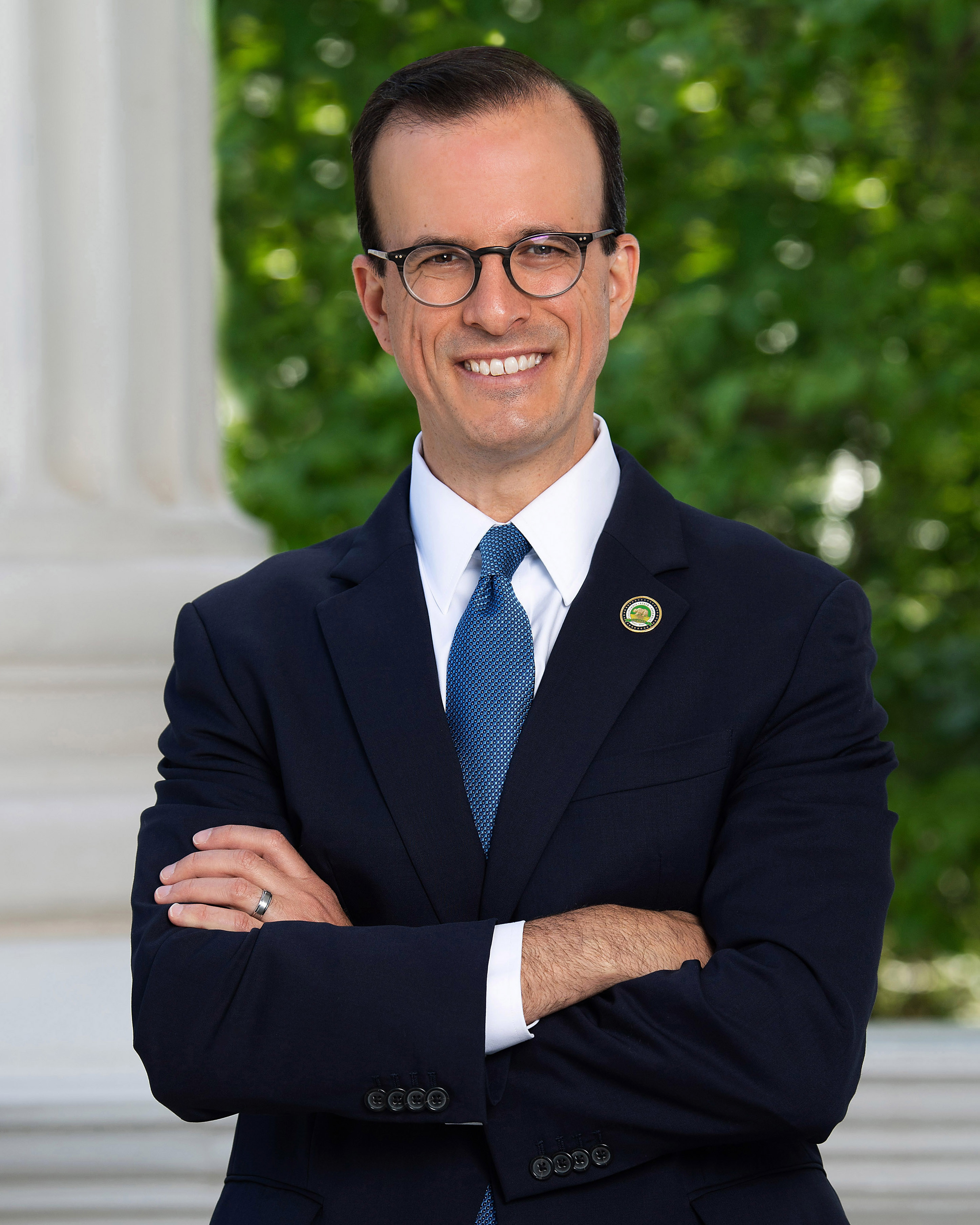
Asm. Marc Berman
Sponsored bills
Existing law establishes the California Community Colleges, under the administration of the Board of Governors of the California Community Colleges, as one of the segments of public postsecondary education in this state. Existing law authorizes community colleges to charge students a fee of $46 per unit per semester, and also authorizes the waiver of this fee for students who meet specified criteria. This bill would require the governing board of each community college district to waive the fee requirement for any student enrolled in certain child development courses who has declared a specified child development major and who has completed and submitted either a Free Application for Federal Student Aid or a California Dream Act application. To the extent this bill would impose a new duty on a community college district, this bill would create a state-mandated local program. The California Constitution requires the state to reimburse local agencies and school districts for certain costs mandated by the state. Statutory provisions establish procedures for making that reimbursement. This bill would provide that, if the Commission on State Mandates determines that the bill contains costs mandated by the state, reimbursement for those costs shall be made pursuant to the statutory provisions noted above.
Existing law establishes the California Violence Intervention and Prevention (CalVIP) Grant Program, administered by the Board of State and Community Corrections, to award competitive grants for the purpose of violence intervention and prevention. Existing law imposes various taxes, including taxes on the privilege of engaging in certain activities. The Fee Collection Procedures Law, the violation of which is a crime, provides procedures for the collection of certain fees and surcharges. This bill, the Gun Violence Prevention, Healing, and Recovery Act, would, commencing July 1, 2023, and subject to an appropriation as specified, impose an excise tax in the amount of 10% of the sales price of a handgun and 11% of the sales price of a long gun, rifle, firearm precursor part, and ammunition, as specified. The tax would be collected by the state pursuant to the Fee Collection Procedures Law. The bill would require that the revenues collected be deposited in the Gun Violence Prevention, Healing, and Recovery Fund, which the bill would establish in the State Treasury. This bill would include a change in state statute that would result in a taxpayer paying a higher tax within the meaning of Section 3 of Article XIII A of the California Constitution, and thus would require for passage the approval of 23 of the membership of each house of the Legislature. Because this bill would expand the scope of the Fee Collection Procedures Law, the violation of which is a crime, this bill would impose a state-mandated local program. The California Constitution requires the state to reimburse local agencies and school districts for certain costs mandated by the state. Statutory provisions establish procedures for making that reimbursement. This bill would provide that no reimbursement is required by this act for a specified reason. This bill would declare that it is to take effect immediately as an urgency statute.
The Political Reform Act of 1974 provides for the comprehensive regulation of campaign financing, including requiring elected officials, candidates for elective office, committees formed primarily to support or oppose a candidate for public office or a ballot measure, and other entities to file periodic campaign statements and reports concerning campaign finances. This bill would require a limited liability company that qualifies as a committee or a sponsor of a committee under the act, as specified, to file a statement of members with the Secretary of State. The bill would require the statement of members to include certain information about the limited liability company, including a list of all persons who have a membership interest in the limited liability company of at least 10% or who made a cumulative capital contribution of at least $10,000 to the limited liability company after it qualified as a committee or sponsor of a committee, or within the 2 calendar quarters before it qualified. Existing law makes a knowing or willful violation of the Political Reform Act of 1974 a misdemeanor. By expanding the scope of an existing crime, this bill would impose a state-mandated local program. The California Constitution requires the state to reimburse local agencies and school districts for certain costs mandated by the state. Statutory provisions establish procedures for making that reimbursement. This bill would provide that no reimbursement is required by this act for a specified reason. The Political Reform Act of 1974, an initiative measure, provides that the Legislature may amend the act to further the act's purposes upon a 23 vote of each house of the Legislature and compliance with specified procedural requirements. This bill would declare that it furthers the purposes of the act.
The California Drought, Water, Parks, Climate, Coastal Protection, and Outdoor Access For All Act of 2018, approved by the voters as Proposition 68 at the June 5, 2018, statewide primary direct election, authorizes the issuance of bonds in the amount of $4,100,000,000 pursuant to the State General Obligation Bond Law to finance a drought, water, parks, climate, coastal protection, and outdoor access for all program. Article XVI of the California Constitution requires measures authorizing general obligation bonds to specify the single object or work to be funded by the bonds and further requires a bond act to be approved by a 23 vote of each house of the Legislature and a majority of the voters. This bill would enact the Safe Drinking Water, Wildfire Prevention, Drought Preparation, Flood Protection, Extreme Heat Mitigation, and Workforce Development Bond Act of 2022, which, if approved by the voters, would authorize the issuance of bonds in the amount of $7,080,000,000 pursuant to the State General Obligation Bond Law to finance projects for safe drinking water, wildfire prevention, drought preparation, flood protection, extreme heat mitigation, and workforce development programs. This bill would provide for the submission of these provisions to the voters at the June 7, 2022, statewide primary election. This bill would declare that it is to take effect immediately as an urgency statute.
Existing law imposes various limitations on the emissions of air contaminants for the control of air pollution from vehicular and nonvehicular sources. Existing law assigns the responsibility for controlling vehicular sources of air pollution to the State Air Resources Board. This bill would require the state board, by July 1, 2022, consistent with federal law, to adopt cost-effective and technologically feasible regulations to prohibit engine exhaust and evaporative emissions from new small off-road engines, as defined by the state board. The bill would require the state board to identify and, to the extent feasible, make available funding for commercial rebates or similar incentive funding as part of any updates to existing applicable funding program guidelines to local air pollution control districts and air quality management districts to implement to support the transition to zero-emission small off-road equipment operations.
(1) Existing law prohibits a person subject to a protective order, as defined, from owning, possessing, purchasing, or receiving a firearm or ammunition while that protective order is in effect and makes a willful and knowing violation of a protective order a crime. Existing law requires the court, when issuing the order with both parties present, to inform the parties of this information and to order the restrained person to relinquish any firearm in the person's immediate possession or control or subject to their immediate possession or control. Existing law specifies the means of relinquishment if the law enforcement officer serving the protective order does not request the immediate surrender of the firearm, including, surrender to law enforcement, or by selling the firearm to a licensed gun dealer. This bill would require a court to order the restrained person to relinquish ammunition and to notify the parties of how any firearms or ammunition still in the restrained party's possession are to be relinquished and how to submit a receipt to the court. The bill would require the court to review the file to determine whether the receipt has been filed and inquire as to whether the person has complied with the requirement. The bill would require violations of the firearms or ammunition prohibition to be reported to the prosecuting attorney in the jurisdiction where the order has been issued within 2 business days of the court hearing unless the restrained party provides a receipt showing compliance at a subsequent hearing or by direct filing with the clerk of the court. The bill would authorize the relinquishment to occur by transferring the firearm or ammunition or relinquishing them for storage if the firearm or ammunition is not immediately surrendered to law enforcement upon service of the protective order. This bill would also require the court, at a noticed hearing relating to a domestic violence protective order in family court or juvenile court, to consider information presented that the restrained person has possession or control of a firearm or ammunition. The bill would authorize the court, upon making this finding, to set a review hearing, as specified, to determine whether the person has possession or control of a firearm or ammunition in violation of the above provisions. Existing law requires a court, prior to a hearing on the issuance or denial of a protective order, to ensure that a search has been conducted to determine if the subject of the order has been convicted of a serious or violent felony, a misdemeanor conviction involving domestic violence, weapons, or other violence, has an outstanding warrant, is currently on parole or probation, has a registered firearm, or has a prior restraining order or a violation of a restraining order. Existing law requires the court to notify law enforcement officials if some of those conditions exist, including the person being on parole or probation or having an outstanding warrant. This bill, as part of the search, would require the court to make a written record as to whether the subject has relinquished the firearm. If evidence of compliance with the prohibition on firearms or ammunition is not provided, the bill would require the clerk of the court to notify law enforcement officials and would require those law enforcement officials to take all actions necessary to obtain any firearms or ammunition owned, possessed, or controlled and to address any violation of the order with respect to firearms or ammunition, as specified. By requiring additional duties of local law enforcement officials, this bill would impose a state-mandated local program. Existing law requires a family court to determine the best interest of the child for purposes of deciding child custody in proceedings for dissolution of marriage, nullity of marriage, legal separation of the parties, petitions for exclusive custody of a child, and proceedings under the Domestic Violence Prevention Act. Existing law establishes a rebuttable presumption that an award of sole or joint physical or legal custody of a child to a person who has perpetrated domestic violence is detrimental to the best interest of a child and establishes factors to be considered in rebutting that presumption, including that the perpetrator is restrained by a protective order and has, or has not, complied with that order. This bill, for purposes of rebutting the presumption, would require the court to also consider whether the person is a restrained person in possession or control of a firearm or ammunition in violation of the law. Existing law authorizes the court to issue an ex parte order determining the temporary custody and visitation of a minor child, on the conditions the court determines, to a party who has established a parent and child relationship with the child, based on the best interest of the child. Existing law authorizes the court to suspend or deny custody or visitation or to limit visitation or custody only to situations in which a 3rd person is present. This bill would require the court, in making that determination, to consider whether the party is a restrained person in possession or control of a firearm or ammunition. (2) Existing law requires a law enforcement agency to enter all firearms that have been reported stolen, lost, found, recovered, held for safekeeping, or under observation into the Automated Firearms System (AFS) . This bill would also require law enforcement to enter in all firearms that are relinquished as part of a domestic violence protective order. (3) Existing law specifies how firearms and ammunition may be transported and prohibits open or concealed carry in specified circumstances. Existing law requires a license to sell, lease, or transfer firearms. Existing law, the Safety for All Act of 2016, enacted by the voters as Proposition 63 at the November 8, 2016, General Election, requires a valid ammunition vendor license to sell more than 500 rounds of ammunition in any 30-day period. Proposition 63 authorizes amendments of its provisions by a vote of 55% of both houses of the Legislature if the amendments are consistent with, and further the purposes of, the act. This bill would exempt people who are complying with the firearms provisions of a protective order from those provisions, including amending Proposition 63 to exempt a person from the limitation on the sale of over 500 rounds of ammunition in a 30-day period in order to comply with the protective order. (4) This bill would incorporate additional changes to Section 3044 of the Family Code proposed by AB 1579 and AB 1171, to be operative only if this bill and AB 1579, AB 1171, or both are enacted and this bill is enacted last. The bill would also incorporate additional changes to Section 11108.2 of the Penal Code proposed by SB 715, to be operative only if this bill and SB 715 are enacted and this bill is enacted last. (5) The California Constitution requires the state to reimburse local agencies and school districts for certain costs mandated by the state. Statutory provisions establish procedures for making that reimbursement. This bill would provide that, if the Commission on State Mandates determines that the bill contains costs mandated by the state, reimbursement for those costs shall be made pursuant to the statutory provisions noted above.
Existing law directs law enforcement agencies, as defined, to submit the description of a firearm that has been reported stolen, lost, found, recovered, or under observation directly to an automated Department of Justice system. Existing law also requires these law enforcement agencies to report to the Department of Justice any information in their possession necessary to identify and trace the history of a recovered firearm that is illegally possessed, has been used in a crime, or is suspected of having been used in a crime. Existing law requires the department to maintain this data for at least 10 years and make it available, as specified, for academic and research purposes. This bill would require the department to analyze the data as specified and, by no later than July 1, 2023, and annually thereafter, submit a report to the Legislature summarizing this analysis, and make the report available to the public.
Existing law requires the governing board of a school district to give diligent care to the health and physical development of pupils and authorizes the governing board of a school district to employ properly certified persons for this purpose. Existing law requires a school of a school district or county office of education and a charter school to notify pupils and parents or guardians of pupils no less than twice during the school year on how to initiate access to available pupil mental health services on campus or in the community, or both, as provided. This bill would require the State Department of Education to develop model referral protocols, as provided, for addressing pupil mental health concerns. The bill would require the department to consult with various entities in developing the protocols, including current classroom teachers, administrators, pupils, and parents. The bill would require the department to post the model referral protocols on its internet website. The bill would make these provisions contingent upon funds being appropriated for its purpose in the annual Budget Act or other legislation, or state, federal, or private funds being allocated for this purpose.