

Existing law generally regulates the transfer and possession of firearms. Existing law defines a firearm as a device, designed to be used as a weapon, from which a projectile is expelled through a barrel by force of an explosion or other form of combustion. Existing law also defines a firearm precursor part as a component of a firearm that is necessary to build or assemble a firearm and is either an unfinished handgun frame or an unfinished receiver, as specified. Existing law authorizes an immediate family member of a person or a law enforcement officer to request that a court, after notice and a hearing, issue a gun violence restraining order against that person, prohibiting the subject of the petition from having in their custody or control, or owning, purchasing, possessing, or receiving, a firearm or ammunition, as specified. Under existing law, a violation of a gun violence restraining order is a crime. Existing law permits a person to seek a restraining order to protect against domestic violence, as specified. Existing law prohibits a person subject to that restraining order from owning, possessing, purchasing, or receiving a firearm, and makes a violation of that prohibition a crime. The bill would, on and after July 1, 2022, define a firearm, for the purpose of the specified gun violence and domestic violence restraining order provisions, to include a frame or receiver of the weapon or a firearm precursor part. By expanding the scope of existing crimes, this bill would impose a state-mandated local program. The California Constitution requires the state to reimburse local agencies and school districts for certain costs mandated by the state. Statutory provisions establish procedures for making that reimbursement. This bill would provide that no reimbursement is required by this act for a specified reason.
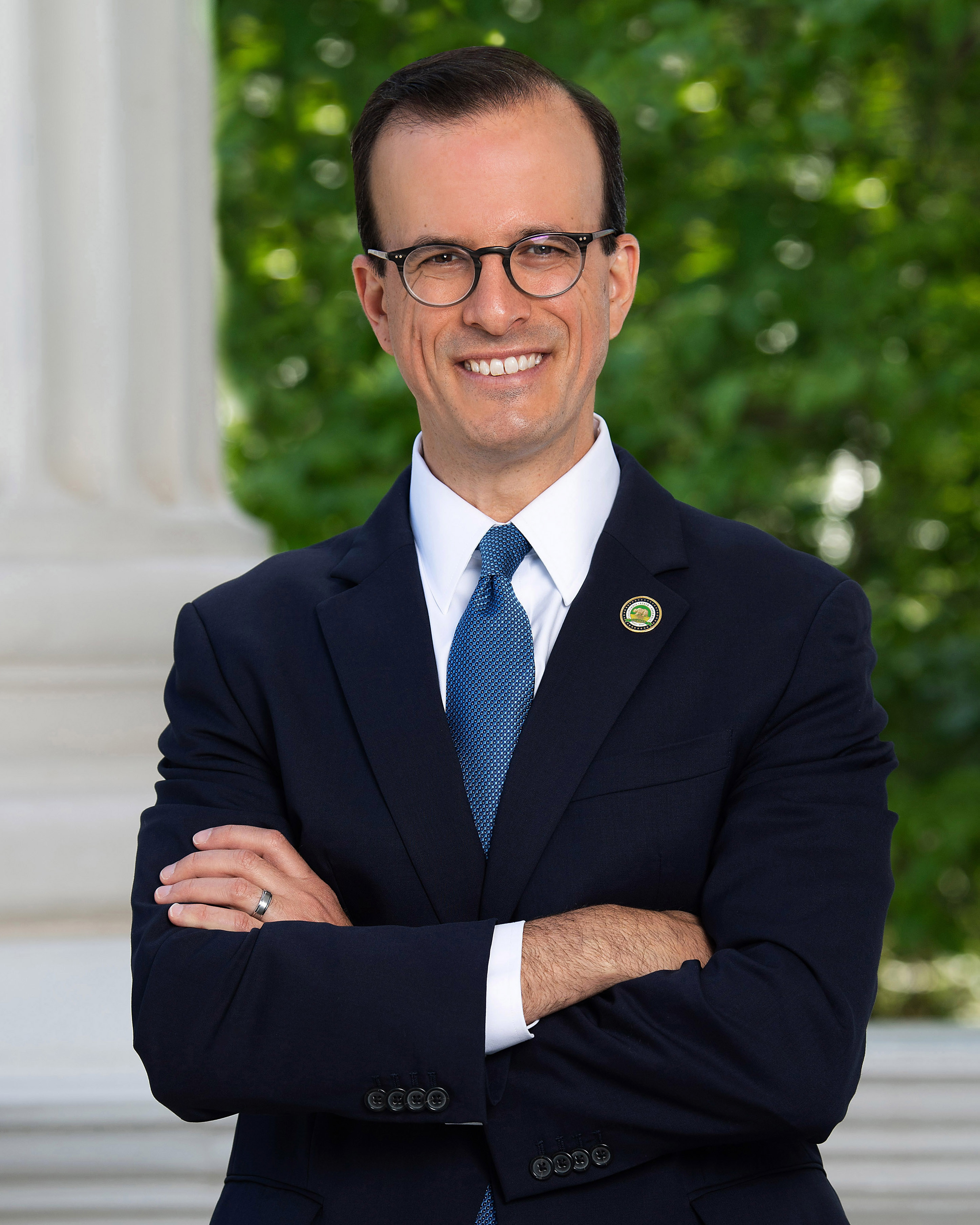
Asm. Marc Berman
Sponsored bills
Existing law establishes the California Community Colleges, under the administration of the Board of Governors of the California Community Colleges, as one of the segments of postsecondary education in this state. The California Community Colleges system provides instruction to students at 116 campuses operated by community college districts throughout the state and, among other things, provides its students with a transfer pathway, facilitated by mechanisms such as the associate degree for transfer, allowing students to apply academic credit earned at a community college toward receipt of a bachelor's degree at a 4-year postsecondary educational institution. The Donahoe Higher Education Act requires a student who earns an associate degree for transfer (ADT) to be deemed eligible for transfer into a California State University baccalaureate program when the student meets certain requirements. Provisions of the Donahoe Higher Education Act apply to the University of California only to the extent that the Regents of the University of California act, by resolution, to make them applicable. Existing law establishes the California Community College Guided Pathways Grant Program under the administration of the office of the Chancellor of the California Community Colleges and requires the chancellor's office to distribute grants, upon appropriation by the Legislature, to community colleges that meet certain requirements, to integrate existing student-success programs and develop clearly structured, coherent guided pathways programs. This bill would express findings and declarations of the Legislature related to the process of transfer from community colleges to 4-year postsecondary educational institutions. The bill would express the intent of the Legislature to enact legislation related to a student-centered transfer process. This bill would establish, until July 1, 2025, the Associate Degree for Transfer Intersegmental Implementation Committee to serve as the primary entity charged with the oversight of the ADT. The bill would specify the committee's membership. The bill would assign numerous duties to the committee, including the duty to establish timelines and reporting deadlines relating to reviews of transfer model curricula, and the duty to develop a comprehensive communications plan and guidance to inform students about the ADT pathway. The bill would also require the committee, on or before December 31, 2023, to provide the Legislature with recommendations on certain issues impeding the scaling of the ADT and streamlining transfer across segments for students. The bill would require the Intersegmental Committee of the Academic Senates of the University of California, the California State University, and the California Community Colleges, on or before May 31, 2023, to establish a singular lower division general education pathway that meets the academic requirements necessary for transfer admission to the California State University and the University of California, and would require, if the committee is unable to come to agreement on or before May 31, 2023, the respective administrative bodies of those segments to establish a singular lower division general education pathway that meets the academic requirements necessary for transfer admission to the California State University and the University of California by December 31, 2023. The bill would require the singular lower division general education pathway, commencing with the fall term of the 2025–26 academic year, to be the only lower division general education pathway used to determine eligibility and sufficient academic preparation for transfer into both segments, and to not lengthen the time-to-degree or include more units than those required under the Intersegmental General Education Transfer Curriculum on July 1, 2021. These requirements pertaining to the singular lower division general education pathway would apply to the University of California only if the regents adopt an appropriate resolution, as required by existing law. Where ADTs for major pathways exist, the bill would require the California Community Colleges, on or before August 1, 2024, to place students who declare a goal of transfer on their mandatory education plans on the ADT pathway if the student has not opted out, as specified, and if such a pathway exists for their intended major. To the extent that this provision would impose new duties on community college districts, it would constitute a state-mandated local program. This bill would authorize community colleges to use funds appropriated in the Budget Act of 2021 or subsequent budget acts to support the continued implementation of the California Community College Guided Pathways Grant Program to implement the bill. The California Constitution requires the state to reimburse local agencies and school districts for certain costs mandated by the state. Statutory provisions establish procedures for making that reimbursement. This bill would provide that, if the Commission on State Mandates determines that the bill contains costs mandated by the state, reimbursement for those costs shall be made pursuant to the statutory provisions noted above.
Existing law establishes categories of peace officers with varying powers and authority to make arrests and carry firearms. Under existing law, in certain counties, including the counties of Butte and Calaveras, a deputy sheriff, who is employed to perform duties exclusively or initially relating to custodial assignments with responsibilities for maintaining the operations of county custodial facilities, is a peace officer whose authority extends to any place in the state only while engaged in the performance of the duties of the officer's employment and for the purpose of carrying out the primary function of employment relating to the officer's custodial assignments, or when performing other law enforcement duties directed by the officer's employing agency during a local state of emergency. This bill would include a deputy sheriff employed by the County of Del Norte, the County of Madera, the County of Mono, or the County of San Mateo within that definition of peace officer.
Existing law provides for the protection, care, and assistance for the people of the state, and the promotion of the welfare and happiness of all people in the state by providing appropriate aid and services to the needy and distressed. Under existing law, counties are responsible for administering the various public social services programs and related services, including, but not limited to, CalFresh and general assistance benefits. Existing law establishes the California Community Colleges, under the administration of the Board of Governors of the California Community Colleges, the California State University, under the administration of the Trustees of the California State University, and the University of California, under the administration of the Regents of the University of California, as segments of public postsecondary education in this state. Existing law establishes community college districts, locations of the California State University, and campuses of the University of California throughout the state. This bill would require a county human services agency to designate at least one employee as a staff liaison to serve as a point of contact for academic counselors and other professional staff at a campus of an institution of public higher education located within the county. The bill would require any disclosure or sharing of personal information under the bill to be made in compliance with applicable state and federal confidentiality laws. The bill would require a county human services agency, with input from the public institutions of higher learning in the county, to develop protocols for engagement between the staff liaison and a campus of an institution of public higher education located within the county and would encourage those entities to consult with specified stakeholders in the development of those protocols. The bill would authorize the State Department of Social Services to implement its provisions by all-county letters or similar instructions. By requiring counties to perform new duties, the bill would impose a state-mandated local program. This bill would also require the Office of the Chancellor of the California State University and the Office of the Chancellor of the California Community Colleges, and request the Office of the President of the University of California, in collaboration with county human services agencies, to conduct a survey to determine the effectiveness of the county liaison position and submit, on or before January 1, 2025, a report with the results of the survey to specified legislative committees and the State Department of Social Services. The bill would repeal these provisions on January 1, 2026. The California Constitution requires the state to reimburse local agencies and school districts for certain costs mandated by the state. Statutory provisions establish procedures for making that reimbursement. This bill would provide that, if the Commission on State Mandates determines that the bill contains costs mandated by the state, reimbursement for those costs shall be made pursuant to the statutory provisions noted above.
Existing law requires a school district, county office of education, or charter school to ensure that a grade 12 pupil who has not opted out, as specified, completes and submits a Free Application for Federal Student Aid or, if the pupil is exempt from paying nonresident tuition under existing law, completes and submits a form for purposes of the California Dream Act. Existing law requires the Student Aid Commission, on or before July 1, 2022, to adopt regulations that include, but are not limited to, model opt-out forms and acceptable use policies for the purpose of providing guidance on applicable state laws. Existing law requires the school district, county office of education, or charter school to exempt a pupil or the pupil's parent or legal guardian from completing a form if the local educational agency determines the pupil is unable to complete the form, and prohibits a pupil's ability to graduate from being affected by a pupil's failure to fill out a form. This bill would require, on or before September 1, 2022, and each year thereafter, the commission and the State Department of Education to facilitate the completion of the Free Application for Federal Student Aid and the form established for purposes of the California Dream Act, by requiring the department to share the current school year's roster of pupils with the commission, and requiring the commission to match data on pupil completion of financial aid forms, as specified.
Existing law, known as the Donahoe Higher Education Act, sets forth the missions and functions of California's public and private segments of higher education and their respective institutions of higher education. The act requires, not later than June 1, 2006, the California Community Colleges and the California State University to adopt, and authorizes the University of California and private postsecondary institutions to adopt, a common course numbering system for the 20 highest-demand majors in the respective segments. The act requires, not later than June 30, 2006, the Board of Governors of the California Community Colleges and the Trustees of the California State University to report to the Legislature, and requests the Regents of the University of California to report to the Legislature, on the status of the activities of their respective segments related to that numbering system and on the plans to implement a common course numbering system for the majors that are not the 20 highest demand majors. The act also requires each campus of a public postsecondary educational institution to incorporate the common course numbering system in its catalog at the next adoption of a campus catalog after June 1, 2006. This bill would require the California Community Colleges, on or before July 1, 2024, to adopt a common course numbering system for all general education requirement courses and transfer pathway courses, and require each community college campus, on or before July 1, 2024, to incorporate common course numbers from the adopted system into its course catalog. The bill would require the common course numbering system to be student facing and ensure that comparable courses across all community colleges have the same course number. By requiring community college campuses to incorporate common course numbers in their catalogs, the bill would impose a state-mandated local program. The California Constitution requires the state to reimburse local agencies and school districts for certain costs mandated by the state. Statutory provisions establish procedures for making that reimbursement. This bill would provide that, if the Commission on State Mandates determines that the bill contains costs mandated by the state, reimbursement for those costs shall be made pursuant to the statutory provisions noted above.
Existing law creates, in the Labor and Workforce Development Agency, the Employment Development Department, which is vested with the duties, purposes, responsibilities, and jurisdiction with respect to job creation activities. The department is authorized to study and make recommendations as to actions that might tend to do several things, including, but not limited to, promoting the prevention of unemployment and the stabilization of employment, reducing and preventing unemployment, and establishing the most effective methods of providing economic security through all forms of social insurance. This bill would require the department to develop and, upon appropriation by the Legislature, implement a recession plan to prepare for an increase in unemployment insurance compensation benefits claims due to an economic recession. The bill would require the plan to detail how to respond to economic downturns with a predetermined strategy that has considered the full effect on the department's operations, and include, but not be limited to, identifying the lessons learned from previous economic downturns, identifying ways to improve self-serve services to avoid long wait times to speak to staff, and enhancing claims processing tools to ensure that the department's identity verification processes are as robust as possible. The bill would require the department to provide a copy of the recession plan to specified legislative committees and the Department of Finance by March 1, 2022, and to update the recession plan and provide a copy to specified legislative committees and the Department of Finance every 2nd year thereafter.
Existing law establishes the Child Care and Development Services Act and the Early Education act, administered by the State Department of Education and the State Department of Social Services, respectively. Existing law provides that the Child Care and Development Services Act has as one of its purposes the provision of a comprehensive, coordinated, and cost-effective system of childcare and development services that includes a full range of supervision, health, and support services through full- and part-time programs. Existing law provides that the Early Education Act has as one of its purposes the provision of an inclusive and cost-effective preschool program that provides high-quality learning experiences, coordinated services, and referrals for families to access health and social-emotional support services through full- and part-time programs. Existing law authorizes the Counties of Alameda, Contra Costa, Fresno, Marin, Monterey, San Benito, San Diego, Santa Clara, Santa Cruz, Solano, and Sonoma, as individual pilot projects, to develop an individualized county childcare subsidy plan, as provided. Existing law concludes that pilot program for the County of Santa Clara on July 1, 2022, and concludes the pilot programs for the remaining counties on July 1, 2023. This bill would authorize the County of Santa Clara to continue the individualized county childcare subsidy plan initially developed and approved under the pilot project described above until July 1, 2023. This bill would also require the State Department of Education and the State Department of Social Services to review the existing individualized county childcare pilot programs and to provide a report containing specified recommendations to the appropriate policy and fiscal committees of the Legislature on or before June 30, 2022. The bill would repeal this requirement January 1, 2024. This bill would make legislative findings and declarations as to the necessity of a special statute for the County of Santa Clara. This bill would declare that it is to take effect immediately as an urgency statute.
Existing law requires the Governor to proclaim certain days each year for specified reasons. This bill would designate August 26 of each year as California Farmworker Day, and require the Governor to annually proclaim August 26 as California Farmworker Day. The bill would make legislative findings in this regard.
Existing law regulates automatic renewal offers and continuous service offers that businesses make to California consumers. Existing law makes it unlawful for a business that makes an automatic renewal offer or continuous service offer to a consumer in this state, among other things, to fail to present the automatic renewal or continuous service offer terms in a clear and conspicuous manner, to charge the consumer for an automatic renewal or continuous service without first obtaining the consumer's affirmative consent, and to fail to provide an acknowledgment that includes the automatic renewal or continuous service offer terms, cancellation policy, and information regarding how to cancel in a manner that is capable of being retained by the consumer, as specified. This bill would, beginning July 1, 2022, revise and recast these provisions to also make it unlawful for the business to fail to provide a consumer with a notice containing specified information if the consumer accepted a free gift or trial, lasting 31 or more days that was included in an automatic renewal offer or continuous service offer or accepted an automatic renewal offer or continuous service offer at a promotional or discounted price, and the applicability of that price was more than 31 days. In these circumstances, the bill would require the notice to be provided at least 3 days before and at most 21 days before the expiration of the period of time for which the free gift or trial, or promotional or discounted price, applies. This bill would also require the notice, as specified, if the consumer accepted an automatic renewal offer or continuous service offer with an initial term of one year or longer that automatically renews for a subsequent term that is longer than one month, unless the consumer cancels the contract. In these circumstances, the bill would require the notice to be provided at least 15 days and not more than 45 days before the automatic renewal offer or continuous service offer renews. The bill would provide that if both types of notice are warranted, only the notice provisions requiring notice at least 15 days and not more than 45 days before the automatic renewal offer or continuous service offer renews apply. If sent electronically, the bill would require the notice to include a link that directs the consumer to the cancellation process, or another reasonably accessible electronic method that directs the consumer to the cancellation process if no link exists. Under existing law, if a consumer accepts an automatic renewal or continuous service offer online, then the business is required to allow the consumer to terminate the offer exclusively online, which may include a termination email formatted and provided by the business. This bill would additionally require the business to allow a consumer to terminate the automatic renewal or continuous service offer at will, and without engaging any further steps that obstruct or delay the consumer's ability to terminate immediately. The bill would require the business to provide a method of termination that is either online in the form of a prominently located direct link or button to cancel or by a termination email, as provided. This bill would also authorize a business to require a consumer to enter account information or otherwise authenticate online before termination of the automatic renewal or continuous service online, provided that a consumer who is unwilling or unable to enter account information or otherwise authenticate online before termination is not precluded from authenticating or terminating offline using another method, as specified. The bill would authorize these requirements to be fulfilled after completion of an initial order.