

Existing law, until January 1, 2026, requires a person, upon a criminal conviction for driving under the influence (DUI) with a prior conviction for DUI, to install a functioning, certified ignition interlock device (IID) for a specified period of time. Existing law also authorizes a court, upon the first criminal conviction of a person for DUI, to order installation of an IID for a specified period of time, or, if the court does not order the installation of the device, authorizes the person to apply for a restricted license, as specified. This bill would establish a pilot program under the Department of Motor Vehicles that would, between July 1, 2025, and July 1, 2030, require the courts in the Counties of Los Angeles, Orange, Sacramento, San Bernardino, and San Diego, to order the installation of an IID for any DUI conviction, as specified. The bill would require the department to prepare and submit a report to the Legislature, after the conclusion of the program, summarizing the effect of the program on reducing first-time and repeat DUI offenses.
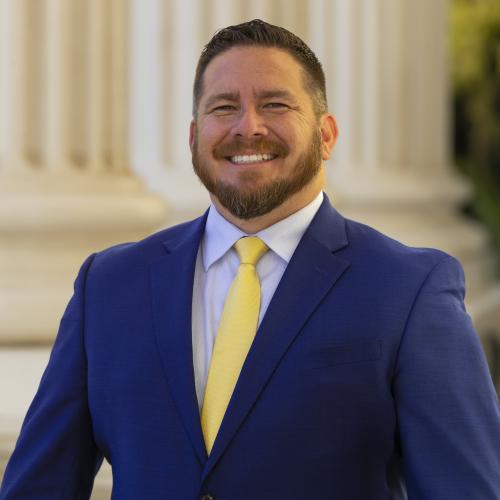
Asm. Juan Alanis
Sponsored bills
Maddy summaryThis bill designates October 2024 as Menopause Awareness Month in California to highlight the health and societal impacts of menopause on women. It acknowledges that millions of women face symptoms that can affect their daily lives and work, noting that women of color are at higher risk for complications like premature menopause and heart disease. The resolution encourages the state to provide better health information and services to support women's well-being before, during, and after this transition. While the text outlines these goals, the bill itself is a formal recognition rather than a law that creates new funding or mandates specific programs.
The Personal Income Tax Law and the Corporation Tax Law allow various credits against the taxes imposed by those laws. This bill, for taxable years beginning on or after January 1, 2025, and before January 1, 2030, would allow a credit against those taxes to a qualified taxpayer in an amount equal to 40% of the qualified wages paid or incurred to a qualified employee employed during the taxable year. The bill would define a qualified employee for this purpose to mean an individual that, among other things, has been convicted of a felony, as provided, and has a hiring date not more than one year after the date the individual was convicted or was released from prison. Existing law requires any bill authorizing a new tax expenditure to contain, among other things, specific goals that the tax expenditure will achieve, detailed performance indicators, and data collection requirements. This bill would include additional information required for any bill authorizing a new income tax expenditure. This bill would take effect immediately as a tax levy.
(1) Existing law, the Brady-Jared Teen Driver Safety Act of 1997, establishes a provisional licensing program and generally requires that a driver's license issued to a person at least 16 years of age, but under 18 years of age be issued pursuant to that provisional licensing program. Existing law requires a person to hold an instruction permit for not less than 6 months prior to applying for a provisional license. During the first 12 months after issuance of a provisional license, existing law prohibits the licensee from driving between the hours of 11 p.m. and 5 a.m. and transporting passengers who are under 20 years of age, as specified. Existing law provides limited exceptions to these restrictions under which a licensee is authorized to drive under specified circumstances. A violation of these provisions is punishable as an infraction. This bill would, commencing January 1, 2027, expand the scope of the provisional licensing program by expanding the applicable age range for the program to persons at least 16 years of age, but under 21 years of age. The restrictions on provisional licensees described above would apply during the first 6 months after issuance of a provisional license to a licensee who is 18, 19, or 20 years of age, subject to specified exemptions. The bill would, commencing July 1, 2027, require a person at least 18 years of age, but under 21 years of age, to hold an instruction permit for at least 60 days before applying for a provisional license. The bill would make other technical and conforming changes and related findings and declarations. By expanding the scope of the provisional licensing program, the violation of which constitutes an infraction, the bill would impose a state-mandated local program. (2) Existing law generally authorizes the Department of Motor Vehicles, for good cause, to issue an instruction permit to any physically and mentally qualified person who applies to the department for an instruction permit and who meets any one of 5 specified requirements, including that the person is 17 years and 6 months of age or older. The bill would, commencing January 1, 2027, raise the age for the above requirement to 20 years and 6 months. Existing law provides that a person, while having in the person's immediate possession a valid permit issued pursuant to the above provisions, may operate a motor vehicle, other than a motorcycle or a motorized bicycle, when accompanied by, and under the immediate supervision of, a California-licensed driver with a valid license of the appropriate class, 18 years of age or over, whose driving privilege is not on probation, as specified. A violation of this provision is punishable as an infraction. The bill would, commencing January 1, 2027, for purposes of supervising a person issued a valid permit as described above, raise the required age of the California-licensed driver to 21 years of age. By changing the definition of an existing infraction, the bill would impose a state-mandated local program. (3) Existing law prohibits a person from owning or operating a driving school or giving driving instruction for compensation without a license issued by the department. The bill would require, on and after January 1, 2025, an owner or operator of a driving school or an independent driving instructor, as a condition of obtaining a new license or renewed license from the department to offer and accept installment payments, as specified, for the compensation to provide the instruction required by the Brady-Jared Teen Driver Safety Act of 1997. The bill would, commencing January 1, 2026, also authorize the department to charge a driving school, as specified, a fee not to exceed $1 for each driver education or driver training certificate of completion furnished by the department and issued to a person who has demonstrated satisfactory completion of a certified driver education and driver training course, in order to recover the department's reasonable costs in administering the provisional licensing program. The bill would prohibit a driving school from charging an applicant a fee for a certificate of completion that exceeds the fee the department charges the school. (4) The California Constitution requires the state to reimburse local agencies and school districts for certain costs mandated by the state. Statutory provisions establish procedures for making that reimbursement. This bill would provide that no reimbursement is required by this act for a specified reason.
The Personal Income Tax Law, in modified conformity with federal income tax laws, generally defines "gross income" as income from whatever source derived, except as specifically excluded, and provides various exclusions from gross income for purposes of computing tax liability. This bill, on and after January 1, 2025, and before January 1, 2030, would exclude from gross income any amount accruing to a first-time homeownership savings account, as defined, whose beneficiary is a qualified taxpayer. The bill would also, for taxable years beginning on or after January 1, 2025, and before January 1, 2030, exclude from gross income any amount withdrawn from a first-time homeownership savings account that is used to pay for qualified homeownership savings expenses of a qualified taxpayer who established the account. The bill would define a first-time homeownership savings account as an account with a financial institution that is designated as a first-time homeownership savings account by the person establishing the account that meets specified requirements. Existing law requires a bill authorizing a new tax expenditure to contain, among other things, specific goals, purposes, and objectives the tax expenditure will achieve, detailed performance indicators, and data collection requirements. This bill would include additional information required for any bill authorizing a new tax expenditure. This bill would take effect immediately as a tax levy.
This measure would proclaim the week of April 14, 2024 to April 20, 2024, to be Cities Week, and would encourage all Californians to be involved in their communities and be civically engaged with their local government.
This measure would join Asian and Pacific Islander communities throughout the state, nation, and world in celebrating April 13, 2024, to April 15, 2024, as the Songkran New Year Festival.
Maddy summaryThis bill is a House Resolution that formally recognizes May 2024 as Asian and Pacific Islander American Heritage Month in California. It directly affects the state legislature and the broader public by establishing an official period to honor the history and contributions of Asian and Pacific Islander communities. The resolution highlights the diverse backgrounds of these populations, their significant roles in California's development, and their ongoing achievements in various fields. By adopting this measure, the Assembly commends these communities for their accomplishments and acknowledges the hardships they have faced throughout history.