

(1) Existing law divides theft into grand theft and petty theft. Existing law punishes petty theft as a misdemeanor while grand theft is punished as either a misdemeanor or a felony. Existing law lists specific types of theft which are grand theft and all other cases of theft as petty theft. Existing law authorizes a person to be charged with grand theft if the property taken exceeds $950 over the course of distinct but related acts. This bill would clarify that those related acts include acts committed against multiple victims or in counties other than the county of the current offense. The bill would also clarify that evidence that distinct acts are motivated by one intention, one general impulse, and one plan may include, but is not limited to, evidence that the acts involve the same defendant or defendants, are substantially similar in nature, or occur within a 90-day period. (2) Existing law prohibits the possession or receipt of stolen property, as specified. A violation of this prohibition is punishable as either a misdemeanor or a felony, depending on the value of the property and whether the offender has certain prior convictions. This bill would make it a crime for any person to possess property unlawfully that was acquired through one or more acts of shoplifting, theft, or burglary from a retail business, if the property is not possessed for personal use and the person has intent to sell, exchange, or return the merchandise for value, or the intent to act in concert with one or more persons to sell, exchange, or return the merchandise for value, and the value of the possessed property exceeds $950. The bill would, for the purpose of determining the value of the property, aggregate the property with any other property possessed by the person with that intent within the prior 2 years and with any property possessed by another person acting in concert with the first person to sell, exchange, or return the merchandise for value, if that property was also acquired unlawfully. The bill would make this crime punishable as a misdemeanor or a felony. By creating a new crime, this bill would impose a state-mandated local program. (3) Existing law prohibits shoplifting, defined as entering a commercial establishment with intent to commit theft while that establishment is open during regular business hours, where the value of the property that is taken or intended to be taken does not exceed $950. Existing law requires an act that falls within this definition to be charged as shoplifting and not as burglary or theft. Under existing law, shoplifting is punishable as a misdemeanor, except when the defendant has prior convictions, as specified. Existing law authorizes a peace officer to make a warrantless arrest for a misdemeanor when the officer has probable cause to believe the person to be arrested has committed the misdemeanor in the officer's presence. Existing law also authorizes a private person to make an arrest for a misdemeanor committed in their presence, and requires the person to deliver the arrested person to a peace officer or magistrate. Existing law additionally authorizes a merchant to detain a person for a reasonable time and in a reasonable manner to determine if a person has unlawfully taken merchandise. Existing law authorizes a peace officer to make a warrantless arrest for specified misdemeanors relating to domestic violence, violation of a restraining order, and carrying a concealed firearm at an airport that did not occur in the officer's presence. This bill would authorize a peace officer to make a warrantless arrest for a misdemeanor shoplifting offense not committed in the officer's presence if the officer has probable cause to believe that person has committed shoplifting, as specified. The bill would clarify that local law enforcement or a local jurisdiction is prohibited from bringing a nuisance action against a business solely for the act of reporting retail crime, unless the report is knowingly false. (4) Existing law requires a peace officer to release upon a signed promise to appear any person arrested for a misdemeanor, unless the person demands to be taken before a magistrate. Existing law provides certain reasons a person arrested for a misdemeanor shall not be released including that the person is intoxicated or in need of medical attention, the person is unable to provide satisfactory proof of identification, or there are outstanding arrest warrants for the person. Additionally, existing law exempts from this provision persons arrested for specified crimes including domestic violence, stalking, threatening a witness, and, until January 1, 2026, organized retail theft. This bill would extend that exemption for organized retail theft until January 1, 2031. (5) Existing law, until January 1, 2026, authorizes a city or county prosecuting authority or county probation department to create a diversion or deferred entry of judgment program for persons who commit a theft offense or repeat theft offenses, as specified. This bill would extend that authorization until January 1, 2031. (6) Existing law authorizes the court to suspend a criminal sentence and make and enforce terms of probation for a period not to exceed 2 years, and in misdemeanor cases, for a period not to exceed one year. Existing law authorizes the court to make and enforce the terms of probation for specified theft cases for a period not to exceed 3 years. This bill would, for an offense of shoplifting or petty theft, authorize the court to make and enforce the terms of probation for a period not to exceed 2 years. The bill would require a court that imposes a term longer than one year to consider referring the defendant to a collaborative court or rehabilitation program that is relevant to the underlying factor or factors that led to the commission of the offense, as specified. For a defendant under 25 years of age, the bill would require the court, to the extent such a program is available, to refer the defendant to a program modeled on healing-centered, restorative, trauma-informed, and positive youth development approaches that is provided in collaboration with community-based organizations. By increasing the period of probation, this bill would impose a state-mandated local program. (7) The California Constitution requires the state to reimburse local agencies and school districts for certain costs mandated by the state. Statutory provisions establish procedures for making that reimbursement. This bill would provide that, if the Commission on State Mandates determines that the bill contains costs mandated by the state, reimbursement for those costs shall be made pursuant to the statutory provisions noted above.
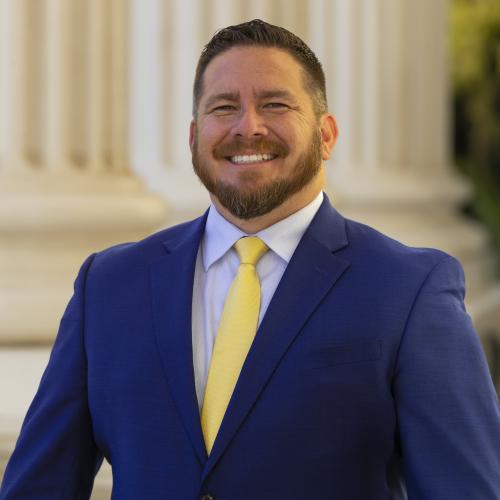
Asm. Juan Alanis
Sponsored bills
Existing law defines types of theft, including petty theft, grand theft, and shoplifting. Existing law also defines the crimes of robbery and burglary. Existing law sets forth specific rules relating to the jurisdiction for the prosecution of theft by fraud, organized retail theft, and receiving stolen property, including that the jurisdiction for prosecution includes the county where an offense involving the theft or receipt of the stolen merchandise occurred, the county in which the merchandise was recovered, or the county where any act was done by the defendant in instigating, procuring, promoting, or aiding or abetting in the commission of a theft offense or other qualifying offense. Existing law jurisdictionally limits prosecution of each of the above to criminal actions brought by the Attorney General. This bill would no longer limit the jurisdictional rules for the above crimes to criminal actions brought by the Attorney General. If a case is brought by someone other than the Attorney General and multiple offenses are committed by the same defendant in multiple jurisdictions, the bill would allow a criminal action to be brought in any of those jurisdictions subject to a hearing on consolidation of the offenses, as specified. The bill would require the prosecution to present written evidence at the hearing that all district attorneys in counties with jurisdiction over the offenses agree to the venue. The bill would require charged offenses from jurisdictions where there is not a written agreement from the district attorney to be returned to that jurisdiction.
Existing law authorizes the Governor to appoint and commission individuals designated by a railroad company to serve as police officers. Existing law, until January 1, 2026, requires the Department of the California Highway Patrol to coordinate with the Department of Justice to convene a regional property crimes task force to identify geographic areas experiencing increased levels of property crimes and assist local law enforcement with resources, such as personnel and equipment. This bill would require the task force to assist railroad police and would specify cargo theft as a property crime for consideration by the regional property crimes task force. This bill would declare that it is to take effect immediately as an urgency statute.
Existing law, the Lanterman-Petris-Short Act, authorizes the involuntary commitment and treatment of persons with specified mental disorders. Under the act, when a person, as a result of a mental health disorder, is a danger to self or others, or gravely disabled, the person may, upon probable cause, be taken into custody by specified individuals, including, among others, by peace officers and designated members of a mobile crisis team, and placed in a facility designated by the county and approved by the State Department of Health Care Services for up to 72 hours for evaluation and treatment. This bill would additionally authorize, until January 1, 2030, a person to be taken into custody, pursuant to those provisions, by a licensed mental health professional, as defined. The bill would require a licensed mental health professional who is not direct staff of, or contracted by, a county to complete a specified training prior to exercising that authority and would prohibit those licensed mental health professionals from transporting a person taken into custody pursuant to the above-described provisions unless specifically authorized by the county to do so. Existing law requires the State Department of Health Care Services to collect and publish annually quantitative information concerning the operation of various provisions relating to community mental health services, including the number of persons admitted for evaluation and treatment for certain periods, transferred to mental health facilities, and for whom certain conservatorships are established, as specified. Existing law requires each county behavioral health director, each designated and approved facility, and each other entity, as specified, to provide accurate and complete data as prescribed by the department. This bill would require county behavioral health directors to provide, and would require the State Department of Health Care Services to collect and publish, additional information, including, among other things, the number of individuals designated by each county to perform specified functions, their profession, and the number of holds initiated per profession, as specified. The bill would require each law enforcement agency to provide accurate and complete data to the department regarding the number of holds initiated by a peace officer. By increasing the duties on county behavioral health directors and law enforcement agencies, this bill would impose a state-mandated local program. The California Constitution requires the state to reimburse local agencies and school districts for certain costs mandated by the state. Statutory provisions establish procedures for making that reimbursement. This bill would provide that, if the Commission on State Mandates determines that the bill contains costs mandated by the state, reimbursement for those costs shall be made pursuant to the statutory provisions noted above.
Existing law establishes the State Department of Public Health and sets forth its powers and duties pertaining to, among other things, protecting, preserving, and advancing public health. Existing law requires the department, in consultation with specified stakeholders, to develop a plan, addressing specified issues, with recommendations and guidelines for counties to use in the case of a significant air quality event caused by wildfires or other sources. This bill, the Wildfire Smoke and Health Outcomes Data Act, would require the State Department of Public Health, in consultation with the Department of Forestry and Fire Protection and the Wildfire and Forest Resilience Task Force, to create, operate, and maintain a statewide integrated wildfire smoke and health data platform no later than July 1, 2026, that, among other things, would integrate wildfire smoke and health data from multiple databases. Under the bill, the purposes for the data platform would include providing adequate information to understand the negative health impacts on California's population caused by wildfire smoke and evaluating the effectiveness of investments in forest health and wildfire mitigation on health outcomes in California. This bill would require the State Department of Public Health, in consultation with the Department of Forestry and Fire Protection and the Wildfire and Forest Resilience Task Force, to develop, among other things, protocols for data sharing, documentation, quality control, and promotion of open-source platforms and decision support tools related to wildfire smoke and health data. This bill would authorize the State Department of Public Health, the Department of Forestry and Fire Protection, and the Wildfire and Forest Resilience Task Force, where appropriate, to utilize data from existing sources, including open source data and other external data, for purposes of implementing the act. This bill would create the Wildfire Smoke and Health Administration Fund. Under the bill, moneys in the fund would be available, upon appropriation, to the State Department of Public Health, the Department of Forestry and Fire Protection, and the Wildfire and Forest Resilience Task Force for the collection, management, and improvement of wildfire smoke and health data for the purposes of the act. The bill would make related findings and declarations.
(1) Existing law requires a pupil to complete designated coursework while in grades 9 to 12, inclusive, in order to receive a diploma of graduation from high school. The coursework requirements include, among others, the completion of one course in visual or performing arts, foreign language, or, until July 1, 2027, career technical education. Existing law defines "a course in career technical education" to mean a course in a district-operated career technical education program that is aligned to the career technical model curriculum standards and framework adopted by the State Board of Education, including courses through a regional occupational center or program operated by a county superintendent of schools or pursuant to a joint powers agreement. Existing law requires the Superintendent of Public Instruction to coordinate the development, on a cyclical basis, of model curriculum standards for, among other courses of study, a career technical education course of study. This bill, until July 1, 2027, would revise that definition to clarify that a course in a district-operated career technical education program that is aligned to the career technical model curriculum standards and framework adopted by the state board also includes courses that include participation in a preapprenticeship program, as defined, or a youth apprenticeship program, as defined. The bill would require the Superintendent, on or before July 1, 2029, and in collaboration with specified entities, to develop and adopt work-based learning program guidelines, as provided. The bill would require the State Department of Education, on or before January 1, 2026, and in collaboration with the Labor and Workforce Development Agency, to develop guidance on the definitions of youth apprenticeship programs, career technical education programs, preapprenticeship programs, and regional occupation programs, as provided. (2) Existing law requires the department, in collaboration with, and subject to the approval of, the executive director of the State Board of Education, to develop and maintain the California School Dashboard, a web-based system for publicly reporting performance data on the state and local indicators included in the evaluation rubrics. The department, pursuant to the requirement of developing the California School Dashboard, has included as one of several state indicators, the College/Career Indicator (CCI) , which represents the percentage of high school graduates who are prepared for college or a career, and includes several measures, including, among others, work-based learning measures, as part of the CCI. This bill would require the state board to, on or before July 1, 2026, consider including youth apprenticeship programs as a work-based learning measure for purposes of the CCI. (3) Existing law provides funding for career technical education programs, including through, among others, the California Career Technical Education Incentive Grant Program, the Strong Workforce Program, and a K–12 component of the Strong Workforce Program, with the purpose of creating, maintaining, supporting, encouraging, strengthening, and expanding the delivery of career technical education programs in the state, as provided. This bill would, subject to an appropriation of one-time funds for this purpose in the annual Budget Act or another statute, establish the High School Apprenticeship Pilot Program under the administration of the department. The bill would require the department, on or before July 1, 2026, to provide grants to 3 school districts, county offices of education, or charter schools for use over 2 school years, commencing with the 2026–27 school year, as provided. The bill would require the department to, among other things, convene a working group with specified entities and to work in collaboration with the working group to, among other things, determine application procedures and selection criteria for the grant awards. The bill would require the department to identify data to be collected by the grant recipients and would require the department, on or before December 1, 2028, to submit a report to the Legislature including, among other things, the data identified by the department. This bill would make these provisions relating to the grant program inoperative on July 1, 2032, and would repeal it as of January 1, 2033.
Existing law establishes various commissions within state government. This bill would, until January 1, 2028, establish the California Commission on the United States Semiquincentennial in state government to celebrate the 250th anniversary of the signing of the Declaration of Independence and the founding of the United States of America. The bill would require the commission to plan and coordinate commemorations and observances of the 250th anniversary of the Declaration of Independence and the American Revolution. The bill would require the commission to be solely supported by private or federal funds made available for the purpose of supporting the commission. The bill would require that these funds be deposited in the Semiquincentennial Fund, and would create that fund in the State Treasury. The bill would require funds in the Semiquincentennial Fund to be available, upon appropriation by the Legislature, as specified. The bill would require the records, files, and other memoranda of the commission, other than any private possessions, to be deposited and filed with the State Archives before January 1, 2028, and would require the State Archives to receive those materials. These provisions would become operative only if the Treasurer determines that sufficient private or federal funds have been made available.
Existing law provides for the civil commitment of a person who is determined to be a sexually violent predator. Existing law establishes a procedure by which a person committed as a sexually violent predator may petition for conditional release and requires the court, if it makes a specified determination, to place the person on conditional release. Existing law generally requires that a person released on conditional release pursuant to these provisions be placed in the person's county of domicile prior to their incarceration unless extraordinary circumstances exist requiring placement outside the county, as specified. Existing law also prohibits the placement of a person released on conditional release within 14 mile of any public or private school, as specified. Existing law defines a sexually violent predator as a person who has been convicted of a sexually violent offense and has a diagnosed mental disorder that makes the person a danger to others in that they are likely to engage in sexually violent criminal behavior. Existing law requires the State Department of State Hospitals to notify the sheriff or chief of police, or both, the district attorney, or the county's designated counsel under specific circumstances, including when it makes a recommendation to the court for community outpatient treatment for a person committed as a sexually violent predator. This bill, the Sexually Violent Predator Accountability, Fairness, and Enforcement Act, would require the State Department of State Hospitals to ensure department vendors consider public safety in the placement of a conditionally released sexually violent predator and approve a potential placement before a department employee or vendor signs a lease or rental agreement for the placement of a sexually violent predator, as specified. This bill would declare that it is to take effect immediately as an urgency statute.
Existing law, the Parent's Accountability and Child Protection Act, requires a person or business that conducts business in California and that seeks to sell specified products or services to take reasonable steps to ensure that the purchaser is of legal age at the time of purchase or delivery, including verifying the age of the purchaser. The act provides that reasonable steps include, but are not limited to, any of specified options, including requiring the user to input, scan, provide, or display a government-issued identification, as specified. The act prohibits any person or business required to comply with the provisions of the act from retaining, using, or disclosing any information it receives from a purchaser or recipient in an effort to verify age under the provisions of the act. In an action brought by a public prosecutor, existing law subjects a business or person that violates these provisions to a civil penalty not to exceed $7,500 for each violation. This bill would expand the above-described provisions to require a person or business that conducts business in California and seeks to sell or make available products or services that are illegal to make available to minors, as specified, to take reasonable steps to ensure that the purchaser or user, as defined, is of legal age at the time of access, purchase, or delivery, as applicable. The bill would provide that reasonable steps include, but are not limited to, any of specified options, including requiring the user or purchaser to input, scan, provide, or display a government-issued identification, as specified, and would also require the Attorney General to issue regulations further defining reasonable steps pursuant to these provisions, as provided. The bill would expand the above-described prohibition against retention, use, or disclosure to apply to a person or business that conducts business in California and that seeks to make available products that are illegal to make available to minors and would require the business or person to ensure that the reasonable step is designed to anonymize a user's identity and is incapable of being used to create a record of the user's online activity. This bill would provide that the penalty described above for a violation of the bill's provisions with regard to certain products or services that are illegal to make available to minors may be assessed and recovered only in a civil action brought by the Attorney General. The bill would also delete an obsolete provision. The bill would make the bill's provisions operative on January 1, 2027.
Existing law sets forth various programs relating to opioid overdose prevention and treatment, including, among others, standing orders for the distribution of an opioid antagonist, a naloxone grant program, and a grant program to reduce fentanyl overdoses and use throughout the state. Existing law prohibits a person from possessing for sale or purchasing for purposes of sale, specified controlled substances, including fentanyl. This bill would enact the Fighting Fentanyl Bond Act of 2024, which, if adopted, would authorize the issuance, pursuant to the State General Obligation Bond Law, of bonds in the amount of $____, for purposes of financing, among other things, substance use treatment, harm reduction programs, supportive services for students, programs targeting drug trafficking, substance use treatment programs in prisons and juvenile facilities, and recovery housing and transitional housing for previously incarcerated individuals, as specified. The bill would provide for submission of the bond act to the voters at the November 5, 2024, statewide general election in accordance with specified law. This bill would declare that it is to take effect immediately as an urgency statute.