

Existing law requires the Wildfire and Forest Resilience Task Force to develop a comprehensive implementation strategy to track and ensure the achievement of the goals and key actions identified in the state's "Wildfire and Forest Resilience Action Plan," as provided. Existing law requires, on or before March 1, 2026, and every 5 years thereafter, the task force to update the action plan. This bill would require the task force, on or before July 1, 2028, and in cooperation with the Office of Environmental Health Hazard Assessment, the State Air Resources Board, and the State Department of Public Health, to assess the health costs and impacts of wildfire smoke using existing wildfire smoke and health data, as provided. The bill would require the task force, in developing this assessment, to, among other things, develop a model to determine the approximate health benefits of achieving the goals identified in the action plan and make recommendations on how the action plan can increase its health benefits. The bill would authorize the task force to enter into contracts with an independent group to assist with this assessment. The bill would require the task force to include this assessment and additional actions to reduce the health impact of wildfire smoke in the next update to the action plan, as provided.
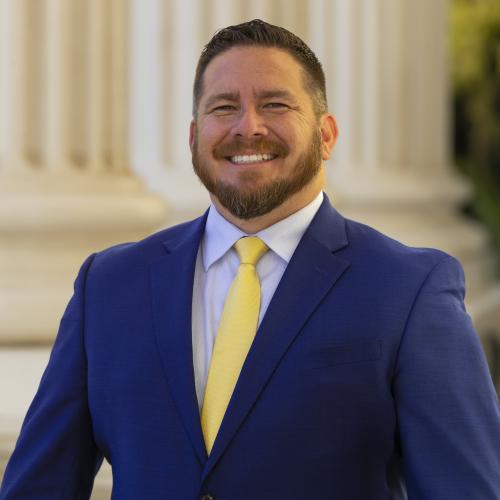
Asm. Juan Alanis
Sponsored bills
Existing law, the Uniform Controlled Substances Act, authorizes the forfeiture and seizure of property involved in, or purchased with the proceeds from, a controlled substance offense. Existing law authorizes a police or sheriff's department, the Department of Justice, or the Department of the California Highway Patrol to, with an order from the court, destroy controlled substances, instruments, or paraphernalia, as specified. This bill would require the Department of Justice, upon an appropriation by the Legislature, and in consultation with the Department of Toxic Substances Control and other relevant state and local agencies, to develop and publish guidance, on the Department of Justice's internet website, for proper management and disposal of controlled substances in the possession of law enforcement, as specified.
Existing law authorizes a judge in a case where a misdemeanor is being prosecuted, over the objection of the prosecuting attorney, to offer diversion to the defendant. Existing law prohibits this type of diversion when, among other things, the current charged offense is willfully, maliciously, and repeatedly following or willfully and maliciously harassing another person while making a credible threat toward that person, as specified. Existing law requires the clerk of a court, in which a person was convicted of a violation of the Vehicle Code or other specified provisions, to prepare within 5 days after conviction and immediately forward to the Department of Motor Vehicles an abstract of the record of the court covering the case in which the person was convicted. This bill would require the court, if the court grants diversion to a defendant who, if they had been convicted, would have had an abstract of record forwarded to the department pursuant to the above provisions, to instead direct that the prosecuting attorney ensure notice of the arrest or incident is provided to the department, as specified. By increasing the duties on local officials, this bill would impose a state-mandated local program. The California Constitution requires the state to reimburse local agencies and school districts for certain costs mandated by the state. Statutory provisions establish procedures for making that reimbursement. This bill would provide that, if the Commission on State Mandates determines that the bill contains costs mandated by the state, reimbursement for those costs shall be made pursuant to the statutory provisions noted above.
Existing law provides for the regulation of various chemicals, including chemicals contained in drugs, dietary supplements, and food products. This bill would prohibit an entity, as defined, from manufacturing, distributing, or offering for sale in this state a product that contains tianeptine or that is marketed as containing tianeptine. The bill would make a violation of these provisions punishable by a civil penalty not to exceed $2,500 for a first violation and not to exceed $5,000 for each subsequent violation, upon an action brought by the Attorney General, a city attorney, or a county counsel. The bill would entitle a prevailing plaintiff to an award of reasonable attorney's fees and costs.
Existing law generally provides requirements for the licensing of business establishments. Existing law requires a business that provides services to minors, as defined, to provide written notice to the parent or guardian of a minor participating in the service offered by the business regarding the business' policies relating to criminal background checks for employees, as specified. Existing law requires the Department of Justice to maintain state summary criminal history information, as defined, and to furnish this information as required by statute to specified entities, including a human resource agency or an employer. Under existing law, the disclosure of state summary criminal history information to an unauthorized person is a crime. This bill would require a person who provides behavioral health treatment for a behavioral health center, facility, or program to undergo a background check, as specified. By expanding the scope of the crime of unlawful disclosure of state summary criminal history information, this bill would impose a state-mandated local program. The California Constitution requires the state to reimburse local agencies and school districts for certain costs mandated by the state. Statutory provisions establish procedures for making that reimbursement. This bill would provide that no reimbursement is required by this act for a specified reason.
Existing law requires a prosecuting attorney to disclose to the defendant or their attorney all relevant real evidence seized or obtained as a part of the investigation of the offenses charged that is in the possession of the prosecuting attorney or known to be in the possession of the investigating agencies. Existing law prohibits an attorney from disclosing or permitting to be disclosed to a defendant, members of the defendant's family, or anyone else copies of child pornography evidence, unless specifically permitted to do so by the court after a hearing and a showing of good cause. Existing law authorizes an attorney to disclose or permit to be disclosed copies of child pornography evidence to persons employed by the attorney or to persons appointed by the court to assist in the preparation of a defendant's case if that disclosure is required for that preparation. This bill would repeal the provisions allowing disclosure of copies to a defendant, the defendant's family, person's employed by an attorney or appointed by the court, or anyone else. The bill would instead require any material that constitutes child pornography, as defined, to remain in the care, custody, or control of either a law enforcement agency, the prosecution, or the court. The bill would prohibit a defendant, their attorney, or anybody else from copying, photographing, duplicating, or reproducing any material that constitutes child pornography so long as the prosecution makes the material, and any hardware, media, or other property containing, storing, or housing the material, reasonably available to the defendant, as specified. The bill would also require this material to be made available, as specified, to a victim or the victim's attorney or to any individual the victim may seek to qualify to furnish expert testimony. By requiring new duties on prosecutors, law enforcement agencies, and the courts, this bill would create a state-mandated local program. The California Constitution requires the state to reimburse local agencies and school districts for certain costs mandated by the state. Statutory provisions establish procedures for making that reimbursement. This bill would provide that, if the Commission on State Mandates determines that the bill contains costs mandated by the state, reimbursement for those costs shall be made pursuant to the statutory provisions noted above.
Maddy summaryThis bill serves as a commemorative resolution to mark the 50th anniversary of the Surface Mining and Reclamation Act of 1975. It does not create new laws or alter existing regulations but instead formally acknowledges the milestone achievement of the original legislation. The measure is intended to honor the history of mining and land reclamation efforts established by the 1975 act.
Maddy summaryThis bill designates June 2026 as Men's Mental Health Month to raise awareness about mental health issues affecting men. The measure is a formal proclamation that does not change laws or allocate funding, but rather encourages public recognition of the topic. Once passed, it serves as an official declaration without imposing new requirements on individuals or organizations.
This measure would declare the month of June 2026 as Alzheimer's Disease and Brain Awareness Month, and would urge all Californians to commemorate the month of June 2026 as Alzheimer's Disease and Brain Awareness Month.
Maddy summaryThis bill designates June 23, 2026, as Social Media Harms Victim Remembrance Day in California. The measure requires the state to officially proclaim this date, creating a specific day for remembrance. It does not change laws or impose new requirements on individuals or organizations. The primary effect is to establish a formal date for commemoration within the state.