

The California Constitution provides that the University of California constitutes a public trust, and requires the university to be administered by the Regents of the University of California, a corporation in the form of a board, with full powers of organization and government, subject to legislative control only for specified purposes. The California Constitution requires the board to consist of 7 ex officio members and 18 appointive members appointed by the Governor and approved by the Senate. The California Constitution authorizes the members of the board to appoint either a member of the faculty at a campus of the university or of another institution of higher education, or a person enrolled as a student at a campus of the university, or both, as members of the board serving for no less than one year with all rights of participation. Beginning on July 1, 2027, this measure would require, instead of authorize, the members of the board to appoint to the board for 2-year terms, 2 undergraduate students and 2 graduate students enrolled at a campus of the university for each regular academic term during their service as members of the board, as provided. The measure would require each student board member to serve as a nonvoting student regent-designate in the first year of their 2-year term, and would authorize a student member who graduates from the university on or after January 1 of the 2nd year of the student member's 2-year term to serve the remainder of their term.
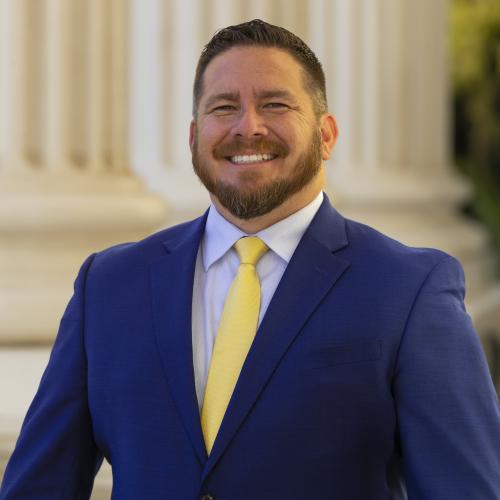
Asm. Juan Alanis
Sponsored bills
Maddy summaryThis House Resolution officially designates September as Black Music Month to honor the significant contributions of Black artists to American culture. The measure recognizes a wide range of musical genres, including jazz, blues, gospel, and hip-hop, by highlighting their historical origins and influential figures. While the text celebrates these artistic achievements, it does not impose any new legal requirements or funding mandates.
Existing federal law establishes the Supplemental Nutrition Assistance Program (SNAP) , known in California as CalFresh, under which supplemental nutrition assistance benefits allocated to the state by the federal government are distributed to eligible individuals by each county. Existing federal law limits a participant who is an able-bodied adult without dependents (ABAWD) to 3 months of CalFresh benefits in a 3-year period unless that participant has met work participation requirements or is otherwise exempt. Existing federal law authorizes a waiver of that time limit upon the request of a state if it is determined that the area in which the individuals reside has an unemployment rate of over 10% or does not have a sufficient number of jobs to provide employment for the individuals. Existing state law requires the State Department of Social Services, to the extent permitted by federal law, to annually seek a federal waiver of the time limit. Existing federal law also authorizes a state to provide, in each fiscal year, an exemption from the 3-month time limit for covered individuals, to the extent that the average monthly number of exemptions in effect during a fiscal year does not exceed 8% of the number of covered individuals in the state. Existing law requires the department to also establish the California Food Assistance Program (CFAP) to provide nutrition benefits to households that are ineligible for CalFresh benefits solely due to their immigration status, as specified. Existing law requires CFAP benefits to be equivalent to SNAP benefits. Under existing law, operative on the date the department notifies the Legislature that the Statewide Automated Welfare System can perform the necessary automation for this purpose, an individual 55 years of age or older is eligible for CFAP benefits, subject to an appropriation. Existing law requires these provisions only be implemented during any period that specified federal benefits are provided. This bill, the California Antihunger Response and Employment Training Act of 2026, would expand CFAP eligibility to include individuals ineligible for CalFresh benefits due to the federal time limits placed on ABAWDs regardless of if they are a citizen or noncitizen and individuals ineligible solely due to their humanitarian immigration status. The bill would also repeal the provisions requiring certain federal benefits be provided in order for CFAP to be implemented. The bill would make related findings and declarations. To the extent the bill would expand eligibility for county-administered benefits through expansion of the CFAP program, the bill would impose a state-mandated local program. The California Constitution requires the state to reimburse local agencies and school districts for certain costs mandated by the state. Statutory provisions establish procedures for making that reimbursement. This bill would provide that, if the Commission on State Mandates determines that the bill contains costs mandated by the state, reimbursement for those costs shall be made pursuant to the statutory provisions noted above.
Existing law establishes the Geologic Energy Management Division in the Department of Conservation, under the direction of the State Oil and Gas Supervisor, who is required to supervise the drilling, operation, maintenance, and abandonment of oil and gas wells in the state. Existing law requires the operator of a well to file a written notice of intention to commence drilling or written notice of intention to abandon a well with, and prohibits any drilling or abandonment, respectively, until approval is given by, the supervisor or district deputy. Under existing law, if the supervisor or district deputy fails to give the operator written response to the notice of intention to commence drilling or to the notice of intention to abandon a well within 10 working days from the date of receipt, that failure to respond is considered an approval, as specified. Under existing law, if operations to commence drilling or to abandon a well have not commenced within 24 months of receipt of the notice by the supervisor or the district deputy, the notice is deemed canceled, as provided. This bill would instead require the supervisor or district deputy to provide the operator, within 10 working days of the receipt of notice of intention to commence drilling or notice of intention to abandon a well, respectively, a written determination stating whether the notice of intention is complete. The bill would provide that if a supervisor or district deputy fails to provide this written determination the notice of intention to commence drilling or notice of intention to abandon a well, respectively, is required to be deemed complete. The bill would require, if the supervisor or the district deputy determines the notice of intention to commence drilling or notice of intention to abandon a well, respectively, is not complete, the supervisor or the district deputy to provide a written list that specifically identifies each item that is missing or deficient and to make a good faith effort to provide that information in a single document, as specified, in addition to the written determination that the notice of intention is not complete. The bill would authorize the operator to cure any deficiencies and to resubmit the notice of intention to commence drilling or notice of intention to abandon a well, respectively, and would require the supervisor or deputy to provide a written determination stating whether the resubmitted notice of intention is complete within 10 working days. The bill would require, if the supervisor or district deputy provides a written determination that a notice of intention or a resubmitted notice of intention to commence drilling or notice of intention to abandon a well, respectively, is complete, or if a notice of intention to commence drilling or notice of intention to abandon a well, respectively, is deemed complete due to a failure of the supervisor or district deputy to provide the written determination of completeness within 10 working days as described above, the supervisor or the district deputy to approve or deny the notice within 30 working days from the date of the determination of completeness. The bill would provide that if the supervisor or district deputy fails to approve or deny a notice of intention to commence drilling or notice of intention to abandon a well, respectively, within 30 working days, that failure is to be considered an approval, provided that all necessary environmental and technical reviews by the supervisor or district deputy are complete. The bill would also require, if the notice of intention to commence drilling or notice of intention to abandon a well, respectively, is denied by the supervisor or district deputy, within 30 working days from the date of a written determination of completion, the supervisor or the district deputy to include in the denial a rationale for why the notice was denied. The bill would instead provide that if operations to commence drilling or to abandon a well, respectively, have not commenced within 24 months of receipt of approval of the notice by the supervisor or the district deputy, the notice is deemed canceled, as provided.
The California Environmental Quality Act (CEQA) requires a lead agency, as defined, to prepare, or cause to be prepared, and certify the completion of an environmental impact report on a project that it proposes to carry out or approve that may have a significant effect on the environment or to adopt a negative declaration if it finds that the project will not have that effect. CEQA also requires a lead agency to prepare a mitigated negative declaration for a project that may have a significant effect on the environment if revisions in the project would avoid or mitigate that effect and there is no substantial evidence that the project, as revised, would have a significant effect on the environment. CEQA exempts from its requirements certain projects. This bill would, until January 1, 2030, exempt from CEQA critical fuels reduction projects that address extremely flammable species, are conducted in communities located in high fire threat districts or very high fire hazard severity zones, and remove specified nonnative species or common species. The bill would require projects exempt from CEQA pursuant to this exemption to comply with the best management practices under the 2025 Statewide Fuels Reduction Environmental Protection Plan, as provided. The bill would require a lead agency carrying out a project exempt from CEQA pursuant to this exemption to consult with the Department of Fish and Wildlife, as provided, and to, within 90 days of project completion, submit a notice of project completion and a final compliance determination regarding the 2025 Statewide Fuels Reduction Environmental Protection Plan to the Secretary of the Natural Resources Agency and the Secretary for Environmental Protection, as provided. The bill would require, on or before March 1, 2028, and annually thereafter, the Secretary of the Natural Resources Agency to, in consultation with the Secretary for Environmental Protection, submit a report to the Legislature with specified information summarizing the implementation of these provisions during the preceding calendar year. Because a lead agency would be required to determine whether a project qualifies for this exemption, the bill would impose a state-mandated local program. The California Constitution requires the state to reimburse local agencies and school districts for certain costs mandated by the state. Statutory provisions establish procedures for making that reimbursement. This bill would provide that no reimbursement is required by this act for a specified reason.
Existing law defines an assault as an unlawful attempt, coupled with present ability, to commit a violent injury upon the person of another. Existing law defines a battery as any willful and unlawful use of force or violence upon the person of another. Under existing law, an assault or battery committed against specified professionals engaged in the performance of their duties, including peace officers, firefighters, and emergency medical personnel, is punishable by imprisonment in a county jail not exceeding one year, by a fine not exceeding $2,000, or by both that fine and imprisonment. This bill would make an assault or battery committed against a utility worker, as defined, who is engaged in the performance of their duties punishable by imprisonment in a county jail not exceeding one year, by a fine not exceeding $2,000, or by both that fine and imprisonment. By expanding the scope of these crimes, this bill would impose a state-mandated local program. The California Constitution requires the state to reimburse local agencies and school districts for certain costs mandated by the state. Statutory provisions establish procedures for making that reimbursement. This bill would provide that no reimbursement is required by this act for a specified reason.
The California Constitution establishes the Fish and Game Commission and provides for the delegation to the commission of powers relating to the protection and propagation of fish and game. Existing law places the Fish and Game Commission in the Natural Resources Agency. This bill would require the commission to, on or before January 1, 2028, adopt regulations, as provided, to increase opportunities to fish, and to hunt big game, wild pigs, upland game birds, and migratory game birds, for resident youth with life-threatening illnesses. The bill would require the commission, in adopting those regulations, to ensure reasonable accommodations for participants in accordance with federal and state disability are incorporated into the regulations and to consider authorizing special hunts, as prescribed. The bill would authorize the commission to include in the regulations additional reasonable accommodations consistent with safe, ethical, and science-based wildlife management practices. The bill would require the Department of Fish and Wildlife to, on or before January 1, 2032, prepare and submit a report to the relevant legislative policy and budget committees in both houses of the Legislature and to the commission, as provided. The bill would make the implementation of its provisions contingent upon an appropriation by the Legislature. The bill would repeal these provisions on January 1, 2033.
Existing law establishes various programs for the delivery of services or benefits to individuals with disabilities, including, among others, the State Supplementary Program for the Aged, Blind, and Disabled, regional center services and supports under the Lanterman Developmental Disabilities Services Act, the In-Home Supportive Services Program, and certain benefits within the Medi-Cal program. This bill would require the California Health and Human Services Agency, upon appropriation and in consultation with relevant state departments within the agency, to complete a feasibility study that includes a comprehensive analysis of the challenges and opportunities related to establishing a state permanent disability certification program. Under the bill, the program would be defined as a certification issued by a state department confirming that an individual has a permanent disability for the purpose of obtaining services. The bill would require the agency to reasonably attempt to consult with local stakeholders, as specified. The bill would require that the analysis within the study address, among other things, technological limitations and compatibility of a permanent disability certification for use within existing federal, state, and local programs. The bill would require the agency, by July 1, 2028, to submit a report of the completed study to the Legislature and to post the report on the agency's internet website. The bill would repeal these provisions on January 1, 2032.
Existing federal law, the Indian Child Welfare Act of 1978 (ICWA) , governs the proceedings for determining the placement of an Indian child when that child is removed from the custody of the child's parent or guardian. Existing law specifies that the state is committed to protecting the essential tribal relations and best interest of an Indian child by promoting practices in accordance with ICWA. Existing law also provides for the state and an Indian tribe to enter into an agreement regarding the care and custody of Indian children and jurisdiction over Indian child custody proceedings. Existing law establishes, in order to provide additional funds to eligible Indian tribes that have entered into an agreement with the state pursuant to those provisions, the Tribally Approved Homes Compensation Program to provide funds to recruit and approve homes for the purpose of foster or adoptive placement of an Indian child and the Tribal Dependency Representation Program to provide funds to pay for legal counsel to represent the Indian tribe in a California Indian child custody proceeding. This bill would establish the Tribal Foster Care Prevention Program to provide funding to assist any federally recognized Indian tribe located in California, or with lands that extend into California, in funding the costs associated with services aimed at preserving families and preventing the entry of children into foster care. The bill would require an Indian tribe that seeks funding for this purpose to submit an annual letter of interest to the department. The bill would require the department, subject to an appropriation in the annual Budget Act for this purpose, to provide each Indian tribe that enters into a specified agreement and submits a letter of interest an annual allocation. The bill would require an Indian tribe that receives funds to submit a progress report regarding the number of Indian children and their families served to the department on or before September 30 following the close of the fiscal year in which funding was received. This bill would authorize the department to issue written guidance to implement, interpret, or make specific these provisions without taking any regulatory action.
The California Constitution provides that all property is taxable and requires that it be assessed at the same percentage of fair market value, unless otherwise provided by the California Constitution or federal law. The California Constitution and existing property tax law provide various exemptions from taxation, including, among others, a disabled veterans' exemption. Under existing law, the disabled veterans' exemption exempts from taxation part of the full value of property that constitutes the principal place of residence of a veteran, the veteran's spouse, or the veteran and veteran's spouse jointly, and the unmarried surviving spouse of a veteran, as provided, if the veteran incurred specified injuries or died while on active duty in military service, as described. Existing law exempts that part of the full value of the residence that does not exceed $100,000, or $150,000 if the household income of the claimant does not exceed $40,000, as adjusted for inflation, as specified. This bill would, until January 1, 2037, exclude service-connected disability payments from the definition of "household income" for purposes of the disabled veterans' exemption. The bill would also correct an erroneous cross-reference in the above-described provisions. By imposing additional duties on local tax officials, the bill would impose a state-mandated local program. Existing law requires any bill authorizing a new tax expenditure to contain, among other things, specific goals, purposes, and objectives that the tax expenditure will achieve, detailed performance indicators, and data collection requirements. This bill would include additional information required for any bill authorizing a new tax expenditure. The California Constitution requires the state to reimburse local agencies and school districts for certain costs mandated by the state. Statutory provisions establish procedures for making that reimbursement. This bill would provide that, if the Commission on State Mandates determines that the bill contains costs mandated by the state, reimbursement for those costs shall be made pursuant to the statutory provisions noted above. Existing law requires the state to reimburse local agencies annually for certain property tax revenues lost as a result of any exemption or classification of property for purposes of ad valorem property taxation. This bill would provide that, notwithstanding those provisions, no appropriation is made and the state shall not reimburse local agencies for property tax revenues lost by them pursuant to the bill. This bill would take effect immediately as a tax levy.