

Existing law vests the Public Utilities Commission with regulatory authority over public utilities, including electrical corporations. Existing law authorizes the commission to fix the rates and charges for every public utility and requires that those rates and charges be just and reasonable. Existing law requires each electrical corporation to identify a separate rate component to fund certain programs that enhance system reliability and provide in-state benefits, and requires that the rate component be a nonbypassable element of the local distribution service. This bill would require the commission, through a new or existing proceeding, to develop optional dynamic rate tariffs applicable to each large electrical corporation for the large electrical corporation's customers. The bill would require at least one optional dynamic rate tariff for each segment of medium and large commercial and industrial customers on or before July 1, 2028, and at least one optional dynamic rate tariff for each segment of residential and small commercial customers on or before July 1, 2030. The bill would require each optional dynamic rate tariff to include, at minimum, a time-varying distribution rate that reflects dynamic grid constraints, a time-varying generation rate that reflects wholesale market conditions, and nonbypassable charges, as specified. The bill would require the commission to ensure, among other things, any overcollection of transmission-, distribution-, and generation-related revenue requirements from participating bundled customers is returned to the participating bundled customers and any undercollection of those revenue requirements is borne by those same customers. The bill would additionally require that any overcollection of transmission- or distribution-related revenue requirements from unbundled customers be returned to the same unbundled customers, and any undercollection of those revenue requirements be borne by those same customers. The bill would require that any customer of an electrical corporation with an installed smart meter who chooses to take service under an optional dynamic rate tariff be provided access to their own interval usage data directly from the smart meter as that data is generated, as provided. The bill would also require the commission to determine whether each large electrical corporation would be required to allow medium and large commercial and industrial customers taking service under an optional dynamic rate tariff to also participate in supply-side resource demand response programs, as provided. The bill would require the commission to consider rules or conditions on participation by vulnerable residential customers to ensure adequate protection for those customers, as provided. The bill would require the commission to incorporate the load shift and load reduction effects of dynamic rate adoption in proceedings on revenue requirement cost recovery, as provided. The bill would require the commission to ensure load-serving entities provide adequate electricity bill comparison information to residential and small business customers interested in taking service under an optional dynamic rate tariff. Under existing law, a violation of any order, decision, rule, direction, demand, or requirement of the commission is a crime. Because a violation of a commission action implementing this bill's requirements would be a crime, the bill would impose a state-mandated local program. The California Constitution requires the state to reimburse local agencies and school districts for certain costs mandated by the state. Statutory provisions establish procedures for making that reimbursement. This bill would provide that no reimbursement is required by this act for a specified reason.
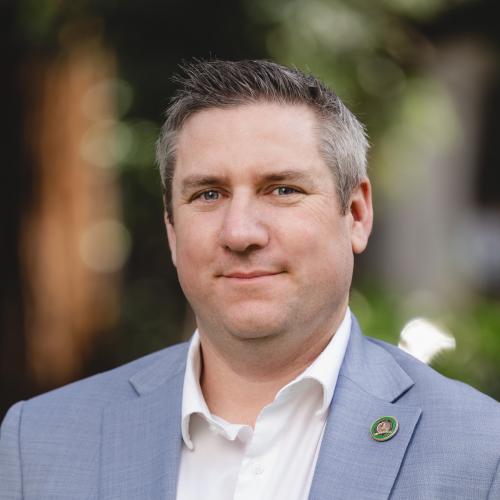
Asm. Chris Rogers
Sponsored bills
Existing law governs the admissibility of evidence in court proceedings and generally provides a privilege as to communications made in the course of certain relations, including the attorney-client, physician-patient, and psychotherapist-patient relationship, as specified. Under existing law, the right of any person to claim those evidentiary privileges is waived with respect to a communication protected by the privilege if any holder of the privilege, without coercion, has disclosed a significant part of the communication or has consented to a disclosure. This bill would establish a privilege between a union agent, as defined, and a represented employee or represented former employee to refuse to disclose any confidential communication between the employee or former employee and the union agent made while the union agent was acting in the union agent's representative capacity, except as specified. The bill would permit a represented employee or represented former employee to prevent another person from disclosing a privileged communication, except as specified. The bill would further provide that this privilege may be waived in accordance with existing law and does not apply in criminal proceedings.
(1) Existing federal law, the Consolidated Appropriations Act, 2021, among other things, requires the federal Department of Health and Human Services to carry out a Low-Income Household Drinking Water and Wastewater Emergency Assistance Program, which is also known as the Low Income Household Water Assistance Program, for making grants to states and Indian tribes to assist low-income households that pay a high proportion of household income for drinking water and wastewater services, as provided. Existing law requires the Department of Community Services and Development to administer the Low Income Household Water Assistance Program in this state, and to receive and expend moneys appropriated and allocated to the state for purposes of that program, pursuant to the above-described federal law. The Low Income Household Water Assistance Program was only operative until March 31, 2024. This bill would repeal the above-described requirements related to the Low Income Household Water Assistance Program. (2) Existing law, the California Safe Drinking Water Act, requires the State Water Resources Control Board to administer provisions relating to the regulation of drinking water to protect public health. Existing law declares it to be the established policy of the state that every human being has the right to safe, clean, affordable, and accessible water adequate for human consumption, cooking, and sanitary purposes. Existing law requires the state board, by January 1, 2018, to develop a plan for the funding and implementation of the Low-Income Water Rate Assistance Program, as prescribed. Existing law requires the state board, by February 1, 2018, to report to the Legislature on its findings regarding the feasibility, financial stability, and desired structure of the program, including any recommendations for legislative action that may need to be taken. Existing law requires a public water system to submit a technical report to the state board as part of the permit application or when otherwise required by the state board. This bill would authorize a public urban retail water supplier to provide water rate assistance to its ratepayers, as specified, and would define the term "water rate assistance" to mean any offset of the cost of drinking water service provided through a low-income water rate assistance program, including, but not limited to, a reduction in a water bill, a percentage reduction of a water utility bill, a water account credit, or crisis assistance used to reduce or eliminate a water bill arrearage or potential arrearage. The bill would authorize the water rate assistance to be provided to specified eligible ratepayers, including, among others, residential ratepayers with an annual household income at or below 200 percent of the federal poverty guideline level. The bill would authorize a public urban retail water supplier to use any funding it has available to provide water rate assistance to its ratepayers, as specified, including voluntary contributions sought from other ratepayers. The bill would require an urban retail water supplier to, beginning January 1, 2028, include in the technical report to the state board specified information regarding its water rate assistance program. The bill would require the state board to conduct a voluntary survey of urban retail water suppliers, as provided, by July 1, 2026.
Existing law designates all parks, public campgrounds, monument sites, landmark sites, and sites of historical interest established or acquired by the state, or that are under its control, as the state park system, except as specified. Under existing law, the Department of Parks and Recreation controls the state park system, which is made up of units. Existing law establishes the California State Library within state government and vests control of the library to the State Librarian. Existing law authorizes the State Librarian to, among other things, purchase and maintain materials and equipment as necessary to carry out California State Library programs and services consistent with well-established library standards. The Budget Act of 2024 appropriated money to the department to be available to support the California State Library Parks Pass Program. This bill would authorize the department, at its discretion, and upon appropriation by the Legislature for this purpose, to issue vehicle day use annual passes, free of charge, to the California State Library to support the California State Library Parks Pass Program.
Existing law authorizes the Department of Motor Vehicles to establish contracts for electronic programs that allow qualified private industry partners, including second-line business partners, to provide services that include processing and payment programs for vehicle registration and titling transactions. Existing law authorizes the department to establish the maximum amount that a qualified private industry partner may charge its customers, but requires the department to annually adjust that amount, as specified. The bill would, notwithstanding the above-described authorization to establish maximum charge amounts, require the department to limit the amount that any qualified second-line business partner may charge an individual customer for a vehicle registration renewal that is processed on the second-line business partner's internet website to no more than the maximum amount a first-line service provider may charge its customers. The bill would also direct the department to require all qualified second-line business partners to prominently display on their internet websites, in a clear and conspicuous manner, a working link to the department's internet website with a specified statement informing the public that consumers may obtain services from the department at no additional cost.
This measure would call on members of the United States Congress to oppose reductions to funding that negatively impact educational services for students with disabilities and would call on the President of the United States and Congress to ensure that services and funding for students with disabilities are uninterrupted.
This measure would recognize February 2025 as Black History Month, urge all citizens to join in celebrating the accomplishments of African Americans during Black History Month, and encourage the people of California to recognize the many talents of African Americans and the achievements and contributions they make to their communities to create equity and equality for education, economics, and social justice. The measure would also recognize the significance in protecting citizens' right to vote and remedying racial discrimination in voting.
Maddy summaryThis is a commemorative resolution, not a bill with policy changes. It recognizes key historical milestones of transgender people in California, including Indigenous gender diversity documented in 1775, 19th-century transgender figures in San Francisco's Tenderloin, early activism like the 1959 Cooper Do-nuts Riot, and legal precedents such as Sir Lady Java's 1967 employment discrimination case. The resolution has no binding effect and does not create new laws or directly affect any individuals or groups. It serves solely to honor these historical contributions.
Maddy summaryThis House Resolution designates September as "Student Parent Month" in California. It recognizes the approximately 400,000 student parents across the state - over half a million children - and aims to raise awareness of their needs. The resolution does not create new policies or funding but encourages colleges, policymakers, and communities to honor student parents and support their educational success. It follows California’s prior legislative actions (like AB 2881 and AB 2458) that established concrete support mechanisms for student parents.
Maddy summaryThis resolution designates August 2025 as "Chicano Heritage Month" in California. It symbolically recognizes the historical contributions of Chicanos/Chicanas to U.S. society, including their role in cultural, educational, and political movements. The resolution encourages all Californians to acknowledge and celebrate this heritage, without creating new programs, funding, or legal requirements. It directly affects the public by promoting awareness of this cultural identity, aligning with similar declarations like Santa Ana's 2021 adoption. The resolution was unanimously passed by the California Assembly on August 25, 2025.