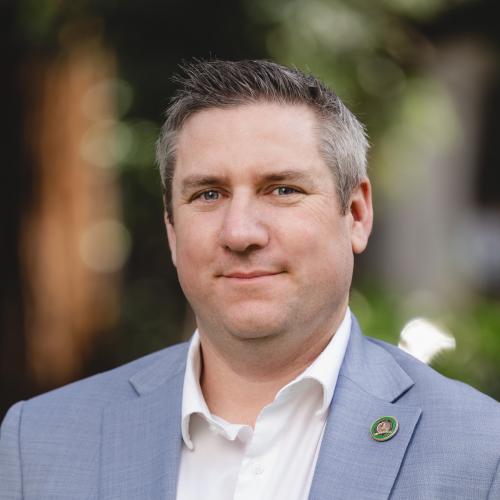
This measure would call on Congress to enact legislation that restores and strengthens the full protections of the Voting Rights Act of 1965, and it would call on the President to sign the legislation.

Rep. Chris Rogers
Sponsored bills
Existing law makes it a crime to knowingly or willfully cause another person to engage in the unlawful manufacture of firearms or knowingly or willfully aiding, abetting, prompting, or facilitating the unlawful manufacture of firearms, including the manufacture of assault weapons or .50 BMG rifles or the manufacture of any firearm using a 3-dimensional printer, as specified. Existing law authorizes a civil action against a person who knowingly distributes or causes to be distributed any digital firearm manufacturing code to any person, except as specified. Existing law authorizes the Attorney General, county counsel, or city attorney to bring an action against this person and seek a civil penalty, as specified, for each violation, as well as injunctive relief. This bill would require the Department of Justice to check on a quarterly basis beginning no later than July 1, 2027, whether ASTM International has published industry standards for equipping 3-dimensional printers with firearm blocking technology. The bill would require, if the department determines that ASTM International has published or adopted industry standards for firearm blocking technology for 3-dimensional printers, that the department publish written guidance or regulations within 24 months after making that determination. The bill would require, among other things, the written guidance or regulations to describe minimum performance standards for 3-dimensional printer firearm blocking technology before a printer can lawfully be sold or offered for sale in the state. If, as of July 1, 2029, the department determines that ASTM International has not published industry standards for firearm blocking technology for 3-dimensional printers, the bill would relieve the department of any further responsibility to ascertain whether ASTM International has published or adopted industry standards. The bill would make it unlawful to sell, offer for sale, or transfer for consideration, a 3-dimensional printer in the State of California that is not equipped with firearm blocking technology that also meets the above-described industry standards. The bill would exempt printers used exclusively for the manufacturing of properties (props) in the entertainment industry, and would authorize the department to adopt regulations that provide for additional exceptions to these provisions. This bill would also exempt a person who distributes, or causes the distribution of, digital firearm manufacturing code, solely for the bona fide purpose of, among other things, developing, refining, and testing the functionality of a firearm blocking technology from civil liability. This bill would make these provisions severable.
Existing law requires the Office of the State Fire Marshal to develop and make available on its internet website a Wildland-Urban Interface Fire Safety Building Standards Compliance training intended for use in the training of local building officials, builders, and fire service personnel, as specified. Existing law authorizes the Office of the State Fire Marshal to allow certification of contractors who conduct defensible space, home hardening, fuel reduction, roadside clearance, and other contracting activities for wildlife resiliency efforts and who have completed specified training programs. Existing law requires the Office of the State Fire Marshal to develop and update a Wildland-Urban Interface Products listing of products and construction assemblies that comply with prescribed regulations regarding building in a wildland-urban interface area. Existing law authorizes the Office of the State Fire Marshal to expend funds from the Building Standards Administration Special Revolving Fund, upon an appropriation by the Legislature, for the purposes of researching and developing the products listing and the educational and training provisions. Existing law requires the Office of the State Fire Marshal to establish the State Fire Marshal's Wildfire Mitigation Advisory Committee. This bill would require, on or before January 1, 2028, the State Fire Marshal's Wildfire Mitigation Advisory Committee to develop an implementation plan for a home hardening certification program that identifies home hardening measures, including defensible space, that can be voluntarily implemented during renovation or property improvement projects, or both, to substantially reduce the risk of loss during a fire and bring existing building stock into alignment with state building standards for wildland-urban interface areas. The bill would require the committee, in developing the implementation plan for the home hardening certification program, to provide specified recommendations. The bill would authorize the Office of the State Fire Marshal to expend funds from the Building Standards Administration Special Revolving Fund, upon an appropriation by the Legislature, for the purposes of developing the implementation plan for the home hardening certification program. The bill would require the committee, on or before January 1, 2028, to provide a report to specified legislative committees on its findings and recommendations pursuant to these provisions. The bill would require, on or before January 1, 2029, the State Fire Marshal to establish the home hardening certification program based on the recommendations made by the Wildfire Mitigation Advisory Committee.
(1) Existing federal law requires the Secretary of Health and Human Services to designate health professional shortage areas and requires the secretary, in establishing criteria for the designation of those areas, to consider, among other things, the ratio of available health manpower to the number of individuals in an area or population group and indicators of a need for health services, as specified. Existing state law makes references to federally recognized or designated health professional shortage areas in various contexts, including, among others, the California Physician Corps Program, the California Reproductive Health Services Corps, the Oral Health Program, the Virtual Health Hub for Rural Communities Pilot Program, and health professions planning grants. This bill, until January 1, 2035, would define the term "health professional shortage area" to mean (1) an area determined by the Department of Health Care Access and Information to have a shortage of health professionals, (2) a health professional shortage area currently designated or recognized by the United States Department of Health and Human Services, or (3) an area designated or recognized as a health professional shortage area by the United States Department of Health and Human Services on January 1, 2025, regardless of whether that area remains designated or recognized by the United States Department of Health and Human Services as a health professional shortage area. The bill would authorize the Department of Health Care Access and Information to revoke designations, as specified. (2) Existing law requires specified boards, including the Board of Registered Nursing and the Respiratory Care Board of California, to collect certain workforce data from their respective licensees and registrants for future workforce planning at least biennially. Existing law requires other boards that regulate healing arts licensees or registrants to request workforce data from their respective licensees and registrants for future workforce planning at least biennially. Existing law requires the workforce data collected or requested to include specified information, including, among others, the type of employer or classification of primary practice site, as specified. Existing law prohibits a licensee or registrant from being required to provide the information as a condition for license or registration renewal and prohibits licensees or registrants from being subject to discipline for not providing the information. Existing law requires the boards and the Department of Health Care Access and Information to maintain the confidentiality of licensee and registrant information collected pursuant to these provisions and authorizes release of the information only in aggregate form. Existing law requires each board to provide individual licensee and registrant data to the Department of Health Care Access and Information on a quarterly basis, as specified. This bill would require the workforce data to be collected or requested by boards at the time a license or registration is issued, except as specified. The bill would require the information collected or requested by boards to also include, among other things, the hours worked in inpatient care, hours worked in outpatient care, and whether the licensee or registrant offers a formal sliding fee scale. The bill would instead require each board to provide licensee and registrant data on a monthly basis. (3) Existing constitutional provisions require that a statute that limits the right of access to the meetings of public bodies or the writings of public officials and agencies be adopted with findings demonstrating the interest protected by the limitation and the need for protecting that interest. This bill would make legislative findings to that effect. (4) This bill would incorporate additional changes to Section 502 of the Business and Professions Code proposed by SB 1271 to be operative only if this bill and SB 1271 are enacted and this bill is enacted last.
Existing law establishes, until January 1, 2028, the Prescribed Fire Liability Pilot Program, to be administered by the Department of Forestry and Fire Protection, to increase the pace and scale of the use of prescribed fire and cultural burning and to reduce barriers for conducting prescribed fires and cultural burning. Existing law creates the Prescribed Fire Claims Fund in the State Treasury to support coverage for losses from prescribed fires and cultural burning by nonpublic entities, such as cultural fire practitioners, private landowners, and nongovernmental entities. Under existing law, moneys in the fund are under the control of the department, and the department or a contracted third-party administrator is authorized to direct payments for claims from the fund, consistent with specified guidelines adopted by the department. These guidelines include, among other things, (1) a requirement that an eligible claim relate to either a prescribed fire conducted or supervised by a burn boss, as defined, or a cultural burn conducted or supervised by a cultural fire practitioner, and (2) a requirement that a claim shall not be paid from the fund unless the department reviewed and approved a burn plan before the prescribed fire or cultural burning. Existing law requires, upon order of the Department of Finance, the $20,000,000 appropriated to the Department of Forestry and Fire Protection by the Legislature in the Budget Act of 2021 be transferred into the fund, and provides that all moneys deposited or transferred into the fund be continuously appropriated to the department for these purposes. By Executive Order N-35-25, Governor Gavin Newsom suspended the limitation on public and governmental agencies enrolling in the Prescribed Fire Liability Pilot Program to the extent that the limitation would prohibit resource conservation districts and volunteer fire departments or districts from such enrollment. This bill would establish the Good Fire Act, which would indefinitely extend the Prescribed Fire Liability Program. The bill would explicitly state that the Prescribed Fire Claims Fund shall support coverage for losses from prescribed fires and cultural burning on any lands within the state. The bill would also expand program eligibility by changing the entities who may receive coverage for losses from prescribed fires and cultural burning from nonpublic entities to individuals and entities other than the department or the federal government, as provided. By extending the term of a continuous appropriation and authorizing the expenditure of continuously appropriated funds for new purposes, the bill would make an appropriation. This bill would eliminate the requirement for department approval for a plan reviewed and approved by a burn boss, and would require a burn plan to be submitted to the claims fund portal before ignition. The bill would also require the guidelines to include methods for prioritizing broadcast burns and burns by non-public individuals or entities or California Native American tribes in the event the fund is oversubscribed. Within one year of a claim being paid from the fund, the bill would require the department to submit a report to the Legislature regarding the claim process and propose statutory changes related to the fund, as provided. Existing law requires the State Fire Marshal, with the involvement of the Statewide Training and Education Advisory Committee, to develop a curriculum for, or amend into an existing curriculum, a certification program for burn bosses who possess authority to engage in a prescribed burning operation and to enter into the necessary contracts related to a prescribed burning operation. Existing law requires this curriculum to provide for the initial certification as well as the continuing education of burn bosses. Under existing law, specified civil liability protections and eligibility for claims from the Prescribed Fire Claims Fund extend to prescribed burns that, among other things, are reviewed and approved by a burn boss certified pursuant to these provisions, as provided. This bill would require, as part of the continuing education of burn bosses, the State Fire Marshal to require recertification no sooner than every 3 years. The bill would also require the department to consider methods to increase the pool of available instructors for the certification program, including the use of non-department instructors. The bill would require the department, in consultation with the Statewide Training and Education Advisory Committee, to develop a mechanism to allow specified individuals to be designated as a burn boss. The bill would authorize these individuals certified pursuant to this process to use the above-described recertification process to maintain currency. Existing law authorizes an entity that owns or controls brush-covered land, forest lands, woodland, grassland, shrubland, or a combination of those types of land within a state responsibility area to apply to the Department of Forestry and Fire Protection for permission to use prescribed burning for certain public purposes. Existing law requires the department, upon receipt of an application, to inspect the land in company with the applicant to determine whether a permit shall be granted, as provided. By Executive Order N-35-25, Governor Gavin Newsom suspended the above-described requirement that the department conduct a site visit or inspection before issuing a state burn permit for projects undertaken by burn bosses or cultural fire practitioners. This bill would authorize the department to waive the inspection requirement or modify the standard precautions for an application submitted by specified individuals. The California Environmental Quality Act (CEQA) requires a lead agency, as defined, to prepare, or cause to be prepared, and certify the completion of an environmental impact report on a project that it proposes to carry out or approve that may have a significant effect on the environment or to adopt a negative declaration if it finds that the project will not have that effect. CEQA also requires a lead agency to prepare a mitigated negative declaration for a project that may have a significant effect on the environment if revisions in the project would avoid or mitigate that effect and there is no substantial evidence that the project, as revised, would have a significant effect on the environment. Existing law exempts from CEQA specified wildfire risk reduction projects, including, among other projects, projects consisting of a prescribed fire or fuel reduction to reduce wildfire risk by reestablishing the fire return interval appropriate to the ecosystem for biodiversity or other benefits, excluding projects located on coastal sage scrub habitat or any other sensitive habitat. By Executive Order N-35-25, Governor Gavin Newsom suspended the requirements of CEQA as applied to the Department of Forestry and Fire Protection to the extent necessary for the department to assist local agencies and beneficial fire practitioners to complete beneficial fire projects that limit dangerous wildfire conditions to the greatest extent feasible. This bill would exempt from CEQA those actions taken by the department to assist in the implementation of prescribed fire or cultural burning projects that do not otherwise require compliance with CEQA. Existing law establishes various grant programs for purposes of wildfire prevention. This bill would require a state agency, department, board, or commission that has awarded grant funds for a project that includes the preparation for, or implementation of, a beneficial fire project to include as an allowable expense of the grant the payment of overtime or double rates of pay to employees or contractors who prepare for or implement the beneficial fire project when such expenses are necessary for the implementation of the beneficial fire project. Existing law authorizes the Director of Forestry and Fire Protection to provide grants to, or enter contracts or other cooperative agreements with, specified entities for the implementation and administration of projects and programs to improve forest health and reduce greenhouse gas emissions. Existing law authorizes the director to authorize advance payments and requires grantees who receive advance payments to file an accountability report with the department 4 months from the date of receiving the funds and every 4 months thereafter. This bill would instead require grantees who receive advance payments to file an accountability report within 6 months from the date of receiving the funds and every 6 months thereafter. This bill would incorporate additional changes to Section 4799.05 of the Public Resources Code proposed by AB 2513 to be operative only if this bill and AB 2513 are enacted and this bill is enacted last. This bill would declare that it is to take effect immediately as an urgency statute.

Existing law, the Protecting Our Kids from Social Media Addiction Act, prohibits an operator of an addictive internet-based service or application from providing an addictive feed, as defined, to a user unless the operator does not have actual knowledge that the user is a minor, as specified, or the operator has obtained verifiable parental consent to provide an addictive feed to the user who is a minor. Existing law, the Digital Age Assurance Act, beginning January 1, 2027, requires a person who owns, maintains, or controls a software application, as defined, to request age bracket data sent by a real-time secure application programming interface or operating system with respect to a particular user from an operating system provider or a covered application store when the application is downloaded and launched. This bill would prohibit a covered platform, as defined, from providing an addictive feature, as defined, to a user who is under 16 years of age and would require a covered platform to implement reasonable measures to ensure that users under 16 years of age are not offered or provided any addictive feature on the covered platform. The bill would also authorize the Attorney General to adopt regulations to implement and enforce the bill in order to further the purpose of protecting minors online, including by altering the scope of "covered platform" if the Attorney General determines that doing so is necessary to ensure that "covered platform" applies to internet websites, online services, online applications, or mobile applications that make addictive features, as defined, available to users under 16 years of age. This bill would impose a civil penalty upon a noncompliant platform and would require its provisions to be enforced by a civil action brought only by the Attorney General or a local public prosecutor, as specified. This bill would also establish the e-Safety Advisory Commission within the Department of Justice as an independent advisory body that is only for administrative purposes to advise state government on certain matters related to online safety and would require the commission to, on or before January 1 of each year, report to the Legislature and the Governor on, among other things, its activities under the bill.
Existing law, commonly known as the Cartwright Act, identifies certain acts as unlawful restraints of trade and unlawful trusts and prescribes provisions for its enforcement. Chapter 338 of the Statutes of 2025 provides that in a complaint for any violation of the Cartwright Act, it is sufficient to contain factual allegations demonstrating that the existence of a contract, combination in the form of a trust, or conspiracy to restrain trade or commerce is plausible. Chapter 338 of the Statutes of 2025 also provides that a complaint for any violation of the Cartwright Act is not required to allege facts tending to exclude the possibility of independent action. Existing case law, In re Cipro Cases I & II (2015) 61 Cal.4th 116, establishes a rule of reason analysis for certain claims under the Cartwright Act, which, among other things, determines whether an act was made for the purpose of avoiding competition and whether the anticompetitive effects of the agreement outweigh any procompetitive justifications. This bill would prohibit any person from monopolizing or monopsonizing any part of trade or commerce, as provided. The bill would require courts to use the analytical framework and guidance provided in In re Cipro Cases I & II. The bill would require a plaintiff bringing an action under its provisions to allege, and prove at trial, substantial market power through either direct or indirect evidence. The bill would exempt a small business, as defined, from these provisions. The bill would provide that its provisions do not prevent, limit, or prohibit certain conduct and legal instruments, including exclusive franchises granted and supervised by a local, state, or federal governmental agency. This bill would require any action brought pursuant to these provisions to be initiated only by the Attorney General or a district attorney, and would, with certain exceptions, preclude an alleged violation under its provisions from serving as a predicate violation under the Unfair Competition Law. The bill would require an action brought pursuant to these provisions to be filed as a "complex case" pursuant to provisions of law requiring the assessment of additional court fees, as specified. The bill would also make related findings and declarations. The bill would require courts to liberally interpret California's antitrust laws to best promote free and fair competition, as provided. Because the bill would expand the scope of activities prohibited by the Cartwright Act, the violation of which is punishable as a crime, the bill would impose a state-mandated local program. The California Constitution requires the state to reimburse local agencies and school districts for certain costs mandated by the state. Statutory provisions establish procedures for making that reimbursement. This bill would provide that no reimbursement is required by this act for a specified reason.
Existing law provides that every executive or ministerial officer, employee, or appointee of the State of California, or any county or city therein, or any political subdivision thereof, who knowingly asks, receives, or agrees to receive any emolument, gratuity, or reward, or any promise thereof excepting such as may be authorized by law for doing an official act, is guilty of a misdemeanor. Existing law exempts from that offense certain employment by a peace officer while off duty, as specified. Existing law also provides that a peace officer shall not be prohibited from engaging in other employment while off duty, as specified. This bill would, notwithstanding those provisions, prohibit certain peace officers from engaging in any form of secondary employment, including contract based or as an individual contractor, that involves engaging in arresting, detaining, transporting, or deporting individuals pursuant to federal or out-of-state immigration laws. The bill would provide that failure to comply with this provision may constitute, for certain purposes, an act of serious misconduct and that it is grounds for decertification as a peace officer. The bill would require certain peace officers to report to their employing law enforcement agency any conditional offer of secondary employment relating to immigration enforcement. The bill would require the law enforcement agency to maintain specified records related to secondary employment. By imposing additional duties on local law enforcement agencies, this bill would impose a state-mandated local program. The bill would also explicitly state that these records related to secondary employment of certain peace officers are public records for the purposes of the California Public Records Act. The California Constitution requires the state to reimburse local agencies and school districts for certain costs mandated by the state. Statutory provisions establish procedures for making that reimbursement. This bill would provide that, if the Commission on State Mandates determines that the bill contains costs mandated by the state, reimbursement for those costs shall be made pursuant to the statutory provisions noted above.
(1) The California Integrated Waste Management Act of 1989, administered by the Department of Resources Recycling and Recovery (CalRecycle) , generally regulates the disposal, management, and recycling of solid waste, as defined. The act authorizes CalRecycle to certify a local enforcement agency and requires CalRecycle and certified local enforcement agencies to perform specified functions with regard to the regulation of solid waste management, including issuing and enforcing solid waste facility permits. The act prohibits a person from operating a solid waste facility without a solid waste facilities permit, as provided. The California Global Warming Solutions Act of 2006 charges the State Air Resources Board with monitoring and regulating sources of emissions of greenhouse gases that cause global warming in order to reduce emission of greenhouse gases. The act requires the state board to adopt rules and regulations to achieve the maximum technologically feasible and cost-effective greenhouse gas emissions reductions, as provided. This bill would require the owner or operator of a solid waste landfill, as defined, to, among other things, notify the Department of Resources Recycling and Recovery if a subsurface elevated temperature event occurs. The bill would define "subsurface elevated temperature event" to mean an event where subsurface gas or waste temperatures at a solid waste landfill persistently exceed 131 degrees Fahrenheit over a substantial area and meets other performance criteria, as determined by the department. The bill would authorize the department to require the owner or operator of a solid waste landfill experiencing a subsurface elevated temperature event to create a corrective action plan that includes, but is not limited to, a cost assessment for fully implementing the corrective action plan. The bill would authorize the department or a local enforcement agency to impose an administrative civil penalty of $100,000 per day for failing to comply with these requirements, as provided. The bill would require all penalties collected to be deposited into the Landfill Subsurface Fire Mitigation Community Fund, which the bill would create in the State Treasury. The bill would continuously appropriate moneys in the fund to the California Alternative Energy and Advanced Transportation Financing Authority, to be paid to counties in which a subsurface elevated temperature event occurred to mitigate harm to a person or community affected by a subsurface elevated temperature event and to be paid to the authority for its costs of implementation. The bill would require the authority to develop guidelines for dispersing these funds, as specified. The bill would authorize the department to become the enforcement agency for a solid waste landfill experiencing a subsurface elevated temperature event, as specified. This bill would authorize the Secretary for Environmental Protection to select and coordinate a multiagency coordination group to investigate and provide recommendations on how to achieve resolution of a subsurface elevated temperature event, as specified. The bill would require a local health department to initiate community health needs assessments to identify and collect information regarding the effects of a subsurface elevated temperature event on an affected community and to share the findings, as provided. By requiring a local health department and a local air pollution control district to perform additional duties, the bill would impose a state-mandated local program. The bill would, upon request by a multiagency coordination group, require the owner or operator of a solid waste landfill that experiences a subsurface elevated temperature event to implement an air monitoring and sampling plan, as specified. The bill would require the owner and operator of a solid waste landfill that experiences a subsurface elevated temperature event to reimburse the members of a multiagency coordination group and the local health department for all reasonable and necessary expenses incurred, as specified. The bill would authorize the department to adopt regulations to implement and enforce them as emergency regulations, as specified. (2) This bill would declare its provisions to be severable. (3) The California Constitution requires the state to reimburse local agencies and school districts for certain costs mandated by the state. Statutory provisions establish procedures for making that reimbursement. This bill would provide that no reimbursement is required by this act for a specified reason.
Existing law creates within the Department of Corrections and Rehabilitation, under the Undersecretary for Operations, the Division of Adult Institutions, among others, and requires each division to be headed by a director, who is appointed by the Governor, as specified. Existing law also requires the Governor to appoint 4 subordinate officers to the division, as specified. Existing law requires each subordinate officer appointed to oversee an identified category of adult institutions, one of which oversees female offender facilities. This bill would instead require the Governor to appoint 3 subordinate officers, as specified, who would oversee an identified category of male adult institutions, and one subordinate officer, as specified, who would oversee female adult institutions. The bill would create within the department, and under the Undersecretary for Operations, the Division of Female Programs and Services. The bill would require the director of this division to be responsible solely for female adult institutions and community facilities housing female offenders. The bill would require the director to report to the undersecretary and to have a minimum of 5 years of experience serving a female correctional population in a custody setting. The bill would also require this new division to manage and provide oversight of adult female programs, including prisons, conservation camps, and parole and community programs and to develop gender-responsive, trauma-informed, culturally sensitive approaches to program and policy development. Existing law requires the department to create a Female Offender Reform Master Plan and present it to the Legislature by a specified date. Existing law requires the department to, among other things, create policies and operational practices that are designed to ensure a safe and productive institutional environment for female offenders. This bill would require the department to provide a report to the Legislature on the implementation of the plan, and update statistics contained in the plan, by March 1, 2027, and every 3 years thereafter. The bill would require the department to maintain the plan, including subsequent updates and reports, in consultation with the commission and others, as specified. The bill would also require the department to post the plan, any reports, and any updates to the plan to the department's internet website. This bill would require the department to establish the Gender Responsive Strategies Commission (GRSC) to develop active partnerships and to support successful implementation of gender responsive practices and rehabilitation programs for incarcerated individuals. The bill would require the GRSC to be composed of 19 representatives, as specified, and would require the department, by June 1, 2027, and annually thereafter, to provide a written report to the Legislature on appointments to the GRSC and the department's response and progress toward implementing the GRSC's recommendations. Existing law also requires the department to contract with nationally recognized gender-responsive experts in prison operational practices, staffing, classification, substance abuse, trauma treatment services, mental health services, transitional services, and community corrections to, among other things, conduct a staffing analysis of all current job classifications assigned to each prison that houses only females, as specified, and develop programs and training for department staff in correctional facilities. This bill would require the department, through this contract, no later than March 1, 2027, and every 3 years thereafter, to prepare and submit to the Legislature an updated staffing analysis and would require a comprehensive review of the office's policies and practices and other aspects of women-centered corrections developed to enhance safety and rehabilitative efforts, as specified. The bill would also require the training program to include training at the academy and, for those working in a female prison, 40 hours of initial training with a curriculum specifically focused on working with the population within female institutions and an 8-hour annual training thereafter. Existing law requires the secretary of the department to expand the existing prison ombudsperson program to ensure the comprehensive deployment of ombudspersons throughout the state prison system with specific focus on the maximum security institutions. This bill would instead require the Undersecretary for Operations to perform this duty and would require the undersecretary to appoint an ombudsperson solely assigned to adult female institutions.