

(1) Existing law authorizes the Department of Forestry and Fire Protection to engage in management of state forests and defines "management" for purposes of the state forests as a means of handling forest crop and forest soil to achieve maximum sustained production of high-quality forest products while giving consideration to values relating to, among other values, recreation, watershed, and wildlife, as provided. This bill would redefine "management" for purposes of state forests as the handling of forest vegetation, water, and soils within the demonstration state forest system for public benefits, as described to include, among other things, watershed health and wildfire resilience. (2) Existing law declares it is in the interest of the welfare of the people of the state and their industries and other activities involving the use of wood, lumber, poles, piling, wood pulp, and other forest products that desirable cutover forest lands be made fully productive and that the holding and reforestation of such lands is a necessary measure predicated on waning supplies of original old growth timber, as provided. Existing law further declares it is in the interest of the welfare of the people of the state that the state retain the existing land base of state forests in timber production for research and demonstration. Existing law requires the Secretary of the Natural Resources Agency, in consultation with the Secretary for Environmental Protection, to, on or before January 10 of each year, submit to the Joint Legislative Budget Committee a report on the activities of all state departments, agencies, and boards relating to forest and timberland regulation. Existing law requires this report to include, among other things, the number of timber harvest plans reviewed in the most recent fiscal year, as specified, and the average time for plan review. This bill would repeal these provisions and instead declare, among other things, that the purpose of the demonstration state forest system is to acquire lands, the reforestation or restoration of which is not assured under private ownership, to achieve the public benefits as described in paragraph (1) through means that include, but are not limited to, multibenefit forest management. The bill would authorize the Secretary of the Natural Resources Agency to enter into, and would require the secretary to make good faith efforts to collaboratively develop, comanagement agreements with California Native American tribes, as defined, to incorporate local traditional ecological knowledge and local indigenous knowledge into the management direction of a forest in the demonstration state forest system, as provided. The bill would require the annual report submitted to the Joint Legislative Budget Committee to also include the number of timber harvest plans approved in the most recent fiscal year and the median time for plan review and would make other nonsubstantive changes relating to the report. The bill would require research to be allowed on land in the demonstration state forest system that informs forest management strategies, science-based decisionmaking, biodiversity, durable onsite carbon storage or sequestration, habitat, water and soil quality, watershed health, tribal stewardship, or other goals that further healthy and resilient ecosystems. The bill would authorize timber harvesting within the demonstration state forest system if in furtherance of specified objectives. (3) Existing law requires the management of state forests and the cutting and sale of timber and other forest products from state forests to conform with regulations prepared by the Director of Forestry and Fire Protection and approved by the State Board of Forestry and Fire Protection. Existing law requires the regulations to conform with forest management practices designed to achieve maximum sustained production of high-quality forest products while giving consideration to values relating to, among other values, recreation, watershed, and wildlife, as specified. Existing law authorizes state forest lands to be used for grazing and mining purposes pursuant to regulations established by the board. Under existing law, a person who violates the rules and regulations pertaining to the state forests established by the board is guilty of a misdemeanor. The bill would instead require the management of demonstration state forests and the cutting and sale of timber and other forest products from demonstration state forests to conform with regulations prepared by the Director of Forestry and Fire Protection and approved by the board. The bill would repeal the authorization for state forest lands to be used for mining purposes, except as provided. The bill would require the regulations permitting prescribed herbivory, recreation concession, and surface mining for forest-related work and restoration purposes, including, but not limited to, the construction of watercourse crossings, on state forest lands to be updated to reflect the redefinition of management. Because a violation of these regulations would be a crime, the bill would impose a state-mandated local program. Existing law requires the department to prepare a map and data relating to the forest conditions, as provided. Existing law requires the department, in preparing the map and data, to be guided by a specified report. This bill would require the department to be guided by consultation with the board instead of by the specified report. Existing law declares that it is the policy of the state to establish and preserve an intensively managed, multifaceted research forest, known as the Soquel Demonstration State Forest, which is representative of forest activities as a living forest in the County of Santa Cruz, as provided. Existing law establishes the Legislature's intent relating to the demonstration state forest. Existing law requires that income from the demonstration state forest property sustain all costs of operation and provide income for research and educational purposes. Existing law requires the department to adopt a general plan for the demonstration state forest, as provided. This bill would instead declare that it is the policy of the state to establish and conserve the Soquel Demonstration State Forest and would revise the Legislature's intent relating to the demonstration state forest, as provided. The bill would require that income from the demonstration state forest property to additionally provide income for recreation. The bill would require the board, instead of the department, to adopt a forest management plan for the demonstration state forest, as specified. (4) Existing law authorizes the department to collect recreational user fees for overnight camping and reserved group activities in a demonstration state forest. Existing law prohibits the department from charging a fee that exceeds the amount necessary to reimburse the department's costs for maintenance and improvement of campground facilities, associated recreational facilities, natural environment, and access thereto. Existing law requires all user fees collected by the department to be deposited into the Forest Resources Improvement Fund and requires the fees to be used, upon appropriation by the Legislature, to reimburse the department's cost of maintaining and improving the campground facilities, associated recreational facilities, natural environment, and access thereto. Under existing law, the Forest Resources Improvement Fund is the depository for all revenue derived from the receipts from the sale of forest products, as defined, from state forests to support specified operations. Existing law authorizes money in the Forest Resource Improvement Fund to only be expended, upon appropriation by the Legislature, for the cost of operations associated with management of lands held in trust by the state and operated as demonstration state forests, as specified. This bill would repeal the prohibition on the department regarding charging a fee that exceeds the amount necessary to reimburse the department's costs for maintenance and improvement, as provided. The bill would require any other funds generated by a demonstration state forest to be deposited into the Forest Resources Improvement Fund. (5) This bill would incorporate additional changes to Sections 4629.6 and 4629.8 of the Public Resources Code proposed by AB 706 to be operative only if this bill and AB 706 are enacted and this bill is enacted last. (6) The California Constitution requires the state to reimburse local agencies and school districts for certain costs mandated by the state. Statutory provisions establish procedures for making that reimbursement. This bill would provide that no reimbursement is required by this act for a specified reason.
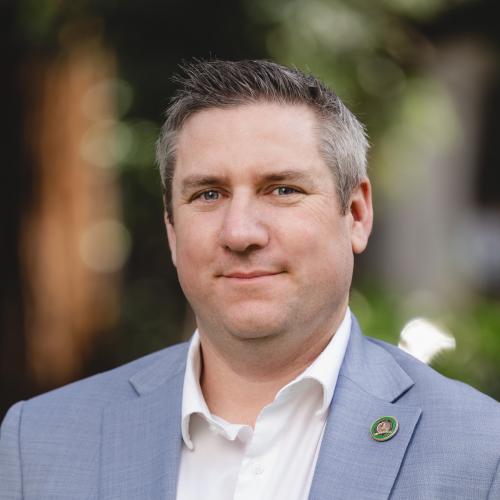
Rep. Chris Rogers
Sponsored bills
This measure would recognize and affirm the important role of artists, arts organizations, creative arts therapists, and arts for health initiatives in supporting behavioral health, promoting recovery, strengthening community resilience, and contributing to public safety. The measure would encourage and recognize exploration, support, and integration of arts and behavioral health within California's health care, behavioral health, and community-based systems.
Existing law regulates the safety of various consumer products, including, among other things, specific additives in foods, chemicals in products for young children, and lead in tableware. This bill would prohibit a person from selling, offering to sell, or giving away as either a retail or wholesale promotion, and a delivery seller from selling, delivering, or causing to be delivered, an over-the-counter diet pill or dietary supplement for weight loss or muscle building, as defined, to any person in this state under 18 years of age, except as specified, by requiring a specified identification check. The bill would make a person who violates these provisions liable for a civil penalty of no more than $500 for each violation, as specified, and would authorize the Attorney General, a county counsel, or a city attorney to apply to a court for, and would authorize that court to have jurisdiction upon hearing and for cause shown to grant, a temporary or permanent injunction enjoining or restraining any person or entity from violating any of the prohibitions. The bill would make a prevailing plaintiff in an action under these provisions entitled to an award of reasonable attorney's fees and costs.
This measure would proclaim the month of October 2026 as California Firefighter Appreciation Month and October 3, 2026, as California Firefighters Memorial Day.
Existing law requires the Office of Emergency Services to enter into a joint powers agreement, as specified, with the Department of Forestry and Fire Protection to develop and administer a comprehensive wildfire mitigation program, that, among other things, encourages cost-effective structure hardening and retrofitting that creates fire-resistant homes, businesses, and public buildings. Existing law establishes the California Alternative Energy and Advanced Transportation Financing Authority to provide alternative methods of financing in providing and promoting the establishment of facilities using alternative methods and sources of energy and facilities needed for the development and commercialization of advanced transportation technologies, as provided. This bill would establish the California Wildfire Resilience Loan Program and would require the authority, upon appropriation by the Legislature, to administer the program to provide financial assistance for projects and activities to reduce wildfire-related risks and losses, including home hardening and defensible space improvements, as provided, and would make related changes.
Existing law makes it a misdemeanor to possess nitrous oxide with the intent of inhaling it for specified purposes, including to cause intoxication. Existing law also makes it a misdemeanor to sell nitrous oxide to any person under 18 years of age. Existing law makes it a misdemeanor to dispense nitrous oxide to a person and knowing that the person will use it for specified prohibited purposes, if that person then causes death or great bodily injury to themselves or another person. Under existing law, the Cigarette and Tobacco Products Licensing Act of 2003, the California Department of Tax and Fee Administration (CDTFA) administers and enforces a statewide program to license manufacturers, importers, distributors, wholesalers, and retailers of cigarettes and tobacco products. Existing law specifically requires a retailer, distributor, or wholesaler, as defined, to hold a license from the CDTFA to engage in the sale of cigarettes or tobacco products. Existing law subjects these licenses to suspension or revocation for violations of existing law. Existing law imposes specified noticing and posting requirements for retailer licenses that are revoked. A violation of these provisions is a misdemeanor. This bill would, except as specifically exempted, prohibit the sale and distribution of a nitrous oxide container that is capable of holding more than 8 grams of nitrous oxide or from which an individual may directly inhale nitrous oxide. The bill would also prohibit the sale and distribution of a nitrous oxide that has, or is marketed as having, the taste or smell of any food. The bill would prohibit knowingly selling or distributing a device that allows an individual to inhale nitrous oxide from the container or hold nitrous oxide for the purposes of inhalation. The bill would punish a violation of these provisions as an infraction, as specified. The bill would also authorize a court to suspend a business license if the business has a prior conviction for violating these prohibitions, and to revoke a license to sell tobacco products if the business has 2 prior convictions for violating these prohibitions. The bill would make any person, distributor, or business found to have violated these prohibitions liable for all reasonable costs incurred by a public agency in the investigation, inspection, seizure, storage, transportation, handling, venting, abatement, disposal, or destruction of nitrous oxide products, nitrous oxide containers, inhalation devices, or related materials involved in the violation, as specified. This bill would prohibit a person that is engaged in the business of selling cigarettes or tobacco products in this state from possessing, storing, owning, or selling nitrous oxide, in violation of the criminal provisions outlined above, at any site where cigarettes and tobacco products are stored or sold. The bill would authorize the CDTFA to seize nitrous oxide products, as prescribed. The bill would subject a violator to civil penalties in amounts depending on the aggregate retail value of the seized nitrous oxide and the number of violations within 5 years of the first violation. The bill would require the deposit of collected civil penalties in the Cigarette and Tobacco Products Compliance Fund. The bill would also subject a violator who commits a 2nd violation to license suspension and who commits a 3rd violation to license revocation, as prescribed. This bill would establish procedures for the CDTFA to follow for a court-ordered revocation. The bill would require the CDTFA to assess a $250 civil penalty for each revoked license and to deposit collected civil penalties into the fund, to be made available to the department, upon appropriation by the Legislature, for purposes of administering the bill. The bill would authorize a licensee to apply for a new license at the previously revoked location 6 months after the date of revocation and would authorize the CDTFA, at its discretion, to issue a new license. The bill would apply these noticing and posting requirements to a retailer subject to a court-ordered revocation pursuant to the bill. The California Constitution provides for the establishment of the State Board of Equalization, which, before July 1, 2017, had primary responsibility for most of the state's duties, powers, and responsibilities regarding the administration of taxes and fees. Existing law, on July 1, 2017, transferred to the CDTFA various duties, powers, and responsibilities of the State Board of Equalization, including administration of the Cigarette and Tobacco Products Licensing Act of 2003, as specified. This bill would change references in the provisions of the Cigarette and Tobacco Products Licensing Act of 2003 amended by this bill from the "State Board of Equalization" to the "California Department of Tax and Fee Administration" to reflect the transfer of the board's duties, powers, and responsibilities to the CDTFA. Because this bill would create new crimes, it would impose a state-mandated local program. The California Constitution requires the state to reimburse local agencies and school districts for certain costs mandated by the state. Statutory provisions establish procedures for making that reimbursement. This bill would provide that no reimbursement is required by this act for a specified reason.
Under existing law, the Tom Bane Civil Rights Act (act) , if a person or persons, whether or not acting under color of law, interferes or attempts to interfere, by threats, intimidation, or coercion, with the exercise or enjoyment by any individual or individuals of rights secured by the Constitution or laws of the United States, or of the rights secured by the Constitution or laws of this state, the Attorney General, or any district attorney or city attorney, is authorized to bring a civil action for injunctive and other appropriate equitable relief in the name of the people of the State of California, in order to protect the exercise or enjoyment of the right or rights secured. Under that act, an individual may also institute and prosecute in their own name and on their own behalf a civil action for damages, as described, for any resulting interference or attempt at interference of the individual's exercise or enjoyment of rights secured by the Constitution or laws of the United States or this state. The act authorizes the court to award the petitioner or plaintiff reasonable attorney's fees in addition to any damages, injunction, or other equitable relief awarded in these civil actions (attorney's fees authorization) . Existing federal law provides that every person who, under color of any statute, ordinance, regulation, custom, or usage, of any state, territory, or the District of Columbia, subjects or causes to be subjected any United States citizen or other person within the jurisdiction to the deprivation of any rights, privileges, or immunities secured by the Constitution and laws, is liable to the party injured in an action at law, suit in equity, or other proper proceeding for redress, except as provided. This bill would also provide that every natural person, as defined, who, under color of any law, statute, ordinance, regulation, custom, or usage, as defined, subjects or causes to be subjected any citizen of this state or any person within the jurisdiction thereof to the deprivation of any rights, privileges, or immunities secured by the United States Constitution, shall be liable to the party injured in an action at law, suit in equity, or other proper proceeding for redress, except as specified. The bill would apply the aforementioned attorney's fees authorization, except as specified, to any action brought under these provisions. The bill would authorize a court, in its discretion, to also award costs, except as specified, to the prevailing plaintiff in any action brought under these provisions. This bill would authorize a defendant in an action brought under these provisions to assert and receive the benefit of a defense of absolute or qualified immunity only to the same extent as a person sued under certain federal provisions under like circumstances, as specified, and would specify that nothing in these provisions is to be construed to waive or abrogate any defense of sovereign immunity otherwise available to a party, as specified. The bill would prohibit any civil action brought under these provisions from being commenced later than 2 years after the date that the cause of action accrues. The bill would make its provisions severable. The bill would specify that these provisions apply retroactively to March 1, 2025, as provided. This bill would declare the intent of the Legislature in enacting these provisions. This bill would declare that it is to take effect immediately as an urgency statute.
Existing law establishes the sovereignty of the state. This bill would require the state government to support California Native Americans to maintain cultural and linguistic traditions, practice ecosystem stewardship, and engage in good faith government-to-government consultations with all California Native American tribes regarding policies that may affect tribal communities. Existing law establishes various state water policies, including the policy that the use of water for domestic purposes is the highest use of water and the human right to water. Existing law requires the State Water Resources Control Board to act upon all applications for a permit to appropriate water. This bill would declare that it is the established policy of the state to recognize and address the inequities, as described, inflicted upon all California Native American tribes through financial assistance, protection of tribal beneficial uses, consultation on water projects, plans, and policies, and incorporation of indigenous knowledge to restore and protect ecosystems. The bill would require specified state agencies, including the State Water Resources Control Board, regional water quality control boards, and the Natural Resources Agency, to incorporate this policy when revising, adopting, or establishing policies, regulations, permits, or grant criteria to address identified inequities. The bill would require those state entities to identify and offer financial assistance to the tribes consistent with existing legal and policy requirements for financial assistance programs. If there is a dispute between a California Native American tribe and one of those state agencies over the implementation of that policy, the bill would require that matter to be brought before the Governor's Office of Tribal Affairs for mediation before the state agency action is challenged in court and would specify procedures and timelines for mediation, as provided. Existing law authorizes the board to conduct investigations and to issue information orders in administering water rights, as provided. The bill would require the state board, in furtherance of an investigation and upon request, to consult with a tribe whose ancestral territory includes the water body or water bodies at issue for the claimed riparian or appropriative right.
Existing law, the Knox-Keene Health Care Service Plan Act of 1975, provides for the licensure and regulation of health care service plans by the Department of Managed Health Care and makes a willful violation of the act a crime. Existing law provides for the regulation of disability insurers by the Department of Insurance. Existing law requires a health care service plan or disability insurer to allow an individual to enroll in or change their health benefit plan as a result of a specified triggering event. This bill would make pregnancy a triggering event for purposes of enrollment or changing a health benefit plan. Because a willful violation of this provision by a health care service plan would be a crime, the bill would impose a state-mandated local program. The California Constitution requires the state to reimburse local agencies and school districts for certain costs mandated by the state. Statutory provisions establish procedures for making that reimbursement. This bill would provide that no reimbursement is required by this act for a specified reason.
Existing law, the Child Care and Development Services Act, administered by the State Department of Social Services, requires the department to administer childcare and development programs that offer a full range of services to eligible children from infancy to 13 years of age, inclusive. Existing law requires the department to contract with local contracting agencies for alternative payment programs for childcare services to be provided throughout the state. Existing law then requires alternative payment programs to reimburse childcare providers for providing childcare to eligible children. This bill would, beginning October 1, 2027, authorize alternative payment programs with clear contracts and that are in full compliance with certain requirements to submit written requests to the department for a voluntary temporary transfer of funds. The bill would require the department to acknowledge receipt of the request within 30 calendar days of receiving it. The bill would require the department to provide the contractor with a written decision within 90 calendar days of receiving the request and notify the local childcare planning council in writing if a voluntary temporary transfer request is approved. The bill would authorize the department to implement these provisions by means of all-county letters, childcare bulletins, or similar written instructions until regulations are adopted.