

The Cigarette and Tobacco Products Licensing Act of 2003 requires the California Department of Tax and Fee Administration to administer a statewide program to license manufacturers, distributers, and retailers of cigarettes and tobacco products. The act requires a retailer to have in place and maintain a license to engage in the sale of cigarettes or tobacco products. The act requires a $265 fee to be submitted with the application for the license. Existing law requires every retailer to file an application for renewal of the license accompanied by a $265 fee per retail location. This bill would make conforming changes to the provisions describing the application process for the license described above and recast that license as a retailer license. The bill would require each application for a retailer license filed on or after July 1, 2026, to be accompanied by a fee of $450 per retail location. The bill would increase the fee for renewal of a retailer license to $450 for renewal applications filed on or after July 1, 2026. The bill would authorize the department to adjust application and renewal fees applicable after July 1, 2026, to an amount not exceeding $600 per retail location to maintain the Cigarette and Tobacco Products Compliance Fund at a level that is no more than necessary to cover the reasonable costs of the department to administer the act. The act requires a retailer who sells tobacco products that are exempt from taxation under the Cigarette and Tobacco Products Tax Law to pay a fee of $265 for the issuance or renewal of a license. This bill would recast that license as a retailer license and make other conforming changes. The bill would require each application for a retailer license filed on or after July 1, 2026, to be accompanied by a fee of $450 per retail location. The bill would increase the fee for renewal of a retailer license to $450 for renewal applications filed on or after July 1, 2026. The bill would authorize the department to adjust application and renewal fees applicable after July 1, 2026, to an amount not exceeding $600 per retail location to maintain the Cigarette and Tobacco Products Compliance Fund at a level that is no more than necessary to cover the reasonable costs of the department to administer the act. This bill would require the Legislative Analyst, on or before December 1, 2027, and again on or before December 1, 2029, to prepare and submit reports to the Legislature on the tobacco retailer enforcement landscape, including enforcement of California's flavor, youth access, taxation, and licensing laws. The bill would require specified state agencies to cooperate with the Legislative Analyst in the preparation and production of the report. The bill would repeal those reporting requirements on January 1, 2034. Chapter 849 of the Statutes of 2024 (AB 3218) revised the Cigarette and Tobacco Products Licensing Act of 2003 by, among other things, authorizing the department or a law enforcement agency to seize illegal flavored tobacco products or tobacco product flavor enhancers that a wholesaler or retailer possesses, stores, owns, or sold, as specified. Existing law further requires the department to impose on the wholesaler or retailer a specified civil penalty per individual package of flavored tobacco product or tobacco product flavor enhancer. Existing law defines "package" for purposes of the penalty provision applicable to retailers. This bill would define "flavored tobacco product" and "tobacco product flavor enhancer" for these purposes and would add the same definition of "package" for purposes of the penalty provision applicable to wholesalers. Chapter 462 of the Statutes of 2024 (SB 1230) , among other things, added a provision to the Cigarette and Tobacco Products Licensing Act of 2003 similar to the above-described provision relating to the seizure of a retailer's products added by AB 3218. Specifically, SB 1230 authorizes the department to seize illegal flavored tobacco products or tobacco product flavor enhancers if the department discovers that a retailer sells, offers for sale, or possesses with the intent to sell or offer for sale, those products, and deems the seized products as forfeited. This bill would repeal the above-described provision added by SB 1230. Existing constitutional provisions require that a statute that limits the right of access to the meetings of public bodies or the writings of public officials and agencies be adopted with findings demonstrating the interest protected by the limitation and the need for protecting that interest. This bill would make legislative findings to that effect.
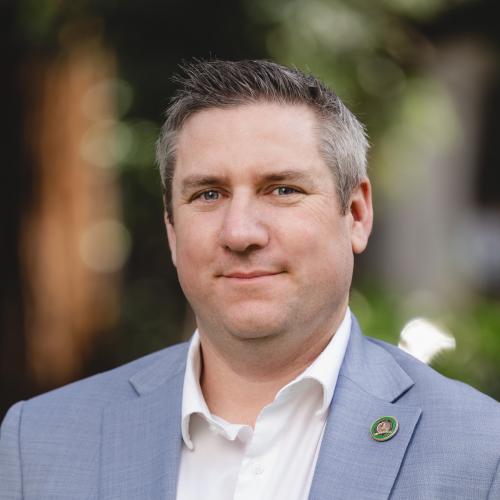
Asm. Chris Rogers
Sponsored bills
Existing law, the Political Reform Act of 1974, prohibits a public officer from expending, and a candidate from accepting, public moneys for the purpose of seeking elective office. This bill would remove prohibitions imposed on a public officer or candidate to expend or accept public funds, as defined, for the purpose of seeking elective office unless the funds are earmarked by a state or local entity for education, transportation, or public safety. The bill would require candidates to abide by specified expenditure limits and meet strict criteria, as defined, to qualify for public funds. The bill would prohibit public funds from being used to pay legal defense fees or fines or to repay personal loans to their campaign. The bill would permit a statute, ordinance, or charter to establish standards to increase the expenditure limits for each qualified, voluntarily participating candidate pursuant to a specified formula. The bill would provide that the Fair Political Practices Commission is not responsible for administering or enforcing a system of public funding of candidates established by a local governmental agency. Existing law prohibits a foreign government or foreign principal, as defined, from making a contribution, expenditure, or independent expenditure in connection with the qualification or support of, or opposition to, any state or local ballot measure or in connection with the election of a candidate to state or local office. Under existing law, a person who violates this prohibition is guilty of a misdemeanor and subject to a fine equal to the amount contributed or expended. This bill would instead require that a person guilty of that misdemeanor, in addition to other penalties, be fined an amount at least equal to the amount contributed or expended, but not exceeding a maximum amount of 3 times the amount contributed or expended. The Political Reform Act of 1974, an initiative measure, provides that the act may be amended by a statute that becomes effective upon approval of the voters. This bill would require the Secretary of State to submit the provisions of the bill, as specified, to the voters for approval at the November 3, 2026, statewide general election. This bill would incorporate additional changes to Section 85320 of the Government Code proposed by AB 953 to be operative pursuant to specified conditions.
Existing law, the Special Occupancy Parks Act, establishes requirements for the construction, maintenance, occupancy, use, and design of special occupancy parks. Existing law defines "special occupancy park" to mean a recreational vehicle park, temporary recreational vehicle park, incidental camping area, or tent camp. This bill would specify that, for purposes of that act, a special occupancy park does not include a low-impact camping area, as specified, that is located in a county that has enacted an ordinance, as specified, authorizing low-impact camping and meeting specified requirements. The bill would impose specified requirements on owners of private property offering low-impact camping area sites and on online hosting platforms. The bill would define a "low-impact camping area" to mean any area of private property that provides for the transient occupancy rental of a temporary sleeping accommodation, as defined, for recreational purposes that is not a commercial lodging facility. The bill would specify that a low-impact camping area is not a special occupancy park if, among other things, it meets certain requirements, including compliance with applicable local requirements relating to waste disposal and quiet hours, as specified. The bill would require that a county that has authorized low-impact camping to take specified actions, including, among others, to establish a registry of low-impact camping areas, as specified, and to notify the Department of Housing and Community Development of the county's choice to authorize low-impact camping areas. The bill would also require all state and local eviction processes applicable to a special occupancy park to apply to a low-impact camping area.
Existing law defines a battery as any willful and unlawful use of force or violence upon the person of another. Existing law provides that when a battery is committed against the person of an operator, driver, or passenger on a bus, taxicab, streetcar, cable car, trackless trolley, or other motor vehicle, as specified, and the person who commits the offense knows or reasonably should know that the victim is engaged in the performance of their duties, the penalty is imprisonment in a county jail not exceeding one year, a fine not exceeding $10,000, or both the fine and imprisonment. Existing law also provides that if the victim is injured, the offense would be punished by a fine not exceeding $10,000, by imprisonment in a county jail not exceeding one year or in the state prison for 16 months, 2, or 3 years, or by both that fine and imprisonment. This bill would expand this crime to apply to an employee, public transportation provider, or contractor of a public transportation provider. By expanding the scope of an existing crime, the bill would impose a state-mandated local program. Existing law authorizes any employer or collective bargaining representative whose employee has suffered harassment, unlawful violence, or a credible threat of violence from any individual, which can reasonably be construed to be carried out or to have been carried out at the workplace, to seek a temporary restraining order and an injunction on behalf of the employee and other employees of the employer. This bill would clarify that "unlawful violence" includes battery committed against the person of an operator, driver, or passenger on a bus, taxicab, streetcar, cable car, trackless trolley, or other motor vehicle, as specified, or against an employee, public transportation provider, or contractor of a public transportation provider. The bill would also clarify that the definition of "employer" for the above-described provision includes a joint powers authority or a public transit operator. The California Constitution requires the state to reimburse local agencies and school districts for certain costs mandated by the state. Statutory provisions establish procedures for making that reimbursement. This bill would provide that no reimbursement is required by this act for a specified reason.
Existing law declares the public policy of the state regarding labor organization, including, among other things, that it is necessary for a worker to have full freedom of association, self-organization, and designation of representatives of their own choosing, to negotiate the terms and conditions of their employment, and to be free from the interference, restraint, or coercion of employers of labor, or their agents, in the designation of such representatives or in self-organization or in other concerted activities for the purpose of collective bargaining or other mutual aid or protection. Existing law establishes the Public Employment Relations Board (PERB) in state government as a means of resolving disputes and enforcing the statutory duties and rights of specified public employers and employees under various acts regulating collective bargaining. Under existing law, PERB has the power and duty to investigate an unfair practice charge and to determine whether the charge is justified and the appropriate remedy for the unfair practice. Existing law, the federal National Labor Relations Act (NLRA) , establishes a comprehensive statutory scheme regulating unfair labor practices on the part of employers and labor organizations in industries affecting interstate commerce, and vests in the National Labor Relations Board (NLRB) the power to conduct elections to determine employee representatives and to prevent unfair labor practices affecting commerce. Existing law, the California Public Records Act, requires that public records, as defined, be available to the public for inspection and made promptly available to any person. This bill would expand PERB's jurisdiction by authorizing a worker, to petition PERB to protect and enforce prescribed rights under specified circumstances, including if the worker is employed in a position subject to the NLRA but the NLRB has expressly or impliedly ceded jurisdiction. The bill would authorize PERB to, among other things, decide unfair labor practice cases pursuant to a specified timeline and order all appropriate relief for a violation, including civil penalties, as prescribed. In order to pursue relief from PERB, the bill would require a covered worker or their representative to file an unfair practice charge or petition that includes specified information, including, where applicable, the original charge or petition filed with the NLRB. The bill would require PERB to hold the supporting documentation and evidence confidential and maintain it as part of its investigatory file and would exempt this documentation and evidence from the California Public Records Act. If PERB determines, among other things, it has insufficient resources to process certain cases or doing so would prevent it from meeting specified statutory deadlines, the bill would require PERB to process and prioritize charges, as specified. The bill would also establish the Public Employment Relations Board Enforcement Fund (fund) in the State Treasury, would require the above-described civil penalties to be deposited into the fund, and would make moneys in the fund available upon appropriation by the Legislature to PERB for the purpose of administering the above-specified provisions. The bill would authorize PERB to rely on its own decisions and precedent under the NLRA and would authorize review of its decisions by a state appellate court, as specified. Existing law, the Alatorre-Zenovich-Dunlap-Berman Agricultural Labor Relations Act of 1975, grants agricultural employees the right to form and join labor organizations and engage in collective bargaining, as specified, and prohibits agricultural employers and labor organizations from engaging in unfair labor practices. Those provisions establish the Agricultural Labor Relations Board (ALRB) and empower the ALRB to prevent any person from engaging in those practices. Existing law establishes various definitions for these purposes. Existing law requires the ALRB to follow applicable precedents of the NLRA. This bill would specify that the ALRB has exclusive jurisdiction in all phases of the administration of the act, and to determine whether any person or entity meets one or more of those definitions. The bill would instead authorize the board to follow applicable precedents of the NLRA, but would not obligate the board to follow precedents where the ALRB deems it inappropriate to do so. This bill would make related findings and declarations and would make its provisions severable. Existing constitutional provisions require that a statute that limits the right of access to the meetings of public bodies or the writings of public officials and agencies be adopted with findings demonstrating the interest protected by the limitation and the need for protecting that interest. This bill would make legislative findings to that effect.
Existing law provides that an emergency regulation adopted by the State Water Resources Control Board following a Governor's proclamation of a state of emergency based on drought conditions, for which the board makes specified findings, may remain in effect for up to one year, as provided, and may be renewed if the board determines that specified conditions relating to precipitation are still in effect. This bill would provide that specified emergency regulations adopted by the board for the Scott River and Shasta River watersheds shall remain in effect until January 1, 2031, or until permanent rules establishing and implementing long-term instream flow requirements are adopted for those watersheds, whichever occurs first. The bill would require the board to provide annual public updates, including opportunities for public comment, on its progress toward developing permanent flow rules for the rivers, as provided. This bill would make legislative findings and declarations as to the necessity of a special statute for the Scott River and Shasta River watersheds.
This measure would designate November 1, 2025, as Fernando Valenzuela Day, to highlight the positive impact his legacy created in the Latino and Hispanic community.
This measure would recognize the importance of California Native American Day, celebrated this year on September 26, 2025, and the annual California Indian Cultural Awareness Conference, to the enhancement of awareness of California Indian culture.
Existing law makes it a misdemeanor to wear a mask, false whiskers, or any personal disguise, as specified, with the purpose of evading or escaping discovery, recognition, or identification while committing a public offense, or for concealment, flight, evasion, or escape from arrest or conviction for any public offense. This bill would make it a crime for a law enforcement officer to wear a facial covering in the performance of their duties, except as specified. The bill would define law enforcement officer as anyone designated by California law as a peace officer who is employed by a city, county, or other local agency, and any officer or agent of a federal law enforcement agency or law enforcement agency of another state, or any person acting on behalf of a federal law enforcement agency or agency of another state. The bill would make a violation of these provisions punishable as an infraction or a misdemeanor, as specified. By creating a new crime, this bill would impose a state-mandated local program. The bill would require any law enforcement agency operating in California to, by July 1, 2026, maintain and publicly post a written policy limiting the use of facial coverings, as specified. The bill would exempt personnel of any agency from the crime of wearing a facial covering if an agency maintains a policy pursuant to this section no later than July 1, 2026. The bill would deem a policy consistent with these provisions for the purposes of that exception unless a member of the public, an oversight body, or a local governing authority challenges it. The bill would also impose a specified civil penalty against certain officers for tortious conduct, including, but not limited to, false imprisonment or false arrest of an individual while wearing a facial covering. The bill would, if the agency does not address deficiencies within 90 days, authorize the complaining party to proceed to a court of competent jurisdiction for a judicial determination of the exemption, as specified. The bill would define a law enforcement agency for these purposes as any entity of a city, county, or other local agency, that employs anyone designated by California law as a peace officer, any federal law enforcement agency, or any law enforcement agency of another state. By imposing additional duties on local law enforcement agencies, this bill would create a state-mandated local program. This bill would declare its provisions to be severable. This bill would make related findings and declarations. The California Constitution requires the state to reimburse local agencies and school districts for certain costs mandated by the state. Statutory provisions establish procedures for making that reimbursement. This bill would provide that with regard to certain mandates no reimbursement is required by this act for a specified reason. With regard to any other mandates, this bill would provide that, if the Commission on State Mandates determines that the bill contains costs so mandated by the state, reimbursement for those costs shall be made pursuant to the statutory provisions noted above.
This measure would declare the Legislature's opposition to the unlawful Executive Order No. 14160, entitled "Protecting the Meaning and Value of American Citizenship," ending birthright citizenship as enshrined in the United States Constitution and would affirm the Legislature's commitment to birthright citizenship, as specified.