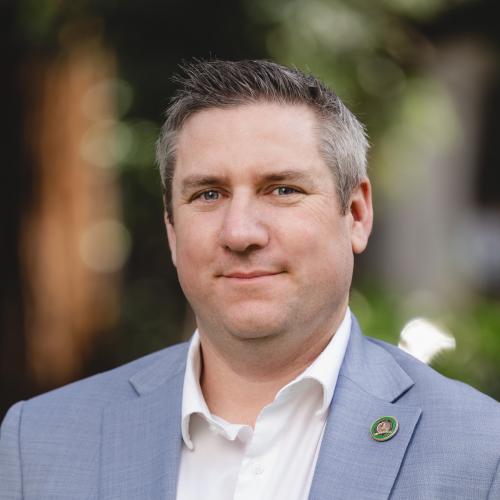
This measure would recognize the historical wrongdoing committed against California Native Americans and urge the federal government to work alongside tribal leaders to address historic injustices, uphold treaty obligations, and ensure equitable access to resources, healthcare, education, and environmental stewardship.
Asm. Chris Rogers
Sponsored bills
Existing law establishes the Medi-Cal program, which is administered by the State Department of Health Care Services and under which qualified low-income individuals receive health care services. The Medi-Cal program is in part governed by, and funded pursuant to, federal Medicaid program provisions. Existing federal law, Public Law 119-21, enacted on July 4, 2025, sets forth various changes to different health care programs, including certain requirements for Medicaid eligibility with regard to work or community engagement reporting, redeterminations, and cost sharing, among other factors, for certain Medicaid populations pursuant to a specified implementation timeline. Existing law, the federal Patient Protection and Affordable Care Act, imposes a certain assessment on an applicable large employer, as defined, that offers full-time employees and their dependents the opportunity to enroll in minimum essential coverage, and for whom one or more full-time employees have been certified as having enrolled in a qualified health plan for which a premium tax credit or cost-sharing reduction is allowed or paid. This bill would create the Employer Responsibility for Medi-Cal Trust Fund to consist of new taxes and deposits, including employer penalties specified in the Budget Act of 2026. The bill would continuously appropriate moneys in the fund to the department to fund the costs of administering the Medi-Cal program in a manner necessary to prevent loss of or to restore health care coverage, benefits, or access to care following the passage of Public Law 119-21 and subsequent state budget actions. The bill would state that these provisions would become operative only if the Medicaid provisions of Public Law 119-21 are not repealed prior to January 1, 2027. By creating a continuously appropriated fund, the bill would make an appropriation. This bill would declare that it is to take effect immediately as an urgency statute.
This measure would recognize the significance of Vesak Day to people of Buddhist faith and extend sincere best wishes to the state's Buddhist community in celebrating Vesak Day.
Maddy summaryThis House Resolution recognizes May 17, 2026, as the International Day Against Homophobia, Biphobia, Interphobia, and Transphobia within the California Legislature. The measure formally acknowledges the ongoing discrimination faced by LGBTQ+ individuals globally and reaffirms the state's commitment to equality and civil rights. By adopting this resolution, the Assembly encourages all Californians to support inclusive practices and stand against hate toward the LGBTQ+ community.
Under existing law, it is unlawful for a person to make an untruthful, deceptive, or misleading environmental marketing claim, whether explicit or implied. A violation of this requirement is a misdemeanor. This bill would, until January 1, 2032, establish a presumption in any suit or complaint brought under the above-described provision that a defendant's environmental marketing claim is valid if the defendant complies with specified disclosure requirements pertaining to voluntary carbon offsets and net zero emissions claims and the claim is based on the voluntary use of a carbon credit issued by a carbon crediting program that is (1) approved by the State Air Resources Board pursuant to specified regulations, (2) approved by the International Civil Aviation Organization to supply credits for a specified carbon offsetting scheme, or (3) meets other specified criteria and appears on a list published by the State Air Resources Board containing carbon crediting programs that satisfy those criteria.
Existing law authorizes the Department of Parks and Recreation to enter into a statewide agreement with a park support organization to facilitate the implementation of reforms recommended by the Parks Forward Commission and to develop and secure expertise, services, resources, and projects that are not readily available to the state park system, for specified purposes. This bill would authorize the Natural Resources Agency to enter into a statewide agreement with a support organization, as defined, to facilitate and implement certain objectives, and would require the agency and support organization to, after entering into a statewide agreement, collaborate to develop an annual list of strategic initiatives and projects that are statewide priorities, as provided. The bill would authorize certain persons, including the Director of the Department of Parks and Recreation, to serve as ex officio, nonvoting members of the support organization's board of directors, as provided.
Existing law vests the Public Utilities Commission (PUC) with regulatory authority over public utilities, including gas corporations and heat corporations. Existing law requires every public utility to furnish and maintain adequate, efficient, just, and reasonable service, instrumentalities, equipment, and facilities, as are necessary to promote the safety, health, comfort, and convenience of its customers, its employees, and the public. Existing law authorizes a gas corporation to cease providing service if a certain pilot program has been implemented and the PUC determines that adequate substitute energy service is reasonably available for the energy end uses of affected gas corporation customers. This bill would authorize a utility regulated by the PUC to own and operate thermal energy service through thermal energy networks, as defined, and would require the PUC to ensure that the substitution of thermal energy service for gas service offers an adequate substitute for the thermal end-use energy needs of customers, as provided. The bill would prohibit a utility regulated by the PUC from recovering costs for gas infrastructure in areas approved to be served by a thermal energy network, except as specified. The bill would require the commission and gas corporations to prioritize the use of the existing gas utility workforce for the transition to thermal energy network operations, as specified. The bill would require a utility to ensure that all contractors and subcontractors performing work on a thermal energy network project use a skilled and trained workforce. The bill would require the PUC, on or before December 31, 2027, to initiate a proceeding to establish a regulatory framework for the provision of cost-effective thermal energy service by gas corporations or other public utilities, as provided. This bill would require the State Energy Resources Conservation and Development Commission (Energy Commission) , in consultation with the PUC, on or before December 31, 2027, to develop technical standards for thermal energy networks, as provided. The bill would require the Energy Commission to complete the development of the technical standards before the PUC initiates the proceeding described above. Under existing law, a violation of the Public Utilities Act or an order, decision, rule, direction, demand, or requirement of the PUC is a crime. Because the labor requirements for a thermal energy network project would be part of the act and a violation of a PUC action implementing those requirements would be a crime, this bill would impose a state-mandated local program. The California Constitution requires the state to reimburse local agencies and school districts for certain costs mandated by the state. Statutory provisions establish procedures for making that reimbursement. This bill would provide that no reimbursement is required by this act for a specified reason.

Existing law requires an electrical corporation to submit to the Office of Energy Infrastructure Safety a wildfire mitigation plan at least once every 4 years for review. Existing law requires the office to approve or deny each wildfire mitigation plan within 9 months of its submission. Existing law requires the Public Utilities Commission to assess a penalty on an electrical corporation that fails to substantially comply with its wildfire mitigation plan. Existing law prohibits a large electrical corporation from including in its equity rate base its share for the first $5,000,000,000 expended in aggregate by large electrical corporations on fire risk mitigation capital expenditure, as provided, and authorizes those expenditures to be financed through a financing order, as described. Existing law requires the commission, in addition to the $5,000,000,000, to prohibit a large electrical corporation from including in its equity rate base its share of the first $6,000,000,000 expended in aggregate by large electrical corporations on fire risk mitigation capital expenditures approved by the commission on or after January 1, 2026, and authorizes the electrical corporation's share of the fire risk mitigation capital expenditures and the debt financing cost of these fire risk mitigation capital expenditures to be financed through a financing order, as provided. This bill would require the commission, on or before June 30, 2027, to complete a one-time independent audit of all wildfire mitigation expenditures incurred by each electrical corporation between January 1, 2021, and January 1, 2027, as provided. The bill would require that the audit be conducted by an independent third-party auditor. The bill would require the commission, in the next appropriate proceeding following the audit, to consider the findings of the audit in determining the terms and conditions under which an electrical corporation's requested cost recovery may be authorized, as provided. The bill would require the commission to establish a schedule for conducting future independent audits of each electrical corporation's wildfire mitigation expenditures incurred during the preceding 4 calendar years. The bill would require the commission, pursuant to that schedule, to conduct an independent audit of an electrical corporation's prior wildfire mitigation expenditures before any proceeding in which the electrical corporation seeks to recover, collect, or expend ratepayer funds for wildfire mitigation programs, including, but not limited to, expenditures authorized pursuant to an approved wildfire mitigation plan. Under existing law, a violation of an order, decision, rule, direction, demand, or requirement of the commission is a crime. Because a violation of a commission action implementing the bill's requirements would be a crime, this bill would impose a state-mandated local program. The California Constitution requires the state to reimburse local agencies and school districts for certain costs mandated by the state. Statutory provisions establish procedures for making that reimbursement. This bill would provide that no reimbursement is required by this act for a specified reason.

Maddy summaryThis bill designates the week of May 17 to May 24, 2026, as National Public Works Week throughout California to honor the contributions of public works professionals. It directly affects engineers, managers, and employees in government and the private sector who maintain essential infrastructure like transportation systems, water supplies, and public buildings. The resolution requests that the Governor issue a proclamation encouraging the public to observe the week with educational programs and activities that highlight the importance of these workers.
Existing law establishes the Division of Labor Standards Enforcement within the Department of Industrial Relations. Existing law authorizes the division, which is headed by the Labor Commissioner, to enforce the Labor Code and all labor laws of the state, the enforcement of which is not specifically vested in any other officer, board, or commission. This bill would prohibit an employer from using a worker's personal information, as defined, to train an artificial intelligence system to replicate, automate, or replace a worker's job, and would prohibit an employer from selling, disclosing, or otherwise providing access to a worker's personal information to a third party for the purpose of training an artificial intelligence system to replicate, automate, or replace a worker's job. The bill would prohibit a vendor providing services to an employer under a contract from providing access to the personal information of an employer's worker to a third party or using the personal information of an employer's worker to train artificial intelligence, as specified. The bill would require a contract between an employer and vendor to include a requirement that the vendor implement and maintain reasonable security procedures to protect the worker's personal information from, among other things, unauthorized or illegal access. The bill would define terms for these provisions, including "employer" and "personal information." The bill would require the Labor Commissioner and authorize a public prosecutor to enforce these provisions. The bill would authorize a worker, or their exclusive representative, who suffered a violation of these provisions to bring a civil action for damages, injunctive relief, punitive damages, and attorney's fees and costs. The bill would establish a statutory penalty for a violation of these provisions of up to $500 for each violation. The bill would include findings that changes proposed by this bill address a matter of statewide concern rather than a municipal affair and, therefore, apply to all cities, including charter cities.