

Existing law generally provides protections for minors on the internet, including the California Age-Appropriate Design Code Act that, among other things, requires a business that provides an online service, product, or feature likely to be accessed by children to do certain things, including estimate the age of child users with a reasonable level of certainty appropriate to the risks that arise from the data management practices of the business or apply the privacy and data protections afforded to children to all consumers and prohibits an online service, product, or feature from, among other things, using dark patterns to lead or encourage children to provide personal information beyond what is reasonably expected to provide that online service, product, or feature or to forego privacy protections. This bill, beginning January 1, 2027, would require, among other things related to age verification with respect to software applications, an operating system provider, as defined, to provide an accessible interface at account setup that requires an account holder, as defined, to indicate the birth date, age, or both, of the user of that device for the purpose of providing a signal regarding the user's age bracket to applications available in a covered application store and to provide a developer, as defined, who has requested a signal with respect to a particular user with a digital signal via a reasonably consistent real-time application programming interface regarding whether a user is in any of several age brackets, as prescribed. The bill would require a developer to request a signal with respect to a particular user from an operating system provider or a covered application store when the application is downloaded and launched. This bill would prohibit an operating system provider or a covered application store from using data collected from a third party in an anticompetitive manner, as specified. This bill would punish noncompliance with a civil penalty to be enforced by the Attorney General, as prescribed. This bill would declare its provisions to be severable.
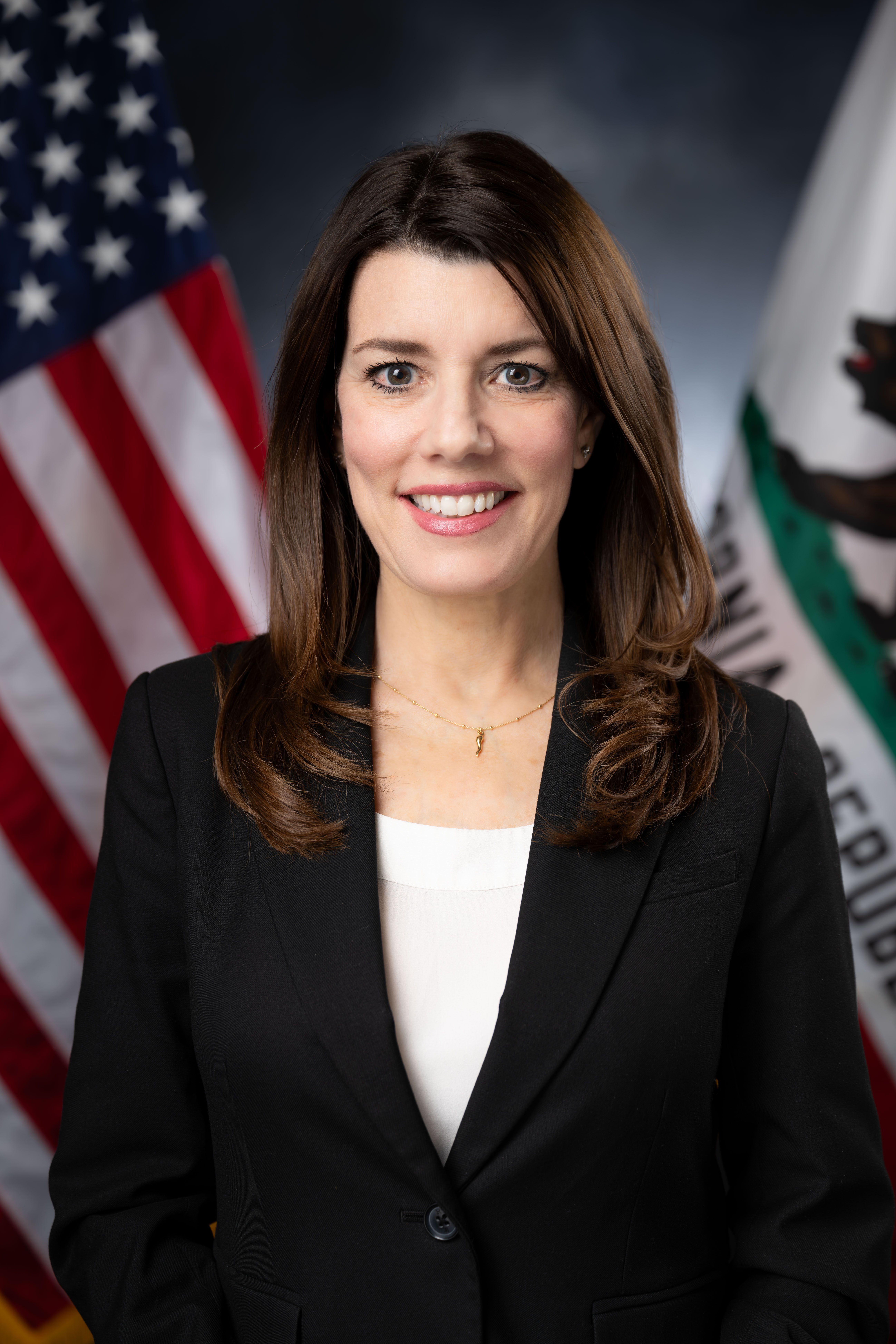
Asm. Catherine Stefani
Sponsored bills
(1) Existing law creates the Metropolitan Transportation Commission as a local area planning agency for the 9-county San Francisco Bay area with comprehensive regional transportation planning and other related responsibilities. Existing law creates various transit districts located in the San Francisco Bay area, with specified powers and duties relating to providing public transit services. This bill would establish the Public Transit Revenue Measure District with jurisdiction extending throughout the boundaries of the Counties of Alameda, Contra Costa, San Mateo, and Santa Clara and the City and County of San Francisco and would require the district to be governed by the same board that governs the commission, thereby imposing a state-mandated local program. The bill would authorize a retail transactions and use tax applicable to the entire district to be imposed by the board of the district or by a qualified voter initiative for a duration of 14 years, and in an amount of 0.5% in each of the above-described counties located within the district and 1% in the City and County of San Francisco, subject to voter approval at the November 3, 2026, statewide general election. After payments are made for various administrative expenses, the bill would require the district to transfer specified portions of the proceeds of the tax to the commission for allocation to certain programs and other purposes and for allocation to the Alameda-Contra Costa Transit District, the Peninsula Corridor Joint Powers Board, commonly known as Caltrain, the San Francisco Bay Area Rapid Transit District, the San Francisco Municipal Transportation Agency, and other specified transit agencies, for transit operations expenses, and would require the district to transfer specified portions of the proceeds of the tax directly to other specified local transportation agencies, including the San Mateo County Transit District and the Santa Clara Valley Transportation Authority, for public transit expenses, as prescribed. By adding to the duties of local officials with respect to elections procedures for this bill on behalf of the district, the bill would impose a state-mandated local program. (2) Existing law requires the commission to develop regional transit service objectives, develop performance measures of efficiency and effectiveness, specify uniform data requirements to assess public transit service benefits and costs, and formulate procedures for establishing regional transportation priorities in the allocation of funds for transportation purposes. This bill would require the commission to contract with, and manage, a third-party consultant to conduct a financial efficiency review of the Alameda-Contra Costa Transit District, Caltrain, the San Francisco Bay Area Rapid Transit District, and the San Francisco Municipal Transportation Agency, as specified. The bill would require the review to be completed in 2 phases, with the analysis for the 2nd phase only required if the tax measure is approved by the voters of the Public Transit Revenue Measure District. The bill would require the consultant to transmit the analysis for each phase to an oversight committee, which the bill would create with a prescribed membership, for review and adoption. The bill would require a transit operator subject to the financial efficiency review to take specified actions in response to the analysis for the first phase and, subject to review of the oversight committee, to adopt an implementation plan that describes the cost-saving measures identified in the analysis for the 2nd phase that the operator plans to implement, as specified. The bill would require a transit operator subject to the financial efficiency review to verify its compliance with the requirements of the review as a condition of receiving funds from the tax measure approved by the voters of the district. The bill would require each transit operator to which the commission allocates funds to comply with a maintenance of effort requirement as a condition of receiving those funds, as provided. This bill would require the commission, if the tax measure is approved by the voters of the district and other conditions are satisfied, to establish an ad hoc adjudication committee for a transit operator subject to the above-described financial efficiency review to assess and adjudicate petitions submitted by a participating county transportation entity, as defined, or a county board of supervisors with regard to the performance of the transit operator within the geographic jurisdiction of the entity submitting the petition, as provided. As part of this process, the bill would require an ad hoc adjudication committee, among other things, to determine whether to direct the commission to withhold funding from the tax measure allocated to the transit operator if the committee agrees with a claim regarding the performance of the transit operator, as specified. This bill would require the commission to submit a report to the Legislature on or before March 31, 2026, on its forecast of the impacts to ridership on the Alameda-Contra Costa Transit District, Caltrain, the San Francisco Bay Area Rapid Transit District, and the San Francisco Municipal Transportation Agency from planned transportation projects and strategies included in its adopted regional transportation plan. By adding to the duties of the commission, the bill would impose a state-mandated local program. (3) The Bay Area County Traffic and Transportation Funding Act authorizes the formation of county transportation authorities in each of the 9 bay area counties, and provides for the imposition of a retail transaction and use tax in each of those counties of either 12 of 1% or 1%, subject to voter approval, with revenues to be used for various transportation purposes. This bill would instead provide that a retail transaction and use tax imposed under those provisions in the County of San Mateo or the City and County of San Francisco may be imposed in 18 of 1% increments up to 1%. (4) This bill would declare that its provisions are severable. (5) The California Constitution requires the state to reimburse local agencies and school districts for certain costs mandated by the state. Statutory provisions establish procedures for making that reimbursement. This bill would provide that, if the Commission on State Mandates determines that the bill contains costs mandated by the state, reimbursement for those costs shall be made pursuant to the statutory provisions noted above.
Existing law, commencing January 1, 2019, made various changes to the law governing ignition interlock devices (IID) , including, among other things, requiring a person who has been convicted of driving a motor vehicle under the influence of an alcoholic beverage, as specified, to install for a specified period of time as ordered by the court, an IID on the vehicle they operate, provided however that installation of an IID is discretionary for a first offender, as specified; authorizing a person convicted of driving a motor vehicle under the influence, if all other requirements are satisfied, including the installation of an IID, to apply for a restricted driver's license without completing a period of license suspension or revocation; and requiring ignition interlock device manufacturers to be in compliance with specified provisions relating to payment for the costs of an ignition interlock device. Existing law makes these changes operative until January 1, 2026. On January 1, 2026, existing law, as it relates to these provisions, is generally reinstated to read as it read prior to January 1, 2019. Existing law makes it a crime to violate certain provisions relating to IIDs and motor vehicles equipped with IIDs. This bill would extend the operation of these provisions until January 1, 2033, and would instead reinstate the law to how it read prior to January 1, 2019, on January 1, 2033. By extending the application of a crime, the bill would impose a state-mandated local program. The California Constitution requires the state to reimburse local agencies and school districts for certain costs mandated by the state. Statutory provisions establish procedures for making that reimbursement. This bill would provide that no reimbursement is required by this act for a specified reason.
(1) The United States Constitution generally requires a state to give full faith and credit to the public acts, records, and judicial proceedings of every other state. Existing law generally authorizes a California court or attorney to issue a subpoena if a foreign subpoena has been sought in this state but prohibits the issuance of a subpoena based on another state's law that interferes with a person's right to allow a child to receive gender-affirming health care or gender-affirming mental health care. Existing law generally prohibits a provider of health care, a health care service plan, or a contractor from disclosing medical information regarding a patient, enrollee, or subscriber without first obtaining an authorization unless an exception applies, including that the disclosure is in response to a subpoena. Existing law prohibits a provider of health care, a health care service plan, or a contractor from releasing medical information related to a person or entity allowing a child to receive gender-affirming health care or gender-affirming mental health care in response to a civil action, including a foreign subpoena, based on another state's law that authorizes a person to bring a civil action against a person or entity that allows a child to receive gender-affirming health care or gender-affirming mental health care. This bill would additionally prohibit a provider of health care, a health care service plan, or a contractor from releasing medical information related to a person seeking or obtaining gender-affirming health care or gender-affirming mental health care in response to a criminal or civil action, including a foreign subpoena, based on another state's law that interferes with an individual's right to seek or obtain gender-affirming health care or gender-affirming mental health care. The bill would also prohibit a provider of health care, health care service plan, contractor, or employer from cooperating with or providing medical information to an individual, agency, or department from another state or, to the extent permitted by federal law, to a federal law enforcement agency that would identify an individual and that is related to an individual seeking or obtaining gender-affirming health care, as specified. The bill would prohibit these entities from releasing medical information related to sensitive services, as defined, in response to a foreign subpoena that is based on a violation of another state's laws authorizing a criminal action against a person or entity for provision or receipt of legally protected health care activity, as defined. The bill would also generally prohibit the issuance of a subpoena based on a violation of another state's law that interferes with a person's right to seek or obtain gender-affirming health care or gender-affirming mental health care, as specified. (2) Existing law requires the Department of Justice to maintain the Controlled Substance Utilization Review and Evaluation System (CURES) for the electronic monitoring of the prescribing and dispensing of certain controlled substances by a health care practitioner authorized to prescribe, order, administer, furnish, or dispense those controlled substances. Existing law authorizes the department to enter into an agreement with an entity operating an interstate data sharing hub, or an agency operating a prescription drug monitoring program in another state, for purposes of interstate data sharing of prescription drug monitoring program information. Existing law limits the entities to which data may be provided from CURES, as well as the type of data that may be released and the uses to which it may be put. This bill would prohibit a state or local agency or employee, appointee, officer, contractor, or official or any other person acting on behalf of a public agency from knowingly providing any CURES data or knowingly expending any resources in furtherance of any interstate investigation or proceeding seeking to impose civil, criminal, or disciplinary liability based upon another state's law for the provision or receipt of legally protected health care activity, as defined. The bill would prohibit the department from sharing data with an out-of-state law enforcement agency without a warrant, subpoena, or court order and would prohibit an out-of-state user from providing any data in furtherance of an investigation or proceeding to impose liability based on another state's law for the provision or receipt of legally protected health care activity. This bill would make it a misdemeanor for a person to access the CURES database when not authorized by law and would make it a misdemeanor for a person who is authorized to access the database to knowingly furnish information from the CURES database to a person who is not authorized by law to receive that information. By creating new crimes, the bill would impose a state-mandated local program. (3) This bill would provide that its provisions are severable. (4) This bill would incorporate additional changes to Section 11165 of the Health and Safety Code proposed by AB 82 to be operative only if this bill and AB 82 are enacted and this bill is enacted last. (5) The California Constitution requires the state to reimburse local agencies and school districts for certain costs mandated by the state. Statutory provisions establish procedures for making that reimbursement. This bill would provide that no reimbursement is required by this act for a specified reason. (6) This bill would declare that it is to take effect immediately as an urgency statute.
(1) Existing law authorizes reproductive health care service providers, employees, volunteers, and patients, and individuals who face threats of violence or violence or harassment from the public because of their affiliation with a reproductive health care services facility, to complete an application to be approved by the Secretary of State for the purposes of enabling state and local agencies to respond to requests for public records without disclosing a program participant's residence address contained in any public record and otherwise provide for confidentiality of identity for that person, subject to specified conditions. Under existing law, any person who makes a false statement in an application is guilty of a misdemeanor. This bill would expand the address confidentiality program to a gender-affirming health care provider, employee, or volunteer, as defined, who faces threats of violence or harassment from the public because of their affiliation with a gender-affirming health care services facility. The bill would also make conforming changes. By imposing new duties on local agencies and expanding the scope of a crime, this bill would create a state-mandated local program. (2) Existing law prohibits a person, business, or association from knowingly publicly posting or publicly displaying, disclosing, or distributing on internet websites or on social media, the personal information or image of any reproductive health care services patient, provider, or assistant, or other individuals residing at the same home address, with the intent to incite a 3rd person to cause imminent great bodily harm to the person identified in the posting or display, or to a coresident of that person, as specified, or to threaten the person identified in the posting or display, or a coresident of that person, as specified. Existing law additionally prohibits a person, business, or association from soliciting, selling, or trading on the internet or social media the personal information or image of a reproductive health care services patient, provider, or assistant with the intent described above. Existing law establishes a cause of action for injunctive or declarative relief for a violation of these prohibitions. Existing law prohibits a person from posting on the internet or social media, with the intent that another person imminently use that information to commit a crime involving violence or a threat of violence against a reproductive health care services patient, provider, or assistant, or other individuals residing at the same home address, the personal information or image of a reproductive health care services patient, provider, or assistant, or other individuals residing at the same home address. Existing law makes a violation of this prohibition punishable by a fine of up to $10,000 per violation, imprisonment, as specified, or by both that fine and imprisonment. This bill would additionally prohibit a person, business, or association from soliciting, selling, or trading on the internet or social media the personal information or image of a gender-affirming health care services provider, employee, volunteer, or patient with the intent described above. The bill would also prohibit a person from posting on the internet or social media, as described above, the personal information or image of a gender-affirming health care services provider, employee, volunteer, or patient, or other individuals residing at the same home address. The bill would define various terms for these purposes. By expanding the scope of a crime, this bill would create a state-mandated local program. (3) Existing law, the California Uniform Controlled Substances Act (the act) , classifies controlled substances into 5 designated schedules, with the most restrictive limitations generally placed on controlled substances classified in Schedule I, and the least restrictive limitations generally placed on controlled substances classified in Schedule V. The act requires the Department of Justice to maintain the Controlled Substances Utilization Review and Evaluation System (CURES) for the electronic monitoring of the prescribing and dispensing of certain controlled substances by a health care practitioner authorized to prescribe, order, administer, furnish, or dispense those controlled substances. Existing law limits the entities to which data may be provided from CURES, as well as the type of data that may be released and the uses to which it may be put. Existing law makes a violation of the act a crime. Existing law defines the term "legally protected health care activity" to include the exercise of, or an act undertaken to aid a person to exercise, the provision of reproductive health care services, gender-affirming health care services, or gender-affirming mental health care services. This bill would prohibit a prescription for or the dispensing of testosterone or mifepristone from being reported to the department, CURES, or a contractor, as specified. The bill would require the department, on or before January 1, 2027, to remove certain existing records that were created or maintained prior to January 1, 2026, and make other conforming changes. By creating a new crime, the bill would establish a state-mandated local program. (4) Existing law authorizes a court to issue various orders relating to criminal investigations, including the interception of wire or electronic communications, the installation and use of a pen register or trap and trace device, or a search warrant upon specified grounds. Existing law prohibits the issuance of any orders or warrants for the purpose of investigating or recovering evidence of a prohibited violation. Existing law defines "prohibited violation" for this purpose as a violation of a law that creates liability for, or arising out of, either providing, facilitating, or obtaining an abortion or intending or attempting to provide, facilitate, or obtain an abortion that is lawful under the laws of this state. This bill would instead define a prohibited violation as a violation of a law that creates liability for, or arising out of, either providing, facilitating, or obtaining a legally protected health care activity or intending or attempting to provide, facilitate, or obtain a legally protected health care activity, as defined. (5) Existing law requires superior court judges in each county to prepare, adopt, and annually revise a uniform countywide schedule of bail for all bailable offenses, as specified. Existing law requires a uniform countywide schedule of bail to set $0 bail for an individual who has been arrested in connection with a proceeding in another state regarding an individual performing, supporting, or aiding in the performance of an abortion in this state, or an individual obtaining an abortion in this state, if the abortion is lawful under California law. This bill would instead require a uniform countywide schedule of bail to set $0 bail for an individual who has been arrested in connection with a proceeding in another state regarding an individual performing, supporting, or aiding in the performance of a legally protected health care activity in this state, or an individual obtaining a legally protected health care activity in this state, as specified. (6) Existing law prohibits a state or local law enforcement agency or officer from knowingly arresting or knowingly participating in the arrest of any person for performing, supporting, or aiding in the performance of an abortion or for obtaining an abortion, if the abortion is lawful in this state. Existing law prohibits a state or local public agency from cooperating with or providing information to an individual or agency from another state or a federal law enforcement agency, as specified, regarding a lawful abortion. Existing law prohibits specified persons, including a judicial officer, a court employee, or an authorized attorney, among others, from issuing a subpoena in connection with a proceeding in another state regarding an individual performing, supporting, or aiding in the performance of an abortion in this state, or an individual obtaining an abortion in this state, if the abortion is lawful in this state. Existing law does not prohibit the investigation of criminal activity that may involve an abortion, provided that no information relating to any medical procedure performed on a specific individual is shared with an agency or individual from another state for the purpose of enforcing another state's abortion law. This bill would instead expand those above-described provisions to apply to legally protected health care activity, as defined. (7) Existing law prohibits a state or local government employee or a person acting on behalf of the local or state government, among others, from providing information or expending resources in furtherance of an investigation that seeks to impose civil or criminal liability or professional sanctions on an individual for a legally protected health care activity, as defined, that occurred in this state or that would be legal if it occurred in this state. Existing law requires any out-of-state subpoena, warrant, wiretap order, pen register trap and trace order, or other legal process to include an affidavit or declaration under penalty of perjury that the discovery request is not in connection with an out-of-state proceeding relating to a legally protected health care activity, except as specified. This bill would authorize the Attorney General to bring a civil action against a person or entity that submitted a false affidavit under these provisions and would make submission of a false affidavit punishable by a civil penalty of $15,000, in addition to any other penalties or remedies provided by law. (8) Existing constitutional provisions require that a statute that limits the right of access to the meetings of public bodies or the writings of public officials and agencies be adopted with findings demonstrating the interest protected by the limitation and the need for protecting that interest. This bill would make legislative findings to that effect. (9) This bill would incorporate additional changes to Section 11165 of the Health and Safety Code proposed by SB 497 to be operative only if this bill and SB 497 are enacted and this bill is enacted last. (10) The California Constitution requires the state to reimburse local agencies and school districts for certain costs mandated by the state. Statutory provisions establish procedures for making that reimbursement. This bill would provide that with regard to certain mandates no reimbursement is required by this act for a specified reason. With regard to any other mandates, this bill would provide that, if the Commission on State Mandates determines that the bill contains costs so mandated by the state, reimbursement for those costs shall be made pursuant to the statutory provisions noted above.
(1) Under existing law, a caregiver who is 18 years of age or older and signs a caregiver's authorization affidavit under penalty of perjury for a minor who lives in their home is authorized to enroll the minor in school and consent to school-related medical care on behalf of the minor. Under existing law, a caregiver who is 18 years of age or older, signs the caregiver's authorization affidavit under penalty of perjury, and who is a certain type of relative of the minor who lives in their home, has the same rights to authorize medical care and dental care for the minor that are given to guardians, as specified. Under existing law, a person who acts in good faith reliance on a completed caregiver's authorization affidavit to provide medical or dental care, without actual knowledge of facts contrary to those stated on the affidavit, is not subject to criminal or civil liability or professional disciplinary action for that reliance, but is not relieved from liability for violations of other provisions of law. This bill, the Family Preparedness Plan Act of 2025, would revise the definition of relative to expand the type of relative who is authorized to execute a caregiver's authorization affidavit and grant them the same rights to authorize school-related medical care, as defined, for the minor that are given to guardians, as specified. By expanding who is authorized to sign a caregiver's authorization affidavit for these purposes under penalty of perjury, this bill would expand the crime of perjury, thereby imposing a state-mandated local program. This bill would amend the statutory form for a caregiver's authorization affidavit. (2) Existing law generally provides for the establishment and administration of guardianships. Existing law authorizes a court to appoint joint guardians of a person, an estate, or a person and an estate. Existing law requires a nomination of a guardian to become effective when made, and remain effective, unless stated otherwise in writing, as specified. This bill would authorize a court, in its discretion, to appoint a custodial parent and a person nominated by the custodial parent as joint guardians of the person of the minor, if the custodial parent will be temporarily unavailable due to specified circumstances, including, among other things, an immigration-related administrative action, as specified. The bill would make all records, petitions, orders, and documents related to these proceedings confidential, as specified. The bill would provide that absence is a basis for a delayed effectiveness of a guardianship and that such circumstances would not be a basis for subsequent legal incapacity for the nomination. (3) Existing law prohibits, except as required by state or federal law or as required to administer a state or federally supported educational program, school officials and employees of a local educational agency, as defined, from collecting information or documents regarding citizenship or immigration status of pupils or their family members. Existing law requires the governing board or body of a local educational agency to perform specified actions relating to pupils and immigration status, including, among others, providing information to parents and guardians, as appropriate, regarding their child's right to a free public education, regardless of immigration status or religious beliefs. Existing law requires the Attorney General, by April 1, 2018, in consultation with the appropriate stakeholders, to publish model policies limiting assistance with immigration enforcement at public schools, to the fullest extent possible consistent with federal and state law, as specified. Existing law requires all local educational agencies to adopt the model policies developed by the Attorney General, or equivalent policies, by July 1, 2018. This bill would revise the information disclosure requirements to require the governing board or body of a local educational agency to provide information related to specified guidance on immigration enforcement issued by the Attorney General and would require that information to be revised as necessary to be consistent with any revisions or updates to the Attorney General's guidance. This bill would also require local educational agencies to revise their model policies as necessary to be consistent with any revisions or updates to the model policies developed by the Attorney General, as specified. By imposing additional duties on local educational agencies, the bill would impose a state-mandated local program. (4) Existing law, the California Child Day Care Facilities Act, provides for the licensure and regulation of child daycare facilities, including daycare centers and daycare homes, by the State Department of Social Services. The act exempts certain types of facilities from licensure under its provisions, including California state preschool programs that meet certain requirements, including, among other things, that the programs are operated by local educational agencies in a school building. Similar to the provisions related to local educational agencies described above, this bill would prohibit licensed child daycare facilities, as defined, employees of licensed child daycare facilities, and license-exempt California state preschool program facilities from collecting information or documents regarding citizenship or immigration status of children or their family members, except as required by state or federal law or as required to administer a state or federally supported educational program. The bill would require the licensee or administrator of a licensed child day care facility, as applicable, to report to the department and the Attorney General any requests for information or access to the facility by an officer or employee of a law enforcement agency. The bill would authorize license-exempt California state preschool program facilities to make that report to the State Department of Education and the Attorney General. The bill would require the State Department of Social Services to provide any information on California state preschool programs collected pursuant to those provisions to the Superintendent of Public Instruction. The bill would require a licensed child daycare facility and a license-exempt California state preschool program facility to first exhaust any parental instruction relating to the child's care found in the child's emergency contact information if an employee of the facility is aware that a child's parent or authorized representative is not available to care for the child. The bill would require licensees or administrators of those facilities to request that parents or authorized representatives update their emergency contact information. The bill would require the Attorney General, by April 1, 2026, in consultation with the appropriate stakeholders, to publish model policies limiting assistance with immigration enforcement at child daycare facilities and license-exempt California state preschool program facilities similar to the model policies developed for local educational agencies described above. The bill would require the State Department of Social Services to inform licensed daycare facilities, and the State Department of Education to inform license-exempt California state preschool program facilities, of the model policies. The bill would require all California state preschool programs to adopt the model policies developed by the Attorney General, or equivalent policies, as soon as possible, but in no event later than July 1, 2026. The bill would require California state preschool programs to update these policies to conform with any revisions or updates to the model policies developed by the Attorney General. The bill would require a licensed child daycare facility and license-exempt California state preschool program facilities to provide the parent or authorized representative with information about how to access those model policies. The bill would require the State Department of Social Services to inform licensed child day care facilities, and the State Department of Education to inform license-exempt California state preschool program facilities, of any revisions or updates to the model policies and require any information, policies, or guidance provided by facilities to parents or authorized representatives to be updated to include any revisions or updates to the model policies issued by the Attorney General. The bill would authorize the State Department of Social Services to administer these provisions by interim licensing standards until regulations are adopted. (5) This bill would provide that its provisions are severable. (6) Existing constitutional provisions require a statute that limits the right of access to the meetings of public bodies or the writings of public officials and agencies to be adopted with findings demonstrating the interest protected by the limitation and the need for protecting that interest. This bill would make legislative findings to that effect. (7) The California Constitution requires the state to reimburse local agencies and school districts for certain costs mandated by the state. Statutory provisions establish procedures for making that reimbursement. This bill would provide that with regard to certain mandates no reimbursement is required by this act for a specified reason. With regard to any other mandates, this bill would provide that, if the Commission on State Mandates determines that the bill contains costs so mandated by the state, reimbursement for those costs shall be made pursuant to the statutory provisions noted above. This bill would incorporate additional changes to Section 234.7 of the Education Code proposed by AB 49, AB 419, or both, to be operative only if this bill and AB 49, AB 419, or both, are enacted and this bill is enacted last.
(1) Existing law prescribes the duties of the State Registrar of Vital Statistics (State Registrar) and local registrars of births and deaths with respect to the registration of certificates of live birth, fetal death, or death, and marriage licenses. Existing law requires the State Registrar to prescribe and furnish all record forms for use in carrying out the provisions governing vital records and prohibits the use of any record form or format other than those prescribed by the State Registrar. Existing law requires every live birth, fetal death, death, and marriage that occurs in the state to be registered with the local registrar. Existing law requires certificates of live birth, fetal death, or death, and a marriage license to include specified information, such as the full name of the child on a certificate of live birth and the full names of the parties to be married on a marriage license. Existing law also requires the county clerk to issue a confidential marriage license, as specified, on a form prescribed by the State Registrar. This bill would require, commencing no earlier than 2 years after an appropriation of funds by the Legislature, the State Registrar to require the use of a diacritical mark on an English letter within a name field to be properly recorded, when applicable, on a certificate of live birth, fetal death, death, marriage license and certificate, or confidential marriage license and certificate, and would require the use of a diacritical mark to be deemed an acceptable entry by the State Registrar. The bill would provide that the absence or presence of a diacritical mark on a certificate of live birth, fetal death, or death, or a marriage license and certificate or confidential marriage license and certificate does not render the document invalid nor affect any constructive notice imparted by proper recordation of the document. The bill would authorize the State Registrar to develop a list of acceptable diacritical marks for use on a certificate of live birth, fetal death, or death, or a marriage license and certificate or confidential marriage license and certificate through all-county letters or similar instructions from the State Registrar without taking further regulatory actions. The bill would authorize the State Registrar to remove any diacritical marks on the birth, fetal death, death, and marriage license and certificate data before furnishing the vital statistics to a federal, state, or local government agency. The bill would authorize, beginning July 1, 2026, if a name is not accurately recorded because of the absence of a diacritical mark on an English letter in any certificate of live birth, fetal death, death, or marriage already registered, the person asserting the omission, or the person's conservator, or if a minor, the person's parent or guardian, to make an affidavit under oath, as specified, stating the changes necessary to make the record correct. The bill would require the affidavit to be supported by the affidavit of one other person having knowledge of the facts and be filed with the State Registrar. The bill would require the State Registrar to, review the request and, if the request is accompanied with the payment of a specified fee, to issue an amendment to any certificate of live birth, fetal death, death, or marriage with the accurate name identified in the request. The bill would also authorize, if a name field of either of the parties married or their parents is not accurately recorded because of the absence of a diacritical mark on an English letter on any confidential license and certificate of marriage already registered, the party asserting the omission to make an affidavit, under oath, stating the changes necessary to make the record correct and file it with the county clerk. The bill would authorize the county clerk to charge a fee, not to exceed the amount of the fee for any other amended confidential marriage license and certificate issued by the county clerk and not to exceed the reasonable cost to provide the amended marriage license and certificate. The bill would require the county clerk to review the amendment for acceptance for filing, and if accepted, file the amendment and note the fact of the amendment, with its date, on the otherwise unaltered original confidential license and certificate of marriage. By requiring the affidavit to be under oath, the bill would expand the crime of perjury, thereby imposing a state-mandated local program. By increasing duties on county clerks, the bill would impose a state-mandated local program. (2) Existing law requires the collection of specified fees for certified copies of a fetal death record, death record, a birth certificate, marriage record, or marriage dissolution record. Existing law requires all applicants for certified copies of the above-described records to pay an additional fee of $3 to be collected by the State Registrar, the local registrar, county recorder, or county clerk, as appropriate. This bill would increase the additional fee charged for certified copies of the above-described records to $5. (3) The California Constitution requires the state to reimburse local agencies and school districts for certain costs mandated by the state. Statutory provisions establish procedures for making that reimbursement. This bill would provide that with regard to certain mandates no reimbursement is required by this act for a specified reason. With regard to any other mandates, this bill would provide that, if the Commission on State Mandates determines that the bill contains costs so mandated by the state, reimbursement for those costs shall be made pursuant to the statutory provisions noted above.
Existing law defines rape as an act of sexual intercourse accomplished under certain circumstances, including with a person not the spouse of the perpetrator where the person is incapable of giving legal consent because of a mental disorder or developmental or physical disability. This bill would remove the spousal exception from this definition of rape. By expanding the scope of a crime, this bill would impose a state-mandated local program. The California Constitution requires the state to reimburse local agencies and school districts for certain costs mandated by the state. Statutory provisions establish procedures for making that reimbursement. This bill would provide that no reimbursement is required by this act for a specified reason.
Existing law creates the Vocational Nurse Education Program within the Department of Health Care Access and Information for persons agreeing to serve in an eligible county health facility, state-operated health facility, or a health workforce shortage area, before completing vocational nursing school. Existing law authorizes a person who qualifies for admission to a vocational nursing program to apply for funding under the program, as specified. Existing law establishes the Vocational Nurse Education Fund for the purpose of promoting the education of vocational nurses and related administrative costs. This bill would create the California Nurse-Midwifery Education Fund within the department for the purpose of establishing California-based, master's level, nurse-midwifery education programs within the California State University, the University of California, or both. The bill would require the department to administer the fund, and receive moneys from the General Fund for these purposes upon appropriation by the Legislature. The bill would require the department to establish a competitive application criteria to ensure the optimal sites selection for the education programs within the California State University system or the University of California, would require the department to ensure that a master's degree is an option for students as the culminating degree of the education programs receiving funds, and would require the education programs to meet specified requirements. The bill would also require the fund to support the annual operating costs for the development, operation, and maintenance of the education programs through the graduation of the first cohort of matriculated students, or 5 years, whichever is shorter.
Existing law, the Mello-Roos Community Facilities Act of 1982, authorizes the legislative body of a local agency, as defined, to create a community facilities district to finance specified types of services within an area. Existing law prohibits a territory that is dedicated or restricted to agricultural, open-space, or conservation uses from being included within or annexed to a specified community facilities district without the landowner's consent. This bill would, notwithstanding those prohibitions, specify that for territory that is located within the regional shoreline of the County of San Mateo, the consent of a landowner is not required, if specified conditions are met. This bill would make legislative findings and declarations as to the necessity of a special statute for the County of San Mateo.