

Existing law provides for the Medi-Cal program, which is administered by the State Department of Health Care Services, under which qualified low-income individuals receive health care services pursuant to a schedule of benefits. The Medi-Cal program is, in part, governed and funded by federal Medicaid program provisions. Existing law requires the department to convene a workgroup to examine the implementation of the Medi-Cal doula benefit, as specified. Existing law also requires the department, no later than July 1, 2024, to publish a report that addresses the number of Medi-Cal recipients utilizing doula services and identifies barriers that impede access to doula services, among other things. This bill would establish the Birthing Justice for California Families Pilot Project, which would include a 3-year grant program to provide grants to specified entities, including community-based doula groups, to provide doula care to members of communities with high rates of negative birth outcomes who are not eligible for Medi-Cal and incarcerated people. The bill would require the State Department of Public Health to take specified actions with regard to awarding grants, including awarding grants to selected entities on or before July 1, 2024. The bill would require a grant recipient to use grants funds to pay for the costs associated with providing doula care to eligible individuals and to establish, manage, support, or expand doula services, including technical assistance to nascent doulas or doula groups. The bill would require a grant recipient, in setting the payment rate for a doula being paid with grant funds, to comply with specified parameters, including that the payment rate not be less than the Medi-Cal reimbursement rate for doulas or the median rate paid for doula care in existing local pilot projects providing doula care in California, whichever is higher. The bill would require the department, on or before January 1, 2029, to submit a report to the appropriate policy and fiscal committees of the Legislature on the expenditure of funds and relevant outcome data for the pilot project. The bill would repeal these provisions on January 1, 2029.
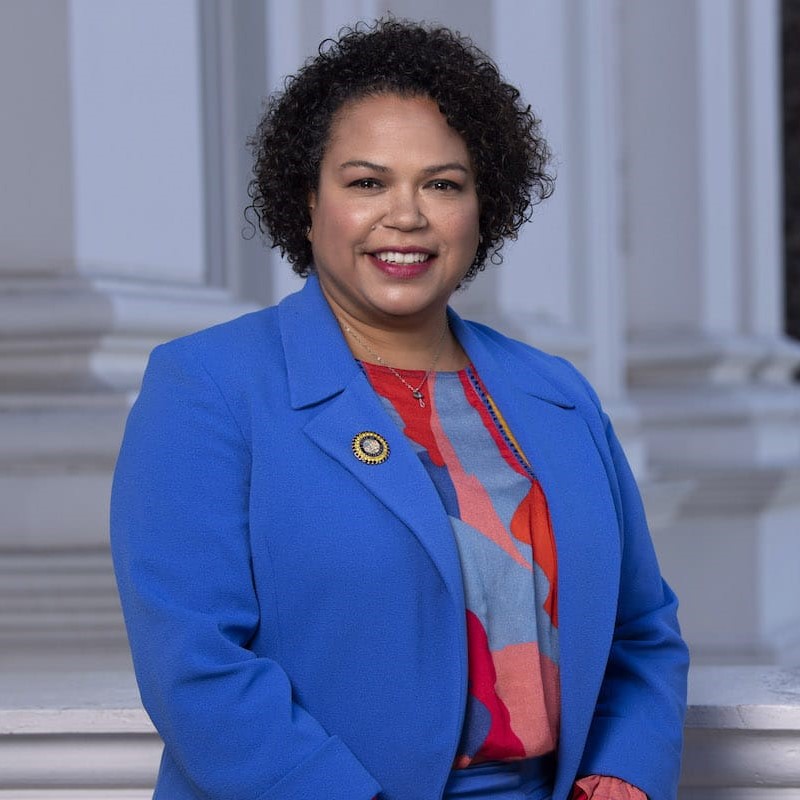
Asm. Mia Bonta
Sponsored bills
Existing law makes public nuisance a misdemeanor, and defines a public nuisance as anything which is injurious to health, or is indecent, or offensive to the senses, so as to interfere with the comfortable enjoyment or life or property by an entire community, neighborhood, or considerable number of persons. This bill would make a defendant sentenced for a violation of this public nuisance law based on a disposition negotiated between the defendant and the prosecution, or pursuant to an indicated sentence of the court, which includes the dismissal of one or more infraction charges that allege unlawfully cultivating, manufacturing, transporting, giving away, selling, or possession or use of a drug, or possession or use of drug paraphernalia, punishable by an infraction. The bill would make a violation of public nuisance under those circumstances, if the dismissal is of a misdemeanor charge that meets that criteria, punishable as a misdemeanor or an infraction. The bill would make a violation of public nuisance under those circumstances, if the dismissal is of a felony charge that meets that criteria, punishable as a felony or a misdemeanor. By changing the punishment of a crime, this bill would impose a state-mandated local program. The California Constitution requires the state to reimburse local agencies and school districts for certain costs mandated by the state. Statutory provisions establish procedures for making that reimbursement. This bill would provide that no reimbursement is required by this act for a specified reason.
Existing law authorizes the Department of Motor Vehicles to issue and renew driver's licenses, as specified. Existing law also authorizes the department to issue identification cards. Existing law requires the department to issue a restricted driver's license to an eligible applicant who is unable to submit satisfactory proof that their presence in the United States is authorized under federal law if they meet all other qualifications for licensure and provide satisfactory proof of identity and California residency. Existing law also authorizes the department to issue an identification card to a person documented under the federal Deferred Action for Childhood Arrivals program. This bill would, among other things, require the department to, by no later than July 1, 2027, issue a restricted identification card to an eligible applicant who is unable to submit satisfactory proof that their presence in the United States is authorized under federal law if they provide satisfactory proof of identity and California residency, as specified. Existing law requires the restricted licenses and identification cards to include a recognizable feature on the front of the cards, such as the letters "DP" instead of "DL" and "IC" instead of "ID." This bill would delete the provision requiring a recognizable feature on the cards. Existing law prohibits California law enforcement agencies from cooperating, as specified, with federal immigration authorities. Existing law prohibits the disclosure of certain documents provided by an applicant to the department, except in response to a subpoena for individual records in a criminal proceeding or a court order, or in response to a law enforcement request to address an urgent health or safety need, as specified. This bill would specify that immigration enforcement, as defined, does not constitute an urgent health and safety need for those purposes, and would prohibit a government agency or department, law enforcement agency, commercial entity, or other person from obtaining, accessing, using, or otherwise disclosing, noncriminal history information maintained by the department, for the purpose of immigration enforcement. The bill would make other conforming changes. This bill would incorporate additional changes to Section 12926 of the Government Code proposed by SB 523 to be operative only if this bill and SB 523 are enacted and this bill is enacted last.
Existing law grants the Division of Occupational Safety and Health, which is within the Department of Industrial Relations, jurisdiction over all employment and places of employment, with the power necessary to enforce and administer all occupational health and safety laws and standards. The Occupational Safety and Health Standards Board, an independent entity within the department, has the exclusive authority to adopt occupational safety and health standards within the state. Existing law, the California Occupational Safety and Health Act of 1973, requires employers to comply with certain standards ensuring healthy and safe working conditions, as specified, and charges the division with enforcement of the act. Existing law makes certain violations of the act a crime. Existing law requires citations, orders, and special orders issued by the department, in enforcing occupational safety and health standards, to be prominently posted at or near each place a violation referred to in the citation or order occurred, in accordance with specified timeframes and procedures. Existing law makes certain violations of specified posting or recordkeeping requirements enforceable by a civil penalty. This bill would require an employer to post an employee notification containing specified information when the above-described citations or orders are issued. The bill would require this notification, in addition to English, to be made available in specified languages. The bill would make a violation of these provisions enforceable by a civil penalty, as specified. The bill would also include related legislative findings. By expanding the scope of a crime, the bill would impose a state-mandated local program. The California Constitution requires the state to reimburse local agencies and school districts for certain costs mandated by the state. Statutory provisions establish procedures for making that reimbursement. This bill would provide that no reimbursement is required by this act for a specified reason.
(1) The Charter Schools Act of 1992 provides for the establishment and operation of charter schools. Existing law requires a petition for the establishment of a charter school to contain comprehensive descriptions of various matters and procedures, including procedures by which pupils can be suspended or expelled from the charter school for disciplinary reasons or otherwise involuntarily removed for any reason. Existing law requires these procedures to contain a clear statement that no pupil shall be involuntarily removed by the charter school for any reason unless the parent or guardian of the pupil has been provided written notice of the intent to remove the pupil no less than 5 schooldays before the effective date of the action. Existing law requires the written notice to inform the pupil, the pupil's parent or guardian, or the pupil's educational rights holder of the right to initiate a hearing adjudicated by a neutral officer before the pupil may be involuntarily removed by the charter school. This bill would require the written notice to be provided to and inform the foster child's educational rights holder, attorney, and county social worker and, if applicable, the Indian child's tribal social worker and, if applicable, county social worker of the right to initiate a hearing adjudicated by a neutral officer before the foster child or, if applicable, Indian child may be involuntarily removed by the charter school. The bill would give a foster child's educational rights holder, attorney, and county social worker and an Indian child's tribal social worker and, if applicable, county social worker the same rights a parent or guardian of a child has to receive a suspension notice, expulsion notice, manifestation determination notice, involuntary transfer notice, and other documents and related information. (2) Existing law requires the governing board of each high school or unified school district that assigns pupils to continuation schools to adopt rules and regulations governing procedures for the involuntary transfer of pupils to continuation schools. Existing law requires these rules and regulations to provide that written notice be given to the pupil and the pupil's parent or guardian informing them of the opportunity to request a meeting with a designee of the district superintendent of schools before the transfer. At the meeting, existing law requires the pupil or the pupil's parent or guardian to be informed of the specific facts and reasons for the proposed transfer and to have the opportunity to inspect all documents relied upon, question any evidence and witnesses presented, and present evidence on the pupil's behalf. This bill would require those rules and regulations, for the involuntary transfer of pupils to continuation schools, to provide written notice of the opportunity to request a meeting with a designee of the district superintendent of schools before the transfer, if the pupil is a foster child, to the foster child's educational rights holder, attorney, and county social worker, and, if the pupil is an Indian child, as defined, the Indian child's tribal social worker and, if applicable, county social worker. The bill would require the foster child's educational rights holder, attorney, and county social worker and the Indian child's tribal social worker and, if applicable, county social worker to have the same rights that a parent of a pupil has at the meeting. Because the bill would impose additional duties on local educational agencies, the bill would impose a state-mandated local program. (3) Existing law requires each local educational agency, as defined, to designate a staff person as the educational liaison for foster children, as defined. If the education liaison is designated by the superintendent of the local educational agency, existing law requires the educational liaison to notify a foster child's attorney and the appropriate representative of the county child welfare agency of pending expulsion proceedings if the decision to recommend expulsion is a discretionary act, and pending proceedings to extend a suspension until an expulsion decision is rendered if the decision to recommend expulsion is a discretionary act. This bill would instead require the foster child's educational rights holder, attorney, and county social worker and an Indian child's, as defined, tribal social worker and, if applicable, county social worker to have the same rights a parent or guardian of a child has to receive a suspension notice, expulsion notice, manifestation determination notice, involuntary transfer notice, and other documents and related information. Because the bill would impose additional duties on local educational agencies, the bill would impose a state-mandated local program. (4) Existing law authorizes the principal of the school, the principal's designee, or the district superintendent of schools to suspend a pupil from the school for any of specified reasons for no more than 5 consecutive schooldays. Existing law requires the suspension to be preceded by an informal conference, as specified. If a pupil is suspended without a conference before suspension, existing law requires the parent and the pupil to be notified of the pupil's right to a conference and the pupil's right to return to school for the purpose of a conference. Existing law requires, at the time of suspension, a school employee to make a reasonable effort to notify the pupil's parent or guardian in person or by telephone of the suspension. In a case where expulsion from a school or suspension for the balance of the semester from a continuation school is being processed by the governing board of school district, existing law requires, if the pupil is a foster child, the district superintendent of schools or the district superintendent's designee to invite the pupil's attorney and an appropriate representative of the county child welfare agency to participate in the meeting, as provided. This bill would require, if a foster child or Indian child, as defined, is suspended without a conference before suspension, the foster child's educational rights holder, attorney, and county social worker, or, if applicable, the Indian child's tribal social worker and, if applicable, county social worker to be notified of the child's right to a conference and the child's right to return to school for the purpose of the conference. The bill would require, at the time of suspension of a foster child or Indian child, a school employee to make a reasonable effort to contact the foster child's educational rights holder, attorney, and county social worker, or, if applicable, the Indian child's tribal social worker and, if applicable, county social worker. The bill would authorize notification at the time of a suspension to a parent, guardian, foster child's educational rights holder, attorney, and county social worker, and Indian child's tribal social worker and, if applicable, county social worker to occur by email. The bill would require the district superintendent of schools or the district superintendent's designee to invite the foster child's county social worker, instead of an appropriate representative of the county child welfare agency, or, if applicable, the Indian child's tribal social worker and, if applicable, county social worker to participate in the meeting on a foster child's or, if applicable, an Indian child's expulsion from a school or suspension for the balance of the semester from a continuation school. Because the bill would impose additional duties on local educational agencies, the bill would impose a state-mandated local program. (5) Existing law requires at the time a pupil is assigned to a supervised suspension classroom, a school employee to notify, in person or by telephone, the pupil's parent or guardian, as specified. This bill would require, if the pupil assigned to a supervised suspension classroom is a foster child or Indian child, as defined, a school employee to notify the foster child's educational rights holder, attorney, and county social worker or the Indian child's tribal social worker and, if applicable, county social worker. The bill would authorize notification of assignment to a supervised suspension classroom to a parent, guardian, foster child's educational rights holder, foster child's attorney, foster child's county social worker, and an Indian child's tribal social worker and, if applicable, county social worker to occur by email. Because the bill would impose additional duties on local educational agencies, the bill would impose a state-mandated local program. (6) If an individual with exceptional needs is a foster child and the local educational agency has proposed a change of placement due to an act for which a decision to recommend expulsion is at the discretion of the principal or the district superintendent of schools, existing law requires the attorney for the individual with exceptional needs and an appropriate representative of the county child welfare agency to be invited to participate in the individualized education program team meeting that makes a manifestation determination on expulsion pursuant to federal law. This bill would require the county social worker for the individual with exceptional needs who is a foster child, instead of an appropriate representative of the county child welfare agency, to be invited to participate in the individualized education program team meeting that makes a manifestation determination. The bill would require the local educational agency to invite the educational rights holder, attorney, and county social worker for the pupil if the local educational agency has proposed a change of placement due to an act for which a decision to recommend expulsion is mandatory. The bill would require the tribal social worker and, if applicable, county social worker for an individual with exceptional needs who is an Indian child, as defined, to participate in the individualized education program team meeting that makes a manifestation determination. The bill would require the local educational agency to invite the tribal social worker and, if applicable, county social worker for the Indian child if the local educational agency has proposed a change of placement due to an act for which a decision to recommend expulsion is mandatory. Because the bill would impose additional duties on local educational agencies, the bill would impose a state-mandated local program. (7) If the decision to recommend expulsion is a discretionary act and the pupil is a foster child, existing law requires the governing board of the school district to provide notice of the expulsion hearing to the pupil's attorney and an appropriate representative of the county child welfare agency at least 10 calendar days before the date of the hearing. This bill would require the governing board of the school district to provide that notice to the pupil's county social worker, instead of an appropriate representative of the county child welfare agency. The bill would require the governing board of the school district to provide that notice to the pupil's educational rights holder, attorney, or county social worker if a recommendation of expulsion is required. The bill would require the governing board of the school district to provide the above-described notice to the tribal social worker and, if applicable, county social worker of a pupil who is an Indian child. The bill would require the governing board of the school district to provide that notice to the Indian child's tribal social worker or, if applicable, county social worker if a recommendation of expulsion is required. Because the bill would impose additional duties on local educational agencies, the bill would impose a state-mandated local program. (8) The California Constitution requires the state to reimburse local agencies and school districts for certain costs mandated by the state. Statutory provisions establish procedures for making that reimbursement. This bill would provide that, if the Commission on State Mandates determines that the bill contains costs mandated by the state, reimbursement for those costs shall be made pursuant to the statutory provisions noted above.
Existing law, the Control, Regulate and Tax Adult Use of Marijuana Act (AUMA) , enacted by the voters at the November 8, 2016, statewide general election, regulates the cultivation, distribution, and use of cannabis for nonmedical purposes by individuals 21 years of age and older. Under AUMA, a person 21 years of age or older may, among other things, possess, process, transport, purchase, obtain, or give away, as specified, up to 28.5 grams of cannabis and up to 8 grams of concentrated cannabis. Existing law authorizes a person to petition for the recall or dismissal of a sentence, dismissal and sealing of a conviction, or redesignation of a conviction of an offense for which a lesser offense or no offense would be imposed under AUMA. Existing law, on or before July 1, 2019, requires the Department of Justice to review the records in the state summary criminal history information database to identify past convictions that are potentially eligible for recall or dismissal of sentence, dismissal and sealing, or redesignation. Existing law gives the prosecution until July 1, 2020, to review all cases and determine whether to challenge the recall, dismissal, or sealing. Existing law requires the court to reduce or dismiss a sentence that has not been challenged by July 1, 2020. This bill would, if a sentence was not challenged by July 1, 2020, require the court to issue an order recalling or dismissing the sentence, dismissing and sealing, or redesignating the conviction no later than March 1, 2023, and would require the court to update its records accordingly and to notify the Department of Justice. The bill would require the Department of Justice, on or before July 1, 2023, to complete the update of the state summary criminal history information database, and ensure that inaccurate state summary criminal history is not reported, as specified. The bill would require the department to conduct an awareness campaign so that individuals that may be impacted by this process become aware of methods to verify updates to their criminal history. The bill would make a conviction, arrest, or other proceeding that has been sealed pursuant to these provisions deemed never to have occurred, as specified. The bill would, until June 1, 2024, require the department, in consultation with the Judicial Council, to produce a quarterly joint progress report to the Legislature, as specified.
Existing law, the Speech-Language Pathologists and Audiologists and Hearing Aid Dispensers Licensure Act, until January 1, 2023, establishes the Speech-Language Pathology Audiology and Hearing Aid Dispensers Board within the Department of Consumer Affairs for the licensure and regulation of speech-language pathologists, speech-language pathology aides, speech language pathology assistants, audiologists, dispensing audiologists, and hearing aid dispensers. Existing law provides for the appointment of members of the board by specified appointing authorities, and, until January 1, 2023, authorizes the board to appoint an executive officer. Existing law authorizes an appointing authority to remove from office at any time any member of a board appointed by the appointing authority for continued neglect of duties, incompetence, or unprofessional or dishonorable conduct. Existing law makes a violation of the act a misdemeanor. This bill would extend the operation of the board and the authorization to appoint an executive officer until January 1, 2027, and would authorize an appointing authority to remove from office at any time any member of the board appointed by that appointing authority. The bill would specify that, in addition to the enforcement and administration of the act, the board is vested with other regulatory duties of the act. The bill would require an applicant, registrant, or licensee under the act who has an email address to provide it to the board no later than July 1, 2023. By expanding the scope of a crime, the bill would impose a state-mandated local program. Existing law establishes the Hearing Aid Dispensing Committee, comprised of 5 members, within the jurisdiction of the board. This bill would abolish the committee. Existing law defines "audiology aide" to mean any person meeting the minimum requirements established by the board. Existing law prohibits an audiology aide from performing any function that constitutes the practice of audiology unless they are under the supervision of an audiologist. This bill would delete that prohibition and would instead define "audiology aide" to mean any person meeting the minimum requirements established by the board who works directly under the supervision of an audiologist. Existing law requires speech-language pathologists and audiologists supervising speech-language pathology or audiology aides to register with the board the name of each person working under their supervision. This bill would make speech-language pathology and audiology aide registrations expire every 2 years and would require the board to establish a renewal fee in an amount not to exceed $30. The bill would require the speech-language pathologist or audiologist supervising the speech-language pathology or audiology aide to, at the time of renewal, update the board on the duties the aide performs and the training program and assessment methods the supervisor is using. Existing law requires an applicant for licensure as an audiologist to submit evidence of satisfactory completion of supervised clinical practice under the direction of an educational institution approved by the board and satisfactory completion of supervised professional experience following completion of the didactic and clinical rotation requirements of an audiology doctoral program. This bill would require the clinical practice to be under the direction of an audiology doctoral program at an educational institution approved by the board, and would delete the requirement that supervised professional experience follow completion of the didactic and clinical rotation requirements of the audiology doctoral program. Existing law requires the board to deem a person who holds a Certificate of Clinical Competence in Speech-Language Pathology issued by the American Speech-Language-Hearing Association's Council for Clinical Certification to have met specified educational and experience requirements for licensure as a speech-language pathologist or audiologist. This bill would make that requirement applicable only to licensure as a speech-language-pathologist and effective only until January 1, 2027, and would instead require the board, until January 1, 2027, to deem a person who holds either a valid Certification of Clinical Competence in Audiology issued by the American Speech-Language-Hearing Association's Council for Clinical Certification or a valid American Board of Audiology certificate issued by the American Academy of Audiology to have met specified educational and experience requirements for licensure as an audiologist. Existing law lists various reasons for which the board is authorized to suspend, revoke, or impose terms and conditions upon the license of any licensee, including incompetence, gross negligence, or repeated negligent acts. This bill would add specified reasons for which the board is authorized to suspend, revoke, or impose terms and conditions upon a license, including for a disciplinary action taken by any public agency in any state or territory for any act substantially related to the practice of speech-language pathology, audiology, or hearing aid dispensing. The bill would authorize a person whose license has been revoked, suspended, or who has been placed on probation to petition the board for reinstatement or modification of penalty after a specified minimum period of time has elapsed from the effective date of the decision ordering that disciplinary action in accordance with specified procedural and other requirements. Existing law provides that a plea or verdict of guilty or a conviction following a plea of nolo contendere made to a charge substantially related to the qualifications, functions, and duties of a speech-language pathologist or audiologist is deemed to be a conviction for specified provisions of the act. This bill would also make that provision applicable to hearing aid dispensers. The bill would also make various other conforming and technical changes to the act, including updating cross-references and deleting an obsolete provision. This bill would incorporate additional changes to Section 2530.2 of the Business and Professions Code proposed by SB 1453 to be operative only if this bill and SB 1453 are enacted and this bill is enacted last. The California Constitution requires the state to reimburse local agencies and school districts for certain costs mandated by the state. Statutory provisions establish procedures for making that reimbursement. This bill would provide that no reimbursement is required by this act for a specified reason. Existing constitutional provisions require that a statute that limits the right of access to the meetings of public bodies or the writings of public officials and agencies be adopted with findings demonstrating the interest protected by the limitation and the need for protecting that interest. This bill would make legislative findings to that effect.
Existing law establishes the Geologic Energy Management Division in the Department of Conservation, under the direction of the State Oil and Gas Supervisor, who is required to supervise the drilling, operation, maintenance, and abandonment of oil and gas wells in the state and the operation, maintenance, and removal or abandonment of tanks and facilities related to oil and gas production within an oil and gas field, so as to prevent damage to life, health, property, and natural resources. Existing law requires the operator of a well to file a written notice of intention to commence drilling with, and prohibits any drilling until approval is given by, the supervisor or district deputy. Existing law authorizes the supervisor to require other pertinent information to supplement the notice. Existing law requires the owner of any well to file with the supervisor a monthly statement that provides certain information relating to the well, as provided. Existing law requires an operator proposing to perform a well stimulation treatment to apply to the supervisor or district deputy for a permit to perform the well stimulation treatment and imposes other requirements and conditions on the use of well stimulation treatments. Under existing law, a person who fails to comply with this and other requirements relating to the regulation of oil or gas operations is guilty of a misdemeanor. This bill would prohibit, commencing January 1, 2023, the division from approving any notice of intention within a health protection zone, as defined, except for reasons related to preventing or responding to a threat to public health, safety, or the environment, complying with a court order, or to plug and abandon or reabandon a well, as provided. The bill would also explicitly authorize the division to approve notices of intention to public and private entities who own, purchase, or lease land containing idle-deserted or previously plugged and abandoned wells for the purposes of those public and private entities plugging and abandoning, or replugging and abandoning, those oil and gas wells so development of nonfossil fuel production and injection and related uses can proceed, as provided. The bill would require an operator who submits a notice of intention, except for certain notices of intention, to also submit either a sensitive receptor inventory and map of the area within the 3,200 feet radius of the wellhead or proposed wellhead location to the division, or a statement certifying that the operator has confirmed that there are no sensitive receptors, as defined, located within 3,200-foot of the wellhead location, as provided. If a notice of intention is approved pursuant to compliance with a court order, the bill would require the operator of the oil or gas well to provide an individual indemnity bond sufficient to pay the full cost of properly plugging and abandoning the operator's well or wells, and decommissioning any attendant production facilities in the health protection zone, as provided. Commencing January 1, 2025, the bill would require all oil or gas production facilities or wells with a wellhead within a health protection zone to comply with specified health, safety, and environmental requirements, as provided. These health, safety, and environmental requirements would, among other things, require compliance with requirements related to applicable permits, public notice, sound levels, light generation, migration of dust and particulates beyond property boundaries, emissions and vapor venting, and chemical analyses of produced waters. The bill would also require all operators with a production facility or well with a wellhead in a health protection zone to submit a leak detection and response plan, as provided, to the division by January 1, 2025, require division approval or notice of deficiency by January 1, 2026, and require implementation of the plan by January 1, 2027. The bill would require the division to hold public workshops related to the leak detection and response plans, as provided, operators to review and update their plans at least once every 5 years, subject to division approval, and the supervisor to notify the applicable legislative budget and policy committees about these leak detection and response plans, as provided. The bill would require operators to contact property owners and tenants before commencing work that requires a notice of intention, and would also require operators to comply with water sampling requirements, as provided. The bill would require every operator to submit a sensitive receptor inventory and map to the division by July 1, 2023, and provide updates to the inventory and map annually thereafter, as provided, and require the division to make all current sensitive receptor inventories and maps publicly available on its internet website. The bill would, commencing January 1, 2027, and annually thereafter, require operators with a wellhead or other production facility in a health protection zone to provide information to the division, as provided, and require the division to make this information publicly available on its internet website. Because a violation of these requirements would be a crime, the bill would impose a state-mandated local program. The bill would exempt from its provisions underground gas storage wells and attendant production facilities. The bill would require the division, on or before July 1, 2027, and annually thereafter, to provide a legislative report to the applicable budget and policy committees regarding the implementation of health protection zones, as provided. The bill would authorize the division, the State Air Resources Board, and the State Water Resources Control Board to prescribe, adopt, and enforce any emergency regulations as necessary to implement, administer, and enforce these duties, as provided. The bill would require the State Air Resources Board, relevant local air districts, the State Water Resources Control Board, and relevant local water quality control boards, by June 1, 2023, to enter into memoranda of understanding with the division to clearly delineate respective responsibilities for the implementation and enforcement of health protection zones. By imposing requirements on local entities, the bill would impose a state-mandated local program. This bill would state that its provisions are severable. The California Constitution requires the state to reimburse local agencies and school districts for certain costs mandated by the state. Statutory provisions establish procedures for making that reimbursement. This bill would provide that with regard to certain mandates no reimbursement is required by this act for a specified reason. With regard to any other mandates, this bill would provide that, if the Commission on State Mandates determines that the bill contains costs so mandated by the state, reimbursement for those costs shall be made pursuant to the statutory provisions noted above.
Existing law, as amended by the Public Safety and Rehabilitation Act of 2016, enacted by Proposition 57 at the November 8, 2016, statewide general election, authorizes the district attorney to make a motion to transfer a minor from juvenile court to a court of criminal jurisdiction in a case in which a minor is alleged to have committed a felony when the minor was 16 years of age or older, or in a case in which a specified serious offense is alleged to have been committed by a minor when the minor was 14 or 15 years of age, but the minor was not apprehended prior to the end of juvenile court jurisdiction. The act requires the juvenile court to decide whether the minor should be transferred to a court of criminal jurisdiction following submission and consideration of a specified report from the probation officer, and of any other relevant evidence, and requires the court to consider certain criteria in making its decision, including whether the minor can be rehabilitated prior to the expiration of the juvenile court's jurisdiction and the success of previous attempts by the juvenile court to rehabilitate the minor. Existing law requires the court to recite the basis for its decision to transfer jurisdiction in an order entered upon the minutes. This bill would require the court to find by clear and convincing evidence that the minor is not amenable to rehabilitation while under the jurisdiction of the juvenile court in order to find that the minor should be transferred to a court of criminal jurisdiction, and would require the order reciting the court's basis for its decision to transfer jurisdiction to include the reasons supporting the court's finding that the minor is not amenable to rehabilitation while under the jurisdiction of the juvenile court. By increasing the number of minors retained under the jurisdiction of the juvenile court, thereby increasing the number of minors who are entitled to county-funded rehabilitative services, this bill would impose a state-mandated local program. The California Constitution requires the state to reimburse local agencies and school districts for certain costs mandated by the state. Statutory provisions establish procedures for making that reimbursement. This bill would provide that with regard to certain mandates no reimbursement is required by this act for a specified reason. With regard to any other mandates, this bill would provide that, if the Commission on State Mandates determines that the bill contains costs so mandated by the state, reimbursement for those costs shall be made pursuant to the statutory provisions noted above.
This measure would proclaim the month of September 2022 as Prostate Cancer Awareness Month.