

Existing law establishes the State Department of Education under the administration of the Superintendent of Public Instruction, and assigns to the department numerous responsibilities relating to the governance of the public elementary and secondary schools in the state. Existing law establishes the California Assessment of Student Performance and Progress (CAASPP) and requires the department to ensure that local educational agencies comply with certain requirements related to CAASPP. This bill would require the department, on an annual basis, to include a report on its internet website that allows the public to view, among other assessment data, certain CAASPP test results by English language acquisition status, as provided. The bill would require the department to publicly report on an annual basis enrollment data by English language acquisition status and disability, as specified.
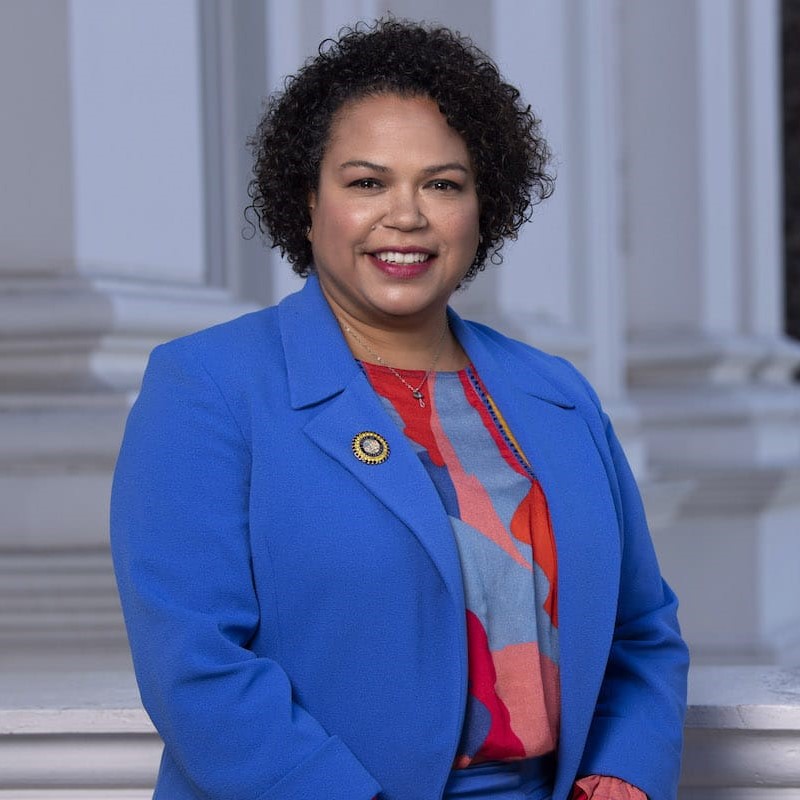
Asm. Mia Bonta
Sponsored bills
Existing law establishes the California Community Colleges, under the administration of the Board of Governors of the California Community Colleges, the California State University, under the administration of the Trustees of the California State University, the University of California, under the administration of the Regents of the University of California, independent institutions of higher education, and private postsecondary educational institutions as the segments of postsecondary education in the state. This bill would enact the California Ban on Scholarship Displacement Act of 2021, which would prohibit each public and private institution of higher education in the state that receives, or benefits from, state-funded financial assistance, or that enrolls students who receive state-funded student financial assistance, from reducing certain students' institution-based gift aid offer below their financial need, except as specified. The bill would make its provisions severable.
Existing law establishes the state prisons under the jurisdiction of the Department of Corrections and Rehabilitation. Existing law places county jails under the jurisdiction of the sheriff for the confinement of persons sentenced to imprisonment for the conviction of a crime. This bill would require every jail, prison, public or privately operated detention facility, and a facility in which individuals are subject to confinement or involuntary detention to develop and follow written procedures governing the management of segregated confinement, as specified. The bill would require those facilities to document the use of segregated confinement by, among other things, providing written orders of that confinement to the individual confined, as specified. The bill would prohibit those facilities from involuntarily placing an individual in segregated confinement if the individual belongs to a special population, including, among others, that the individual has a mental or physical disability or that the individual is under 26 years of age or over 59 years of age. The bill would require the facility to periodically check on the individual and have a medical or mental health professional periodically assess the individual. This bill would require a facility to offer out-of-cell programming to individuals in segregated confinement for at least 4 hours per day, not including time spent on housekeeping or in paid employment. The bill would also authorize a facility to use segregated confinement to help treat and protect against the spread of communicable disease, under certain circumstances. This bill would prohibit a facility from holding an individual in segregated confinement for more than 15 consecutive days and no more than 45 days in a 180-day period, as specified. This bill would also prohibit a facility from imposing limitations on services, treatment, or basic needs; conducting out-of-cell programming opportunities in a smaller cage or therapy module; placing an individual in segregated confinement on the basis of confidential information, as specified; using specified restraints when an individual is in segregated confinement; and using segregated confinement as a means of protecting an individual. This bill would require a facility administrator or chief physician to conduct a secondary review of a person in segregated confinement's dispute regarding qualification in the special populations category. This bill would require facilities to create and publish monthly, semiannual, and annual reports, as specified. The bill would require the Office of the Inspector General and the Board of State and Community Corrections to assess each facility's compliance with the act, as specified. This bill would require local and state authorities to promulgate regulations or directives to implement the act, where applicable. The bill would declare these provisions to be severable. By imposing additional duties on county jails, this bill would create a state-mandated local program. The California Constitution requires the state to reimburse local agencies and school districts for certain costs mandated by the state. Statutory provisions establish procedures for making that reimbursement. This bill would provide that, if the Commission on State Mandates determines that the bill contains costs mandated by the state, reimbursement for those costs shall be made pursuant to the statutory provisions noted above.
Existing law vests the Public Utilities Commission with regulatory authority over public utilities, including telephone corporations. Existing law requires the commission to develop, implement, and administer the California Advanced Services Fund (CASF) to encourage deployment of high-quality advanced communications services to all Californians that will promote economic growth, job creation, and the substantial social benefits of advanced information and communications technologies. Existing law authorizes the commission to impose a surcharge, until December 31, 2032, to collect up to $150,000,000 per year for deposit into the CASF. Existing law requires the commission to establish specified accounts within the CASF, including the Broadband Infrastructure Grant Account to fund the deployment of broadband infrastructure and the Federal Funding Account to fund last-mile broadband projects, as specified. This bill would expressly authorize otherwise eligible wireless broadband service providers to receive funding from the Broadband Infrastructure Grant Account and the Federal Funding Account. The bill would, for purposes of the Federal Funding Account, require the commission to review completed applications within a review period, to document the basis for denial of an application, to authorize the amendment and resubmission of denied applications for consideration in a future review period, and to periodically establish an application deadline. The bill would, for purposes of the Federal Funding Account, authorize the commission to adopt affordability requirements for a recipient of a grant. This bill would incorporate additional changes to Section 281 of the Public Utilities Code proposed by AB 1426 to be operative only if this bill and AB 1426 are enacted and this bill is enacted last. Under existing law, a violation of the Public Utilities Act or any order, decision, rule, direction, demand, or requirement of the commission is a crime. Because the above provisions would be part of the act and a violation of a commission action implementing this bill's requirements would be a crime, the bill would impose a state-mandated local program. The California Constitution requires the state to reimburse local agencies and school districts for certain costs mandated by the state. Statutory provisions establish procedures for making that reimbursement. This bill would provide that no reimbursement is required by this act for a specified reason. This bill would declare that it is to take effect immediately as an urgency statute.
(1) Existing law vests the Public Utilities Commission with regulatory authority over public utilities, including telephone corporations. Existing law requires the commission to develop, implement, and administer the California Advanced Services Fund program to encourage deployment of high-quality advanced communications services to all Californians that will promote economic growth, job creation, and the substantial social benefits of advanced information and communications technologies. Existing law requires the commission, in collaboration with relevant state agencies and stakeholders, to maintain and update a statewide, publicly accessible, and interactive map showing the accessibility of broadband service in the state, as provided. This bill would authorize the commission to collect information from providers of broadband services at the address level. The bill would prohibit the commission from disclosing residential subscriber information, as provided. (2) The Digital Infrastructure and Video Competition Act of 2006 establishes a procedure for the issuance of state franchises for the provision of video service, defined to include video programming services, cable service, and open-video system service, administered by the commission. The act requires, among other things, the commission to collect granular data on the actual locations served by franchise holders. This bill would specify that actual locations include addresses.
Existing law, the Cooperative Corporation Law, authorizes the formation of a corporation for any lawful purpose that is organized and conducts its business primarily for the mutual benefit of its members as patrons of the corporation. Existing law authorizes a corporation organized under those provisions to elect to be governed as a worker cooperative, as specified. Existing law creates the Labor and Workforce Development Agency within state government and places the agency under the supervision of the Secretary of Labor and Workforce Development, and provides that the agency consists of, among other entities, the California Workforce Development Board, the Employment Development Department, and the Department of Industrial Relations. Existing law provides specified protections for employees in regard to payment of wages, hours, working conditions, and labor organizations, among other protections. This bill would enact the Promote Ownership by Workers for Economic Recovery Act. The act would establish a panel to conduct a study regarding the creation of an Association of Cooperative Labor Contractors for the purpose of facilitating the growth of democratically run high-road cooperative labor contractors. The bill would require the study to consider specified issues, including how to promote tenets of democratic worker control and ensure that the association's members offer high-road jobs. The bill would require the panel, in preparing the study, to engage in a stakeholder process by which it consults with, at a minimum, organized labor, worker cooperatives, and business groups that can assess the opportunities and challenges associated with expanding workplace democracy. The bill would require the panel to complete the study and make it publicly available on the internet by June 30, 2024.
(1) The United States Constitution generally requires a state to give full faith and credit to the public acts, records, and judicial proceedings of every other state. Existing law authorizes, upon the demand made by another state, the extradition of a person charged with committing an act in this state that results in a crime in the demanding state, as specified. Existing law sets forth procedures by which a person may enforce a judgment for the payment of money and child custody orders issued by the court of a state other than California. Existing law authorizes a California court or attorney to issue a subpoena if a foreign subpoena has been sought in this state. Existing law generally prohibits a provider of health care, a health care service plan, or a contractor from disclosing medical information regarding a patient, enrollee, or subscriber without first obtaining an authorization, unless a specified exception applies, including that the disclosure is in response to a subpoena. This bill would prohibit a provider of health care, a health care service plan, or a contractor from releasing medical information related to a person or entity allowing a child to receive gender-affirming health care or gender-affirming mental health care in response to a criminal or civil action, including a foreign subpoena, based on another state's law that authorizes a person to bring a civil or criminal action against a person or entity that allows a child to receive gender-affirming health care or gender-affirming mental health care. The bill additionally would prohibit law enforcement agencies from knowingly making or participating in the arrest or extradition of an individual pursuant to an out-of-state arrest warrant based on another state's law against providing, receiving, or allowing a child to receive gender-affirming health care or gender-affirming mental health care in this state, as specified. (2) Existing law, known as the Uniform Child Custody Jurisdiction and Enforcement Act, provides the state exclusive jurisdictional basis for making an initial child custody determination, and permits a California court to assume temporary emergency jurisdiction in specified circumstances. Existing law permits a court to decline to exercise its jurisdiction if it determines that it is an inconvenient forum and a court in another state is a more appropriate forum. Existing law permits a California court to decline to exercise its jurisdiction if the petitioner has wrongfully taken the child from another state or engaged in similar reprehensible conduct, except as specified. Existing law prohibits a court from considering the taking or retention of a child from a person who has legal custody of the child if there is evidence that the taking or retention was a result of domestic violence. The bill would prohibit the enforcement of an order based on another state's law authorizing a child to be removed from their parent or guardian based on that parent or guardian allowing their child to receive gender-affirming health care or gender-affirming mental health care. The bill would prohibit a court from finding that it is an inconvenient forum where the law or policy of another state that may take jurisdiction limits the ability of a parent to obtain gender-affirming health care or gender-affirming mental health care, as defined, and the provision of such care is at issue in the case before the court. The bill would authorize a court to take temporary jurisdiction because a child has been unable to obtain gender-affirming health care. The bill would additionally prohibit a court from considering the taking or retention of a child from a person who has legal custody of the child, if the taking or retention was for obtaining gender-affirming health care or mental health care. The bill would declare its provisions to be severable. (3) This bill would incorporate additional changes to Sections 2029.300 and 2029.350 of the Code of Civil Procedure proposed by AB 2091 to be operative only if this bill and AB 2091 are enacted and this bill is enacted last.
Existing law prohibits the state from seeking a criminal conviction or sentence on the basis of race, ethnicity, or national origin, as specified, and, in a case in which judgment has not been entered prior to January 1, 2021, allows a petition to be filed alleging a violation of that prohibition. Existing law authorizes a court that finds a violation of that prohibition to impose specified remedies, including, among other things, vacating the conviction or sentence and ordering new proceedings. This bill would additionally authorize that petition to be filed for cases in which a judgment was entered as final prior to January 1, 2021, as specified, and in cases in which a juvenile disposition resulted in a commitment to the Division of Juvenile Justice, as specified. The bill would, if a motion under these provisions is based on the conduct or statements by the judge, require the judge to disqualify themselves from those proceedings. The bill would additionally make other technical changes. Existing law allows a defendant to file a motion requesting disclosure of all evidence related to a potential violation of the prohibition on seeking a criminal conviction or sentence on the basis of race, ethnicity, or national origin, and requires the court to order the records to be released upon a showing of good cause. If the records are not privileged, existing law allows the court to permit the prosecution to redact information prior to disclosure. This bill would require the court, upon a showing of good cause, to order disclosure unless a statutory privilege or constitutional privacy right cannot be adequately protected by redaction or a protective order. Under existing law, a conviction or sentence is unlawfully imposed on the basis of race, ethnicity, or national origin if the defendant proves, among other things, that the defendant was charged or convicted of a more serious offense than defendants of other races, ethnicities, or national origins, or received a longer or more severe sentence, and the evidence establishes that the prosecution more frequently sought or obtained convictions for more serious offenses against people who share the defendant's race, ethnicity, or national origin, as specified, or if a longer or more severe sentence was more frequently imposed on defendants of a particular race, ethnicity, or national origin, as specified. Existing law requires this determination to be made pursuant to statistical evidence or aggregate data, as specified. This bill would allow that evidence to include nonstatistical evidence and would require the court to consider the totality of the evidence in determining whether a significant difference in seeking or obtaining convictions or in imposing sentences has been established. The bill would require the court to consider whether systemic and institutional racial bias, racial profiling, and historical patterns of racially biased policing and prosecution may have contributed to, or caused differences observed in, the data or impacted the availability of data overall. This bill would incorporate additional changes to Section 1473 of the Penal Code proposed by SB 467 to be operative only if this bill and SB 467 are enacted and this bill is enacted last.
Existing law designates specific days as holidays in this state. Existing law requires the Governor annually to proclaim the date corresponding with the second new moon following the winter solstice, or the third new moon following the winter solstice should an intercalary month intervene, as the "Lunar New Year." Existing law entitles state employees, with specified exceptions, to elect to receive 8 hours of holiday credit for "Native American Day," in lieu of receiving 8 hours of personal holiday credit, and to elect to use 8 hours of vacation, annual leave, or compensating time off, consistent with departmental operational needs and collective bargaining agreements, for "Native American Day," as specified. This bill would repeal provisions requiring the Governor to annually proclaim the "Lunar New Year," and would instead recognize the "Lunar New Year" as a state holiday. The bill would authorize state employees, with specified exceptions, to elect to receive 8 hours of holiday credit for the "Lunar New Year" in lieu of receiving 8 hours of personal holiday credit, and to elect to use 8 hours of vacation, annual leave, or compensating time off, consistent with departmental operational needs and collective bargaining agreements, for "Lunar New Year," as specified. Existing law designates specific days designated as holidays in this state, every Saturday and the day after Thanksgiving Day as judicial holidays, except "Admission Day," "Columbus Day," and any other day appointed by the President, but not by the Governor, for a public fast, thanksgiving, or holiday. This bill would additionally exclude "Lunar New Year" from designation as a judicial holiday. This bill would incorporate additional changes to Section 135 of the Code of Civil Procedure proposed by AB 1801 to be operative only if this bill and AB 1801 are enacted and this bill is enacted last. This bill would incorporate additional changes to Sections 6700, 19853, and 19853.1 of the Government Code proposed by AB 1655 and AB 1801 to be operative only if this bill and AB 1655, AB 1801, or both are enacted and this bill is enacted last.
Existing regulation requires that a state prison provide a prisoner with use of a telephone consistent with their assigned privilege group. Existing law provides that the sheriff of each county may maintain an inmate welfare fund to be kept in the treasury of the county into which, among other funds, any rebates or commissions received from a telephone company attributable to the use of pay telephones that are primarily used by inmates, is required to be deposited. Existing law contains numerous provisions governing the incarceration and detention of juveniles, including the right to maintain and continue frequent contacts with family members through telephone calls for those confined in a facility of the Division of Juvenile Facilities. This bill would require that a state prison, or a state, county, or city youth residential placement or detention center provide voice communication services to incarcerated persons free of charge to the person initiating and the person receiving the communication, subject to the operational discretion of the Department of Corrections and Rehabilitation in a state-operated facility, as specified. The bill would prohibit a county, city, or state agency from receiving revenue for the provision of communication services to persons in its custody. To the extent this bill would mandate that a local government provide a new program or higher level of service, the bill would impose a state-mandated local program. Existing law vests the Public Utilities Commission with regulatory authority over public utilities, including telephone corporations. Existing law requires the commission to require telephone corporations to provide customer service to telecommunication customers that includes, but is not limited to, reasonable statewide service quality standards. This bill would require the commission to establish service quality standards for incarcerated persons calling services, as defined, to be adhered to by communication service providers rendering services to state or local correctional or detention facilities. Under existing law, a violation of any order, decision, rule, direction, demand, or requirement of the commission is a crime. Because a violation of a commission action implementing this bill's requirements would be a crime, the bill would impose a state-mandated local program. The California Constitution requires the state to reimburse local agencies and school districts for certain costs mandated by the state. Statutory provisions establish procedures for making that reimbursement. This bill would provide that with regard to certain mandates no reimbursement is required by this act for specified reasons. With regard to any other mandates, this bill would provide that, if the Commission on State Mandates determines that the bill contains costs so mandated by the state, reimbursement for those costs shall be made pursuant to the statutory provisions noted above.