

Existing law, the California Healthy Youth Act, requires school districts, defined to include county boards of education, county superintendents of schools, the California School for the Deaf, the California School for the Blind, and charter schools, to ensure that all pupils in grades 7 to 12, inclusive, receive comprehensive sexual health education and human immunodeficiency virus (HIV) prevention education, as specified. The act defines "comprehensive sexual health education" for these purposes to mean education regarding human development and sexuality, including education on pregnancy, contraception, and sexually transmitted infections. This bill would additionally include in that definition of "comprehensive sexual health education" the topic of menstrual health. To the extent the bill would impose additional duties on local educational agencies, the bill would impose a state-mandated local program. The California Constitution requires the state to reimburse local agencies and school districts for certain costs mandated by the state. Statutory provisions establish procedures for making that reimbursement. This bill would provide that, if the Commission on State Mandates determines that the bill contains costs mandated by the state, reimbursement for those costs shall be made pursuant to the statutory provisions noted above.
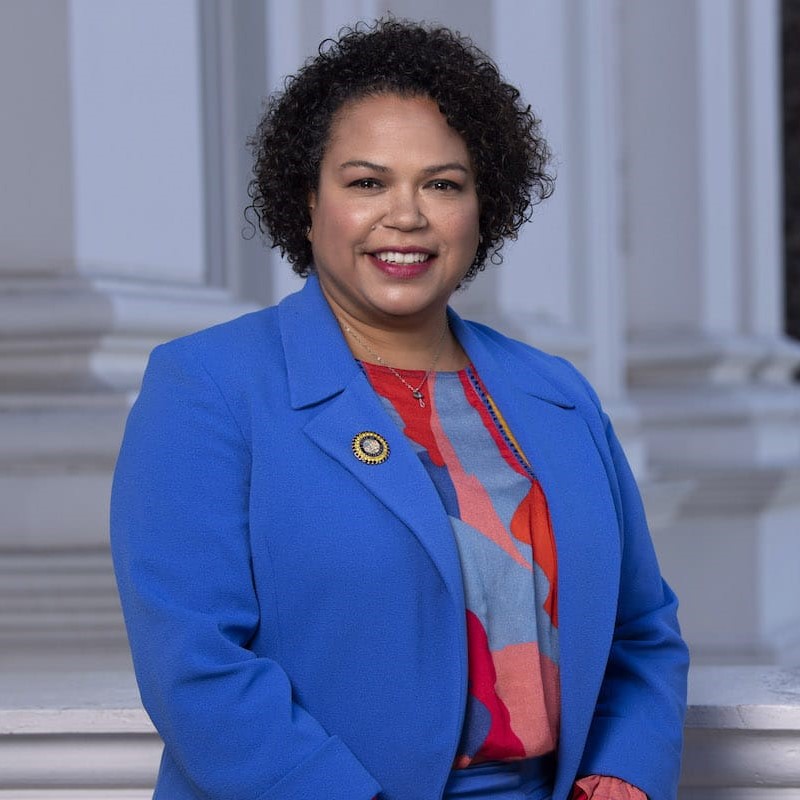
Asm. Mia Bonta
Sponsored bills
Existing law authorizes the operation of an autonomous vehicle on public roads for testing purposes by a driver who possesses the proper class of license for the type of vehicle operated if specified requirements are satisfied. Existing law prohibits the operation of an autonomous vehicle on public roads until the manufacturer submits an application to the Department of Motor Vehicles, as specified, and that application is approved. This bill would require a manufacturer of an autonomous vehicle to report to the department a collision on a public road that involved one of its autonomous vehicles with a gross vehicle weight of 10,001 pounds or more that is operating under a testing or deployment permit that resulted in damage of property, bodily injury, or death within 10 days of the collision. The bill would require a manufacturer of an autonomous vehicle to annually submit to the department specified information regarding the deactivation of the autonomous mode for its autonomous vehicles with a gross vehicle weight of 10,001 pounds or more that were operating under a testing or deployment permit that authorized the vehicle to operate on public roads. The bill would prohibit the operation of an autonomous vehicle with a gross vehicle weight of 10,001 pounds or more on public roads for testing purposes, transporting goods, or transporting passengers without a human safety operator physically present in the autonomous vehicle at the time of operation. The bill would require the Department of Motor Vehicles, by January 1, 2030, or 5 years after commencement of testing, whichever occurs later, and upon appropriation by the Legislature, to submit a report to the appropriate policy and fiscal committees of the Legislature evaluating the performance of autonomous vehicle technology and its impact on public safety and employment in the transportation sector for autonomous vehicles with a gross vehicle weight of 10,001 pounds or more. The bill would require the Department of the California Highway Patrol, the Labor and Workforce Development Agency, the Department of Transportation, the State Air Resources Board, and other relevant state agencies to provide additional information needed to research the report.
Existing law, the California Occupational Safety and Health Act of 1973, imposes safety responsibilities on employers and employees, including the requirement that an employer establish, implement, and maintain an effective injury prevention program, and makes specified violations of these provisions a crime. Existing law also requires the Occupational Safety and Health Standards Board to adopt standards developed by the Division of Occupational Safety and Health that require specified types of hospitals to adopt a workplace violence prevention plan as part of the hospital's injury and illness prevention plan to protect health care workers and other facility personnel from aggressive and violent behavior. This bill would require the standards board, by March 1, 2027, to amend the standards to include a requirement that a hospital implement a weapons detection screening policy that requires the use of weapons detection devices that automatically screen a person's body at specific entrances of the hospital, a requirement that a hospital assign appropriate personnel who meet specified training standards, a requirement that a hospital have reasonable protocols for alternative search and screening for patients, family, or visitors who refuse to undergo weapons detection device screening, and a requirement that a hospital adopt reasonable protocols addressing how the hospital will respond if a dangerous weapon is detected, as specified. Among other provisions, the bill would require that the standards include a requirement that a hospital post, in a conspicuous location, within reasonable proximity of any public entrances where weapons detection devices are utilized, a notice notifying the public that the hospital conducts screenings for weapons upon entry but that no person shall be refused medical care, pursuant to specified federal law. The bill would require the Division of Occupational Safety and Health to set an effective date that is no longer than 90 days after the standard is adopted for hospitals to comply with these requirements. By expanding the scope of an existing crime, this bill would impose a state-mandated local program. The California Constitution requires the state to reimburse local agencies and school districts for certain costs mandated by the state. Statutory provisions establish procedures for making that reimbursement. This bill would provide that no reimbursement is required by this act for a specified reason.
Existing law, the Early Education Act, among other things, requires the Superintendent of Public Instruction to administer all California state preschool programs. Existing law requires the State Department of Education, in collaboration with the State Department of Social Services, to implement a reimbursement system plan that establishes reasonable standards and assigned reimbursement rates, which vary with the length of the program year and the hours of service, for purposes of the act. Existing law requires those contractors who, as of December 31, 2021, received the established standard reimbursement rate to be reimbursed at the greater of the 75th percentile of the 2018 regional market rate survey or the contract per-child reimbursement amount as of December 31, 2021, as increased by a specified cost-of-living adjustment. This bill would instead require, for a contract whose period of performance begins on and after July 1, 2025, the contract reimbursement to be based on the lesser of the maximum reimbursable amount stated in the contract, the net reimbursable program costs, or the product of the adjusted child days of enrollment for certified children times the contract rate set forth in the above-described provisions.
Existing law provides for the licensure and regulation of health facilities by the State Department of Public Health. Existing law requires a health facility to develop, implement, and comply with a patient safety plan to improve the health and safety of patients and to reduce preventable patient safety events. The patient safety plan requires specified elements, including, but not limited to, a reporting system for patient safety events that allows anyone involved to make a report of a patient safety event to the health facility, and a process for a team of facility staff to conduct analyses related to root causes of patient safety events. A violation of these provisions is a crime. This bill would require the reporting system to include anonymous reporting options. The bill would also require analysis of patient safety events by specified sociodemographic factors to identify disparities in these events and would state the intent of the Legislature that a health facility use prescribed stratification categories for this requirement and that a health facility, for certain sociodemographic factors, only be required to disclose information that is voluntarily provided by the patient or client. The bill would require that the safety plan include a process for addressing racism and discrimination and its impacts on patient health and safety, including monitoring sociodemographic disparities in patient safety events and developing interventions to remedy known disparities, and encouraging facility staff to report suspected instances of racism and discrimination. The bill would require, beginning January 1, 2026, and biannually thereafter, that health facilities submit patient safety plans to the department's licensing and certification division. The bill would authorize the department to impose a fine not to exceed $5,000 on health facilities for failure to adopt, update, or submit patient safety plans, and would authorize the department to grant an automatic 60-day extension to submit biannual patient safety plans. The bill would require the department to make all patient safety plans submitted by health facilities available to the public on its internet website. By expanding the requirements on health facilities, the bill would expand the definition of a crime and would impose a state-mandated local program. The California Constitution requires the state to reimburse local agencies and school districts for certain costs mandated by the state. Statutory provisions establish procedures for making that reimbursement. This bill would provide that no reimbursement is required by this act for a specified reason.
Existing law, the Seymour-Campbell Student Success Act of 2012, provides that the purpose of the act is to increase California community college student access and success by providing effective core matriculation services, including orientation, assessment and placement, counseling, other education planning services, and academic interventions. Existing law establishes the Student Equity and Achievement Program and requires a community college district, as a condition of the receipt of funds under the program, to comply with specified requirements, including the maintenance of a student equity plan to ensure equal educational opportunities and promote student success for all students, regardless of race, gender, age, disability, or economic circumstances. Existing law requires a student equity plan to be developed with the active involvement of all groups on campus as required by law, including, but not limited to, the academic senate, academic faculty and staff, student services, and students, and with the involvement of appropriate people from the community. This bill would require a student equity plan to also include a description of the active involvement of all groups on campus in developing the student equity plan for each community college in the community college district. To the extent that the bill would impose new duties on community college districts, it would constitute a state-mandated local program. The California Constitution requires the state to reimburse local agencies and school districts for certain costs mandated by the state. Statutory provisions establish procedures for making that reimbursement. This bill would provide that, if the Commission on State Mandates determines that the bill contains costs mandated by the state, reimbursement for those costs shall be made pursuant to the statutory provisions noted above.
Existing law, the Unruh Civil Rights Act, provides that all persons within the jurisdiction of this state are entitled to full and equal accommodations in all business establishments regardless of their sex, race, color, religion, ancestry, national origin, disability, medical condition, genetic information, marital status, sexual orientation, citizenship, primary language, or immigration status. Existing law, the California Fair Employment and Housing Act, makes it unlawful to engage in specified discriminatory employment practices based on certain protected characteristics, including race, unless based on a bona fide occupational qualification or applicable security regulations, and prohibits housing discrimination based on specified personal characteristics, including race. Existing law states the policy of the State of California to afford all persons in public schools, regardless of their disability, gender, gender identity, gender expression, nationality, race or ethnicity, religion, sexual orientation, or any other specified characteristic, equal rights and opportunities in the educational institutions of the state, and to prohibit acts that are contrary to that policy and to provide remedies therefor. Existing law prohibits discrimination because of a perception that a person has one of those protected characteristics or is associated with a person who has, or is perceived to have, any of those characteristics. The California Fair Employment and Housing Act and public school policy define the term race for purposes of those provisions to include traits historically associated with race, including, but not limited to, hair texture and protective hairstyles, as defined. This bill would remove the term "historically" from the definitions of race, thus defining race to include traits associated with race, including, but not limited to, hair texture and protective hairstyles, as defined, and would add those definitions for "race" and "protective hairstyle" to the Unruh Civil Rights Act. This bill would declare that its provisions are declaratory of existing law. This bill would incorporate additional changes to Section 51 of the Civil Code proposed by SB 1137 to be operative only if this bill and SB 1137 are enacted and this bill is enacted last. This bill would incorporate additional changes to Section 12926 of the Government Code proposed by SB 1022 and SB 1137 to be operative only if this bill and either or both of those bills are enacted and this bill is enacted last.
Existing law grants a person sentenced to imprisonment the right to purchase, receive, and read any and all newspapers, periodicals, and books, as specified, subject to restrictions reasonably related to legitimate penological interests. Existing law authorizes the Department of Corrections and Rehabilitation to prescribe and amend rules and regulations for the administration of state prisons, including determining which materials are a threat to legitimate penological interests. Existing law creates the Office of the Inspector General and grants the Inspector General responsibility for oversight of the department, as specified. This bill would require the Office of the Inspector General to post the Centralized List of Disapproved Publications maintained by the department on the office's internet website and would require the department to notify the office each time a change is made to that list. The bill would authorize the office, upon request, to review publications on the list to determine if it concurs with the department's determination that the publication violates department regulations. The bill would require the office to notify the department if it does not concur with the department's determination. The bill would also require the office to include information relating to those notifications in an annual report the Inspector General provides to the Governor and Legislature.
Former law established, until July 1, 2023, the Task Force to Study and Develop Reparation Proposals for African Americans, with a Special Consideration for African Americans Who are Descendants of Persons Enslaved in the United States. Former law required the Task Force to, among other things, identify, compile, and synthesize the relevant corpus of evidentiary documentation of the institution of slavery that existed within the United States and the colonies that became the United States, and to recommend appropriate remedies in consideration of the Task Force's findings, as specified. Former law required the Task Force to submit a written report of its findings and recommendations to the Legislature, as specified. This bill would provide that the State of California recognizes and accepts responsibility for all of the harms and atrocities committed by the state, its representatives thereof, and entities under its jurisdiction who promoted, facilitated, enforced, and permitted the institution of chattel slavery and the enduring legacy of ongoing badges and incidents from which the systemic structures of discrimination have come to exist. The bill would further provide that the State of California apologizes for perpetuating the harms African Americans have faced and affirms its role in protecting the descendants of enslaved people and all Black Californians. The bill would require a plaque memorializing this apology to be publicly and conspicuously installed and maintained in the State Capitol Building. The bill would impose various duties on the Department of General Services and the Joint Rules Committee relating to the installation and maintenance of the plaque. The bill would authorize the Department of General Services and the Joint Rules Committee to receive money from grants and private donations and would continuously appropriate those funds for this purpose, as specified. The bill would require the Legislature to prepare the formal apology and would request it be signed by specified state leaders. The bill would require the Secretary of State to submit a final copy of this formal apology to the State Archives, where it would be available for viewing by the general public in perpetuity. The bill would include related legislative findings.
The Early Education Act establishes the California Universal Preschool Planning Grant Program with the goal of expanding access universally to preschool programs for 3- and 4-year-old children across the state through a mixed-delivery system, as defined. The act requires the Superintendent of Public Instruction to establish rules and regulations for the staffing of all preschool programs under contract with the State Department of Education. This bill would, notwithstanding any provision of the act to contrary, require the department to, among other things, provide prospective California state preschool program providers an equitable opportunity to establish a trained workforce and administrative systems, and technical assistance on how to meet the requirements of Title 5 of the California Code of Regulations, as provided. The bill would, notwithstanding any provision of the act to contrary, require the department to, among other things, develop early learning resources, as specified, and to develop and implement a proactive one-time 3-year outreach, capacity building, training, and technical assistance plan that targets prospective and new contractors, as provided. The bill would make its provisions operative only upon appropriation by the Legislature for its purposes.