

Existing law prohibits a person employed by or engaged in a public school from inflicting, or causing to be inflicted, corporal punishment upon a pupil. Existing law prohibits the use of certain restraint and seclusion techniques. Existing law authorizes staff trained in prone containment to use the procedure on a pupil who is an individual with exceptional needs in a public school program as an emergency intervention. If prone restraint techniques are used, existing law requires a staff member to observe the pupil for any signs of distress throughout the use of prone restraint. This bill instead would prohibit the use of prone restraint, defined to include prone containment, by an educational provider. The bill would also prohibit the use of prone restraint, including prone containment, on a pupil who is an individual with exceptional needs in a public school program.
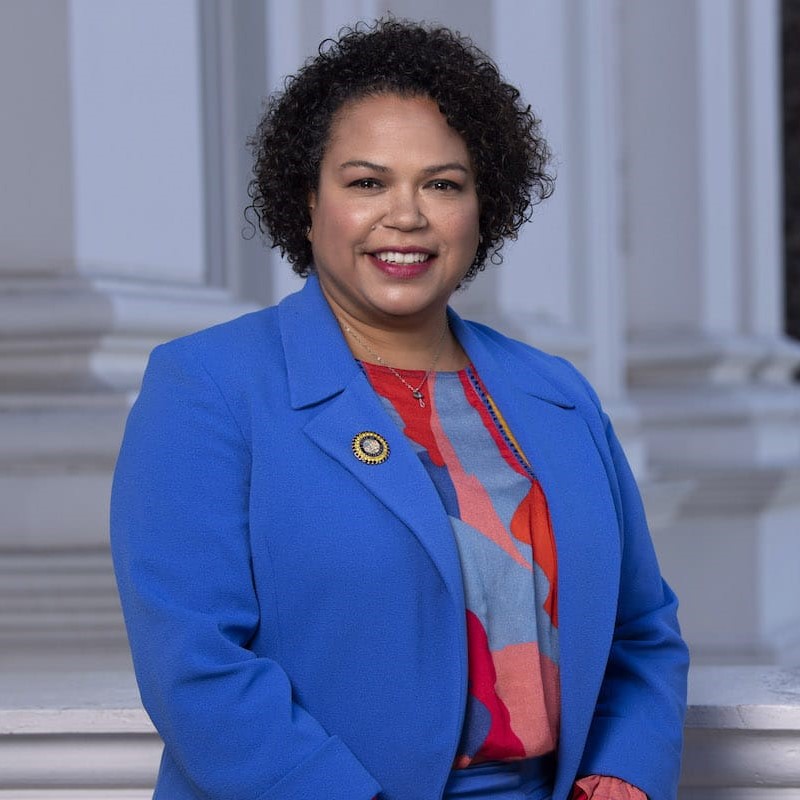
Asm. Mia Bonta
Sponsored bills
Existing law, the Knox-Keene Health Care Service Plan Act of 1975, provides for the licensure and regulation of health care service plans by the Department of Managed Health Care and makes a willful violation of the act a crime. Existing law also provides for the regulation of health insurers by the Department of Insurance. Existing law requires health care service plan contracts and health insurance policies to provide coverage for certain services and treatments, including medical transportation services. Existing law establishes the Medi-Cal program, administered by the State Department of Health Care Services and under which qualified low-income individuals receive health care services, including emergency medical transport. The Medi-Cal program is, in part, governed and funded by federal Medicaid program provisions. Existing law, until January 1, 2031, authorizes a local emergency medical services (EMS) agency to develop a community paramedicine or triage to alternate destination program that, among other things, provides case management services to frequent EMS users or triage paramedic assessments, respectively. This bill would require a health care service plan contract or health insurance policy issued, amended, or renewed on or after July 1, 2025, to establish a process to reimburse for services provided by a community paramedicine program, a triage to alternate destination program, and a mobile integrated health program, as defined. The bill would require those contracts and policies to require an enrollee or insured who receives covered services from a noncontracting program to pay no more than the same cost-sharing amount that they would pay for the same covered services received from a contracting program. The bill would prohibit reimbursement rates adopted pursuant to this provision from exceeding the health care service plan's or health insurer's usual and customary charges for services rendered. Because a willful violation of these provisions by a health care service plan would be a crime, the bill would impose a state-mandated local program. The bill would also make services provided by these programs covered benefits under the Medi-Cal program. The bill would condition this Medi-Cal coverage on an appropriation, receipt of any necessary federal approvals, and the availability of federal financial participation. The California Constitution requires the state to reimburse local agencies and school districts for certain costs mandated by the state. Statutory provisions establish procedures for making that reimbursement. This bill would provide that no reimbursement is required by this act for a specified reason.
Existing law, the Elder Abuse and Dependent Adult Civil Protection Act, establishes various procedures for the reporting, investigation, and prosecution of elder and dependent adult abuse. Existing law defines financial abuse for those purposes and provides that it occurs when, among other instances, a person or entity takes, secretes, appropriates, obtains, or retains, or assists in taking, secreting, appropriating, obtaining, or retaining, real or personal property of an elder or dependent adult for a wrongful use or with intent to defraud, or both. Existing law requires a person or entity to be deemed to have taken, secreted, appropriated, obtained, or retained property for a wrongful use if, among other things, the person or entity takes the property and the person or entity knew or should have known that the conduct is likely to be harmful to the elder or dependent adult. Existing law requires the court to award specified costs if a defendant is found liable for financial abuse, as specified. Existing law makes the failure to report, or impeding or inhibiting a report of, among other things, financial abuse of an elder or dependent adult, in violation of certain reporting requirements a misdemeanor. This bill, commencing January 1, 2026, would require a covered person or entity, as defined, to establish an emergency financial contact program for covered accountholders, as specified. The bill would require a covered person or entity to notify a joint accountholder or an emergency financial contact, if one has been provided, if the covered person or entity should reasonably suspect a covered transaction requested by the covered accountholder is the result of financial abuse. The bill would also require a covered person or entity to delay, by at least 3 business days, a covered transaction initiated by a covered accountholder if the covered person or entity should reasonably suspect the transaction is the result of financial abuse and would make a covered person or entity immune from administrative, civil, or other liability that might arise from a delayed or refused transaction. The bill would authorize a covered person or entity to implement an emergency financial contact program for an accountholder who is not an elder or dependent adult, as specified. Existing law provides for the award of attorney's fees and costs, and damages, to a plaintiff when it is proven by a preponderance of the evidence that the defendant is liable for financial abuse of an elder or dependent adult. This bill would, if proven by a preponderance of the evidence, subject a covered person or entity to liability for actual and noneconomic damages, for certain specified violations. The bill would prohibit a nonmanagerial employee of a covered entity or a covered person who is an employee of a covered entity who meets certain specifications from being held personally liable in their individual capacity for specified violations. The bill would make these provisions severable, except as specified.
Existing law requires a certified farmers' market operator to annually register with the Department of Food and Agriculture by applying for and obtaining a certificate from a county agricultural commissioner that is valid for up to 12 months from the date of issue. Existing law requires a producer, as defined, to register with the department by applying for and obtaining a certificate from the county agricultural commissioner's office in the county in which the producer's land or facility is located before selling at a certified farmers' market. Existing law requires the county agricultural commissioner to issue to the producer a certified producer's certificate upon approval of an application. Existing law makes it unlawful for a person or entity, or employee or agent of that person or entity, to make a statement, representation, or assertion relating to the sale or availability of agricultural products that is false, deceptive, or misleading, as specified, and makes a violation of those provisions a misdemeanor, punishable by imprisonment in the county jail not exceeding 6 months, by a fine not exceeding $2,500, or both the fine and imprisonment. This bill would require an operator of a certified mobile farmers' market, as defined, to register annually with the department. The bill would require the operator of a certified mobile farmers' market to sell or distribute agricultural products, as defined, produced by a California producer with a valid certified producer's certificate, obtain from each producer an itemized list of all products, as specified, ensure that all processed agricultural products being sold comply with specified requirements, and ensure all products being represented or offered for sale as organic are clearly labeled or have conspicuous and posted point-of-sale signage identifying the products as organic. The bill would make a person who makes false, deceptive, or misleading representations, relating to the sale or availability of agricultural products, subject to the penalties mentioned above. By expanding the scope of an existing crime, this bill would impose a state-mandated local program. Existing law requires a dealer, as defined, of any farm product to be licensed. Existing law makes it a misdemeanor for a person to, among other things, attempt to act or to act as a licensee or agent without a license. This bill would require the operator of a certified mobile farmers' market who is selling agricultural products not of their own production to be licensed as a produce dealer. By expanding the scope of an existing crime, this bill would impose a state-mandated local program. Existing law requires a registered California direct marketing producer to pay an annual registration fee of up to $100, as provided, to be deposited in the Department of Food and Agriculture Fund, a continuously appropriated fund, which would be used by the department for the administration of direct marketing of agricultural products, as specified. Existing law requires the Secretary of Food and Agriculture to file an order to adopt, amend, or repeal regulations relating to the fee with the Office of Administrative Law, and would require the order to be filed with the Secretary of State in accordance with specified provisions. This bill would require a certified mobile farmers' market to pay an annual registration fee of up to $200, as provided, to be deposited in the Department of Food and Agriculture Fund, a continuously appropriated fund, and used by the department for the administration of the certified mobile farmers' market registration program, as specified. The bill would require the Secretary of Food and Agriculture to file an order to adopt, amend, or repeal regulations relating to the fee with the Office of Administrative Law, and would require the order to be filed with the Secretary of State in accordance with specified provisions. By requiring the transfer of moneys into a continuously appropriated fund, and by expanding the purposes for which continuously appropriated fund moneys may be used, the bill would make an appropriation. Existing law, the California Retail Food Code, establishes uniform health and sanitation standards for mobile food facilities and various types of food venues. Existing law authorizes local health agencies to be primarily responsible for enforcing the code, but requires the department to provide technical assistance, training, and standardization. A person who violates any provision of the code is guilty of a misdemeanor, except as otherwise provided. This bill would require a certified mobile farmers' market to be permitted and operated as a mobile food facility and would impose upon the certified mobile farmers' market the uniform health and sanitation standards for mobile food facilities and general food safety requirements. By imposing new enforcement requirements on local health agencies, the bill would impose a state-mandated local program. Existing federal law, the WIC Farmers' Market Nutrition Act of 1992, is designed to provide resources to persons who are nutritionally at risk, in the form of fresh, high-quality agricultural products from certified farmers' markets, expand the awareness and use of certified farmers' markets, and increase sales at those markets. Existing state law authorizes the State Department of Public Health to establish the California Special Supplemental Nutrition Food Program for Women, Infants, and Children (WIC Program) to implement the federal program. This bill would require the department to include criteria in the next state plan submission to the United States Department of Agriculture to authorize certified mobile farmers' markets to participate in the WIC Farmers' Market Nutrition Program. If the state plan is approved, the bill would require the department to establish the criteria for authorization of certified mobile farmers' markets to participate in the program, as specified. The California Constitution requires the state to reimburse local agencies and school districts for certain costs mandated by the state. Statutory provisions establish procedures for making that reimbursement. This bill would provide that no reimbursement is required by this act for a specified reason.
Existing federal law, the Federal Food, Drug, and Cosmetic Act and the regulations adopted pursuant to that act, authorizes folic acid to be used in food as a nutrient in accordance with specified prescribed conditions, including that folic acid may be added to corn masa flour at a level not to exceed 0.7 milligrams of folic acid per pound of corn masa flour. Existing federal law also requires any state requirement for nutrition labeling of food to conform with federal law, and requires the declaration of folic acid to be included when added as a nutrient supplement, as specified. Existing state law, the Sherman Food, Drug, and Cosmetic Law, provides for the regulation of various subjects relating to the processing, labeling, advertising, and sale of food, drugs, and cosmetics, including enriched food, under the administration and enforcement of the State Department of Public Health. Existing law provides that all food additive and food labeling regulations and any amendments to those regulations adopted pursuant to the federal law are the regulations of this state, and authorizes the department to prescribe conditions under which a food additive may be used in this state whether or not these conditions are in accordance with the regulations adopted pursuant to the federal act and to adopt additional food labeling regulations. A violation of these provisions is a crime. This bill would, commencing January 1, 2026, require corn masa flour, as defined, that is manufactured, sold, delivered, distributed, held, offered for sale, or used as an ingredient in the manufacture of a food product to contain folic acid at a level of 0.7 milligrams of folic acid per pound of corn masa flour, as specified, and would authorize wet corn masa product that is manufactured, sold, delivered, distributed, held, offered for sale, or used as an ingredient in the manufacture of a food product to contain folic acid at a level of 0.4 milligrams of folic acid per pound of end product, as specified. The bill would require corn masa flour or a wet corn masa product to include specified information, including a declaration of folic acid on the nutrition label in accordance with applicable federal law. The bill would exempt snack foods and corn masa flour made by, or supplied to, specified types of businesses, including cottage food operations or a grocery store that also offers conforming products. The bill would make these provisions severable. By creating a new crime, this bill would impose a state-mandated local program. The California Constitution requires the state to reimburse local agencies and school districts for certain costs mandated by the state. Statutory provisions establish procedures for making that reimbursement. This bill would provide that no reimbursement is required by this act for a specified reason.
Existing law requires a pupil, while enrolled in kindergarten in a public school, or while enrolled in first grade in a public school if the pupil was not previously enrolled in kindergarten in a public school, to present proof of having received an oral health assessment by a licensed dentist, or other licensed or registered dental health professional operating within the professional's scope of practice, that was performed no earlier than 12 months before the date of the initial enrollment of the pupil, as provided. This bill would define "kindergarten" for these purposes as including both transitional kindergarten and kindergarten, and would require the above-described proof only once during a 2-year kindergarten program. To the extent the bill would impose additional duties on public schools, the bill would impose a state-mandated local program. The California Constitution requires the state to reimburse local agencies and school districts for certain costs mandated by the state. Statutory provisions establish procedures for making that reimbursement. This bill would provide that, if the Commission on State Mandates determines that the bill contains costs mandated by the state, reimbursement for those costs shall be made pursuant to the statutory provisions noted above.
Existing law, the Zenovich-Moscone-Chacon Housing and Home Finance Act, prohibits "affordable rent" for certain rental housing developments that receive assistance on or after January 1, 1991, from exceeding a specified percentage based on the area median income adjusted for family size appropriate for the unit and whether the household is an acutely low income household, extremely low income household, very low income household, lower income household, or moderate-income household. Existing law defines "area median income," "adjustments for family size appropriate to the unit," and "moderate-income household" for these purposes. This bill would, for an above-described rental housing development that dedicates 80% of units to lower income households, as specified, prohibit affordable rent from exceeding the rent prescribed by deed restrictions or regulatory agreements pursuant to the terms of public financing or public financial assistance for the rental housing development, if the rental housing development receives specified awards on or after January 1, 2025. The bill would also modify the above-described definitions. By altering "affordable rent," and thereby revising the duties of local government officials with respect to administering various programs and requirements that require a determination of "affordable rent," this bill would impose a state-mandated local program. Existing law establishes a low-income housing tax credit program, through which the California Tax Credit Allocation Committee allocates low-income housing tax credits aimed at providing affordable low-income housing within and throughout the state. Existing law authorizes the committee to undertake specified responsibilities in allocating the tax credit, including entering into regulatory agreements relating to projects that are allocated the tax credit. Existing law requires the committee, when allocating the tax credit, to prefer specified projects, including projects that serve lowest income tenants at rents affordable to those tenants. This bill would require the committee, on or before June 30, 2025, to adopt regulations limiting annual rent increases for tenants in properties that received an allocation of the low-income housing tax credit, prior to April 3, 2024, as specified. The bill would require the committee, on or before June 30, 2026, and annually thereafter, to assess the limit, as specified. The bill would also make a related statement of legislative findings and declarations. The California Constitution requires the state to reimburse local agencies and school districts for certain costs mandated by the state. Statutory provisions establish procedures for making that reimbursement. This bill would provide that, if the Commission on State Mandates determines that the bill contains costs mandated by the state, reimbursement for those costs shall be made pursuant to the statutory provisions noted above.
Existing law requires the adopted course of study for grades 1 to 6, inclusive, and the adopted course of study for grades 7 to 12, inclusive, to include certain areas of study, including, among others, English, mathematics, social sciences, science, and visual and performing arts, as specified. Existing law requires the Instructional Quality Commission, when the history-social science curriculum framework is next revised, on or after January 1, 2024, to consider providing for inclusion, in that curriculum framework, related evaluation criteria, and accompanying instructional materials, of instruction, among other things, the historical, social, economic, and political contributions of Asian Americans, Native Hawaiians, and Pacific Islanders in the United States. This bill, with respect to the adopted course of study for grades 1 to 6, inclusive, for social sciences, would additionally require instruction that provides a foundation for understanding the Spanish colonization of California and the Gold Rush Era, including the treatment and perspectives of Native Americans during those periods. The bill, with respect to the adopted course of study for grades 7 to 12, inclusive, for social sciences, would require, to the extent instruction is provided on the Spanish colonization of California or the Gold Rush Era, instruction that provides a foundation for understanding the treatment and perspectives of Native Americans during those periods. The bill would require the commission, when the State Board of Education next revises the history-social science curriculum framework or adopts new instructional materials, on or after January 1, 2025, to consider including content on the treatment and perspectives of Native Americans during those periods in that curriculum framework or evaluation criteria for instructional materials. To the extent that this bill would create new duties for local educational agencies or local officials, it would constitute a state-mandated local program. This bill would incorporate additional changes to Section 51210 of the Education Code proposed by AB 2073 to be operative only if this bill and AB 2073 are enacted and this bill is enacted last. This bill would incorporate additional changes to Section 51220 of the Education Code proposed by AB 1871 to be operative only if this bill and AB 1871 are enacted and this bill is enacted last. This bill would incorporate additional changes to Section 51226.3 of the Education Code proposed by AB 1805 to be operative only if this bill and AB 1805 are enacted and this bill is enacted last. The California Constitution requires the state to reimburse local agencies and school districts for certain costs mandated by the state. Statutory provisions establish procedures for making that reimbursement. This bill would provide that, if the Commission on State Mandates determines that the bill contains costs mandated by the state, reimbursement for those costs shall be made pursuant to the statutory provisions noted above.
Existing law defines a "fence-line monitoring system," for purposes of specified laws requiring the monitoring of toxic air contaminants from nonvehicular sources, to mean monitoring equipment that measures and records air pollutant concentrations at or adjacent to a stationary source that may be useful for detecting or estimating emissions of pollutants from the source, including the quantity of fugitive emissions, and in supporting enforcement efforts. Existing law requires the Department of Toxic Substances Control to adopt, and revise when appropriate, standards and regulations for the management of hazardous wastes to protect against hazards to the public health, to domestic livestock, to wildlife, or to the environment, including the operation of metal shredding facilities for appliance recycling. Existing law authorizes the department to collect an annual fee from all metal shredding facilities that are subject to the requirements of the hazardous waste control laws, and to deposit those fees into a subaccount in the Hazardous Waste Control Account. Existing law makes those moneys available to the department, upon appropriation by the Legislature, to reimburse the department's costs to implement the hazardous waste control laws applicable to metal shredding facilities. Existing law establishes the State Air Resources Board as the state agency with primary jurisdiction over the regulation of air pollution. Existing law generally designates air pollution control districts and air quality management districts with the primary responsibility for the control of air pollution from all sources other than vehicular sources. This bill would require, instead of authorize, the department to collect the above-described annual fee from all metal shredding facilities that are subject to the requirements of the hazardous waste control laws, and would require the department to set the fee schedule at a rate sufficient to also reimburse the Office of Environmental Health Hazard Assessment for its costs to implement these provisions, as provided. The bill would make the moneys in the subaccount additionally available, upon appropriation by the Legislature, to the office for its costs to implement these provisions, as provided. The bill would require an air district the jurisdiction of which includes metal shredding facilities, in consultation with the department and the office, on or before January 1, 2027, to develop requirements for facilitywide fence-line air quality monitoring at metal shredding facilities, as provided. The bill would require the air district to, among other things, develop threshold levels, in consultation with the office, for airborne contaminants, as specified, and, on or before July 1, 2027, to adopt regulations to implement, interpret, or make specific the requirements of the bill. The bill would authorize the air district to be reimbursed for these costs pursuant to its fee authority. The bill would require the department to require metal shredding facilities to monitor and report to the department hazardous waste constituents requested by the department and would authorize metal shredding facilities to report the results of that monitoring to local public health departments, as provided. The bill would also require the department to collect and analyze light fibrous material at the fence lines to determine the potential for release of hazardous waste. The bill would require the department, on or before July 1, 2027, to develop a community notification procedure, as provided. By imposing new duties on air districts and local public health departments, the bill would impose a state-mandated local program. The California Constitution requires the state to reimburse local agencies and school districts for certain costs mandated by the state. Statutory provisions establish procedures for making that reimbursement. This bill would provide that with regard to certain mandates no reimbursement is required by this act for a specified reason. With regard to any other mandates, this bill would provide that, if the Commission on State Mandates determines that the bill contains costs so mandated by the state, reimbursement for those costs shall be made pursuant to the statutory provisions noted above.
(1) Existing federal law, the Victims of Crime Act of 1984, creates the Crime Victims Fund and authorizes federal financial assistance to states for the purpose of supporting eligible crime victim assistance programs. Existing law creates various programs under the Office of Emergency Services related to crime prevention and education, including, among other things, programs concerning family violence prevention and domestic violence prevention. This bill, the California Victims of Crime Act, would establish the California Crime Victims Fund in the State Treasury and would require that moneys deposited in the fund be continuously appropriated to the Office of Emergency Services to support crime victims services. The bill would require the Office of Emergency Services to seek advisement from the Victims of Crime Act Steering Committee on priorities for utilizing the funds and would require the Treasurer to provide an annual report to the Legislature on the amounts deposited into the fund. By continuously appropriating moneys to the Office of Emergency Services for the support of crime victim services, the bill would make an appropriation. (2) Existing law establishes the aggravated white-collar crime enhancement which imposes enhanced penalties against a person who commits 2 or more related felonies, a material element of which is fraud or embezzlement, that involve a pattern of related felony conduct, and the pattern of related felony conduct involves the taking or loss of more than $100,000, as specified. This bill would authorize a court to impose an additional fine, known as the corporate white collar criminal enhancement, against a corporation that is convicted of a misdemeanor or felony. The bill would authorize the court to determine the amount of the fine, but would set specified limits. The bill would require the court to consider certain factors when determining the amount of the fine, including, among other things, the nature and seriousness of the offense and the corporation's assets, liabilities, and net worth, as specified. The bill would require that any moneys collected under this provision be deposited into the California Crime Victims Fund. (3) The California Constitution entitles the victim of a crime to restitution. Existing law requires the court in each criminal case to order a convicted defendant to pay full restitution to the victim and a separate restitution fine, as specified. This bill would, if a corporation is convicted of a misdemeanor or felony offense, require the court to impose a separate and additional restitution fine, as specified. The bill would authorize the court to determine the amount of the restitution fine, but would impose specified maximums. The bill would require any moneys collected under this provision to be distributed to the California Crime Victims Fund and the prosecuting agency that brought the criminal prosecution, as specified.