

(1) The Alcoholic Beverage Control Act contains various provisions regulating the application for, the issuance of, the suspension of, and the conditions imposed upon alcoholic beverage licenses by the Department of Alcoholic Beverage Control. Existing law provides for various annual fees for the issuance of alcoholic beverage licenses, depending upon the type of license issued. Existing law authorizes the department to issue a music venue license, as defined, that allows the licensee to sell beer, wine, and distilled spirits at retail for consumption on the premises in a music entertainment facility, as defined. Existing law makes selling, giving, delivering, or purchasing an alcoholic beverage between the hours of 2 a.m. and 6 a.m. of the same day a misdemeanor. Existing law further limits a music venue licensee's authorization to sell, serve, and permit consumption of alcoholic beverages to the time period from 2 hours before a live performance until one hour after the live performance. Existing law authorizes the department to make any examination of the books and records of any licensee and makes any person who fails to preserve the books for inspection guilty of a misdemeanor. This bill would authorize a licensee under a music venue license to apply to the department for a duplicate license or licenses, as prescribed. The bill would also authorize a music venue licensee to sell, serve, and permit consumption of alcoholic beverages during private events or private functions not open to the general public within any hours of operation permitted by its license, regardless of whether any live performance occurs. The bill would exempt the licensee from having to meet certain requirements generally imposed on a music entertainment facility in connection with and during a private event or private function if specified conditions are met. The bill would require the licensee to keep records demonstrating compliance with these provisions for the preceding 3 calendar years and to provide these records to the department upon request. The bill would make a licensee's failure to keep the required records or provide them to the department grounds for disciplinary action punishable as a misdemeanor and would, therefore, expand the scope of a crime, thereby imposing a state-mandated local program. (2) Under existing law, any person possessing an open container of an alcoholic beverage in any city, county, or city and county-owned public place, as specified, or any regional park or recreation and park district, is guilty of an infraction if the city or county has enacted an ordinance that prohibits the possession of those containers or the consumption of alcoholic beverages in those areas, except as specified. Existing law, the Planning and Zoning Law, authorizes the legislative body of any city or county to adopt ordinances regulating zoning within its jurisdiction, as specified. Existing law authorizes a licensed beer manufacturer, a licensed winegrower, and any on-sale licensee to sell certain alcoholic beverages for consumption on or off the premises, as specified. This bill, additionally, would authorize a licensed beer manufacturer, a licensed winegrower, and any on-sale licensee to permit consumers to leave the premises with open containers of alcoholic beverages for consumption off the premises within an entertainment zone, subject to certain conditions. The bill would define "entertainment zone" for purposes of the Alcoholic Beverage Control Act as a zone created by ordinance on or after January 1, 2024, in the City and County of San Francisco, that authorizes consumption of one or more types of alcoholic beverages on public streets, sidewalks, or public rights-of-way adjacent to and during a special event permitted or licensed by the department. The bill would require the City and County of San Francisco, if it establishes an entertainment zone, to provide specified information relating to the entertainment zone to the department and establish a process or procedure by which persons in possession of alcoholic beverages in the entertainment zone may be readily identifiable as being 21 years of age or older. This bill would make legislative findings and declarations as to the necessity of a special statute for City and County of San Francisco. (3) This bill would incorporate additional changes to Section 23357 of the Business and Professions Code proposed by SB 788 to be operative only if this bill and SB 788 are enacted and this bill is enacted last. This bill would incorporate additional changes to Section 23358 of the Business and Professions Code proposed by AB 1704 to be operative only if this bill and AB 1704 are enacted and this bill is enacted last. (4) The California Constitution requires the state to reimburse local agencies and school districts for certain costs mandated by the state. Statutory provisions establish procedures for making that reimbursement. This bill would provide that no reimbursement is required by this act for a specified reason.
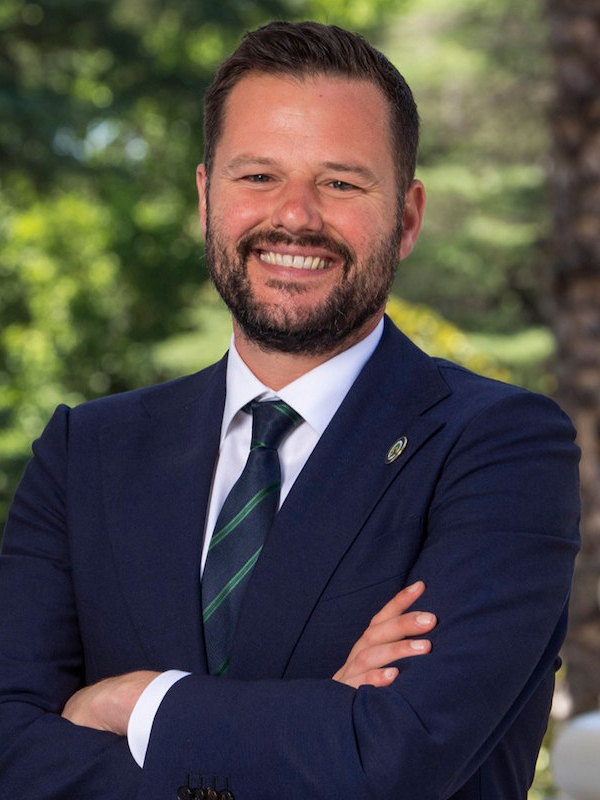
Asm. Matt Haney
Sponsored bills
Existing law, the Lanterman-Petris-Short Act, provides for the involuntary commitment and treatment of a person who is a danger to themselves or others or who is gravely disabled. Existing law, for purposes of involuntary commitment, defines "gravely disabled" as either a condition in which a person, as a result of a mental health disorder, is unable to provide for their basic personal needs for food, clothing, or shelter or has been found mentally incompetent, as specified. This bill expands the definition of "gravely disabled" to also include a condition in which a person, as a result of a severe substance use disorder, or a co-occurring mental health disorder and a severe substance use disorder, is, in addition to the basic personal needs described above, unable to provide for their personal safety or necessary medical care, as defined. The bill would also expand the definition of "gravely disabled," as it applies to specified sections, to include, in addition to the basic needs described above, the inability for a person to provide for their personal safety or necessary medical care as a result of chronic alcoholism. The bill would authorize counties to defer implementation of these provisions to January 1, 2026, as specified. The bill would make conforming changes. To the extent that this change increases the level of service required of county mental health departments, the bill would impose a state-mandated local program. Existing law also authorizes the appointment of a conservator, in the County of Los Angeles, the County of San Diego, or the City and County of San Francisco, for a person who is incapable of caring for the person's own health and well-being due to a serious mental illness and substance use disorder. Existing law establishes the hearsay rule, under which evidence of a statement is generally inadmissible if it was made other than by a witness while testifying at a hearing and is offered to prove the truth of the matter stated. Existing law sets forth exceptions to the hearsay rule to permit the admission of specified kinds of evidence. Under this bill, for purposes of an opinion offered by an expert witness in any proceeding relating to the appointment or reappointment of a conservator pursuant to the above-described provisions, the statements of specified health practitioners or a licensed clinical social worker included in the medical record would not be made inadmissible by the hearsay rule under specified conditions. The bill would authorize the court to grant a reasonable continuance if an expert witness in a proceeding relied on the medical record and the medical record has not been provided to the parties or their counsel. Existing law requires the State Department of Health Care Services to collect data quarterly and publish, on or before May 1 of each year, a specified report that includes, among other things, the number of persons for whom temporary conservatorship are established in each county and an analysis and evaluation of the efficacy of mental health assessments, detentions, treatments, and supportive services provided, as specified. This bill would, beginning with the report due May 1, 2024, require the report to also include the number of persons admitted or detained, as specified, for conditions that include, among others, grave disability due to a mental health disorder, severe substance use disorder, or both a mental health disorder and a severe substance use disorder. The California Constitution requires the state to reimburse local agencies and school districts for certain costs mandated by the state. Statutory provisions establish procedures for making that reimbursement. This bill would provide that, if the Commission on State Mandates determines that the bill contains costs mandated by the state, reimbursement for those costs shall be made pursuant to the statutory provisions noted above.
(1) Existing law, the Meyers-Milias-Brown Act (act) , authorizes local public employees, as defined, to form, join, and participate in the activities of employee organizations of their own choosing for the purpose of representation on matters of labor relations. Existing law generally requires that the scope of representation under the act include all matters relating to employment conditions and employer-employee relations, while excepting the consideration of the merits, necessity, or organization of any service or activity provided by law or executive order. Existing law states that the Legislature finds and declares that the duties and responsibilities of local agency employer representatives under the act are substantially similar to the duties and responsibilities required under existing collective bargaining enforcement procedures and therefore the costs incurred by the local agency employer representatives in performing those duties and responsibilities under that act are not reimbursable as state-mandated costs. This bill would impose specified requirements with respect to the temporary employees, as defined, of a public employer who have been hired to perform the same or similar type of work that is performed by permanent employees represented by a recognized employee organization, subject to limited exceptions. In this regard the bill would require those temporary employees to be automatically included in the same bargaining unit as the permanent employees if the requested classification of temporary employees is not presently within the unit. The bill would further require the public employer to promptly participate in collective bargaining to establish certain employment conditions for the newly added temporary employees if the parties' current memorandum of understanding does not address them, as specified. The bill would also require a public employer to, upon hire, provide each temporary employee with their job description, wage rates, and eligibility for benefits, anticipated length of employment, and procedures to apply for open, permanent positions. By imposing new duties on local agencies that employ temporary employees, the bill would impose a state-mandated local program. The bill would require complaints alleging a violation of its provisions to be processed as unfair practice charges under the act. The bill would additionally include the same findings and declarations as set forth above. (2) The California Constitution requires the state to reimburse local agencies and school districts for certain costs mandated by the state. Statutory provisions establish procedures for making that reimbursement. This bill would provide that no reimbursement shall be made pursuant to these statutory provisions for costs mandated by the state pursuant to this act, but would recognize that a local agency or school district may pursue any available remedies to seek reimbursement for these costs.
Existing law authorizes the Department of Corrections and Rehabilitation to maintain canteens at its facilities, as specified. Existing law requires the sale prices of the articles offered for sale to be fixed by the Director of Corrections at the amounts that will, as far as possible, render each canteen self-supporting. This bill would instead require the department to maintain a canteen at its active facilities, as specified. The bill would, until January 1, 2028, prohibit the sale prices of the articles offered for sale from exceeding a 35% markup above the price of the articles paid to the vendors. The bill would, commencing on January 1, 2028, require the sale amounts of the articles to be offered for sale to be fixed by the secretary at amounts that will render each canteen self-supporting.
Existing law, the Boxing Act, also known as the State Athletic Commission Act, creates within the Department of Consumer Affairs the State Athletic Commission. Existing law establishes the Boxers' Pension Fund, a retirement fund under the exclusive control of the commission, that is funded by an assessment on tickets that is transferred to the commission following a contest or wrestling exhibition, as prescribed, and by contributions by boxers, managers, promoters, or any one or more of these persons. Existing law requires all moneys in the Boxers' Pension Fund to be continuously appropriated to be used exclusively for the purposes and administration of the pension fund. Existing law prohibits any moneys with the Boxers' Pension Fund from being deposited or transferred to the General Fund. Existing law requires every person who conducts a contest or wrestling exhibition, within 72 hours after the determination of every contest or wrestling exhibition for which admission is charged and received, to furnish to the commission, among other things, a written report executed under penalty of perjury by one of the officers, showing the amount of the gross receipts, not to exceed $2,000,000, and a fee of 5% of the amount paid for admission to the contest or wrestling exhibition, but prohibits the fee from exceeding $100,000. Existing law requires the commission to report to a specified legislative committee on the fiscal impact of that $100,000 limitation. This bill would instead require a written report executed under penalty of perjury by one of the officers, showing the amount of the gross receipts, not to exceed $4,000,000, and prohibit the fee of 5% of the amount paid for admission to the contest or wrestling exhibition from exceeding $200,000.
Existing law, the Boxing Act, also known as the State Athletic Commission Act, creates within the Department of Consumer Affairs the State Athletic Commission. Under existing law, the commission has sole direction, management, control of, and jurisdiction over all professional and amateur boxing and kickboxing, all forms and combinations of full contact martial arts contests, including mixed martial arts, and matches or exhibits conducted, held, or given within California. Existing law authorizes the commission to license professional and amateur boxers, professional and amateur martial arts fighters, booking agents, managers of professional boxers and professional martial arts fighters, trainers, chief seconds, and seconds of each. Existing law prohibits a person from participating in any contest, or serving in the capacity of a booking agent, manager, trainer, or second, unless the person has been licensed for that purpose by the commission. Existing law establishes the Boxers' Pension Fund, a retirement fund under the exclusive control of the commission, that is funded by an assessment on tickets that is transferred to the commission following a contest or wrestling exhibition, as prescribed, and by contributions by boxers, managers, promoters, or any one or more of these persons. Existing law requires all moneys in the Boxers' Pension Fund to be continuously appropriated to be used exclusively for the purposes and administration of the pension fund. Existing law prohibits any moneys with the Boxers' Pension Fund from being deposited or transferred to the general fund. This bill would, among other things, require the commission to establish the Mixed Martial Arts Retirement Benefit Fund (MMA Fund) and would continuously appropriate the moneys in the MMA Fund to be used exclusively for the purposes and administration of the MMA Fund. The bill would require the commission to establish a method for financing the MMA Fund, including by a specified assessment on tickets to events under the commission's jurisdiction, by revenue generated through the sale of special interest license plates and other commission-branded items, including, but not limited to, sport paraphernalia and souvenirs, and by contributions from mixed martial artists, managers, promoters, or any one or more of these persons. The bill would require a participating martial artist, as defined, to become vested in the amount credited to the participating martial artist's regular account in the MMA Fund when the participating martial artist has fought in at least 39 scheduled rounds in a commission-sanctioned professional mixed martial art contest held in the state and would prohibit a participating martial artist from being entitled to distribution of the funds held in the participating martial artist's regular account until the participating martial artist is at least 50 years of age. The bill would require contributions to finance the MMA Fund to be allocated to each participating martial artist's regular account on the last day of the MMA Fund year, as specified. The bill would authorize the commission to award an early retirement benefit to a participating martial artist, who has vested in the MMA Fund but is younger than 50 years of age, for vocational, education, training, or medical need in the amount contained in the participating martial artist's regular account, as specified. The bill would require information submitted by or to a participating martial artist pursuant to that early retirement benefit provision to be confidential and not subject to public disclosure unless, among other things, the participating martial artist, in writing, waives the confidentiality of information submitted to the commission. The bill would also authorize a participating martial artist to designate one or more beneficiaries of the martial artist's benefits from the MMA Fund upon the death of the participating martial artist, as prescribed. The bill would require a form submitted by a participating martial artist to the commission or its designee pursuant to that provision, including a beneficiary designation, to be confidential and not subject to public disclosure, except as specified. This bill would require the commission to notify any participating martial artist eligible to receive benefits from the MMA Fund of certain information when the right to receive those benefits vests in that martial artist, including the date upon which the martial artist will first be able to claim benefits from the MMA Fund or will first be able to convert all, or a portion of, those benefits to an early medical or early vocational retirement benefit. This bill would include a change in state statute that would result in a taxpayer paying a higher tax within the meaning of Section 3 of Article XIIIA of the California Constitution, and thus would require for passage the approval of 23 of the membership of each house of the Legislature. Existing constitutional provisions require that a statute that limits the right of access to the meetings of public bodies or the writings of public officials and agencies be adopted with findings demonstrating the interest protected by the limitation and the need for protecting that interest. This bill would make legislative findings to that effect.
Existing law authorizes a minor who is 12 years of age or older to consent to medical care and counseling relating to the diagnosis and treatment of a drug- or alcohol-related problem. Existing law exempts replacement narcotic abuse treatment, as specified, from these provisions. This bill would authorize a minor who is 16 years of age or older to consent to replacement narcotic abuse treatment that uses buprenorphine at a physician's office, clinic, or health facility, by a licensed physician and surgeon or other health care provider, as specified, whether or not the minor also has the consent of their parent or guardian. The bill would authorize a minor 16 years of age or older to consent to any other medications for opioid use disorder from a licensed narcotic treatment program as replacement narcotic therapy without the consent of the minor's parent or guardian only if, and to the extent, expressly permitted by federal law.
Existing law, the Pharmacy Law, requires the California State Board of Pharmacy within the Department of Consumer Affairs to license and regulate the practice of pharmacy, including pharmacists, pharmacy technicians, and pharmacies. Existing law authorizes a county, city and county, or special hospital authority, as defined, to operate a mobile unit as an extension of a pharmacy license held by the county, city and county, or special hospital authority to provide prescription medication within its jurisdiction to specified individuals, including those individuals without fixed addresses. Existing law authorizes a mobile unit to dispense prescription medication pursuant to a valid prescription if the county, city and county, or special hospital authority meets prescribed requirements for licensure, staffing, and operations, including a prohibition on carrying or dispensing controlled substances. Existing law, the California Uniform Controlled Substances Act, classifies certain controlled substances into Schedules I to V, inclusive. This bill would instead authorize a county, city and county, or special hospital authority to operate one or more mobile units as an extension of a pharmacy license held by the county, city and county, or special hospital authority, as described above. The bill would require the pharmacist-in-charge to determine the number of mobile units that are appropriate for a particular pharmacy license. The bill would additionally authorize a mobile unit to provide prescription medication within its jurisdiction to city-and-county-operated housing facilities. This bill would exempt from the above-described prohibition on carrying or dispensing controlled substances Schedule III, Schedule IV, or Schedule V controlled substances approved by the United States Food and Drug Administration for the treatment of opioid use disorder. The bill would require any controlled substance for the treatment of opioid use disorder carried or dispensed in accordance with that exemption to be carried in reasonable quantities based on prescription volume and stored securely in the mobile pharmacy unit. Existing law requires a city, city and county, or special hospital authority, at least 30 days before commencing operation of a mobile unit, to notify the board of its intention to operate a mobile unit. Existing law further requires that the board be given notice at least 30 days before discontinuing operation of a mobile unit. This bill would instead require a county, city and county, or special hospital authority to notify the board of its intention to operate a mobile unit as soon as possible, and no later than 5 business days after commencing operation of a mobile unit. The bill would also require a city, city and county, or special hospital authority to notify the board of its intention to discontinue operation of a mobile unit as soon as possible, and at least one business day before discontinuing operation of a mobile unit.
Existing law generally requires a contractor or subcontractor to be registered with the Department of Industrial Relations to be qualified to bid on, be listed in a bid proposal, or engage in the performance of any public works contract. Existing law requires a contractor or subcontractor to meet specific conditions to qualify for this registration. Existing law requires the Department of Industrial Relations to maintain on its internet website a list of contractors that are currently registered to perform public work. This bill would require awarding authorities to annually submit to the Department of Industrial Relations' electronic project registration database a list of ineligible contractors, as specified, pursuant to local debarment or suspension processes. This bill would require the department to make the list available to the public through the electronic database.
Existing law, the Pharmacy Law, provides for the licensure and regulation of pharmacists, pharmacy technicians, and pharmacies by the California State Board of Pharmacy, which is within the Department of Consumer Affairs. Existing law authorizes the board to appoint an executive officer to exercise the powers and perform the duties delegated by the board. A violation of the Pharmacy Law is a crime. (1) Existing law requires every pharmacy to designate a pharmacist-in-charge who is responsible for a pharmacy's compliance with all state and federal laws and regulations pertaining to the practice of pharmacy. This bill would authorize a pharmacist-in-charge to make staffing decisions to ensure sufficient personnel are present in the pharmacy to prevent fatigue, distraction, or other conditions that may interfere with a pharmacist's ability to practice competently and safely. The bill would authorize a pharmacist on duty, if the pharmacist-in-charge is not available, to adjust staffing according to workload if needed. The bill would require a pharmacist-in-charge or pharmacist on duty to immediately notify store management of any conditions that present an immediate risk of death, illness, or irreparable harm to patients, personnel, or pharmacy staff. The bill would require store management to take immediate and reasonable steps to address and resolve those conditions, and, if those conditions are not resolved within 24 hours, would require the pharmacist-in-charge or pharmacist on duty to ensure the board is notified. The bill would require the executive officer, upon a reasonable belief that conditions within a pharmacy exist that present an immediate risk of death, illness, or irreparable harm to patients, personnel, or pharmacy staff, to issue a cease and desist order, as specified. The bill would make a failure to comply with the cease and desist order unprofessional conduct for a pharmacy corporation. (2) Existing law, with specified exceptions, prohibits a community pharmacy from requiring a pharmacist employee to engage in the practice of pharmacy at any time the pharmacy is open to the public, unless either another employee of the pharmacy or, if the pharmacy is located within another establishment, an employee of the establishment within which the pharmacy is located, is made available to assist the pharmacist at all times. This bill would require a chain community pharmacy to be staffed at all times with at least one clerk or pharmacy technician fully dedicated to performing pharmacy-related services. The bill would prohibit the board from taking action against a pharmacy for a violation of this requirement if specified conditions apply, including if the pharmacist on duty waives the requirement in writing during specified hours based on workload needs. The bill would require, if staffing of pharmacist hours within a chain community pharmacy does not overlap sufficiently, that scheduled closures for lunch time for all pharmacy staff be established and publicly posted and included on the outgoing telephone message. The bill would require a licensed community pharmacy, as defined, to report all medication errors to an entity approved by the board and to maintain records, as prescribed. The bill would deem these reports confidential and not subject to discovery, subpoena, or disclosure pursuant to the California Public Records Act, except that the board would be authorized to publish certain deidentified information compiled from the data in the reports in accordance with specified requirements. (3) Existing law authorizes a pharmacy technician to perform prescribed nondiscretionary tasks only while assisting, and while under the direct supervision and control of, a pharmacist who is responsible for the duties performed under their supervision by a technician. Existing law prohibits a pharmacy with only one pharmacist from having more than one pharmacy technician performing these tasks. This bill would additionally authorize a pharmacy technician under the direct supervision and control of a pharmacist to prepare and administer influenza and COVID-19 vaccines via injection or intranasally, prepare and administer epinephrine, perform specimen collection for specified tests, receive prescription transfers, and accept clarification on prescriptions under prescribed conditions. The bill would prohibit a pharmacy with only one pharmacist from having more than one pharmacy technician performing these additionally authorized tasks and specify that if a pharmacy technician is performing these additionally authorized tasks, a second pharmacy technician is required to be assisting a pharmacist with performing the nondiscretionary tasks currently authorized under existing law. (4) Existing law establishes specific provisions for the licensure of clinics, including requiring a clinic that makes an application for a license to show evidence that the professional director is responsible for the safe, orderly, and lawful provision of pharmacy services. Existing law requires a consulting pharmacist be retained to approve the clinic's policies and procedures in conjunction with the professional director and the administrator and to visit the clinic regularly and at least quarterly. Existing law requires the consulting pharmacist to certify in writing quarterly that the clinic is, or is not, operating in compliance with existing law governing clinics. This bill would require a consulting pharmacist, before July 1 of every odd-numbered year, to complete a Surgical Clinic Self-Assessment Form as determined by the board as a means to promote compliance through self-examination and education, as specified, including a requirement that the professional director of the clinic and consulting pharmacist make a prescribed certification signed under penalty of perjury, kept on file in the clinic for 3 years, and made available to the board or its designee, upon request. The bill would require, as part of the renewal process for a clinic license, that the consulting pharmacist certify compliance with the quarterly inspections and provide the most recent self-assessment form. By expanding the crime of perjury, this bill would impose a state-mandated local program. (5) Existing law requires the board to take action against any holder of a license who is guilty of unprofessional conduct or whose license has been issued by mistake. Existing law establishes a list of specified actions that constitute unprofessional conduct. This bill would expand the list of specified actions that constitute unprofessional conduct to include actions or conduct that would subvert the efforts of a pharmacist to comply with laws and regulations, or exercise professional judgment, including creating or allowing conditions that may interfere with a pharmacist's ability to practice with competency and safety or creating or allowing an environment that may jeopardize patient care; actions or conduct that would subvert the efforts of a pharmacist-in-charge to comply with laws and regulations, exercise professional judgment, or make determinations about adequate staffing levels to safely fill prescriptions of the pharmacy or provide other patient care services in a safe and competent manner; actions or conduct that would subvert the efforts of a pharmacist intern or a pharmacy technician to comply with laws or regulations; or establishing policies and procedures related to time guarantees to fill prescriptions within a specified time unless those guarantees are required by law or to meet contractual requirements. (6) Existing law authorizes the board to issue a cease and desist order for operating any facility under existing law that requires licensure or for practicing any activity under existing law that requires licensure without obtaining that licensure. This bill would authorize the board to assess administrative fines and issue orders of abatement to any unlicensed entity who engages in any action that requires licensure under the jurisdiction of the board, not to exceed $5,000 for each occurrence pursuant to a citation issued by the board. (7) By imposing new requirements under the Pharmacy Law, the violation of which would be a crime, this bill would impose as state-mandated local program. (8) Existing constitutional provisions require that a statute that limits the right of access to the meetings of public bodies or the writings of public officials and agencies be adopted with findings demonstrating the interest protected by the limitation and the need for protecting that interest. This bill would make legislative findings to that effect. (9) The California Constitution requires the state to reimburse local agencies and school districts for certain costs mandated by the state. Statutory provisions establish procedures for making that reimbursement. This bill would provide that no reimbursement is required by this act for a specified reason.