

Pharmacy.
Summary
Existing law, the Pharmacy Law, provides for the licensure and regulation of pharmacists, pharmacy technicians, and pharmacies by the California State Board of Pharmacy, which is within the Department of Consumer Affairs. Existing law authorizes the board to appoint an executive officer to exercise the powers and perform the duties delegated by the board. A violation of the Pharmacy Law is a crime. (1) Existing law requires every pharmacy to designate a pharmacist-in-charge who is responsible for a pharmacy's compliance with all state and federal laws and regulations pertaining to the practice of pharmacy. This bill would authorize a pharmacist-in-charge to make staffing decisions to ensure sufficient personnel are present in the pharmacy to prevent fatigue, distraction, or other conditions that may interfere with a pharmacist's ability to practice competently and safely. The bill would authorize a pharmacist on duty, if the pharmacist-in-charge is not available, to adjust staffing according to workload if needed. The bill would require a pharmacist-in-charge or pharmacist on duty to immediately notify store management of any conditions that present an immediate risk of death, illness, or irreparable harm to patients, personnel, or pharmacy staff. The bill would require store management to take immediate and reasonable steps to address and resolve those conditions, and, if those conditions are not resolved within 24 hours, would require the pharmacist-in-charge or pharmacist on duty to ensure the board is notified. The bill would require the executive officer, upon a reasonable belief that conditions within a pharmacy exist that present an immediate risk of death, illness, or irreparable harm to patients, personnel, or pharmacy staff, to issue a cease and desist order, as specified. The bill would make a failure to comply with the cease and desist order unprofessional conduct for a pharmacy corporation. (2) Existing law, with specified exceptions, prohibits a community pharmacy from requiring a pharmacist employee to engage in the practice of pharmacy at any time the pharmacy is open to the public, unless either another employee of the pharmacy or, if the pharmacy is located within another establishment, an employee of the establishment within which the pharmacy is located, is made available to assist the pharmacist at all times. This bill would require a chain community pharmacy to be staffed at all times with at least one clerk or pharmacy technician fully dedicated to performing pharmacy-related services. The bill would prohibit the board from taking action against a pharmacy for a violation of this requirement if specified conditions apply, including if the pharmacist on duty waives the requirement in writing during specified hours based on workload needs. The bill would require, if staffing of pharmacist hours within a chain community pharmacy does not overlap sufficiently, that scheduled closures for lunch time for all pharmacy staff be established and publicly posted and included on the outgoing telephone message. The bill would require a licensed community pharmacy, as defined, to report all medication errors to an entity approved by the board and to maintain records, as prescribed. The bill would deem these reports confidential and not subject to discovery, subpoena, or disclosure pursuant to the California Public Records Act, except that the board would be authorized to publish certain deidentified information compiled from the data in the reports in accordance with specified requirements. (3) Existing law authorizes a pharmacy technician to perform prescribed nondiscretionary tasks only while assisting, and while under the direct supervision and control of, a pharmacist who is responsible for the duties performed under their supervision by a technician. Existing law prohibits a pharmacy with only one pharmacist from having more than one pharmacy technician performing these tasks. This bill would additionally authorize a pharmacy technician under the direct supervision and control of a pharmacist to prepare and administer influenza and COVID-19 vaccines via injection or intranasally, prepare and administer epinephrine, perform specimen collection for specified tests, receive prescription transfers, and accept clarification on prescriptions under prescribed conditions. The bill would prohibit a pharmacy with only one pharmacist from having more than one pharmacy technician performing these additionally authorized tasks and specify that if a pharmacy technician is performing these additionally authorized tasks, a second pharmacy technician is required to be assisting a pharmacist with performing the nondiscretionary tasks currently authorized under existing law. (4) Existing law establishes specific provisions for the licensure of clinics, including requiring a clinic that makes an application for a license to show evidence that the professional director is responsible for the safe, orderly, and lawful provision of pharmacy services. Existing law requires a consulting pharmacist be retained to approve the clinic's policies and procedures in conjunction with the professional director and the administrator and to visit the clinic regularly and at least quarterly. Existing law requires the consulting pharmacist to certify in writing quarterly that the clinic is, or is not, operating in compliance with existing law governing clinics. This bill would require a consulting pharmacist, before July 1 of every odd-numbered year, to complete a Surgical Clinic Self-Assessment Form as determined by the board as a means to promote compliance through self-examination and education, as specified, including a requirement that the professional director of the clinic and consulting pharmacist make a prescribed certification signed under penalty of perjury, kept on file in the clinic for 3 years, and made available to the board or its designee, upon request. The bill would require, as part of the renewal process for a clinic license, that the consulting pharmacist certify compliance with the quarterly inspections and provide the most recent self-assessment form. By expanding the crime of perjury, this bill would impose a state-mandated local program. (5) Existing law requires the board to take action against any holder of a license who is guilty of unprofessional conduct or whose license has been issued by mistake. Existing law establishes a list of specified actions that constitute unprofessional conduct. This bill would expand the list of specified actions that constitute unprofessional conduct to include actions or conduct that would subvert the efforts of a pharmacist to comply with laws and regulations, or exercise professional judgment, including creating or allowing conditions that may interfere with a pharmacist's ability to practice with competency and safety or creating or allowing an environment that may jeopardize patient care; actions or conduct that would subvert the efforts of a pharmacist-in-charge to comply with laws and regulations, exercise professional judgment, or make determinations about adequate staffing levels to safely fill prescriptions of the pharmacy or provide other patient care services in a safe and competent manner; actions or conduct that would subvert the efforts of a pharmacist intern or a pharmacy technician to comply with laws or regulations; or establishing policies and procedures related to time guarantees to fill prescriptions within a specified time unless those guarantees are required by law or to meet contractual requirements. (6) Existing law authorizes the board to issue a cease and desist order for operating any facility under existing law that requires licensure or for practicing any activity under existing law that requires licensure without obtaining that licensure. This bill would authorize the board to assess administrative fines and issue orders of abatement to any unlicensed entity who engages in any action that requires licensure under the jurisdiction of the board, not to exceed $5,000 for each occurrence pursuant to a citation issued by the board. (7) By imposing new requirements under the Pharmacy Law, the violation of which would be a crime, this bill would impose as state-mandated local program. (8) Existing constitutional provisions require that a statute that limits the right of access to the meetings of public bodies or the writings of public officials and agencies be adopted with findings demonstrating the interest protected by the limitation and the need for protecting that interest. This bill would make legislative findings to that effect. (9) The California Constitution requires the state to reimburse local agencies and school districts for certain costs mandated by the state. Statutory provisions establish procedures for making that reimbursement. This bill would provide that no reimbursement is required by this act for a specified reason.
Bill status
signed
all 5 stages cleared
Introduction
Feb 2023
Committee Review
Aug 2023
Assembly Passage
Jun 2023
Senate Passage
Sep 2023
Signed into Law
Oct 2023
Introduced Feb 16, 2023
Signed Oct 8, 2023
Floor votes · Senate Sep 13, 2023 · Assembly Jun 1, 2023
How they voted
30–9
Passed · 1 other
Total votes 40
Sep 13, 2023
D
Democratic31
96% Yea
R
Republican9
100% Nay
Vote distribution
All Yea
All Nay
Mixed
No data
Full legislative history
Actions timeline
Total actions
28
Key actions
12
Committee
7
Amendments
10
Oct 8, 2023
Signed into law
Approved by the Governor.
legislature
Sep 14, 2023
Lower · Passed
Senate amendments concurred in. To Engrossing and Enrolling. (Ayes 59. Noes 8. Page 3560.).
lower
Sep 13, 2023
Introduced
In Assembly. Concurrence in Senate amendments pending.
lower
Sep 13, 2023
Upper · Passed
Read third time. Passed. Ordered to the Assembly. (Ayes 30. Noes 9. Page 2758.).
upper
Sep 8, 2023
Upper · Passed
Read third time and amended. Ordered to second reading.
upper
Aug 21, 2023
Upper · Passed
From committee: Be ordered to second reading pursuant to Senate Rule 28.8.
upper
Jul 13, 2023
Upper · Passed
Read second time and amended. Re-referred to Com. on APPR.
upper
Jul 12, 2023
Introduced
From committee: Amend, and do pass as amended and re-refer to Com. on APPR. (Ayes 9. Noes 2.) (July 11).
upper
Jul 5, 2023
Introduced
From committee chair, with author's amendments: Amend, and re-refer to committee. Read second time, amended, and re-referred to Com. on JUD.
upper
Jul 3, 2023
Upper · Passed
From committee: Do pass and re-refer to Com. on JUD. (Ayes 8. Noes 3.) (July 3). Re-referred to Com. on JUD.
upper
Jun 29, 2023
Introduced
From committee chair, with author's amendments: Amend, and re-refer to committee. Read second time, amended, and re-referred to Com. on B., P. & E. D.
upper
Jun 14, 2023
Committee
Referred to Coms. on B., P. & E. D. and JUD.
upper
Jun 1, 2023
Lower · Passed
Read third time. Passed. Ordered to the Senate. (Ayes 57. Noes 10. Page 2125.)
lower
May 31, 2023
Lower · Passed
Read third time and amended. Ordered to third reading. (Page 1954.)
lower
May 3, 2023
Lower · Passed
From committee: Do pass. (Ayes 12. Noes 2.) (May 3).
lower
Apr 20, 2023
Committee
Re-referred to Com. on APPR.
lower
Apr 19, 2023
Lower · Passed
Read second time and amended.
lower
Apr 18, 2023
Introduced
From committee: Amend, and do pass as amended and re-refer to Com. on APPR. (Ayes 11. Noes 1.) (April 18).
lower
Mar 2, 2023
Committee
Referred to Com. on B. & P.
lower
Feb 17, 2023
Lower · Passed
From printer. May be heard in committee March 19.
lower
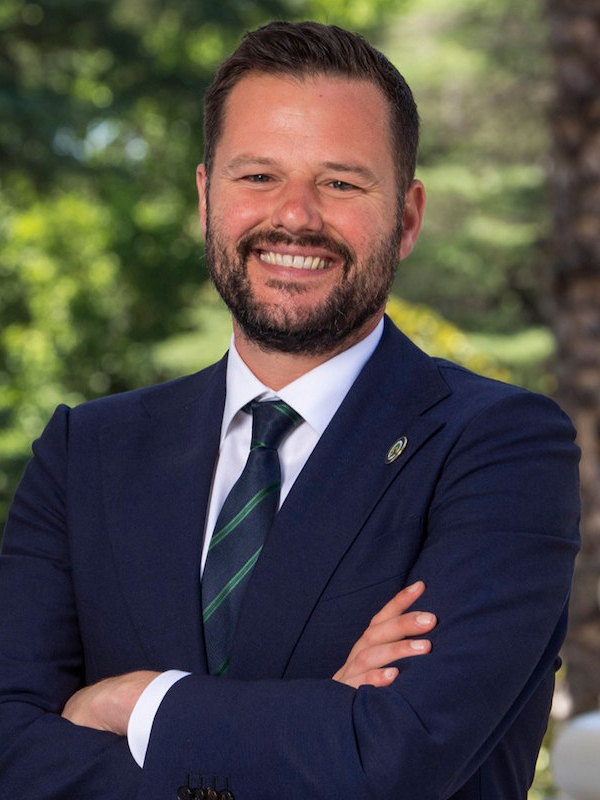
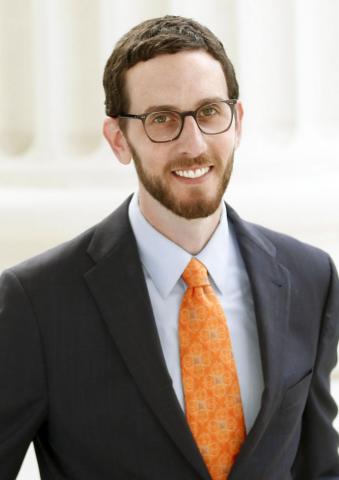
1 primary · 1 co-sponsor
Sponsors
Ask Maddy
·
AI policy assistant
Ask Maddy about AB 1286
Scope: CA
Hi! I can help you understand AB 1286. What would you like to know?
Try one of these
i
Maddy answers using official bill text and legislative records. Always verify before sharing.
Sources cited inline