

Existing law, the Elder Abuse and Dependent Adult Civil Protection Act, establishes procedures for the reporting, investigation, and prosecution of elder and dependent adult abuse. Existing law requires a mandated reporter of suspected financial abuse of an elder or dependent adult, as defined, to report financial abuse in a specified manner, including by telephone or through a confidential internet reporting tool, as specified, immediately, or as soon as practicably possible. If reported by telephone, existing law requires a written report to be sent, or an internet report to be made through the internet reporting tool, to the local adult protective services agency or the local law enforcement agency within 2 working days. Existing law deems all officers and employees of a financial institution to be mandated reporters of suspected financial abuse of an elder or dependent adult. A mandated reporter who fails to report financial abuse of an elder or dependent adult is liable for civil penalties, as specified. If a report of financial abuse is made by a mandated reporter, as described above, this bill would also require a report to be made to the Federal Bureau of Investigation Internet Crime Complaint Center within 2 working days. Within 48 hours of filing a report, the bill would require a financial institution to notify the elder or dependent adult identified in the report, as specified, and provide additional required information. The bill would require a financial institution to provide annual training to its mandated reporters on how to escalate internally and report suspected financial abuse of an elder or a dependent adult to both local and federal authorities, as specified. The bill would specify that violations of these provisions would not incur the above-described liability for civil penalties. The bill would make its provisions operative on January 1, 2028.
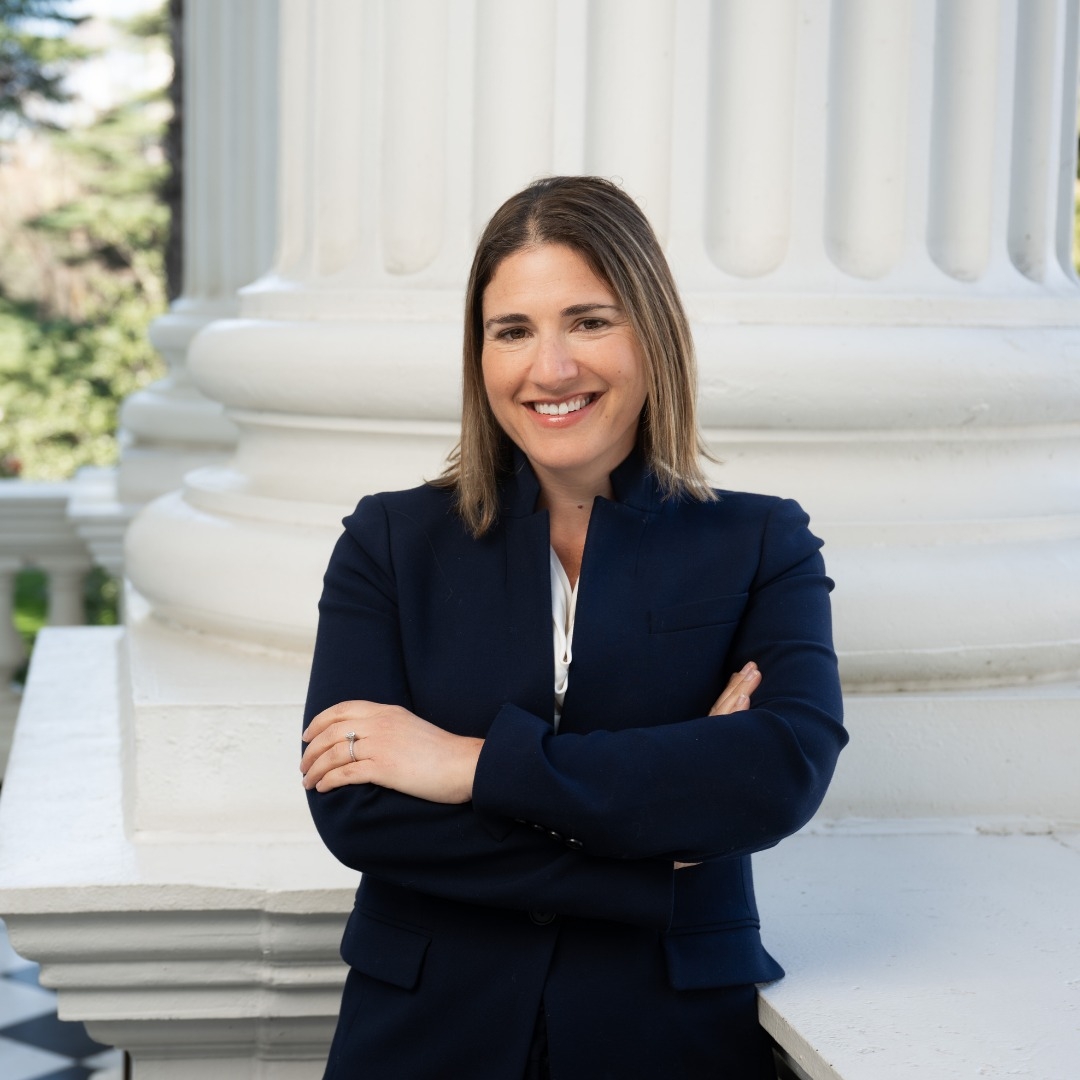
Asm. Rebecca Bauer-Kahan
Sponsored bills
(1) Existing law tolls the periods of limitation to bring specific civil actions for up to 2 years, if during that time that the claimant is imprisoned on a criminal charge, as specified. However, under existing law these tolling provisions do not apply to an action brought against a public entity or public employee, as specified. This bill would, notwithstanding any other law, provide that the period for bringing an action for sexual assault against a public entity or public employee that is alleged to have occurred while the claimant was imprisoned on a criminal charge, or in execution under the sentence of a criminal court, is tolled during the entire period of the claimant's imprisonment or sentence. Under the bill, any claim for sexual assault against a public entity or public employee subject to that provision is exempt from all state and local government claim presentation requirements. (2) Existing law establishes the Office of the Sexual Abuse in Detention Elimination Ombudsperson with the authority to inspect all of the Department of Corrections and Rehabilitation institutions and to interview all inmates and wards. Under existing law, if an investigation confirms that any employee of the department has sexually abused an inmate or ward, that employee is required to be terminated. Existing law prohibits retaliation against an inmate or ward for making an allegation of sexual abuse. Existing law requires the department to keep statistics on the sexual abuse of inmates and wards and make that data available to the Office of the Sexual Abuse in Detention Elimination Ombudsperson. This bill would prohibit an employee who has been terminated after an investigation confirms that the employee has sexually abused an incarcerated person or ward from future employment with the department. This bill would require the department to monitor for 90 days an incarcerated person who reports sexual assault, and the incarcerated person reported to have suffered the sexual assault, by a staff member for possible retaliation. The bill would require the department to make specific notifications and reporting after an incarcerated person is reported to have suffered a sexual assault. The bill would require the department, on or before January 1, 2028, to develop and implement procedures for notifications of an incarcerated person's contact person, as defined. The bill would require the department to minimize the transfer of an incarcerated person who is reported to have suffered a sexual assault by a staff member for 90 days following the report, unless there is an operational need to do so or there are safety, security, or health concerns. The bill would define terms for its purposes and declare these provisions are severable.
Existing law designates specific days as holidays in this state. Existing law designates holidays on which public schools are required to close. This bill would require, commencing with the 2027–28 school year, the governing board of a school district, a county office of education, or the governing body of a charter school to consider making efforts to avoid scheduling the first day of class and high school graduation, if applicable, on a date for which the governing board of the school district, the county office of education, or the governing body of the charter school knows, or has reason to know, that members of the public would be unable to participate or be present due to the ritual observance of a religious, cultural, or ancestral holiday. The bill would require the governing board of a school district, a county office of education, or the governing body of a charter school, in considering and making a determination of which dates to avoid, to actively seek input from the affected community and consider any other relevant sources to ensure inclusive public participation. The Donahoe Higher Education Act sets forth the missions and functions of California's public segments of higher education and their respective institutions of higher education. The California State University, under the administration of the Trustees of the California State University, the California Community Colleges, under the administration of the Board of Governors of the California Community Colleges, and the University of California, under the administration of the Regents of the University of California, are 3 of the segments. Provisions of the act apply to the University of California only to the extent that the Regents of the University of California act, by appropriate resolution, to make them applicable. This bill would require, commencing with the 2027–28 academic year, the governing board of a community college and the California State University, and would request the University of California, to make good faith, reasonable efforts, when developing academic calendars, to avoid calendaring an institutional event, as defined, on a date for which the institution of higher education knows, or has reason to know, that members of the public would be unable to participate or be present due to the ritual observance of a religious, cultural, or ancestral holiday. The bill would require the governing board of a community college and the California State University, and would request the University of California, in considering and making a determination of which dates to avoid, to seek input from the student and faculty organizations on campus. The Bagley-Keene Open Meeting Act and the Ralph M. Brown Act require, with specified exceptions, that all meetings of specified governmental bodies be open and public and all persons be permitted to attend. Existing law prohibits a state agency, as defined, or a legislative body of a local agency, as defined, from conducting any meeting, conference, or other function in any facility that prohibits the admittance of any person, or persons, on the basis of ancestry or a specified characteristic, that is inaccessible to disabled persons, or where members of the public may not be present without making a payment or purchase. This bill would require a state agency to make good faith, reasonable efforts to avoid conducting any meeting, conference, or other function on a date for which the state agency knows, or has reason to know, that members of the public would be unable to participate or be present due to the ritual observance of a religious, cultural, or ancestral holiday, including, among others, Eid al-Adha, Rosh Hashanah, and Diwali. The bill would also encourage a legislative body of a local agency to consider making efforts to avoid conducting any meeting, conference, or other function on a date for which the legislative body knows, or has reason to know, that members of the public would be unable to participate or be present due to the ritual observance of a religious, cultural, or ancestral holiday, including, among others, the holidays listed above. By imposing new duties on school districts and community college districts, the bill would impose a state-mandated local program. This bill would authorize a person who has suffered harm as a result of a violation of certain of the above provisions to bring a civil action for injunctive relief, as provided. The California Constitution requires local agencies, for the purpose of ensuring public access to the meetings of public bodies and the writings of public officials and agencies, to comply with a statutory enactment that amends or enacts laws relating to public records or open meetings and contains findings demonstrating that the enactment furthers the constitutional requirements relating to this purpose. This bill would make legislative findings to that effect. The California Constitution requires the state to reimburse local agencies and school districts for certain costs mandated by the state. Statutory provisions establish procedures for making that reimbursement. This bill would provide that, if the Commission on State Mandates determines that the bill contains costs mandated by the state, reimbursement for those costs shall be made pursuant to the statutory provisions noted above.
Existing law requires law enforcement agencies to report to the Department of Justice, as specified, any incident in which a peace officer is involved in a shooting or use of force that results in death or serious bodily injury. Existing law requires the state prosecutor to investigate incidents involving a shooting by a peace officer resulting in the death of an unarmed civilian. Existing law authorizes the state prosecutor to criminally prosecute any officer that, pursuant to an investigation, is found to have violated state law. Existing law provides that the Attorney General is the state prosecutor unless otherwise specified or named. This bill would require the state prosecutor to conduct an independent, transparent, and thorough investigation into incidents of an immigration enforcement officer-involved shooting resulting in the death of an unarmed civilian. The bill would authorize the state prosecutor to criminally prosecute an immigration enforcement officer that, pursuant to an investigation, is found to have violated state law. The bill would require the state prosecutor to post and maintain on a public internet website each written report, as specified. The bill provides that the Attorney General is the state prosecutor unless otherwise specified or named. This bill would provide that the provisions of this bill are severable.
Existing law requires a social media platform to take certain actions with respect to child sexual abuse material on the social media platform, including requiring the platform to provide, in a mechanism that is reasonably accessible to users, a means for a user who is a California resident to report material to the platform that the user reasonably believes meets certain criteria, including that the reported material is child sexual abuse material and that the reporting user is depicted in the material. Existing law also requires the social media platform to collect information reasonably sufficient to enable the platform to contact, as specified, a reporting user. Existing law defines child sexual abuse material for these purposes to include obscene matter that depicts a minor personally engaging in, or personally simulating, sexual conduct. This bill would revise the definition of child sexual abuse material to instead include an intimate visual depiction, as defined, of an identifiable individual who is a minor. The bill would additionally require the above-described mechanism to be clear and conspicuous, as defined, and would delete the requirement that the reporting user be depicted in the material. The bill would require a social media platform to, among other things, ensure review by a natural person if there is not an established or known hash match to child sexual abuse material with respect to the reported material and the reported material is not otherwise blocked. The bill would require a social media platform to restore availability or functionality of the reporting mechanism if the reporting mechanism is unavailable or nonfunctional. Existing law makes a noncomplying social media company liable to a reporting user for actual damages and statutory damages, as specified. This bill would instead make a social media company liable to a depicted individual, as defined, for actual and statutory damages, as provided. The bill would also impose specified civil penalties on a noncomplying company to be collected in a civil action by certain public attorneys, including the Attorney General. Existing law establishes the Survivor Support Fund within the state treasury and makes moneys in the fund available, upon appropriation by the Legislature, for grants by the California Victim Compensation Board to community-based organizations that provide direct services to vulnerable individuals in areas with a high concentration of sex trafficking. This bill would require any penalty collected in a civil action by the Attorney General under these provisions to be deposited into the Survivor Support Fund. Existing law prohibits a social media platform from knowingly facilitating, aiding, or abetting commercial sexual exploitation, as defined. Existing law deems a social media platform to have knowledge for the purposes of this prohibition if material was reported to the social media platform using the reporting mechanism for 4 consecutive months, as provided. Existing law exempts a social media platform from being deemed in violation of this prohibition if it instituted a specified audit program and provided to each member of its board of directors a true and correct copy of each audit, as prescribed. This bill would remove the requirement that material was reported for 4 consecutive months to deem a social media platform to have knowledge for the purposes of the above-described prohibition. The bill would, in order to be exempt from that prohibition, require the social media platform to also submit the audit to the Attorney General, and if requested, to certain other public officials. The bill would provide that an audit submitted as described above is confidential and shall be exempt from disclosure under the California Public Records Act. This bill would declare its provisions severable. Existing constitutional provisions require that a statute that limits the right of access to the meetings of public bodies or the writings of public officials and agencies be adopted with findings demonstrating the interest protected by the limitation and the need for protecting that interest. This bill would make legislative findings to that effect. The California Constitution requires local agencies, for the purpose of ensuring public access to the meetings of public bodies and the writings of public officials and agencies, to comply with a statutory enactment that amends or enacts laws relating to public records or open meetings and contains findings demonstrating that the enactment furthers the constitutional requirements relating to this purpose. This bill would make legislative findings to that effect.
Existing law includes various provisions limiting how state and local entities may use their resources for immigration enforcement purposes. This bill would prohibit the use of state-owned property for purposes of immigration enforcement, as specified. In this regard, the bill would prohibit, among other uses, staging, assembling, mobilizing, or deploying vehicles, equipment, or personnel for immigration enforcement purposes. The bill would require the Department of General Services and state agencies to work together to identify state-owned property previously or likely to be used for immigration enforcement purposes. The bill would require state agencies to post signage at those properties regarding the prohibition and to use physical barriers limiting access, as provided. The bill would require state agencies to develop procedures to ensure that an attempted or actual use of state-owned property for immigration enforcement purposes is documented in writing, that the documentation includes any photographic or video evidence, and that the Attorney General's office or the Attorney General's designee is notified. The bill would direct state agencies to make educational materials available regarding the rights of employees, tenants, and security staff if federal agents enter state-owned property. The bill would further require the Attorney General's office to design standardized signage and to make the signage available to download free of charge on the Attorney General's internet website.
Existing law vests the Public Utilities Commission with regulatory authority over public utilities, including electrical corporations. Existing law authorizes the commission to fix the rates and charges for every public utility and requires that those rates and charges be just and reasonable. This bill would require the commission to ensure that all data serving as a basis for any decision or ruling issued by the commission, or in any proposal or analysis provided by commission staff, for the determination or application of a calculation methodology for any nonbypassable charge imposed on customers of a load-serving entity to recover costs associated with contracts, electrical corporation-owned generation, or any other resource or value included in that charge and any other charge derived from those costs, is made available to load-serving entities and ratepayer advocates on behalf of customers. The bill would require the commission to require an electrical corporation, member association, load-serving entity, or other party, in submitting a proposal or analysis for the determination or application of a calculation methodology for any nonbypasssable charge imposed on customers of a load-serving entity to recover costs associated with contracts, electrical corporation-owned generation, or any other resource or value included in that charge and any other charge derived from those costs, to make all data serving as a basis for that proposal or analysis available to load-serving entities and ratepayer advocates on behalf of customers. The bill would require that the data exclude any information that can reasonably be used to identify an individual, family, household, residence, or nonresidential customer. The bill would require that the data meet specified requirements, including that it is made available through a public disclosure, except for market-sensitive data, as provided. Under existing law, a violation of the Public Utilities Act or any order, decision, rule, direction, demand, or requirement of the commission is a crime. Because the above provisions would be a part of the act, and because a violation of a commission action implementing the above provisions would be a crime, the bill would impose a state-mandated local program. The California Constitution requires the state to reimburse local agencies and school districts for certain costs mandated by the state. Statutory provisions establish procedures for making that reimbursement. This bill would provide that no reimbursement is required by this act for a specified reason.
Existing law, the Reproductive Privacy Act, declares as contrary to the public policy of this state a law of another state that authorizes a person to bring a civil action against a person or entity that engages in certain activities relating to obtaining or performing an abortion. Existing law prohibits the state from applying an out-of-state law to a case or controversy in state court or enforcing or satisfying a civil judgment under the out-of-state law. This bill would specify that the protections applicable to persons who engage in legally protected health care activity, as defined, apply to a person who previously has undertaken one or more acts or omissions while in another United States jurisdiction to aid or encourage, or attempt to aid or encourage, any person in the exercise and enjoyment, or attempted exercise and enjoyment, of rights to reproductive health care services or gender affirming health care services if the acts or omissions were permissible under the laws of the jurisdiction in which the person was located at the time of the acts or omissions. Existing law prohibits a state or local law enforcement agency or officer from knowingly arresting or knowingly participating in the arrest of any person for performing, supporting, or aiding in the performance of legally protected health care activity, if the health care activity is lawful in this state. Existing law prohibits a state or local public agency from cooperating with or providing information to an individual or agency from another state or a federal law enforcement agency, as specified, regarding a legally protected health care activity that is lawful in this state. Under existing law, the Governor may surrender, on demand of executive authority of any other state, any person in this state charged in the other state, as specified, with committing an act in this state, or in a 3rd state, intentionally resulting in a crime in the state whose executive authority is making the demand. This bill would prohibit the Governor from recognizing a request for extradition of a person subject to criminal liability based on the alleged provision or receipt of, assistance in the provision or receipt of, material support for, or in any theory of vicarious, joint, several, or conspiracy liability for any legally protected health care activity, except as specified.
This measure would urge the President of the United States and Congress of the United States to immediately restore full and consistent funding and staffing for the National Park Service.
Maddy summaryCalifornia Assembly Resolution 140 designates August 2026 as Children's Get Offline and Get Outdoors Month to promote awareness of the benefits of screen-free play for child development. The resolution cites research linking excessive social media use and reduced free play time to increased rates of anxiety, depression, and other behavioral issues among teenagers. It encourages families and communities to support unstructured outdoor activities and highlights ongoing federal efforts to protect children's mental health through technology guardrails.