

Existing law, the Unruh Civil Rights Act, specifies that all persons within the jurisdiction of the state are free and equal. Existing law entitles people regardless of their sex, race, color, religion, ancestry, national origin, disability, medical condition, genetic information, marital status, sexual orientation, citizenship, primary language, or immigration status to the full and equal accommodations, advantages, facilities, privileges, or services in all business establishments of every kind. This bill would establish the Commission on the State of Hate in the state government. The bill would provide for the appointment of 9 members, appointed by the Governor, the Speaker of the Assembly, and the Senate Committee on Rules, as provided. The bill would prescribe the goals of the commission, which would include, among other things, providing resources to various state agencies and the public to inform them on the state of hate and advising the Legislature, the Governor, and state agencies on policy recommendations to promote intersocial education designed to foster mutual respect and understanding among California's diverse population. The bill would require the commission to host and coordinate a minimum of 4 in-person or virtual community forums, open to the public, on the state of hate per year. The bill would require the commission to seek to protect civil liberties in accordance with applicable law. The bill would authorize the commission to seek, apply for, or accept funding from sources other than the General Fund, as provided. Starting July 1, 2023, the bill would require the commission to make publically available and issue to the Governor and the Legislature an Annual State of Hate Commission Report that describes its activities for the previous year and its recommendations for the following year. The bill would require this report, among other things, to provide a comprehensive accounting of hate crime activity statewide and report on relevant national hate crime trends and statistics. The bill would require the commission to report to the Legislature through the Joint Committee on Rules annually, as provided. This bill would make the operation of these provisions contingent on funding appropriated by the Legislature for these purposes, and would require the commission to post notice of the appropriation on the homepage of its internet website and send notice of the funding to the Secretary of State and the Legislative Counsel. This bill would be repealed by its own provisions on January 1, 2027.
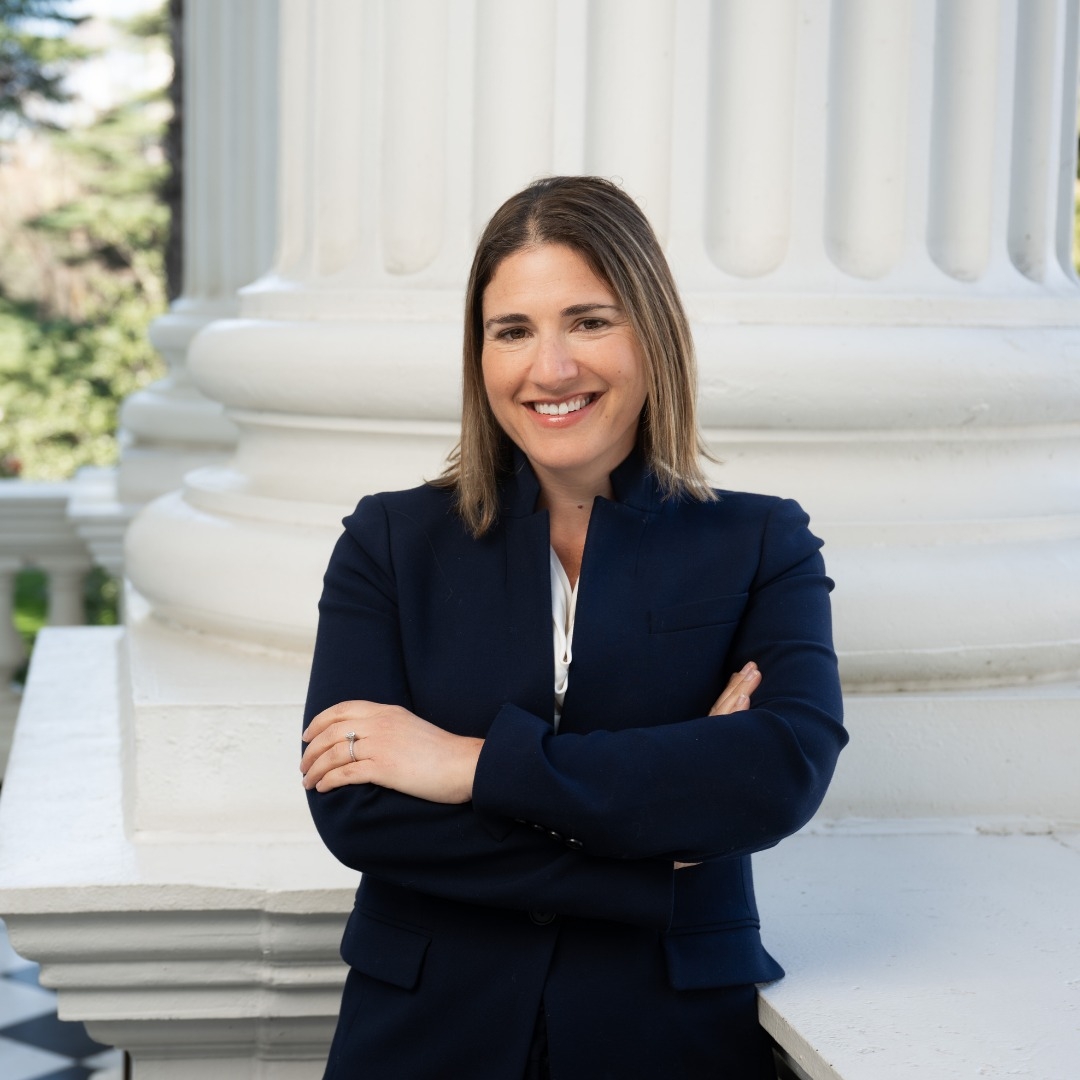
Asm. Rebecca Bauer-Kahan
Sponsored bills
Existing law establishes the State Department of Social Services in the Health and Welfare Agency and sets forth its powers and duties relating to the administration of various programs relating to public social services. This bill would enact the Community Response Initiative to Strengthen Emergency Systems Act, or the C.R.I.S.E.S. Act, for purposes of creating, implementing, and evaluating the C.R.I.S.E.S. Grant Pilot Program, which the act would establish. The bill would require the department to administer the program if appropriate funding is made available to the department. The bill would require the department to award grants to qualified grantees, which include city, county, and tribal departments of social services, disability services, health services, public health, or behavioral health, based on grant eligibility criteria developed in partnership with a stakeholder workgroup. This bill would require each grantee to receive a minimum award of $250,000 per year under the program. The bill would require a grantee to award at least 90% of grant funds received to one or more qualifying community-based organizations, as defined. The bill would require funds awarded under the program to be utilized to create and strengthen community-based alternatives to law enforcement to lessen the reliance on law enforcement agencies as first responders to crisis situations unrelated to a fire department or emergency medical service response. This bill would require a grantee to report at least annually to the department on the use of funding awarded under the program. The bill would require the department to convene a stakeholder workgroup consisting of specified individuals to make recommendations to the department regarding the implementation of the program, as specified. This bill would establish the Community Response Initiative to Strengthen Emergency Systems Program Fund within the State Treasury, and would provide that, upon appropriation by the Legislature, the moneys may be expended by the department for purposes of the program. The bill would prohibit the department from expending more than 5% of appropriated funds on administrative costs, as specified. The bill would require the department to award all grants by January 1, 2023. This bill would authorize the department to implement, interpret, or make specific the provisions of the program without taking regulatory action, as specified. The bill would grant immunity to the state from liability resulting from the activities of a grantee or community-based organization under the program. This bill would repeal these provisions on June 30, 2026.
Existing law requires a public school maintaining any combination of classes from grade 6 to grade 12, inclusive, that meets a 40% pupil poverty threshold specified in federal law, to stock 50% of the school's restrooms with feminine hygiene products, and prohibits a public school from charging for any menstrual products provided to pupils. This bill would enact the Menstrual Equity for All Act of 2021, which would require a public school, as provided, maintaining any combination of classes from grades 6 to 12, inclusive, to stock the school's restrooms with an adequate supply of free menstrual products, as defined, available and accessible, free of cost, in all women's restrooms and all-gender restrooms, and in at least one men's restroom, at all times, and to post a designated notice, on or before the start of the 2022–23 school year, as prescribed. This bill would require the California State University and each community college district, and would encourage the Regents of the University of California and private universities, colleges, and institutions of higher learning, to stock an adequate supply of menstrual products, available and accessible, free of cost, at no fewer than one designated and accessible central location on each campus and to post a designated notice, as provided. By imposing additional requirements on public schools and community college districts, this bill would impose a state-mandated local program. The California Constitution requires the state to reimburse local agencies and school districts for certain costs mandated by the state. Statutory provisions establish procedures for making that reimbursement. This bill would provide that, if the Commission on State Mandates determines that the bill contains costs mandated by the state, reimbursement for those costs shall be made pursuant to the statutory provisions noted above.
Existing law defines a "hate crime" as a criminal act committed, in whole or in part, because of actual or perceived characteristics of the victim, including, among other things, race, religion, disability, and sexual orientation. Existing law requires the Commission on Peace Officer Standards and Training (POST) to develop guidelines and a course of instruction and training for law enforcement officers addressing hate crimes. Existing law requires state law enforcement agencies to adopt a framework or other formal policy created by POST regarding hate crimes. Existing law requires any local law enforcement agency that adopts or updates a hate crime policy to include specified information in that policy, including information on bias motivation. This bill would include a statement of legislative findings and declarations and require the basic course curriculum on the topic of hate crimes to be developed in consultation with subject matter experts, as specified. The bill would, subject to an appropriation of funds for this purpose in the annual Budget Act or other statute, require POST to update the basic course to include the viewing of a specified video course developed by POST. The bill would also require POST to make the video available via the online learning portal, and would require all peace officers to complete specified training materials no later than one year after the commission makes the updated course available. The bill would require POST to develop and periodically update an interactive course on hate crimes for in-service peace officers, and require officers to take the course every 6 years. This bill would also require any local law enforcement agency that adopts or updates a hate crime policy to include specified information on recognizing religion-bias hate crimes, and would require those policies to include the discriminatory selection of victims as a form of bias motivation.
Under existing law, the Department of Consumer Affairs (department) , under the control of the Director of Consumer Affairs, is comprised of various boards that license and regulate various professions and vocations. Existing law requires an applicant seeking a license from a board within the department to meet specified requirements and to pay certain licensing fees. Existing law requires a board within the department to issue, after appropriate investigation, certain types of temporary licenses to an applicant if the applicant meets specified requirements, including that the applicant supplies evidence satisfactory to the board that the applicant is married to, or in a domestic partnership or other legal union with, an active duty member of the Armed Forces of the United States who is assigned to a duty station in this state under official active duty military orders and the applicant submits an application to the board that includes a signed affidavit attesting to the fact that the applicant meets all of the requirements for a temporary license and that the information submitted in the application is accurate, to the best of the applicant's knowledge. Under existing law, some of the funds within the jurisdiction of a board consist of revenue from fees that are continuously appropriated. Existing law authorizes a board to adopt regulations necessary to administer these provisions. This bill, on and after January 1, 2023, would expand the requirement to issue temporary licenses to practice a profession or vocation to include licenses issued by any board within the department, except as provided. The bill would require an applicant for a temporary license to provide to the board documentation that the applicant has passed a California law and ethics examination if otherwise required by the board for the profession or vocation for which the applicant seeks licensure. The bill would require a board to issue a temporary license within 30 days of receiving the required documentation if the results of a criminal background check do not show grounds for denial and would require a board to request the Department of Justice to conduct the criminal background check and to furnish the criminal background information in accordance with specified requirements. The bill would specifically direct revenues from fees for temporary licenses issued by the California Board of Accountancy to be credited to the Accountancy Fund, a continuously appropriated fund. The bill would require, if necessary to implement the bill's provisions, a board to submit to the department for approval draft regulations necessary to administer these provisions. The bill would exempt from these provisions a board that has a process in place by which an out-of-state licensed applicant in good standing who is married to, or in a domestic partnership or other legal union with, an active duty member of the Armed Forces of the United States is able to receive expedited, temporary authorization to practice while meeting state-specific requirements for a period of at least one year or is able to receive an expedited license by endorsement with no additional requirements superseding those for a temporary license, as described above. The bill would make conforming changes. By expanding the scope of the crime of perjury, the bill would impose a state-mandated local program. The bill's expansion of the requirement to issue temporary licenses would result in revenues from fees for certain licenses being deposited into continuously appropriated funds. By establishing a new source of revenue for those continuously appropriated funds, the bill would make an appropriation. Existing law provides that these temporary licenses shall expire 12 months after issuance, upon issuance of an expedited license, or upon denial of the application for expedited licensure by the board, whichever occurs first. Existing law authorizes the immediate termination of a temporary license upon a finding that the temporary licenseholder failed to meet the requirements for temporary licensure or provided substantively inaccurate information that would affect the person's eligibility for temporary licensure. This bill, on and after July 1, 2023, would instead provide that these temporary licenses are nonrenewable and shall expire 12 months after issuance, upon issuance or denial of a standard license, upon issuance or denial of a license by endorsement, or upon issuance or denial of an expedited license, whichever occurs first. The bill, on and after July 1, 2023, would also require the board to revoke a temporary license if the board finds that the temporary licenseholder engaged in unprofessional conduct or any other act that is cause for discipline by the board. This bill would require the Department of Consumer Affairs to compile an annual report to the Legislature containing specified information relating to the professional licensure of veterans, servicemembers, and their spouses. The bill would also require the Department of Consumer Affairs and each board within the department to post specified information on their internet websites relating to licensure for military spouses, the availability of temporary licenses, and permanent licensure by endorsement or credential for out-of-state applicants. The bill would also require the Department of Real Estate to compile specified information on military, veteran, and spouse licensure into an annual report for the Legislature. Existing law, the Psychology Licensing Law, provides for the licensure and regulation of psychologists by the Board of Psychology. Existing law authorizes a psychologist certified or licensed in another state or Canadian province who has applied to the board for licensure to provide activities and services of a psychological nature without a valid license for a period not to exceed 180 days from the time of submitting their application or from the commencement of residency in the state, whichever occurs first, subject to specified conditions and requirements. This bill would also authorize a psychologist certified or licensed in another state or Canadian province who is married to, or in a domestic partnership or other legal union with, an active duty member of the Armed Forces of the United States and who has applied to the board for licensure to perform activities and services of a psychological nature without a valid license for a period not to exceed 12 months. The California Constitution requires the state to reimburse local agencies and school districts for certain costs mandated by the state. Statutory provisions establish procedures for making that reimbursement. This bill would provide that no reimbursement is required by this act for a specified reason. This bill would incorporate additional changes to Section 2946 of the Business and Professions Code proposed by SB 801 to be operative only if this bill and SB 801 are enacted and this bill is enacted last.
(1) Existing law allows a person who was arrested or convicted of a nonviolent offense while they were a victim of human trafficking to petition the court, under penalty of perjury, for vacatur relief. Existing law requires, to receive that relief, that the person establish, by clear and convincing evidence, that the arrest or conviction was the direct result of being a victim of human trafficking. This bill would create similar relief for a person who was arrested or convicted of an offense that was the direct result of being a victim of intimate partner violence or sexual violence. By expanding the scope of the crime of perjury, this bill would impose a state-mandated local program. Existing law creates an affirmative defense against a charge of a crime that the person was coerced to commit the offense as a direct result of being a human trafficking victim at the time of the offense and when the person had reasonable fear of harm. Existing law prohibits this defense from being used with respect to a serious or violent felony, as defined, or a charge of human trafficking. This bill would allow that defense to be used with respect to a serious felony or a charge of human trafficking. The bill would additionally create a defense against a charge of a crime that the person was coerced to commit the offense as a direct result of being a victim of intimate partner violence or sexual violence at the time of the offense and had a reasonable fear of harm. (2) Existing law specifies the pleas that may be made to an indictment, information, or complaint charging a misdemeanor or infraction, including the pleas of guilty, not guilty, or nolo contendere. Existing law defines "plea bargaining" as any bargaining, negotiation, or discussion between a criminal defendant, or their counsel, and a prosecuting attorney or judge, whereby the defendant agrees to plead guilty or nolo contendere, in exchange for any promises, commitments, concessions, assurances, or consideration by the prosecuting attorney or judge relating to any charge against the defendant or to the sentencing of the defendant. This bill would require the prosecutor, during plea negotiations, to consider in support of a mitigated sentence whether the person has experienced psychological, physical, or childhood trauma, was a youth, as defined, at the time of the commission of the offense, or was a victim of intimate partner violence or human trafficking. (3) Existing law, after January 1, 2022, requires the court, when a judgment of imprisonment is imposed and specifies 3 possible terms, to impose the middle term unless there are circumstances in aggravation or mitigation of the crime. This bill would require the court to impose the lower term if the person has experienced psychological, physical, or childhood trauma, was a youth, as defined, at the time of the commission of the offense, or was a victim of intimate partner violence or human trafficking, unless the aggravating circumstances outweigh the mitigating circumstances that the imposition of the lower term would be contrary to the interests of justice. Existing law authorizes a court, within 120 days after sentencing the defendant or at any time upon a recommendation from specified correctional entities, to recall an inmate's sentence and resentence that inmate to a lesser sentence. This bill would require the court, when resentencing, to consider if the defendant has experienced psychological, physical, or childhood trauma, including, but not limited to, abuse, neglect, exploitation, or sexual violence, if the defendant was a victim of intimate partner violence or human trafficking prior to or at the time of the commission of the offense, or if the defendant is a youth or was a youth at the time of the commission of the offense, and whether those circumstances were a contributing factor in the commission of the offense. (4) This bill would incorporate additional changes to Section 1170 of the Penal Code proposed by AB 1540 and SB 567 to be operative only if this bill, AB 1540, and SB 567 are enacted and this bill is enacted last. (5) The California Constitution requires the state to reimburse local agencies and school districts for certain costs mandated by the state. Statutory provisions establish procedures for making that reimbursement. This bill would provide that no reimbursement is required by this act for a specified reason.
(1) Under existing law, the Public Utilities Commission has regulatory authority over public utilities, including telephone corporations. Existing law requires the commission to develop, implement, and administer the California Advanced Services Fund (CASF) to encourage deployment of high-quality advanced communications services to all Californians that will promote economic growth, job creation, and the substantial social benefits of advanced information and communications technologies. Existing law authorizes the commission to impose a surcharge to collect $330,000,000 for deposit into the CASF beginning January 1, 2018, and continuing through the 2022 calendar year. Existing law specifies the amount of surcharge revenues to be deposited into each account within the CASF, subject to appropriation by the Legislature. This bill would authorize the commission to impose the surcharge to fund the CASF until December 31, 2032, as specified. Existing law requires the commission, until April 1, 2023, to annually report specified information to the Legislature, including the remaining unserved areas in the state, the status of the CASF balance, and the projected amount to be collected in each year. This bill would require the commission to report that information in perpetuity. This bill would authorize the commission to require each internet service provider, as defined, to report specified information regarding each free, low-cost, income-qualified, or affordable internet service plan advertised by the provider. (2) Existing law requires the commission to require interconnected Voice over Internet Protocol service providers to collect and remit surcharges on their California intrastate revenues in support of specified public purpose program funds. Existing law authorizes those providers to use certain methodologies to identify their intrastate revenues subject to the surcharge. This bill would repeal that authorization to use those methodologies. (3) Existing law establishes the deaf and disabled telecommunications program and requires the commission to establish a rate recovery mechanism through a surcharge not to exceed 12 of 1% uniformly applied to a subscriber's intrastate telephone service, other than one-way radio paging service and universal telephone service, until January 1, 2025, to allow providers of equipment and service pursuant to that program to recover their costs as they are incurred. This bill would revise those requirements to instead require the commission to administer a surcharge to collect revenues of up to $100,000,000 per year until January 1, 2025, subject to annual appropriation of moneys by the Legislature, to allow providers of equipment and service pursuant to the deaf and disabled telecommunications program to recover their costs as they are incurred. (4) Under existing law, a violation of the Public Utilities Act or any order, decision, rule, direction, demand, or requirement of the commission is a crime. Because certain of the above provisions would be part of the act and a violation of a commission action implementing this bill's requirements would be a crime, the bill would impose a state-mandated local program. The California Constitution requires the state to reimburse local agencies and school districts for certain costs mandated by the state. Statutory provisions establish procedures for making that reimbursement. This bill would provide that no reimbursement is required by this act for a specified reason. (5) This bill would become effective only if SB 4 of the 2021–22 Regular Session is enacted and takes effect on or before January 1, 2022. (6) This bill would declare that it is to take effect immediately as an urgency statute.
(1) Existing law defines rape as an act of sexual intercourse accomplished with a person not the spouse of the perpetrator under certain circumstances, including where the victim is incapable of giving legal consent because of a mental disorder or developmental or physical disability, where the victim is not aware of the essential characteristics of the act due to the perpetrator's fraudulent representation that the act serves a professional purpose, and where the victim submits to the act under the belief that the perpetrator is someone known to the victim other than the perpetrator, and the perpetrator intentionally and fraudulently induces that belief. Existing law separately defines rape of a spouse as an act of sexual intercourse accomplished with the spouse of the perpetrator under similar circumstances as nonspousal rape, except that spousal rape does not include acts of sexual intercourse accomplished under the specific circumstances described above. This bill would repeal the provisions relating to spousal rape and make conforming changes, thereby making an act of sexual intercourse accomplished with a spouse punishable as rape if the act otherwise meets the definition of rape, except that sexual intercourse with a person who is incapable of giving legal consent because of mental disorder or developmental or physical disability would not be rape if the 2 people are married. By changing the definition of a crime, this bill would impose a state-mandated local program. (2) Existing law authorizes an employer to request from the Department of Justice records of all convictions or any arrest pending adjudication for specified offenses for a person who applies for a license, employment, or volunteer position, in which the person would have supervisory or disciplinary power over a minor and requires the employer to notify the parent or guardian of a child if a person with specified convictions will have supervisory or disciplinary power over that child. Existing law exempts certain convictions, including spousal rape, from that notification requirement. This bill would remove the exemption for spousal rape or any other felony conviction and would instead exempt only misdemeanor convictions from that notification. The bill would make numerous conforming changes. (3) This bill would incorporate additional changes to Section 1103 of the Evidence Code proposed by AB 939 to be operative only if this bill and AB 939 are enacted and this bill is enacted last. (4) This bill would incorporate additional changes to Section 3044 of the Family Code proposed by SB 320 and AB 1579 to be operative only if this bill and SB 320, AB 1579, or both, are enacted and this bill is enacted last. (5) This bill would incorporate additional changes to Section 13956 of the Government Code proposed by SB 299 to be operative only if this bill and SB 299 are enacted and this bill is enacted last. (6) The California Constitution requires the state to reimburse local agencies and school districts for certain costs mandated by the state. Statutory provisions establish procedures for making that reimbursement. This bill would provide that no reimbursement is required by this act for a specified reason.
The Corporate Securities Law of 1968 requires securities offered or sold in this state in an issuer or nonissuer transaction to be qualified through an application, as specified, unless exempt from the qualification requirements. That law exempts, among other transactions, certain transactions not involving any public offering, as prescribed. That law also makes it unlawful, for a person in connection with the offer, sale, or purchase of a security, to engage in fraudulent or misleading acts or omissions. This bill would establish a new exemption from the qualification provisions for an offer or sale of any security for which the issuer is a California or foreign corporation that is not a "blind pool" company, as defined by the Commissioner of Financial Protection and Innovation, is not issuing fractional undivided interests in oil or gas rights or other similar mineral rights, is not an investment company subject to the federal Investment Company Act of 1940, and is not subject to certain reporting requirements of the Securities Exchange Act of 1934. The bill would require, among other criteria, that the offer or sale be conducted in accordance with certain requirements of federal law, except as provided, and that the issuer file a notice of transaction at least 15 days prior to the publication of an initial offer of these securities. Existing law provides that any person who violates a condition of qualification of the offer or sale of a security is liable to any person acquiring the security sold in violation, who may sue to recover the consideration paid for the security with interest thereon at the legal rate or for damages, as specified. This bill would provide for the recovery of reasonable attorney's fees, as specified. Existing law imposes liability on any person who engages in specified unlawful activity to the person who purchases a security from them or sells a security to them, and authorizes the purchaser or seller to sue either for rescission or for damages. The bill would require the court to award reasonable attorney's fees, as specified. The bill would also make technical changes.
Existing law, the Student Loan Servicing Act, provides for the licensure, regulation, and oversight of student loan servicers by the Commissioner of Financial Protection and Innovation, who is the head of the Department of Financial Protection and Innovation. The act prohibits a person from engaging in the business of servicing a student loan in this state without a license, unless the person falls within certain exceptions. Existing law, the Student Borrower Bill of Rights, imposes requirements on a student loan servicer, including, among others, the timely posting, processing, and crediting of student loan payments, and applying overpayments consistent with the best financial interest of a student loan borrower. Existing law also prohibits a student loan servicer from engaging in unfair or deceptive practices, or abusive acts or practices in connection with the servicing of a student loan, and authorizes a person to bring an action for actual damages, injunctive relief, restitution, punitive damages, attorney's fees, and other relief, including treble damages in certain circumstances. This bill would enact the Private Student Loan Collections Reform Act, which would become operative July 1, 2022. The act would prohibit a private education lender or a private education loan collector, as defined, from making any written statement to a debtor in an attempt to collect a private education loan unless the private education lender or private education loan collector possesses certain information regarding the loan and provides this information to the debtor, as specified. The act would require all settlement agreements between a private education lender or private education loan collector and a debtor to be documented in open court or otherwise reduced to writing, as specified. The act would also require a private education lender or private education loan collector that accepts a payment as payment in full or as a full and final compromise of a private education loan, within 30 calendar days, to provide specified information to the debtor regarding the loan. The act would also prohibit a private education lender or private education loan collector from bringing suit or initiating an arbitration or other legal proceeding to collect a private education loan if the applicable statute of limitations on the claim has expired. The act would require a complaint, with respect to an action brought by a private education lender or private education loan collector to collect a private education loan, to contain specified information and would prohibit a default or other judgment from being entered against a defendant unless documents submitted to the court establish the facts alleged. The act would require a plaintiff seeking an exemption, as an exempt entity, from those requirements to attach to the complaint a declaration or affidavit, signed under penalty of perjury, stating certain information. By expanding the scope of the crime of perjury, the bill would create a state-mandated local program. The act would also authorize a person to bring a cause of action against a creditor, private education lender, or private education loan collector for violating the act for actual damages, statutory damages, restitution, and other specified relief. The California Constitution requires the state to reimburse local agencies and school districts for certain costs mandated by the state. Statutory provisions establish procedures for making that reimbursement. This bill would provide that no reimbursement is required by this act for a specified reason.