

Existing law establishes the Office of Small Business Advocate within the Governor's Office of Business and Economic Development for the purpose of advocating for the causes of small business and to provide small businesses with the information they need to survive in the marketplace. This bill, the Keep California Working Act, would establish the Keep California Working Grant Program. The act would require the Small Business Advocate to administer the program and award grants, as specified, to small businesses and nonprofit entities that meet specified criteria, including that the entity has experienced economic hardship resulting from the COVID-19 pandemic. The act would specify that grant money awarded pursuant to the program may be used only for specified purposes, including payroll costs, health care benefits, paid sick, medical, or family leave, and insurance premiums. The act would appropriate $2.6 billion dollars to the Office of Small Business Advocate for those purposes. The Personal Income Tax Law and the Corporation Tax Law, in conformity with federal income tax law, generally define "gross income" as income from whatever source derived, except as specifically excluded, and provide various exclusions from gross income. This bill would exclude from gross income, for state income tax purposes, the amount of a grant awarded pursuant to the Keep California Working Grant Program. Existing law requires a bill authorizing a new tax expenditure to contain, among other things, specific goals, purposes, and objectives that the tax expenditure will achieve, detailed performance indicators, and data collection requirements. The bill also would include additional information required for a bill authorizing a new tax expenditure. This bill would declare that it is to take effect immediately as an urgency statute.
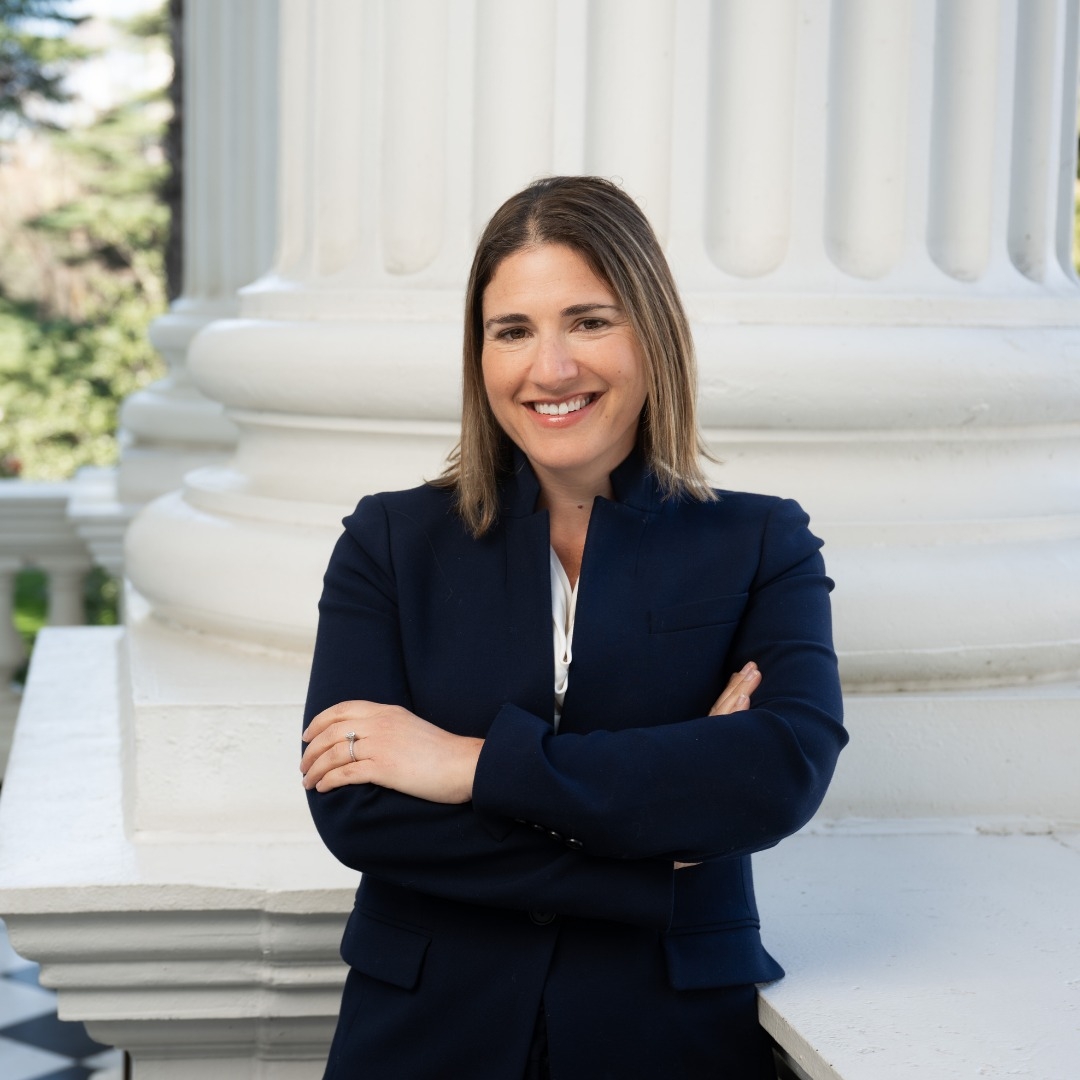
Asm. Rebecca Bauer-Kahan
Sponsored bills
The Rechargeable Battery Recycling Act of 2006 requires every retailer, as defined, to have in place a system for the acceptance and collection of used rechargeable batteries, defined to include lithium-ion batteries, for reuse, recycling, or proper disposal. The act requires the system for the acceptance and collection of used rechargeable batteries to include, at a minimum, specified elements, including, among others, the take-back of a used rechargeable battery at no cost to the consumer. The hazardous waste control laws, among other things, authorize the Department of Toxic Substances Control to regulate the generation and disposal of hazardous waste. Existing law prohibits a person from intentionally disposing of or causing the disposal of a hazardous or extremely hazardous waste at a point not authorized by the hazardous waste control laws, as provided. Under existing department-adopted regulations, specified hazardous wastes, including certain batteries, are designated as "universal waste" and are regulated separately pursuant to universal waste management provisions. This bill would prohibit a person from knowingly disposing of a lithium-ion battery in a container or receptacle that is intended for the collection of solid waste or recyclable materials, unless the container or receptacle is designated for the collection of batteries for recycling pursuant to specified laws. The bill would require the Department of Resources Recycling and Recovery, on or before July 1, 2024, and in consultation with the Department of Toxic Substances Control, to develop a guidance document for use by local governments to better inform, educate, and increase public awareness regarding the proper handling and disposal of lithium-ion batteries and products that contain lithium-ion batteries, as provided. The bill would authorize the Department of Resources Recycling and Recovery, in carrying out that requirement, to solicit and use any expertise available in other state agencies and would authorize the department to convene a specified working group to advise on the content, development, and promotion of the guidance document. The bill would require the Department of Forestry and Fire Protection, before January 1, 2023, in consultation with relevant state agencies and stakeholders, to develop a model protocol that identifies best practices for the detection, safe handling, and suppression of fires that originate from discarded lithium-ion batteries or products that contain lithium-ion batteries on or in solid waste or recycling collection vehicles, transfer or processing stations, or disposal facilities, as provided. The bill would require a solid waste enterprise, before July 1, 2023, after consulting with the county fire marshal of every county in which the solid waste enterprise conducts solid waste collection operations, to adopt, or update if necessary, a protocol and arrange any necessary training for relevant employees that identifies procedures to follow under those same circumstances. By imposing new duties on county fire marshals, the bill would impose a state-mandated local program. The California Constitution requires the state to reimburse local agencies and school districts for certain costs mandated by the state. Statutory provisions establish procedures for making that reimbursement. This bill would provide that, if the Commission on State Mandates determines that the bill contains costs mandated by the state, reimbursement for those costs shall be made pursuant to the statutory provisions noted above.
Existing law establishes the California Conservation Corps in the Natural Resources Agency and requires the corps to implement and administer the conservation corps program. Existing law authorizes the Director of the California Conservation Corps to establish the Education and Employment Reentry Program within the corps to develop, partner with, and create opportunities for certain forestry corps program objectives, collaborate with the Employment Development Department to provide access to workforce services, collaborate with nongovernmental organizations dedicated to providing access to counseling, mentorship, supportive housing, health care, and educational opportunities, and employ collaborations and partnerships available to the corps, as specified. This bill would require the director, upon appropriation and on or before December 31, 2023, upon appropriation and on or before December 31, 2023, in partnership with the Department of Forestry and Fire Protection and the Department of Corrections and Rehabilitation, to establish a forestry training center in northern California to provide enhanced training, education, work experience, and job readiness for entry-level forestry and vegetation management jobs. The bill would require the training center to include counseling, mentorship, supportive housing, health care, and educational services and authorize the training center to provide training modules on specified activities. The bill would require the director to enroll at the training center formerly incarcerated individuals and to prioritize enrollment for those formerly incarcerated individuals who have either successfully served on a California Conservation Camp program crew and were recommended by the Director of Forestry and Fire Protection and the Secretary of the Department of Corrections and Rehabilitation, as provided, or successfully served on a hand crew at the county level and were recommended for participation by county probation and county fire departments. The bill would provide that successful completion of a training program at the training center constitutes qualifying experience for an entry-level forestry or vegetation management position at a state agency. Existing law requires the corps to report by December 31 of each year the total number of corpsmembers in the cohort who permanently separated from the corps, as provided. Existing law requires the report to include specified information. This bill would require the report, commencing December 31, 2023, and annually thereafter, to contain specified information regarding formerly incarcerated individuals enrolled in corps programs or centers, as provided. This bill would make legislative findings and declarations as to the necessity of a special statute for northern California.
Existing law, the Unruh Civil Rights Act, specifies that all persons within the jurisdiction of the state are free and equal, and no matter their sex, race, color, religion, ancestry, national origin, disability, medical condition, genetic information, marital status, sexual orientation, citizenship, primary language, or immigration status, are entitled to the full and equal accommodations, advantages, facilities, privileges, or services in all business establishments of every kind. This bill would require a retail department store that is physically located in California that has a total of 500 or more employees across all California retail department store locations that sells childcare items or toys to maintain a gender neutral section or area, to be labeled at the discretion of the retailer, in which a reasonable selection of the items and toys for children that it sells shall be displayed, regardless of whether they have been traditionally marketed for either girls or for boys. Beginning on January 1, 2024, the bill would make a retail department store that fails to comply with these provisions liable for a civil penalty not to exceed $250 for a first violation or $500 for a subsequent violation, as provided.
Existing law imposes various limitations on the emissions of air contaminants for the control of air pollution from vehicular and nonvehicular sources. Existing law assigns the responsibility for controlling vehicular sources of air pollution to the State Air Resources Board. This bill would require the state board, by July 1, 2022, consistent with federal law, to adopt cost-effective and technologically feasible regulations to prohibit engine exhaust and evaporative emissions from new small off-road engines, as defined by the state board. The bill would require the state board to identify and, to the extent feasible, make available funding for commercial rebates or similar incentive funding as part of any updates to existing applicable funding program guidelines to local air pollution control districts and air quality management districts to implement to support the transition to zero-emission small off-road equipment operations.
Existing law, the Alcoholic Beverage Control Act, which is administered by the Department of Alcoholic Beverage Control, regulates the application, issuance, and suspension of alcoholic beverage licenses. Existing law authorizes a person holding an on-sale general license, with respect to beer and wine, and any on-sale license, with respect to the particular beverage or beverages mentioned in the license, to exercise the rights and privileges granted by an off-sale beer and wine license. This bill would, until December 31, 2026, authorize the holder of an on-sale license for a bona fide public eating place that has off-sale privileges, or a licensed beer manufacturer, licensed wine manufacturer, or licensed craft distiller that operates a bona fide public eating place at its premises of production, to exercise additional off-sale rights and privileges, subject to specified requirements. In this regard, the bill would authorize the licensee to sell distilled spirits for off-sale consumption for which their license permits on-sale consumption if the beverages are in manufacturer-prepackaged containers, and are ordered and picked up by the consumer. Additionally, the bill would authorize a licensee to sell the alcoholic beverages, except beer, for off-sale consumption for which their license permits on-sale consumption when the beverages are not in manufacturer-prepackaged containers if specified conditions are met, including, among other things, that the beverages be packaged in a container with a secure lid or cap sealed in a manner designed to prevent consumption without removal of the lid or cap by breaking the seal, and the beverages are ordered and picked up by the consumer. The bill would authorize the department to place conditions on a license prohibiting or restricting the licensee's rights granted under this bill, as provided.
(1) Existing law prohibits a person subject to a protective order, as defined, from owning, possessing, purchasing, or receiving a firearm or ammunition while that protective order is in effect and makes a willful and knowing violation of a protective order a crime. Existing law requires the court, when issuing the order with both parties present, to inform the parties of this information and to order the restrained person to relinquish any firearm in the person's immediate possession or control or subject to their immediate possession or control. Existing law specifies the means of relinquishment if the law enforcement officer serving the protective order does not request the immediate surrender of the firearm, including, surrender to law enforcement, or by selling the firearm to a licensed gun dealer. This bill would require a court to order the restrained person to relinquish ammunition and to notify the parties of how any firearms or ammunition still in the restrained party's possession are to be relinquished and how to submit a receipt to the court. The bill would require the court to review the file to determine whether the receipt has been filed and inquire as to whether the person has complied with the requirement. The bill would require violations of the firearms or ammunition prohibition to be reported to the prosecuting attorney in the jurisdiction where the order has been issued within 2 business days of the court hearing unless the restrained party provides a receipt showing compliance at a subsequent hearing or by direct filing with the clerk of the court. The bill would authorize the relinquishment to occur by transferring the firearm or ammunition or relinquishing them for storage if the firearm or ammunition is not immediately surrendered to law enforcement upon service of the protective order. This bill would also require the court, at a noticed hearing relating to a domestic violence protective order in family court or juvenile court, to consider information presented that the restrained person has possession or control of a firearm or ammunition. The bill would authorize the court, upon making this finding, to set a review hearing, as specified, to determine whether the person has possession or control of a firearm or ammunition in violation of the above provisions. Existing law requires a court, prior to a hearing on the issuance or denial of a protective order, to ensure that a search has been conducted to determine if the subject of the order has been convicted of a serious or violent felony, a misdemeanor conviction involving domestic violence, weapons, or other violence, has an outstanding warrant, is currently on parole or probation, has a registered firearm, or has a prior restraining order or a violation of a restraining order. Existing law requires the court to notify law enforcement officials if some of those conditions exist, including the person being on parole or probation or having an outstanding warrant. This bill, as part of the search, would require the court to make a written record as to whether the subject has relinquished the firearm. If evidence of compliance with the prohibition on firearms or ammunition is not provided, the bill would require the clerk of the court to notify law enforcement officials and would require those law enforcement officials to take all actions necessary to obtain any firearms or ammunition owned, possessed, or controlled and to address any violation of the order with respect to firearms or ammunition, as specified. By requiring additional duties of local law enforcement officials, this bill would impose a state-mandated local program. Existing law requires a family court to determine the best interest of the child for purposes of deciding child custody in proceedings for dissolution of marriage, nullity of marriage, legal separation of the parties, petitions for exclusive custody of a child, and proceedings under the Domestic Violence Prevention Act. Existing law establishes a rebuttable presumption that an award of sole or joint physical or legal custody of a child to a person who has perpetrated domestic violence is detrimental to the best interest of a child and establishes factors to be considered in rebutting that presumption, including that the perpetrator is restrained by a protective order and has, or has not, complied with that order. This bill, for purposes of rebutting the presumption, would require the court to also consider whether the person is a restrained person in possession or control of a firearm or ammunition in violation of the law. Existing law authorizes the court to issue an ex parte order determining the temporary custody and visitation of a minor child, on the conditions the court determines, to a party who has established a parent and child relationship with the child, based on the best interest of the child. Existing law authorizes the court to suspend or deny custody or visitation or to limit visitation or custody only to situations in which a 3rd person is present. This bill would require the court, in making that determination, to consider whether the party is a restrained person in possession or control of a firearm or ammunition. (2) Existing law requires a law enforcement agency to enter all firearms that have been reported stolen, lost, found, recovered, held for safekeeping, or under observation into the Automated Firearms System (AFS) . This bill would also require law enforcement to enter in all firearms that are relinquished as part of a domestic violence protective order. (3) Existing law specifies how firearms and ammunition may be transported and prohibits open or concealed carry in specified circumstances. Existing law requires a license to sell, lease, or transfer firearms. Existing law, the Safety for All Act of 2016, enacted by the voters as Proposition 63 at the November 8, 2016, General Election, requires a valid ammunition vendor license to sell more than 500 rounds of ammunition in any 30-day period. Proposition 63 authorizes amendments of its provisions by a vote of 55% of both houses of the Legislature if the amendments are consistent with, and further the purposes of, the act. This bill would exempt people who are complying with the firearms provisions of a protective order from those provisions, including amending Proposition 63 to exempt a person from the limitation on the sale of over 500 rounds of ammunition in a 30-day period in order to comply with the protective order. (4) This bill would incorporate additional changes to Section 3044 of the Family Code proposed by AB 1579 and AB 1171, to be operative only if this bill and AB 1579, AB 1171, or both are enacted and this bill is enacted last. The bill would also incorporate additional changes to Section 11108.2 of the Penal Code proposed by SB 715, to be operative only if this bill and SB 715 are enacted and this bill is enacted last. (5) The California Constitution requires the state to reimburse local agencies and school districts for certain costs mandated by the state. Statutory provisions establish procedures for making that reimbursement. This bill would provide that, if the Commission on State Mandates determines that the bill contains costs mandated by the state, reimbursement for those costs shall be made pursuant to the statutory provisions noted above.
(1) Existing law, notwithstanding the requirement that each person between 6 and 18 years of age who is not otherwise exempted is subject to compulsory full-time education, requires a pupil to be excused from school for specified types of absences, including, among others, if the absence was due to the pupil's illness. This bill would include, within the meaning of an absence due to a pupil's illness, an absence for the benefit of the pupil's mental or behavioral health. The bill would require the State Board of Education to update its illness verification regulations, as necessary, to account for including a pupil's absence for the benefit of the pupil's mental or behavioral health within the scope of this provision. To the extent this bill would impose additional duties on local educational entities, the bill would impose a state-mandated local program. (2) Existing law requires the governing board of a school district to give diligent care to the health and physical development of pupils and authorizes the governing board of a school district to employ properly certified persons for the work. Existing law requires a school of a school district or county office of education and a charter school to notify pupils and parents or guardians of pupils no less than twice during the school year on how to initiate access to available pupil mental health services on campus or in the community, or both, as provided. This bill, contingent on an appropriation made for these purposes, would require the State Department of Education, on or before January 1, 2023, to recommend best practices and identify evidence-based, as defined, and evidence-informed, as defined, training programs for schools to address youth behavioral health, including, but not necessarily limited to, staff and pupil training, as specified. The bill would define a local educational agency for purposes of these provisions to mean a county office of education, school district, state special school, or charter school that serves pupils in any of grades 7 to 12, inclusive. (3) This bill would incorporate additional changes to Section 48205 of the Education Code proposed by AB 516 to be operative only if this bill and AB 516 are enacted and this bill is enacted last. (4) The California Constitution requires the state to reimburse local agencies and school districts for certain costs mandated by the state. Statutory provisions establish procedures for making that reimbursement. This bill would provide that, if the Commission on State Mandates determines that the bill contains costs mandated by the state, reimbursement for those costs shall be made pursuant to the statutory provisions noted above. (5) This bill would declare that it is to take effect immediately as an urgency statute.
Existing law directs law enforcement agencies, as defined, to submit the description of a firearm that has been reported stolen, lost, found, recovered, or under observation directly to an automated Department of Justice system. Existing law also requires these law enforcement agencies to report to the Department of Justice any information in their possession necessary to identify and trace the history of a recovered firearm that is illegally possessed, has been used in a crime, or is suspected of having been used in a crime. Existing law requires the department to maintain this data for at least 10 years and make it available, as specified, for academic and research purposes. This bill would require the department to analyze the data as specified and, by no later than July 1, 2023, and annually thereafter, submit a report to the Legislature summarizing this analysis, and make the report available to the public.