

The California Public Records Act requires state and local agencies to make their records available for public inspection, unless an exemption from disclosure applies. The act declares that access to information concerning the conduct of the people's business is a fundamental and necessary right of every person in this state. This bill would, subject to appropriation, establish the Office of the California Public Records Act Ombudsperson. The bill would require the Governor to appoint the ombudsperson subject to certain requirements. The bill would require the ombudsperson to receive and investigate requests for review, as defined, determine whether the denials of original requests, as defined, complied with the California Public Records Act, and issue written opinions of its determination, as provided. The bill would require the ombudsperson to create a process to that effect, and would authorize a member of the public to submit a request for review to the ombudsperson consistent with that process. The bill would require the ombudsperson, within 30 days from receipt of a request for review, to make a determination, as provided, and would require the state agency to provide the public record if the ombudsperson determines that it was improperly denied. The bill would require the ombudsperson to create a process through which a person whose information is contained in a record being reviewed may intervene to assert their privacy and confidentiality rights, and would otherwise require the ombudsperson to maintain the privacy and confidentiality of records, as provided. The bill would require the ombudsperson to report to the Legislature, on or before March 31, 2025, and annually thereafter, on, among other things, the number of requests for review the ombudsperson has received in the prior year.
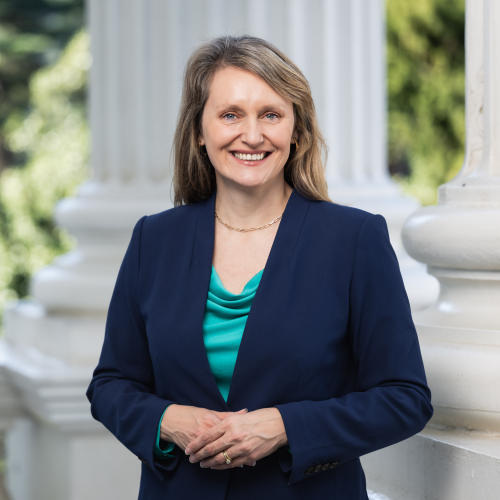
Asm. Buffy Wicks
Sponsored bills
Existing law establishes the Department of Forestry and Fire Protection within the Natural Resources Agency. Existing law vests the department with specified responsibilities, including providing fire protection, fire prevention, pest control, and forest and range protection and enhancement implements and apparatus as necessary. Existing law, the California Urban Forestry Act of 1978, has as a stated purpose the promotion of the use of urban forest resources for purposes of increasing integrated projects with multiple benefits in urban communities. This bill would establish the California Pocket Forest Initiative in the department and would authorize the department to coordinate implementation of the initiative in conjunction with the act. The bill would authorize the department to offer grants to cities, counties, districts, nonprofit organizations, the California Conservation Corps or certified community conservation corps, public universities, public community colleges, and public schools to establish pocket forests on public lands, as provided. The bill would require the department to prioritize disadvantaged communities and communities that lack publicly accessible green space for these grants. The bill would require the department to partner with one or more academic institutions to test, and submit a report on or before January 1, 2030, to the Legislature that evaluates, the applicability and effectiveness of the Miyawaki method, as defined, to restore degraded lands and reforest urban areas in multiple regions throughout California. The bill would repeal these provisions on January 1, 2031.
Existing law requires the collection of specified fees for certified copies of a birth certificate, marriage record, or marriage dissolution record. Existing law imposes fees upon the application for an original class C or M driver's license or a renewal of a driver's license or for a license to operate a different class of vehicle, as described. This bill would instead exempt persons who are recipients of specified assistance programs from payment of a fee for certified copies of a birth certificate, marriage record, or marriage dissolution record. The bill would, beginning July 1, 2027, also exempt a person who can verify their status as a homeless person or homeless child or youth from payment of a fee upon the application for an original or renewal of a driver's license. The bill would require the verification of homeless status to be subject to regulations adopted by the Department of Motor Vehicles and may be made by a homeless services provider, as defined. By establishing an exemption as to fees paid for receipt of certified copies of vital records, this bill would create a state-mandated local program. The bill would make all these provisions operative only to the extent that funding is provided by express reference for these purposes. The California Constitution requires the state to reimburse local agencies and school districts for certain costs mandated by the state. Statutory provisions establish procedures for making that reimbursement. This bill would provide that, if the Commission on State Mandates determines that the bill contains costs mandated by the state, reimbursement for those costs shall be made pursuant to the statutory provisions noted above.
Existing law, the California Fair Employment and Housing Act (FEHA) , which is enforced by the Civil Rights Department, prohibits various forms of employment discrimination and recognizes the opportunity to seek, obtain, and hold employment without specified forms of discrimination as a civil right. The act also makes it an unlawful employment practice for an employer, among other things, to refuse to hire or employ a person because of various personal characteristics, conditions, or traits. This bill would prohibit employment discrimination on account of family caregiver status, as defined, and would recognize the opportunity to seek, obtain, and hold employment without discrimination because of family caregiver status as a civil right, as specified. This bill would incorporate additional changes to Section 12926 of the Government Code proposed by SB 403 to be operative only if this bill and SB 403 are enacted and this bill is enacted last.
(1) Existing law categorizes certain drugs and other substances as controlled substances and prohibits various actions related to those substances, including their manufacture, transportation, sale, possession, and ingestion. This bill would, on and after January 1, 2025, make lawful the possession, preparation, obtaining, or transportation of, specified quantities of psilocybin, psilocyn, dimethyltryptamine (DMT) , and mescaline, for personal use, as defined, by and with persons 21 years of age or older. The bill would provide penalties for possession of these substances on school grounds, or possession by, or transferring to, persons under 21 years of age. The bill would require the California Health and Human Services Agency to convene a workgroup to study and make recommendations on the establishment of a framework governing the therapeutic use, including facilitated or supported use, of those substances. The bill would require that workgroup to send a report to the Legislature containing those recommendations on or before January 1, 2025. (2) Existing law prohibits the cultivation, transfer, or transportation, as specified, of any spores or mycelium capable of producing mushrooms or other materials that contain psilocybin or psilocyn. This bill would, on and after January 1, 2025, make lawful the cultivation or transportation of specified quantities of spores or mycelium capable of producing mushrooms or other materials that contain psilocybin or psilocyn for personal use, as defined, by and with persons 21 years of age or older. (3) Existing law prohibits the possession of drug paraphernalia, as defined. This bill would exempt from this prohibition, paraphernalia related, as specified, to these specific substances. The bill would also exempt from the prohibition items used for the testing and analysis of controlled substances. (4) Existing law states the intent of the Legislature that the messages and information provided by various state drug and alcohol programs promote no unlawful use of any drugs or alcohol. This bill would repeal those provisions. (5) By eliminating and changing the elements of existing crimes and creating new offenses, and by requiring new duties of local prosecutors, this bill would impose a state-mandated local program. The California Constitution requires the state to reimburse local agencies and school districts for certain costs mandated by the state. Statutory provisions establish procedures for making that reimbursement. This bill would provide that with regard to certain mandates no reimbursement is required by this act for a specified reason. With regard to any other mandates, this bill would provide that, if the Commission on State Mandates determines that the bill contains costs so mandated by the state, reimbursement for those costs shall be made pursuant to the statutory provisions noted above. (6) This bill would state that its provisions are severable.
Existing law establishes the Department of Housing and Community Development in the Business, Consumer Services, and Housing Agency and makes the department responsible for administering various housing programs throughout the state, including, among others, the Multifamily Housing Program, the CalHOME Program, and the California Emergency Solutions Grants Program. This bill would enact the Tribal Housing Reconstitution and Resiliency Act and would create the Tribal Housing Grant Program Trust Fund to be administered by the department. The bill would require the fund, upon annual appropriation from the Legislature, to be allocated in accordance with a specified formula, as provided. This bill would authorize the funds to be allocated for specific purposes, including, among others, housing and housing-related program services for affordable housing, housing and community development project costs, and management services for affordable housing. The bill would require the funds to be allocated only for the benefit of eligible beneficiaries, including, among others, Indian and essential families and individuals residing in an Indian area, as defined. This bill would require recipients of the funds to expend all funds allocated to programs and services within 3 years from the date of execution of a funding agreement with the department, and to expend all funds allocated to projects within 5 years from the date of execution of a funding agreement with the department, unless granted an extension by the department, as specified. The bill would require moneys paid and deposited into the Tribal Housing Grant Program Trust Fund to be continuously appropriated on an annual basis for a 5-year period starting January 1, 2024, through December 31, 2028.
Existing law provides for the payment of unemployment compensation benefits and extended benefits to eligible individuals who meet specified requirements. Under existing law, unemployment benefits are paid from the Unemployment Fund, which is continuously appropriated for these purposes. Existing law makes an employee ineligible for benefits if the employee left work because of a trade dispute and specifies that the employee remains ineligible for the duration of the trade dispute. Existing case law holds that employees who left work due to a lockout by the employer, even if it was in anticipation of a trade dispute, are eligible for benefits. This bill would restore eligibility after the first 2 weeks for an employee who left work because of a trade dispute. The bill would codify specified case law that holds that employees who left work due to a lockout by the employer, even if it was in anticipation of a trade dispute, are eligible for benefits. The bill would specify that the bill's provisions do not diminish eligibility for benefits of individuals deprived of work due to an employer lockout or similar action, as specified. Because this bill would expand the categories of people eligible to receive benefits from a continuously appropriated fund, it would make an appropriation.
Existing law prohibits a local authority from enacting or enforcing an ordinance on matters covered by the Vehicle Code unless expressly authorized by the Vehicle Code. Existing law authorizes local authorities to adopt rules and regulations by ordinance or resolution regarding specified matters, including, among others, crossing guards, the operation of bicycles, the removal of illegally parked vehicles, and cruising, as defined. This bill would remove the authorization for a local authority to adopt rules and regulations by ordinance or regulation regarding cruising. Existing law makes it unlawful to operate a passenger vehicle, or commercial vehicle under 6,000 pounds, that has been modified from its original design so that any portion of the vehicle, other than the wheels, has less clearance from the surface of a level roadway than the clearance between the roadway and the lowermost portion of any rim of any wheel in contact with the roadway. This bill would repeal that prohibition. This bill would incorporate additional changes to Section 21100 of the Vehicle Code proposed by AB 825 and SB 50 to be operative only if this bill and AB 825, this bill and SB 50, or this bill, AB 825, and SB 50 are enacted and this bill is enacted last.