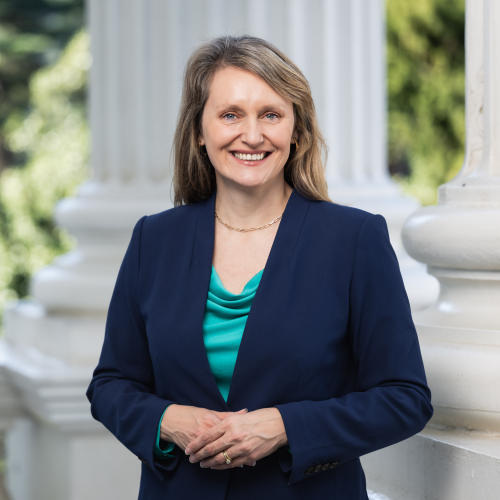
Photo of Buffy Wicks
D California Assembly · District 14 On the 2026 ballot

Asm. Buffy Wicks

Compare
Total votes
20,934
all sessions
Attendance
93%
978 missed
Near the chamber average
With party
99%
of cast votes
Near the chamber average
Bipartisan score
0%
crosses aisle rarely
Near the chamber average
Sponsored
1,740
bills & resolutions
Near the chamber average
Committees
9
assignments
1,740 bills and resolutions

Sponsored bills

Total
1,740
Primary
165
Co-sponsor
1,575
This page
1,740
matching current filters
Primary AB 1656
died · California Assembly · Lead sponsor
Homelessness: funding.

Existing law establishes various programs to prevent and ameliorate homelessness, including the Homeless Youth Act of 2018 and the Homeless Housing, Assistance, and Prevention program. This bill would state the intent of the Legislature to enact subsequent legislation to establish an ongoing funding source to address the state's homelessness crisis.

died Feb 1, 2024 0 co-sponsors
Primary AB 679
Failed · California Assembly · Lead sponsor
Family childcare homes: meals: reimbursement rates.

Existing law, the Early Education Act, requires the Superintendent of Public Instruction, to, among other things, provide an inclusive and cost-effective preschool program, and declares the policy of the state that no child shall be hungry while in attendance in a preschool facility and that preschool programs have an obligation to provide for the nutritional needs of children in attendance. Existing law requires a school district or county superintendent of schools maintaining a kindergarten or any of grades 1 to 12, inclusive, to provide a needy pupil with one nutritionally adequate free or reduced-price meal during each schoolday, and two school meals free of charge during each schoolday to any pupil who requests a meal without consideration of the pupil's eligibility for a federally funded free or reduced-price meal, and sets the reimbursement rate for meals served by family daycare homes at 75 percent of the meals served. This bill would increase the reimbursement rate for meals served in family childcare homes to instead be 100 percent of the eligible meals served. The bill would define "family childcare homes" to mean the same as "family daycare homes," as provided.

Failed Feb 1, 2024 0 co-sponsors
Co-sponsor AB 401
Failed · California Assembly · Co-sponsor
State parks: park entrance fees: waivers: 4th grade children.

Existing law gives control of the state park system to the Department of Parks and Recreation, and requires the Director of Parks and Recreation to promote and regulate the use of the state park system in a manner that conserves the scenery, natural and historic resources, and wildlife for the enjoyment of future generations. Existing law authorizes the department to collect fees, rents, and other returns for use of any state park system area, as provided. Existing law prohibits the department from collecting from any group of pupils in kindergarten or grades 1 to 12, inclusive, or their escorts, any fee, rental, or other return for use of any unit in the state park system when the group is visiting the area pursuant to a school outing or field trip under the direction of a school personnel, as provided. This bill, commencing on July 1, 2024, would require the department to waive the day use entrance fees to a unit of the state park system for any child in the 4th grade, or the 4th grade equivalent, who holds a valid federally issued "Every Kid Outdoors" pass, as provided. The bill would require the department to post on its internet website information on how to obtain the federal "Every Kid Outdoors" pass, including a hyperlink to the federal program establishing the pass.

Failed Feb 1, 2024 1 co-sponsor
Primary AB 1072
Failed · California Assembly · Lead sponsor
Water conservation and efficiency: low-income residential customers.

Existing law sets forth general state policies regarding water resources. This bill would declare the policy of the state that all residents have access to water conservation and efficiency programs. The bill would also set forth related findings including that reaching the state's environmental justice goals and commitments requires designing climate adaptation programs so that all households may participate. Existing law establishes in the Natural Resources Agency the Department of Water Resources. Existing law also establishes in the California Environmental Protection Agency the State Water Resources Control Board to provide for the orderly and efficient administration of the water resources of the state. This bill would require, on and after January 1, 2025, urban wholesale water suppliers and urban water suppliers, as defined, to offer technical assistance and financial incentives, as described, to low-income residential customers to install efficient water conservation devices and climate resilient landscaping, as provided. The bill would require the department and the board to utilize, to the maximum extent allowable by law, existing funding programs to provide technical assistance and financial incentives for water conservation and efficiency to community water systems with fewer than 3,000 service connections serving disadvantaged communities, and to urban wholesale water suppliers and urban water suppliers that meet specified criteria. The bill would require the department and the board to prioritize assistance to community water systems with the greatest risks to water supply security. The bill would require the board, in cooperation with the department, prior to January 1, 2025, to hold at least one public workshop to solicit stakeholder input on technical assistance and financial incentive program design and implementation considerations. The bill would also require the board to adopt reporting requirements, as described, on or before July 1, 2026.

Failed Feb 1, 2024 0 co-sponsors
Co-sponsor AB 1644
Failed · California Assembly · Co-sponsor
Medi-Cal: medically supportive food and nutrition services.

Existing law establishes the Medi-Cal program, which is administered by the State Department of Health Care Services and under which qualified low-income individuals receive health care services. The Medi-Cal program is, in part, governed and funded by federal Medicaid program provisions. Existing law requires the department to establish the Medically Tailored Meals Pilot Program and the Short-Term Medically Tailored Meals Intervention Services Program, to operate in specified counties and during limited periods for the purpose of providing medically tailored meal intervention services to eligible Medi-Cal beneficiaries with certain health conditions, including congestive heart failure, cancer, diabetes, chronic obstructive pulmonary disease, or renal disease. Existing law, subject to implementation of the California Advancing and Innovating Medi-Cal (CalAIM) initiative, authorizes a Medi-Cal managed care plan to elect to cover community supports approved by the department as cost effective and medically appropriate in a comprehensive risk contract that are in lieu of applicable Medi-Cal state plan services. Under existing law, community supports that the department is authorized to approve include, among other things, medically supportive food and nutrition services, including medically tailored meals. This bill would make medically supportive food and nutrition interventions, as defined, a covered benefit under the Medi-Cal program, upon issuance of final guidance by the department. The bill would require medically supportive food and nutrition interventions to be covered when determined to be medically necessary by a health care provider or health care plan, as specified. In order to qualify for coverage under the Medi-Cal program, the bill would require a patient to be offered at least 3 of 6 specified medically supportive food and nutrition interventions and for the interventions to be provided for a minimum duration of 12 weeks, as specified. The bill would only provide coverage for nutrition support interventions when paired with the provision of food through one of the 3 offered interventions. The bill would require a health care provider to match the acuity of a patient's condition to the intensity and duration of the medically supportive food and nutrition intervention and include culturally appropriate foods whenever possible. The bill would establish a medically supportive food and nutrition benefit advisory workgroup to advise the department in developing final guidance related to eligible populations, the duration and dosage of medically supportive food and nutrition interventions, the ratesetting process, determination of permitted providers, and continuing education for health care providers, as specified. The bill would require the workgroup to include certain stakeholders knowledgeable in medically supportive food and nutrition interventions and stakeholders from Medi-Cal consumer advocacy organizations. The bill would require the workgroup to meet at least quarterly and would require the department to issue final guidance on or before July 1, 2026. The bill would also include findings and declarations of the Legislature relating to the need for medically supportive food and nutrition intervention coverage under the Medi-Cal program.

Failed Feb 1, 2024 1 co-sponsor
Primary AB 583
Failed · California Assembly · Lead sponsor
Birthing Justice for California Families Pilot Project.

Existing law establishes the Department of Health Care Access and Information, which administers, among other programs, the California Reproductive Health Equity Program to ensure abortion and contraception services are affordable for and accessible to all patients and to provide financial support for safety net providers of these services. Existing law provides for the Medi-Cal program, which is administered by the State Department of Health Care Services, under which qualified low-income individuals receive health care services pursuant to a schedule of benefits. Existing law requires the department to convene a workgroup to examine the implementation of the Medi-Cal doula benefit, as specified, and, no later than July 1, 2024, to publish a report that addresses the number of Medi-Cal recipients utilizing doula services and identifies barriers that impede access to doula services, among other things. This bill would establish the Birthing Justice for California Families Pilot Project, which would include a 3-year grant program administered by the Department of Health Care Access and Information to provide grants to specified entities, including community-based doula groups, to provide full-spectrum doula care to pregnant and birthing people who are low income and do not qualify for Medi-Cal or who are from communities that experience high rates of negative birth outcomes. The bill would require the department to take specified actions with regard to awarding grants, including awarding grants to selected entities on or before January 1, 2025. The bill would require a grant recipient to use grants funds to pay for the costs associated with providing full-spectrum doula care to eligible individuals and establishing and managing doula services. The bill would require a grant recipient, in setting the payment rate for a doula being paid with grant funds, to comply with specified parameters, including that the payment rate not be less than the Medi-Cal reimbursement rate for doulas or the median rate paid for doula care in existing local pilot projects providing doula care in California, whichever is higher. The bill would require the department, on or before January 1, 2028, to submit a report to the appropriate policy and fiscal committees of the Legislature on the expenditure of funds and relevant outcome data for the pilot project. The bill would repeal these provisions on January 1, 2029.

Failed Feb 1, 2024 0 co-sponsors
Co-sponsor AB 29
Failed · California Assembly · Co-sponsor
Firearms: California Do Not Sell List.

Existing law makes possession of a firearm by certain classes of persons, including a convicted felon, a person convicted of specified misdemeanors, a person has been found mentally incompetent to stand trial, a person has been found not guilty of specified crimes by reason of insanity, or a person has been placed under conservatorship, a crime. Existing law additionally makes it a crime to sell or give possession of a firearm to these classes of persons prohibited from owning a firearm. Existing law requires the Department of Justice, upon submission of firearm purchaser information by a licensed firearm dealer, to examine its records to determine whether a potential firearm purchaser is prohibited by state of federal law from possessing, receiving, owning, or purchasing a firearm. Existing law requires the department to participate in the National Instant Criminal Background Check System. This bill would require the Department of Justice to develop and launch a secure Internet-based platform to allow a person who resides in California to voluntarily add their own name to the California Do Not Sell List. The bill would require the department to ensure that information on the list is uploaded and reflected in the National Instant Criminal Background Check System. The bill would make it a crime, punishable as a misdemeanor, to transfer a firearm to a person who is validly registered on the California Do Not Sell List. By creating a new crime, this bill would impose a state-mandated local program. This bill would allow a person, after a specified period of time, to request removal from the list. The bill would require the State Department of Public Health to create and distribute informational materials about the California Do Not Sell List to general acute care hospitals and acute psychiatric hospitals. The bill would specify that a person presenting in a general acute care hospital or acute psychiatric hospital who is at a substantially elevated risk of suicide should be presented with these informational materials. The bill would specify that any suicide hotline maintained or operated by an entity funded in whole or in part by the state should generally inform callers on how to access the California Do Not Sell List Internet-based platform. The bill would provide that its provisions are severable. The California Constitution requires the state to reimburse local agencies and school districts for certain costs mandated by the state. Statutory provisions establish procedures for making that reimbursement. This bill would provide that no reimbursement is required by this act for a specified reason.


Failed Feb 1, 2024 1 co-sponsor
Primary AB 1094
Failed · California Assembly · Lead sponsor
Drug and alcohol testing: informed consent.

Existing law generally prohibits disclosure of a drug test result to a patient by internet posting or other electronic means unless the health care professional has first discussed the result with the patient. Existing law requires a health practitioner or medical social worker to perform a needs assessment for a substance-exposed infant to identify needed services and determine the level of risk to the newborn upon release to the home. This bill would prohibit medical personnel from performing a drug or alcohol test or screen on a pregnant person, perinatal person, or newborn without the prior written and verbal informed consent of the pregnant person, perinatal person, or person authorized to consent for a newborn, and would require the test or screen to be medically necessary to provide care. The bill would authorize performing a drug or alcohol test or screen on a pregnant person, perinatal person, or newborn without consent if, in the physician's judgment, an emergency exists, the person is in immediate need of medical attention, and an attempt to secure consent would result in a delay of treatment that would increase the risk to the person's life or health. If a test or screen is performed without consent, the bill would require that the pregnant person, perinatal person, or person authorized to consent for a newborn receive verbal and written notification, as specified. The bill would prohibit medical personnel from refusing to treat a pregnant person, perinatal person, or newborn due to the refusal to consent to a drug or alcohol test or screen.

Failed Feb 1, 2024 0 co-sponsors
Primary AB 540
Failed · California Assembly · Lead sponsor
Social Service Transportation Improvement Act: coordinated transportation services agencies.

(1) The Social Service Transportation Improvement Act requires transportation planning agencies and county transportation commissions to prepare and adopt plans detailing required steps to consolidate social service transportation services, including the designation of consolidated transportation service agencies. The act requires funding for implementation to be provided from specified local transportation funds. This bill would require the coordination, rather than the consolidation, of social service transportation services under the act and would recharacterize consolidated transportation service agencies in the act as coordinated transportation service agencies. This bill would authorize a coordinated transportation service agency to review and comment on specified plans and projects relevant to its jurisdiction, and would require specified agencies to respond to the comments. By increasing service requirements for counties, this bill would create a state-mandated local program. (2) Existing law annually imposes a transportation improvement fee on each vehicle based on its market value. Existing law requires the deposit of these revenues into specified accounts, one of which is the Public Transportation Account. The California Constitution requires that all of these revenues be used solely for specified transportation purposes. This bill would increase the transportation improvement fee by $10 per vehicle, and would require the revenues generated to be deposited into the Public Transportation Account. The bill would continuously appropriate this fee revenue for allocation, as specified, to counties for accessible transportation services for seniors and disabled persons. (3) This bill would include a change in state statute that would result in a taxpayer paying a higher tax within the meaning of Section 3 of Article XIIIA of the California Constitution, and thus would require for passage the approval of 23 of the membership of each house of the Legislature. The California Constitution requires the state to reimburse local agencies and school districts for certain costs mandated by the state. Statutory provisions establish procedures for making that reimbursement. This bill would provide that no reimbursement is required by this act for a specified reason.
Failed Feb 1, 2024 0 co-sponsors
Co-sponsor AB 36
Failed · California Assembly · Co-sponsor
Domestic violence protective orders: possession of a firearm.

(1) Existing law prohibits a person subject to a protective order, as defined, from owning, possessing, purchasing, or receiving a firearm or ammunition while that protective order is in effect. Existing law makes a violation of that prohibition with regard to purchasing or receiving a firearm or ammunition punishable by imprisonment in the county jail for up to one year, by imprisonment in the state prison for 16 months or 2 or 3 years, or by a fine not exceeding $1,000, or by both that imprisonment and fine. Existing law makes a violation of that prohibition with regard to owning or possessing a firearm or ammunition punishable by imprisonment in the county jail for up to one year, or by a fine not exceeding $1,000, or by both that imprisonment and fine. After notice and hearing, this bill would, for protective orders, as specified, issued on or after July 1, 2024, prohibit a person subject to the protective order from owning, possessing, purchasing, or receiving a firearm or ammunition within 3 years after the expiration of the order and make a violation of these provision a crime. The bill would require a court, if they find that the person willfully violated that prohibition within 3 years after the expiration of the order, to impose the maximum fine allowed under existing law. (2) Existing law allows a search warrant to be issued upon various grounds, including when the property or things to be seized include a firearm, if the prohibited firearm is possessed, owned, in the custody of, or controlled by a person against whom a specified protective order has been issued, and the person is served with the order and fails to relinquish the firearm as required by law. This bill would expand the grounds for the search warrant to include a person who is subject to any civil or criminal protective order that includes a prohibition on owning, possessing, or having custody or control of a firearm. (3) Existing law requires the Judicial Council to provide notice on all protective orders issued within the state and requires a restraining order requiring a person to relinquish a firearm or ammunition to state on its face that the respondent is prohibited from owning, possessing, purchasing, or receiving a firearm or ammunition while the protective order is in effect. This bill would require the Judicial Council to also include a statement in the notice that the firearm and ammunition prohibition extends for 3 years after the expiration of the protective order that is issued on or after July 1, 2024. The bill would require a restraining order to include a similar statement. By creating new crimes, this bill would create a state-mandated local program. The California Constitution requires the state to reimburse local agencies and school districts for certain costs mandated by the state. Statutory provisions establish procedures for making that reimbursement. This bill would provide that no reimbursement is required by this act for a specified reason.

Failed Feb 1, 2024 1 co-sponsor
Showing 591 to 600 of 1,740 bills
Previous 1 … 59 60 61 … 174 Next