

Existing law requires the Department of Forestry and Fire Protection to establish a local assistance grant program for fire prevention and home hardening education activities in California and extends eligibility for grants to specified entities, including local agencies. Existing law provides that eligible activities under the local assistance grant program include, among other things, technical assistance to local agencies to improve fire prevention and reduce fire hazards and projects to improve public safety, including, but not limited to, access to emergency equipment and improvements to public evacuation routes. Existing law makes funding for this program subject to an appropriation by the Legislature. This bill would expand eligible activities under the local assistance grant program to include projects undertaken by a local governmental entity involving the acquisition or installation of mobile rigid dip tanks or similar mobile and permanent infrastructure that is capable of providing helicopter-accessible water supplies for firefighting response or suppression purposes in very high fire and high fire hazard severity zones, as provided.
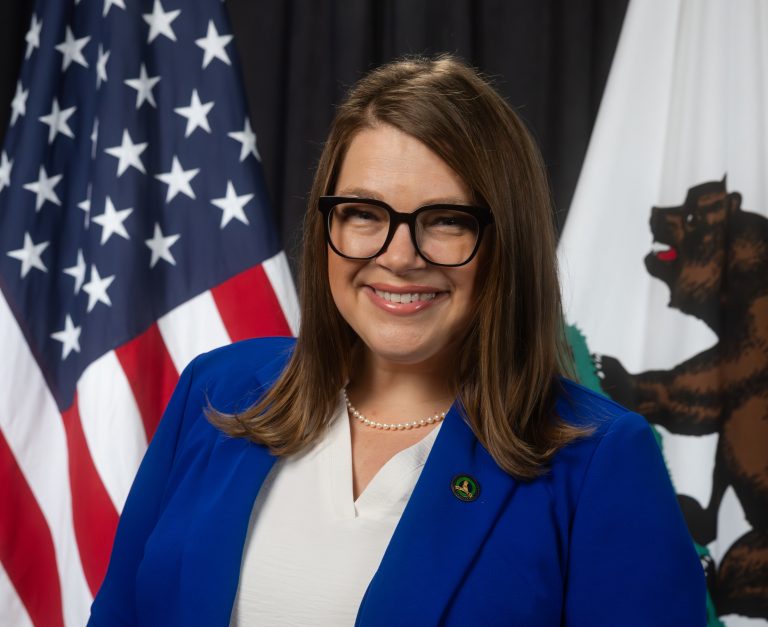
Asm. Heather Hadwick
Sponsored bills
Maddy summaryThis bill designates the week of January 25 to January 31, 2026, as National School Choice Week. The measure does not change any laws or affect funding, but it officially recognizes a period intended to highlight school choice options. It is a symbolic resolution that does not alter policy or impose new requirements on schools or families.
Existing state sales and use tax laws impose a tax on retailers measured by the gross receipts from the sale of tangible personal property sold at retail in this state, or on the storage, use, or other consumption in this state of tangible personal property purchased from a retailer for storage, use, or other consumption in this state. The Sales and Use Tax Law provides various exemptions from those taxes. This bill, the Fairground Act for Investment and Revitalization, on and after January 1, 2027, and before January 1, 2032, would exempt the gross receipts from the sale in this state of, and the storage, use, or other consumption in this state of, tangible personal property for use in the construction, development, or ongoing operation of a qualified project, defined to mean a new development project, or new phase of an existing project, that is located on the land of a fairground, undertaken pursuant to a written agreement and approved by a governing body of a fairground, as provided. The bill would require a governing body of a fairground to approve a project. By requiring additional duties be performed by the governing body of a fairground, this bill would impose a state-mandated local program. Existing law requires any bill authorizing a new tax expenditure to contain, among other things, specific goals, purposes, and objectives that the tax expenditure will achieve, detailed performance indicators, and data collection requirements. This bill also would include additional information required for any bill authorizing a new tax expenditure. The Bradley-Burns Uniform Local Sales and Use Tax Law authorizes counties and cities to impose local sales and use taxes in conformity with the Sales and Use Tax Law, and existing laws authorize districts, as specified, to impose transactions and use taxes in accordance with the Transactions and Use Tax Law, which generally conforms to the Sales and Use Tax Law. Amendments to the Sales and Use Tax Law are automatically incorporated into the local tax laws. This bill would provide that the exemption created by the bill does not apply to local sales and use taxes or transactions and use taxes. Existing law imposes or dedicates certain state sales and use tax rates for local funding, including through the Local Revenue Fund 2011. This bill would provide that the exemption created by the bill does not apply to those state sales and use tax rates imposed or dedicated for local government funding, including those rates for which revenues are deposited into the Local Revenue Fund 2011. The California Constitution requires the state to reimburse local agencies and school districts for certain costs mandated by the state. Statutory provisions establish procedures for making that reimbursement. This bill would provide that, if the Commission on State Mandates determines that the bill contains costs mandated by the state, reimbursement for those costs shall be made pursuant to the statutory provisions noted above. This bill would take effect immediately as a tax levy.
Existing law requires that each death be registered with the local registrar of births and deaths in the district in which the death was officially pronounced or the body was found. Existing law establishes the required contents of the death certificate, including, but not limited to, the decedent's name, sex, race, and the disease or conditions leading directly to death and antecedent causes, among other relevant identifying and medical information. When the facts are incorrectly stated in a certificate of death, including a typographical error, existing law authorizes a person to make an affidavit under oath stating the changes necessary to make the record correct. Existing law requires that specified information be filed with the state or local registrar, and if the amendments are accepted, the State Registrar is required to transmit copies of the amendment to the county recorder in whose offices the copies of the original record and information are on file. Existing law requires the amendment to be filed with and become a part of the record to which it pertains. This bill would authorize a family member of the deceased, when a judicial determination is made on the manner of a deceased person's death, to submit a written request to the State Registrar for a new death certificate reflecting the newly determined manner of death. This bill would require the request to be supported by a certified copy of the plea, verdict, statement of decision, or a judgment showing that the manner of death was determined by a finder of fact to be different than stated on the existing certificate. The bill would require the State Registrar to review the request and issue a new death certificate if specified conditions are met, including, but not limited to, that the request identifies the determination of manner of death in the certified court record. The bill would require the State Registrar to transmit copies of the new death certificate and the new certificate will supplant any previously issued certificate for the deceased person. The bill would require the local registrar to transmit any copies of the previously issued death certificate to the State Registrar if it is practical to do so and if it is not practical to do so, seal a cover over the copy, as specified. The bill would specify that a plea, verdict, statement of decision, or judgment reflects a judicial determination that the manner of death was homicide if it shows criminal responsibility or civil liability for the death of the deceased person. The bill would authorize a family member of the deceased to include additional certified court records with their request to permit the State Registrar to determine the manner of death. The bill would require a determination by the State Registrar to be based solely on the request and the submitted certified court documents. By imposing new duties on local registrars, this bill would impose a state-mandated program. The California Constitution requires the state to reimburse local agencies and school districts for certain costs mandated by the state. Statutory provisions establish procedures for making that reimbursement. This bill would provide that, if the Commission on State Mandates determines that the bill contains costs mandated by the state, reimbursement for those costs shall be made pursuant to the statutory provisions noted above.
Maddy summaryThis bill designates the week of May 17 to May 24, 2026, as National Public Works Week throughout California to honor the contributions of public works professionals. It directly affects engineers, managers, and employees in government and the private sector who maintain essential infrastructure like transportation systems, water supplies, and public buildings. The resolution requests that the Governor issue a proclamation encouraging the public to observe the week with educational programs and activities that highlight the importance of these workers.
Existing law designates the State Air Resources Board as the state agency responsible for the preparation of the state implementation plan required by the federal Clean Air Act, and requires the state board to adopt standards, rules, and regulations that are consistent with the state goal of providing a decent home and suitable living environment for every Californian. Existing law, the Administrative Procedure Act, governs, among other things, the procedures for the adoption, amendment, or repeal of regulations by state agencies. Existing law requires a state agency proposing to adopt, amend, or repeal a regulation that is not a major regulation, as defined, to prepare an economic impact assessment, as provided. Existing law requires a state agency that is proposing to adopt, amend, or repeal a major regulation to prepare a standardized regulatory impact analysis, as provided. This bill would require the State Air Resources Board proposing to adopt, amend, or repeal a regulation to include in either the economic impact assessment, or the standardized regulatory impact assessment, a distributional analysis of the costs, benefits, and net impacts on personal income across income levels and an informative digest, as provided.
The Personal Income Tax Law, in modified conformity with federal income tax laws, allows various deductions in calculating taxable income. Existing federal income tax law, for taxable years beginning before January 1, 2029, allows deductions in determining taxable income, as defined, for amounts equal to the qualified tips, as defined. This bill, for taxable years beginning on or after January 1, 2026, and before January 1, 2029, would conform to federal income tax law with regard to qualified tips, except as provided. Existing law requires any bill authorizing a new tax expenditure to contain, among other things, specific goals that the tax expenditure will achieve, detailed performance indicators, and data collection requirements. This bill also would include additional information required for any bill authorizing a new tax expenditure. This bill would take effect immediately as a tax levy.
This measure would proclaim the week of April 20, 2026, to April 24, 2026, inclusive, as California Home Visiting Week, and would encourage all Californians to recognize and celebrate the contributions of home visiting programs and professionals and the families they serve.
Maddy summaryThis bill designates the week of April 19 to April 25, 2026, as Mosquito Awareness Week. The measure is a commemorative resolution that officially recognizes this specific time period to highlight mosquito-related issues. It does not create new laws, impose regulations, or allocate funding, but rather serves to raise public awareness through official designation.
Maddy summaryThis bill designates April 2026 as Parkinson's Disease Awareness Month in California. It requires state officials to issue a formal proclamation highlighting the importance of raising public awareness about the condition. The measure does not change laws or allocate funding but serves to recognize the month dedicated to this health issue.