Issue · Immigration

Immigration

Every immigration bill, vote, and legislator stance in California, automatically classified by Maddy, our AI policy reader.

Total bills
80
2025-2026 Regular Session
Top supporter
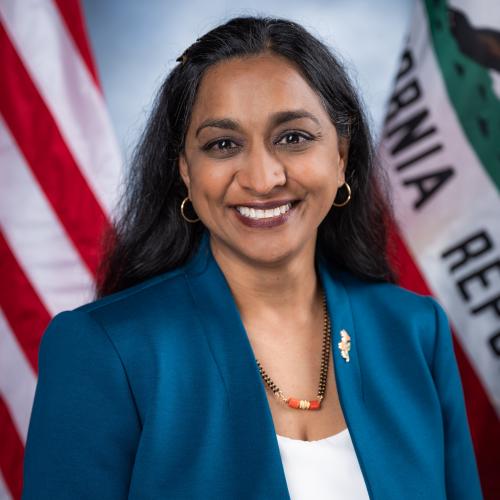
Celeste Rodriguez
85% support rate
Top opponent
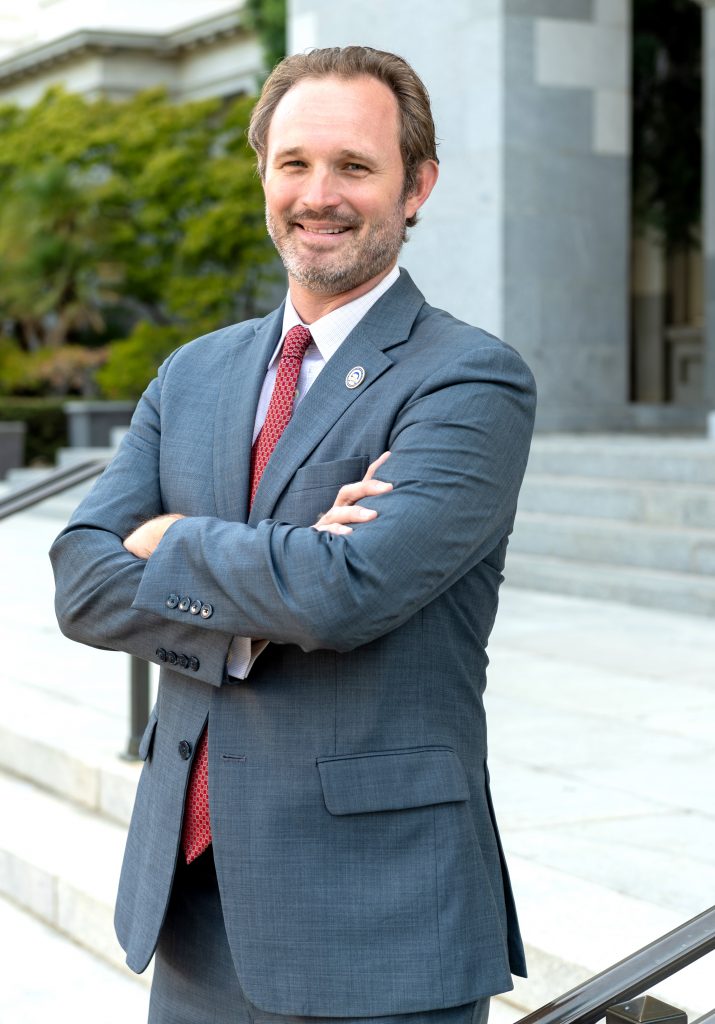
James Gallagher
19% support rate
Ranked legislators
10
5 support · 5 oppose
Key legislators

Who's moving immigration in California

Legislators moving immigration in California
Legislator Party Stance Support rate Votes
Celeste Rodriguez
Celeste Rodriguez House · District 43
D
Strong +
85% 213
Melissa Hurtado
Melissa Hurtado Senate · District 16
D
Strong +
83% 225
Darsh Patel
Darsh Patel House · District 76
D
Strong +
82% 235
Sade Elhawary
Sade Elhawary House · District 57
D
Strong +
81% 285
Pilar Schiavo
Pilar Schiavo House · District 40
D
Strong +
81% 215
James Gallagher
James Gallagher House · District 3
R
Strong −
19% 167
Roger Niello
Roger Niello Senate · District 6
R
Oppose
23% 257
Kate Sanchez
Kate Sanchez House · District 71
R
Oppose
25% 302
Stan Ellis
Stan Ellis House · District 32
R
Oppose
25% 243
Diane Dixon
Diane Dixon House · District 72
R
Oppose
26% 352
Showing 61–70 of 80 bills

All immigration bills

failed · California · Assembly Jun 2, 2025

AB 1066: Immigration services: grants.

Existing law requires the State Department of Social Services, subject to an appropriation, to provide grants to qualified nonprofit organizations through contracts, in order to provide certain immigration-related legal services to persons residing in, or formerly residing in, the state. Under existing law, those grants are aimed at obtaining certain immigration remedies and benefits, assisting with the naturalization process and an appeal arising from the process, or providing legal training and technical assistance. Existing law prohibits these funds from being used to provide legal services to an individual who has been convicted of, or who is currently appealing a conviction for, a violent felony, as specified, or a serious felony, as specified. This bill would additionally prohibit these funds from being used to obstruct or interfere with federal enforcement actions or legal proceedings against individuals convicted of a felony who are present in the United States in violation of federal immigration laws. The bill would specify that this restriction includes, but is not limited to, expenditures on litigation, administrative actions, or any other measures intended to shield such individuals from federal apprehension or deportation.
introduced · California · Assembly Jun 13, 2025

ACR 98: Law enforcement: immigration actions.

This measure would, among other things, call for an immediate end to policies that obstruct lawful immigration enforcement and urge the Governor to take immediate action to restore law and order.
passed · California · Senate Jul 10, 2025

SR 32: Relative to birthright citizenship.

Senate Resolution 32 is a symbolic resolution passed by the California Senate opposing President Trump's Executive Order No. 14160, which sought to limit birthright citizenship for children of certain immigrants. The resolution affirms that birthright citizenship is protected by the 14th Amendment to the U.S. Constitution, as established by the 1898 Supreme Court case United States v. Wong Kim Ark. It states that denying birthright citizenship would harm children of immigrants by limiting their access to education, healthcare, and essential services like CalWORKs and CalFresh. The resolution was adopted unanimously (27-0) on July 10, 2025, and will be sent to federal officials as a statement of opposition. This resolution does not change any law but expresses California's position on this constitutional issue.
passed · California · Senate Aug 29, 2025

SB 323: Student Aid Commission: California Dream Act application.

Existing law exempts a student, other than a nonimmigrant alien, as defined, from paying nonresident tuition at the California State University and the California Community Colleges if the student meets certain requirements. Existing law makes a student who meets these requirements for exemption from nonresident tuition, or who meets equivalent requirements adopted by the Regents of the University of California, eligible to apply for, and participate in, any student financial aid program administered by the state to the full extent permitted by federal law. Existing law requires the Student Aid Commission to establish procedures and forms that enable these students to apply for, and participate in, those student financial aid programs. This bill would require the commission, by the start of the 2026–27 financial aid cycle, to amend the California Dream Act application, and any of its grant processing systems, to clarify and ensure that the application can be used by any student eligible for state financial aid programs, regardless of their eligibility for federal financial aid. The bill would also require the commission to consult with California's public and private colleges and universities to promote the California Dream Act application effectively and inform students and their families of their available financial aid application options, as provided.
introduced · California · Assembly May 24, 2025

AJR 13: Relative to the censure of members of the California delegation to the United States House of Representatives for supporting cuts to social safety net programs.

AJR 13 is a non-binding resolution from the California State Assembly that would formally censure members of California's delegation to the U.S. House of Representatives who support federal cuts to social safety net programs. It directly targets those California representatives who vote in favor of reducing funding for programs like food assistance, housing support, or healthcare subsidies. The resolution expresses the Assembly's disapproval through a formal written reprimand but does not change any laws or affect the representatives' voting power.
passed · California · Assembly Feb 11, 2026

AJR 8: Immigration: Temporary Protected Status.

This measure would condemn decisions by the administrations of President Donald J. Trump to terminate or curtail Temporary Protected Status designations for people from specified nations, denounce federal policies that strip lawful status from long-residing individuals, as specified, and urge Congress to enact bipartisan legislation that provides a path to permanent residency and citizenship for individuals with Temporary Protected Status.
signed · California · Senate Jan 28, 2026

SJR 9: Immigrants in California: mass immigration raids.

This measure would strongly condemn and denounce mass immigration raids that target immigrant workers and families in California and the engagement of the military in immigration enforcement operations and in response to community protests. This measure would affirm support for safeguarding the rights and safety of all Californians, regardless of immigration status, and support, among other things, the expansion of legal services and emergency response resources to protect workers, children, and families affected by immigration enforcement.
signed · California · Senate Oct 13, 2025

SB 670: Adult Education Program: immigrant integration.

Existing law establishes the Adult Education Program under the administration ​of the Chancellor of the California Community Colleges and the Superintendent of ​Public Instruction. Existing law requires the chancellor and the Superintendent, with the advice of the executive director of the State Board of Education, to divide the state into adult education regions and approve one adult education consortium in each of those regions. Existing law requires, on or before February 1 of each fiscal year for which funds are appropriated for the program, the chancellor and the Superintendent to report to the Director of Finance, the Statewide Director of Immigrant Integration, the state board, and the Legislature about the use of specified funds and outcomes for adults statewide and in each adult education region, including, among other things, any recommendations related to delivery of education, immigrant integration, and workforce services for adults. Existing law requires, consistent with that reporting requirement, the chancellor and the Superintendent, with input from the Statewide Director of Immigrant Integration and adult education program providers, to identify common measures for meeting the needs of immigrant and refugee adults seeking integration, as specified. This bill would define immigrant integration for purposes of the program.
vetoed · California · Assembly Jan 22, 2026

AB 695: California Community Colleges Access and Continuity for Deported Students Act.

Existing law establishes the California Community Colleges, under the administration of the Board of Governors of the California Community Colleges as one of the 3 segments of public postsecondary education in the state. Existing law establishes uniform residency requirements for purposes of ascertaining the amount of tuition and fees to be paid by students of public postsecondary educational institutions. Existing law requires a student classified as a nonresident to pay nonresident tuition, in addition to other fees required by the institution, except as provided. This bill, the California Community Colleges Access and Continuity for Deported Students Act, would, until January 1, 2030, exempt a community college student from paying nonresident tuition if the student departs the United States on or after January 1, 2025, for specified reasons, was not paying nonresident tuition at the time of departure, provides an attestation of specified information related to the departure, and reenrolls in a community college online education program no later than 3 years from the date the student departed the United States. The bill, until January 1, 2030, would require a deported student, as defined, who resumes in-person education at a community college to be eligible to retain residency status for the purpose of determining tuition and fees, provided the student was previously classified as a resident and eligible for the nonresident tuition exemption at the time of departure, and would require the student to be eligible to apply for financial aid upon reenrollment. To the extent that the bill would impose new duties on community college districts, the bill would impose a state-mandated local program. The California Constitution requires the state to reimburse local agencies and school districts for certain costs mandated by the state. Statutory provisions establish procedures for making that reimbursement. This bill would provide that, if the Commission on State Mandates determines that the bill contains costs mandated by the state, reimbursement for those costs shall be made pursuant to the statutory provisions noted above. This bill would declare that it is to take effect immediately as an urgency statute.
signed · California · Senate Sep 20, 2025

SB 98: Elementary, secondary, and postsecondary education: immigration enforcement: notification.

(1) Under existing law, each school district and county office of education is responsible for the overall development, as specified, of a comprehensive school safety plan for each of its schools operating kindergarten or any of grades 1 to 12, inclusive. Existing law requires a comprehensive school safety plan to, among other things, identify appropriate strategies and programs that will provide or maintain a high level of school safety and address the school's procedures for complying with existing laws related to school safety. This bill would additionally require, until January 1, 2031, when a comprehensive school safety plan is next reviewed and updated, or by no later than March 1, 2026, those plans to include procedures specifically designed to notify parents and guardians of pupils, teachers, administrators, and school personnel when the school confirms the presence of immigration enforcement, as defined, on the schoolsite. Existing law prohibits a chartering authority from denying a petition for the establishment of a charter school unless it makes written factual findings supporting at least one of specified bases for denial. One of those bases for denying a petition is if the petition does not contain a reasonably comprehensive description of the development of a school safety plan that includes the same safety topics required in the comprehensive school safety plan of a school district or county office of education. This bill would authorize, until January 1, 2031, a chartering authority to deny a charter school petition that does not include in its proposed development of a school safety plan the same provisions on procedures and policies relating to notifying parents and guardians of pupils, teachers, administrators, and charter school personnel when the charter school confirms the presence of immigration enforcement, as defined, on the schoolsite as are required by the bill in a school district or county office of education comprehensive school safety plan. The bill also would make conforming changes. To the extent that this bill would impose new duties on local educational agencies, the bill would impose a state-mandated local program. (2) Existing law establishes the California State University, under the administration of the Trustees of the California State University, the University of California, under the administration of the Regents of the University of California, the California Community Colleges, under the administration of the Board of Governors of the California Community Colleges, and independent institutions of higher education as 4 segments of postsecondary education in the state. Existing law requires the Trustees of the California State University, the governing boards of community college districts, and independent institutions of higher education that are qualifying institutions for purposes of the Cal Grant Program, and requests the Regents of the University of California, to the fullest extent consistent with state and federal law, to implement various precautionary measures when federal immigration enforcement activities are undertaken on campuses of those segments, as specified, including, among others, that those postsecondary entities advise all students, faculty, and staff to notify the office of the chancellor or president, or their designee, as soon as possible, if they are advised that an immigration officer is expected to enter, will enter, or has entered the campus to execute a federal immigration order. This bill would require, until January 1, 2031, those postsecondary educational entities, and each campus of those postsecondary educational entities, to notify, as specified, all students, faculty, staff, and other campus community members who work on campus when the presence of immigration enforcement, as defined, is confirmed on campus. To the extent that the bill would impose new duties on community college districts, the bill would impose a state-mandated local program. The California Constitution requires the state to reimburse local agencies and school districts for certain costs mandated by the state. Statutory provisions establish procedures for making that reimbursement. This bill would provide that, if the Commission on State Mandates determines that the bill contains costs mandated by the state, reimbursement for those costs shall be made pursuant to the statutory provisions noted above. This bill would declare that it is to take effect immediately as an urgency statute.
Showing 61 to 70 of 80 bills
Previous 1 6 7 8 Next