Issue · Immigration

Immigration (Citizenship & Naturalization)

Every immigration bill, vote, and legislator stance in California, automatically classified by Maddy, our AI policy reader.

Total bills
9
2025-2026 Regular Session
Top supporter
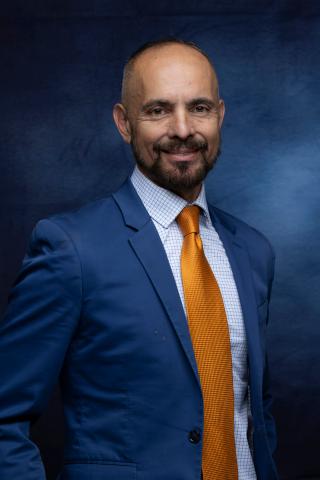
Melissa Hurtado
100% support rate
Top opponent
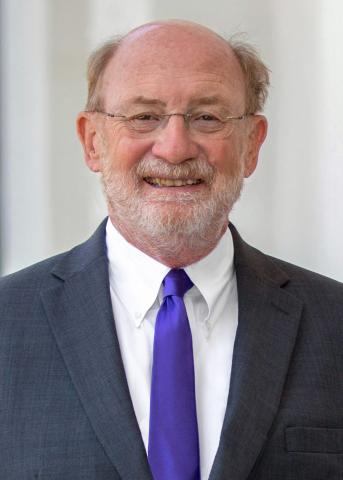
Megan Dahle
20% support rate
Ranked legislators
10
5 support · 5 oppose
Key legislators

Who's moving citizenship & naturalization in California

Legislators moving citizenship & naturalization in California
Legislator Party Stance Support rate Votes
Melissa Hurtado
Melissa Hurtado Senate · District 16
D
Strong +
100% 3
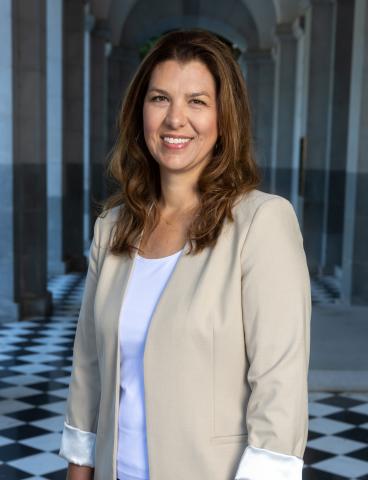
Aisha Wahab
Aisha Wahab Senate · District 10
D
Strong +
80% 5
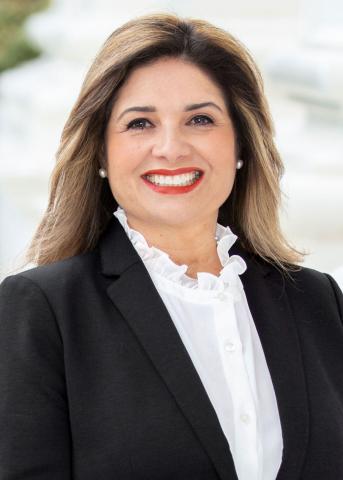
Akilah Weber Pierson
Akilah Weber Pierson Senate · District 39
D
Strong +
80% 5
Christopher Cabaldon
Christopher Cabaldon Senate · District 3
D
Strong +
80% 5
John Laird
John Laird Senate · District 17
D
Strong +
80% 5
Megan Dahle
Megan Dahle Senate · District 1
R
Strong −
20% 5
Brian Jones
Brian Jones Senate · District 40
R
Oppose
25% 4
Marie Alvarado-Gil
Marie Alvarado-Gil Senate · District 4
R
Oppose
25% 4
Roger Niello
Roger Niello Senate · District 6
R
Oppose
25% 4
Rosilicie Ochoa Bogh
Rosilicie Ochoa Bogh Senate · District 19
R
Oppose
25% 4
Showing 9 of 9 bills

All immigration bills

in committee · California · Assembly Mar 3, 2026

AB 1937: Discrimination: business establishments.

Existing law, the Unruh Civil Rights Act, provides that all persons within the jurisdiction of this state are entitled to full and equal accommodations in all business establishments of every kind whatsoever, regardless of their sex, race, color, religion, ancestry, national origin, disability, medical condition, genetic information, marital status, sexual orientation, citizenship, primary language, or immigration status. Existing law requires the Civil Rights Department, among other things, to enforce the provisions of the Unruh Civil Rights Act. Existing law authorizes aggrieved persons to, among other remedies, file a complaint with the Civil Rights Department. This bill would provide related declarations, including the intent of the Legislature to clarify that those provisions of existing law fully apply to early childcare and education settings and prohibit discrimination in access to and provision of those services. This bill would specify that "business establishments of every kind whatsoever" includes, but is not limited to, entities and individuals that provide early care and education services to the public for a fee or other consideration, including licensed childcare centers, licensed family childcare homes, and family, friend, and neighbor care providers, regardless of whether the services are publicly funded. The bill would prohibit its provisions from being construed to limit existing protections or requiring the disclosure of immigration or citizenship status.
in committee · California · Assembly Mar 23, 2026

AB 2077: Protect the Promise Act.

Existing law establishes the Medi-Cal program, which is administered by the State Department of Health Care Services and under which qualified low-income individuals receive health care services. The Medi-Cal program is in part governed by, and funded pursuant to, federal Medicaid program provisions. Existing law establishes procedures for counties in making Medi-Cal eligibility determinations and redeterminations. Existing federal law, enacted on July 4, 2025, sets forth various changes to Medicaid eligibility with regard to community engagement reporting, redeterminations, cost sharing, and retroactive coverage, among other factors, for certain Medicaid populations pursuant to a specified implementation timeline. This bill, the Protect the Promise Act, would require the department, in coordination with counties, to verify Medi-Cal eligibility before enrollment approval whenever reliable data sources are available. The bill, subject to any exceptions under federal law, would prohibit self-attestation alone for Medi-Cal eligibility purposes from being accepted for the eligibility factors of income, residency, identity, household composition, or citizenship or immigration status. The bill would require the department and the county to fully utilize certain data sets and verification systems. The bill would require the department to cross-reference beneficiary data with certain databases, complete a one-time submission of enrollment data to the federal government, and review information from specified federal and state sources. The bill would require the department to maintain a continuous process to identify changes in residency. The bill would require the department to require regular and systematic eligibility redeterminations, as specified. The bill would require the department and the county to identify eligibility errors, correct errors, and recover improper payments. The bill would require the department to establish enforceable accountability mechanisms, including, among others, reports to the Legislature and designation of officials. By creating new duties for counties relating to Medi-Cal eligibility determinations and redeterminations, the bill would impose a state-mandated local program. The California Constitution requires the state to reimburse local agencies and school districts for certain costs mandated by the state. Statutory provisions establish procedures for making that reimbursement. This bill would provide that, if the Commission on State Mandates determines that the bill contains costs mandated by the state, reimbursement for those costs shall be made pursuant to the statutory provisions noted above.
in committee · California · Assembly May 14, 2026

AB 2064: Discrimination: criminal history.

Existing law, the Unruh Civil Rights Act, provides that all persons within the jurisdiction of this state are entitled to full and equal accommodations in all business establishments regardless of their sex, race, color, religion, ancestry, national origin, disability, medical condition, genetic information, marital status, sexual orientation, citizenship, primary language, or immigration status. This bill would add criminal history, as defined, to the list of protected characteristics under the Unruh Civil Rights Act. Existing law, the California Fair Employment and Housing Act, declares the public policy of the state to be that it is necessary to protect and safeguard the right and opportunity of all persons to seek, obtain, and hold employment without discrimination or abridgment on account of race, religious creed, or color, among other characteristics. The act declares discrimination in housing accommodations because of race, color, or religion, among other characteristics, to be against public policy. In that regard, the act prohibits various forms of employment and housing discrimination, including various types of discrimination because of a person's race, color, or national origin, among other characteristics. This bill would add criminal history, as defined, to the list of protected characteristics under the California Fair Employment and Housing Act.
passed both · California · Senate Aug 24, 2026

SB 1194: Immigration Legal Fellowship Project.

Existing law requires the State Department of Social Services, subject to an appropriation, to provide grants to qualified nonprofit organizations through contracts, in order to provide certain immigration-related legal services to persons residing in, or formerly residing in, the state. Under existing law, those grants are aimed at obtaining certain immigration remedies and benefits, assisting with the naturalization process and an appeal arising from the process, or providing legal training and technical assistance. This bill would establish the Immigration Legal Fellowship Project within the department for the purpose of expanding access to high-quality immigration legal services by supporting legal fellowships for qualified individuals who provide immigration legal services under the grant programs described above. The bill would require the department to award grants or enter into contracts with nonprofit entities to operate legal fellowships that include specified components, including, among other things, the recruitment, placement, coordination, and hosting of legal fellows. The bill would authorize the department to establish eligibility criteria, application requirements, and funding priorities for the program. The bill would require the department to include specified information relating to the use of funds appropriated for the purposes of the project in reports and updates provided to the Legislature regarding other immigration-related programs. The bill would provide that the implementation of these provisions is contingent on an appropriation for these purposes.
passed both · California · Assembly Aug 30, 2026

AB 1627: Public employment: disqualifications.

Existing law contains numerous provisions governing the qualifications, standards, and training of peace officers. Existing law specifies circumstances that disqualify a person from holding office or being employed as a peace officer, including, among other things, any person previously employed in law enforcement in any state or United States territory or by the federal government whose name is listed in any of specified indexes whose certification as a law enforcement officer in that jurisdiction was revoked for misconduct or who, while employed as a law enforcement officer, engaged in serious misconduct that would have resulted in their certification being revoked by the commission if employed as a peace officer in this state. This bill would specify that, for purposes of the disqualification circumstances described above, the terms "employed in law enforcement" and "law enforcement officer" include a law enforcement officer employed in any state or United States territory or by the federal government who engages in immigration enforcement, as provided. The bill would make the provisions of the act severable. The bill would include findings that changes proposed by this bill address a matter of statewide concern rather than a municipal affair and, therefore, apply to all cities, including charter cities. This bill would incorporate additional changes to Section 1029 of the Government Code proposed by AB 1896 to be operative only if this bill and AB 1896 are enacted and this bill is enacted last.
failed · California · Assembly Jun 2, 2025

AB 1066: Immigration services: grants.

Existing law requires the State Department of Social Services, subject to an appropriation, to provide grants to qualified nonprofit organizations through contracts, in order to provide certain immigration-related legal services to persons residing in, or formerly residing in, the state. Under existing law, those grants are aimed at obtaining certain immigration remedies and benefits, assisting with the naturalization process and an appeal arising from the process, or providing legal training and technical assistance. Existing law prohibits these funds from being used to provide legal services to an individual who has been convicted of, or who is currently appealing a conviction for, a violent felony, as specified, or a serious felony, as specified. This bill would additionally prohibit these funds from being used to obstruct or interfere with federal enforcement actions or legal proceedings against individuals convicted of a felony who are present in the United States in violation of federal immigration laws. The bill would specify that this restriction includes, but is not limited to, expenditures on litigation, administrative actions, or any other measures intended to shield such individuals from federal apprehension or deportation.
passed · California · Senate Jul 10, 2025

SR 32: Relative to birthright citizenship.

Senate Resolution 32 is a symbolic resolution passed by the California Senate opposing President Trump's Executive Order No. 14160, which sought to limit birthright citizenship for children of certain immigrants. The resolution affirms that birthright citizenship is protected by the 14th Amendment to the U.S. Constitution, as established by the 1898 Supreme Court case United States v. Wong Kim Ark. It states that denying birthright citizenship would harm children of immigrants by limiting their access to education, healthcare, and essential services like CalWORKs and CalFresh. The resolution was adopted unanimously (27-0) on July 10, 2025, and will be sent to federal officials as a statement of opposition. This resolution does not change any law but expresses California's position on this constitutional issue.
signed · California · Assembly Sep 16, 2025

AJR 5: Relative to birthright citizenship.

This measure would declare the Legislature's opposition to the unlawful Executive Order No. 14160, entitled "Protecting the Meaning and Value of American Citizenship," ending birthright citizenship as enshrined in the United States Constitution and would affirm the Legislature's commitment to birthright citizenship, as specified.
signed · California · Senate Oct 12, 2025

SB 281: Pleas: immigration advisement.

Existing law requires the court, prior to the acceptance of a plea of guilty or nolo contendere, to advise the defendant that if they are not a citizen, conviction of the crime charged may result in deportation, exclusion from admission to the United States, or denial of naturalization. After January 1, 1978, if the court fails to advise the defendant, as required, and the defendant shows that conviction of the offense to which the defendant pleaded guilty or nolo contendere may have the consequences for the defendant of deportation, exclusion from admission to the United States, or denial of naturalization pursuant to the laws of the United States, the court, on the defendant's motion, is required to vacate the judgment and permit the defendant to withdraw the plea of guilty or nolo contendere, and enter a plea of not guilty. This bill would require the court to give the above-described advisement verbatim and would clarify the advisement to state that if the defendant is not a citizen of the United States, conviction may result in the specified immigration consequences. The bill would state that for a plea accepted prior to January 1, 2026, it is not the intent of the Legislature that a court's failure to provide the advisement verbatim requires vacation of judgment and withdrawal of the plea or constitutes grounds for finding a prior conviction invalid, as specified.