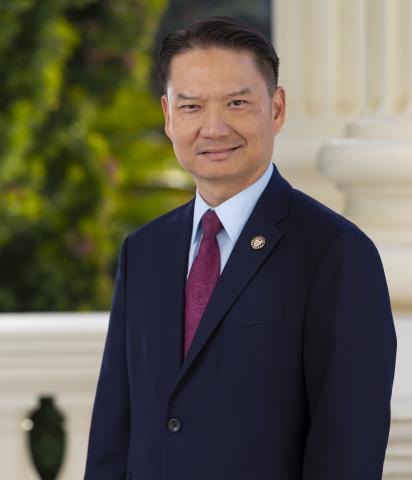
Existing law establishes the University of California Kern County Medical Education Endowment Fund. Upon appropriation by the Legislature, existing law requires moneys in the endowment fund to be allocated to the University of California to support the annual operating costs for the development, operation, and maintenance of a branch campus of an existing University of California School of Medicine in the County of Kern, and to conduct a feasibility study related to that campus. This bill would require the University of California, on or before January 1, 2028, to complete a feasibility study, and reasonably attempt to consult with local stakeholders, to determine the steps necessary to establish a branch campus of an existing University of California medical school in the County of Kern, and to submit the feasibility study, including detailed findings, recommendations, and an implementation timeline, to the Governor and Legislature, as provided. The bill would require the feasibility study to include a comprehensive analysis of the requirements, challenges, and opportunities related to establishing a branch campus of an existing University of California medical school in the County of Kern, as provided. This bill would declare that it is to take effect immediately as an urgency statute.
Existing law provides for the Medi-Cal program, administered by the State Department of Health Care Services and under which qualified low-income individuals receive health care services. The Medi-Cal program is, in part, governed and funded by federal Medicaid program provisions. Existing law establishes a schedule of benefits under the Medi-Cal program and provides for various services, including comprehensive perinatal services and federally qualified health center (FQHC) and rural health clinic (RHC) services, that are rendered by Medi-Cal enrolled providers. Under existing law, FQHCs and RHCs receive a per-visit prospective payment system (PPS) rate for each visit. Existing law establishes the Comprehensive Perinatal Services Program, the goals of which are to decrease and maintain the decreased level of perinatal, maternal, and infant mortality and morbidity in the State of California and to support methods of providing comprehensive prenatal care that prevent prematurity and the incidence of low birth weight infants. Under the program, the State Department of Public Health is required to develop and maintain a statewide comprehensive community-based perinatal services program and enter into contracts, grants, or agreements with health care providers to deliver these services in a coordinated effort. Existing law also requires the department to monitor the delivery of services under those contracts, grants, and agreements through a uniform health data collection system that utilizes epidemiologic methodology. This bill would instead require the State Department of Health Care Services to oversee a statewide comprehensive community-based perinatal services program and enroll health care providers to deliver these services to Medi-Cal members and make conforming changes, but would maintain the State Department of Public Health's role with related contracts, grants, and agreements. The bill would specify that any participation by the State Department of Public Health does not change the State Department of Health Care Services' authority to implement comprehensive community-based perinatal services for purposes of the Medi-Cal program. By January 1, 2028, the bill would require the State Department of Health Care Services, in consultation with the State Department of Public Health, to clarify each department's roles and responsibilities regarding comprehensive perinatal services by regulation. The bill would, among other things, require the State Department of Health Care Services to develop informational and educational materials on comprehensive perinatal services by January 1, 2028, and require all Medi-Cal managed care plans to disseminate the materials, as specified. The bill would require the State Department of Health Care Services, no later than July 15, 2027, to submit to the Assembly Committee on Health and the Senate Committee on Health, and post on its internet website, a report that identifies the number of pregnant and postpartum individuals that received comprehensive perinatal services from January 1, 2022, to January 1, 2025, inclusive. The bill would also require the State Department of Health Care Services, commencing July 15, 2028, and every 3 years thereafter, to submit to those committees, and post on its internet website, a report that identify the number of pregnant and postpartum individuals that received and were offered comprehensive perinatal services during the previous 3 calendar years. This bill would require a Medi-Cal managed care plan to inform each Medi-Cal member treated during the perinatal period regarding the availability of and access to comprehensive perinatal services.
Under existing law, the State Department of Public Health is responsible for the licensing and regulation of various facilities and settings that provide health care services, as specified. Existing law, the Confidentiality of Medical Information Act prohibits, except to the extent expressly authorized by a patient, enrollee, or subscriber, or as otherwise permitted or required, a provider of health care, health care service plan, contractor, or corporation and its subsidiaries and affiliates from disclosing medical information for immigration enforcement. Existing law requires health care provider entities, as defined, to establish or amend procedures for monitoring, documenting, and receiving visitors to health care provider entities to the extent possible, and prohibits, unless required by state or federal law, a health care provider entity and its personnel from allowing any person access to nonpublic areas of the provider's facilities for immigration enforcement purposes, except as specified. This bill would, among other things, require a health care provider entity to, when there is a patient accompanied by an immigration enforcement officer, verify and document the identities and agencies of the accompanying immigration enforcement officers, to the extent possible. The bill would require a health care provider entity to ask an immigration enforcement officer to step out of the patient's room when discussing any matters pertaining to patient care, or performing any physical examination, or providing any medical care, except as specified, would prohibit an immigration enforcement officer from having any authority to make, influence, or participate in medical decisions on behalf of patient they accompany, and would require the health care provider entity personnel to report a refusal to comply with the requirements of this bill to the health care provider entity management, administration, or legal counsel, who is required to then document the actions, and, to the extent possible, the name and badge number of an immigration enforcement officer. The bill would also prohibit a health care provider entity from using blackout policies when admitting a patient who is accompanied by an immigration enforcement officer, except as specified, and defines blackout policies to mean any policy that is used by health care provider entities to conceal a patient's presence or identity at the entity's facility, including, but not limited to, registering patients under a pseudonym, removing the patient's name from the health care provider entity's directory, or prohibiting personnel from confirming that a patient is in the health care provider entity.
Existing law requires the governing board of a school district to have general control of, and be responsible for, all aspects of the interscholastic athletic policies, programs, and activities in its school district, as provided, and requires the governing board of a school district to ensure that all interscholastic policies, programs, and activities in the school district comply with state and federal law. Existing law authorizes the governing board of a school district to enter into associations or consortia with other governing boards for purposes of governing regional or statewide interscholastic athletics, as provided. Existing law describes the California Interscholastic Federation (CIF) as a voluntary organization that consists of school and school-related personnel with responsibility for administering interscholastic athletic activities in secondary schools and states the intent of the Legislature that the CIF, in consultation with the State Department of Education, implement specified policies relating to interscholastic athletics. Existing law, the 1998 California High School Coaching Education and Training Program, declares the intent of the Legislature to establish a California High School Coaching Education and Training Program, to be administered by school districts with an emphasis on specific components, including, among other components, sports psychology. Existing law requires every high school sports coach to complete, at their own expense, a coaching education program that meets the guidelines established by the California High School Coaching Education and Training Program. This bill would add a component on mental health training, as specified, to the list of components to be emphasized by the 1998 California High School Coaching Education and Training Program. The bill, commencing with the 2027–28 school year, would require a person who serves as a coach in an interscholastic athletic program at a high school, including a private school, that is a member of the California Interscholastic Federation to complete an initial training, and a subsequent training every 2 years, on mental health, as provided. The bill, commencing with the 2027–28 school year, would also require a school district, county office of education, or charter school that elects to offer an athletic program, other than an interscholastic athletic program, to ensure that the athletic program's coaches complete an initial training, and a subsequent training every 2 years, that covers sudden cardiac arrest, as provided, and youth athletics behavioral and mental health training, as provided. This bill would incorporate additional changes to Section 35179.1 of the Education Code proposed by AB 1626 to be operative only if this bill and AB 1626 are enacted and this bill is enacted last. This bill would make the operation of its provisions contingent upon the enactment of AB 1626 of the 2025–26 Regular Session.
This measure would call upon Congress to reauthorize the enhanced premium tax credits and would urge Congress to continue exploring the concept of bolstering health savings accounts, as specified.
Existing law requires the governing board of each school district to have general control of, and be responsible for, all aspects of the interscholastic athletic policies, programs, and activities in its school district, as provided, and requires the governing board of a school district to ensure that all interscholastic policies, programs, and activities in the school district are in compliance with state and federal law. Existing law authorizes the governing board of a school district to enter into associations or consortia with other governing boards for purposes of governing regional or statewide interscholastic athletics, as provided. Existing law describes the California Interscholastic Federation (CIF) as a voluntary organization that consists of school and school-related personnel with responsibility for administering interscholastic athletic activities in secondary schools and states the intent of the Legislature that the CIF, in consultation with the State Department of Education, implement specified policies relating to interscholastic athletics. Existing law, the 1998 California High School Coaching Education and Training Program, declares the intent of the Legislature to establish a California High School Coaching Education and Training Program, to be administered by school districts with an emphasis on specific components, including, among other components, sports psychology. Existing law requires every high school sports coach to complete, at their own expense, a coaching education program that meets the guidelines established by the California High School Coaching Education and Training Program. This bill would require specified trainings for coaches described in AB 1665 of the 2025–26 Regular Session to cover specified mental-health related topics, including, among other topics, trauma-informed care, as provided, and strategies of creating a positive team culture, as provided. The bill would require the department, on or before September 1, 2027, to identify existing training or develop a model youth athletics behavioral and mental health training, as specified, for persons who serve as coaches in youth sports organizations, both for recreational leagues and competitive or club leagues. The bill would require the department to post the training on its internet website and work with local partners to disseminate the training to appropriate youth athletic leagues, youth coaching entities, and relevant statewide organizations and associations. This bill would incorporate additional changes to Section 35179.1 of the Education Code proposed by AB 1665 to be operative only if this bill and AB 1665 are enacted and this bill is enacted last. This bill would make the operation of its provisions contingent upon the enactment of AB 1665 of the 2025–26 Regular Session.
Existing law defines "sexual orientation change efforts" as practices by mental health providers that seek to change an individual's sexual orientation, as specified. Existing law prohibits a mental health provider, as defined, from engaging in sexual orientation change efforts with a patient under 18 years of age, and provides that such efforts attempted by a mental health provider are considered unprofessional conduct and must subject the mental health provider to discipline by that provider's licensing entity. This bill would define "sexual orientation or gender identity change efforts" as any practices of a licensed mental health provider that seek, during the provision of mental health services, to direct a patient toward a predetermined sexual orientation or gender identity, as specified, and would apply the prohibitions described above to such efforts. The bill would exclude specified practices, including age-appropriate interventions to address unlawful conduct or unsafe practices that do not seek to direct the patient toward a particular sexual orientation or gender identity, from this definition.
Existing law provides for the Medi-Cal program, which is administered by the State Department of Health Care Services, under which qualified low-income individuals receive health care services. The Medi-Cal program is, in part, governed and funded by federal Medicaid provisions. Qualified individuals under the Medi-Cal program include medically needy persons and medically needy family persons who meet the required eligibility criteria, including applicable income requirements. Existing law requires the department to establish income levels for maintenance need at the lowest levels that reasonably permit a medically needy person to meet their basic needs for food, clothing, and shelter, and for which federal financial participation will still be provided under applicable federal law. In calculating the income of a medically needy person in a medical institution or nursing facility, or a person receiving institutional or noninstitutional services from a Program of All-Inclusive Care for the Elderly organization, the required monthly maintenance amount includes an amount providing for personal and incidental needs in the amount of not less than $35 per month while a patient. Existing law authorizes the department to increase, by regulation, this amount as necessitated by increasing costs of personal and incidental needs. This bill would increase the monthly maintenance amount for personal and incidental needs from $35 to $50, and would require that the amount be increased annually, as specified. The bill would make these changes subject to receipt of necessary federal approvals.
This measure would urge the United States Congress and the President of the United States to immediately restore and extend the enhanced Affordable Care Act premium tax credits.
Existing federal law, the Indian Gaming Regulatory Act of 1988, provides for the negotiation and execution of tribal-state gaming compacts for the purpose of authorizing certain types of gaming on Indian lands within a state. The California Constitution authorizes the Governor to negotiate and conclude tribal-state gaming compacts, subject to ratification by the Legislature. Existing law expressly ratifies a number of tribal-state gaming compacts, and amendments of tribal-state gaming compacts, between the State of California and specified Indian tribes. The California Environmental Quality Act (CEQA) requires a lead agency to prepare, or cause to be prepared, and certify the completion of, an environmental impact report on a project, as defined, that it proposes to carry out or approve that may have a significant effect on the environment, as defined, or to adopt a negative declaration if it finds that the project will not have that effect. This bill would ratify the amendment to the tribal-state gaming compact entered into between the State of California and the Yuhaaviatam of San Manuel Nation executed on June 23, 2026. The bill would provide that, in deference to tribal sovereignty, certain actions related to that amended compact are not projects for purposes of CEQA. This bill would declare that it is to take effect immediately as an urgency statute.